Značka: Trading

House Democrats seek SEC answers on AI investment advisors

A group of Democratic US House lawmakers is questioning the US securities regulator over how it is overseeing investment advice and trading powered by artificial intelligence.In a letter to SEC Chair Paul Atkins dated Tuesday, the lawmakers said that platforms offering AI trading agents to retail traders “raises serious questions for investor protection, broker-dealer responsibilities, market integrity, and the accountability of AI developers.”“While such trading may initially be limited in scope, there are indications that agentic trading could expand to a broad range of additional products, including options, cryptocurrency, event contracts, and futures,” the lawmakers wrote.AI agents have grown in popularity among crypto users as traders look to gain an edge in the always-on market, an idea that has spread to retail traders of traditional equities as they seek help with strategies.Crypto exchange Coinbase is one of the latest major platforms to introduce such a tool, releasing an AI agent earlier this month integrated into its app, which it said is a Securities and Exchange Commission- and Commodity Futures Trading Commission-registered financial adviser that can give guidance on trades.The letter, led by Bill Foster, the top Democrat on the House Financial Services Financial Institutions Subcommittee, and Brad Sherman, the top Democrat on the Capital Markets Subcommittee, said the agents have “operated largely outside the securities regulatory framework,” even as they are making “consequential investment decisions on behalf of retail investors.”Representative Bill Foster speaking at a hearing in early June. Source: YouTubeThe lawmakers said the disclosures accompanying AI agents say that brokerage platforms can’t guarantee the accuracy or suitability of any AI output or control, monitor or audit the agents.Related: Bitcoin’s deeply discounted versus AI-stocks, but hawkish Fed risk lingers: BitwiseSuch disclaimers “raise urgent questions about the regulatory treatment of agentic trading tools and create uncertainty regarding legal responsibility among brokers, AI developers and retail investors.”The letter asked the SEC to provide written responses to a list of questions by July 31, including what guardrails or analysis the agency has on agents, when an AI agent would need to register and the extent of its consultations with platforms over AI.It also asked if the SEC has the authority it needs to address the risks of AI agents, or if it needs congressional action to address them.Representatives Stephen Lynch, Jim Himes, Sean Casten, Rashida Tlaib, Brittany Pettersen and Sylvia Garcia also signed the letter.Magazine: The end of anonymity? AI could unmask crypto’s hidden identities

Čítaj viac
Social trading platform Fomo raises $75M, reaches $550M valuation

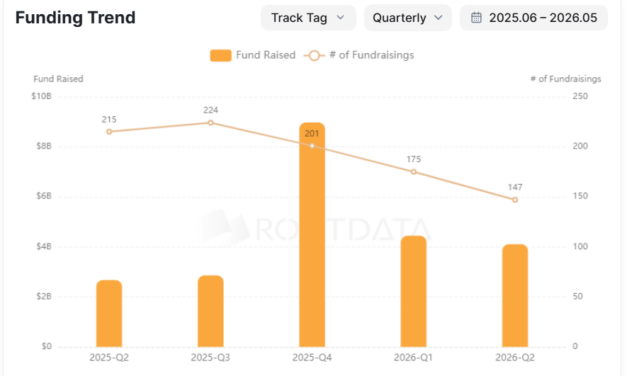
Crypto startup Fomo has raised $75 million in a Series B funding round led by venture capital firm Index Ventures, which valued the social trading and token discovery platform at $550 million.The funding round also received participation from Union Square Ventures and the company’s existing investor, Benchmark, along with angel investors including Zynga co-founder Mark Pincus, Eventbrite co-founder Kevin Hartz, Discord CEO Humam Sakhnini, Nexos AI co-founder Tomas Okmanas and others, Fomo announced on Monday.Fomo allows users to trade assets across multiple blockchains without having to manually bridge funds or handle gas fees. The company said it has attracted more than 625,000 traders since launching a year ago, generating $4 billion in trading volume and 110 million social interactions.The raise adds to a growing list of crypto venture deals in 2026, even as digital asset prices remain below recent highs. According to RootData, crypto startups raised $4.1 billion across 147 funding rounds during the second quarter.Crypto and Web3 funding by quarterly sum. Source: Root DataFomo says 68,000 users made first crypto purchase on platformFomo said more than 68,000 users made their first cryptocurrency purchase on the platform using Apple Pay, representing roughly $25 million in transaction volume.Related: Kalshi in early IPO talks with investment banks: ReportCrypto research firm Delphi Digital said in a December X post that the platform’s social features may be helping attract users by making trading feel “more like scrolling a feed than sitting at a terminal.”“In November, @fomo_family generated more monthly fees than Moonshot, despite being a younger product with lower fees,” Delphi Digital wrote.Source: Delphi DigitalFomo allows users to view trades made by other users in real time and execute similar trades across multiple blockchains without manually bridging assets or managing separate wallets.Other crypto exchanges offering copy-trading features include Binance, Bybit, OKX, Bitget, BingX, MEXC, Gate.io, KuCoin, Phemex and BitMart.On June 11, Fomo launched perpetual futures contracts powered by Hyperliquid for users outside the United States. On June 2, the company said it had surpassed $2 million in referral fees paid to users.Magazine: The legal battle over who can claim DeFi’s stolen millions 

Čítaj viac

Charles Schwab to enter prediction markets with S&P 500 wagers: WSJ

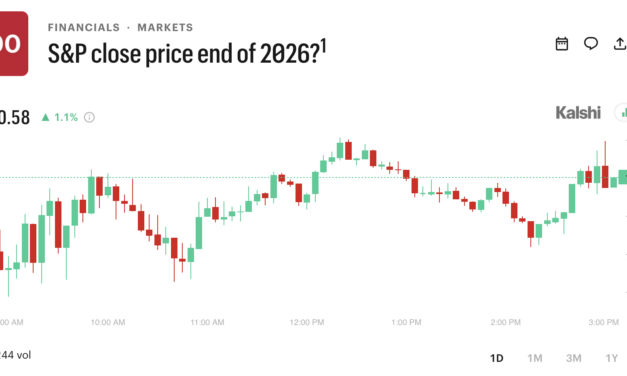
Financial services giant Charles Schwab will reportedly enter the prediction markets business by offering customers wagers on the S&P 500.According to a Friday Wall Street Journal report, Charles Schwab is planning to launch options contracts allowing users to place yes-or-no wagers on the performance of the S&P 500 stock market index. The move, expected to roll out in a matter of months as part of a partnership with Cboe Global Market, could mark the company’s first into prediction markets.Source: KalshiWhile prediction market platforms like Kalshi and Polymarket offer a variety of event contracts based on the outcome of events, including those tied to politics, sports, weather and companies, the Charles Schwab product will reportedly only include yes-or-no bets on whether the S&P 500 closes above or below a target price. Cryptocurrency exchanges like Coinbase have also moved closer to prediction offerings with many projecting the market will reach $1 trillion in annual volume by 2030.In May, Charles Schwab announced the launch of spot Bitcoin and Ether trading for retail clients, marking the company’s move deeper into digital asset services. The company reported a net income of $2.5 billion for the first quarter of 2026.Related: Republican lawmaker proposes prediction markets insider trading ban, not including White House officialsBoth Polymarket and Kalshi already offer similar event contracts related to predictions on the S&P 500. Prediction markets are still under scrutiny by lawmakersAlthough the market continues to grow, many state-level authorities and members of US Congress are calling for oversight of platforms like Kalshi and Polymarket. In addition to the potential for elected officials to profit from using nonpublic information on the platforms, many state gaming authorities have challenged their ability to offer event contracts related to sports.The US Commodity Futures Trading Commission (CFTC) under Chair Michael Selig has taken the position that event contracts on prediction markets qualify as “swaps” and the agency has exclusive jurisdiction for regulation and enforcement. Many of the cases connected to Kalshi, Polymarket, the CFTC, and state authorities continue to be litigated.Magazine: Should users be allowed to bet on war and death in prediction markets?Cointelegraph is committed to independent, transparent journalism. This news article is produced in accordance with Cointelegraph’s Editorial Policy and aims to provide accurate and timely information. Readers are encouraged to verify information independently.

Čítaj viac

CME Group sues CFTC over crypto perpetual futures

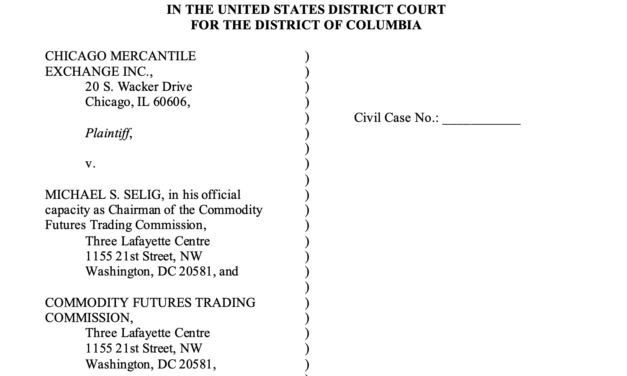
The Chicago Mercantile Exchange (CME) Group said it was taking legal action against the US Commodity Futures Trading Commission (CFTC) over cryptocurrency perpetual futures.In a Thursday filing in the US District Court for the District of Columbia, CME filed a complaint against the CFTC and its chair Michael Selig over the agency’s regular approvals of perpetual futures tied to crypto. The lawsuit stemmed from a May 29 notice from the CFTC approving perpetual futures contracts tied to the spot price of Bitcoin (BTC) for prediction markets platform Kalshi and issuing a no-action position for similar products on cryptocurrency exchange Coinbase.According to CME’s filing, the CFTC’s approval of such products went against directives from the US Congress by treating “futures” as “swaps” with expiration dates. The company alleged that the agency was in violation of the Commodity Exchange Act and a court should vacate its actions over perpetual futures, noting that Selig had unilaterally acted without a full panel of five CFTC commissioners.“With one stroke of his pen, [Selig] overrode Congress’s definition of the term ‘swap’ and circumvented the regulatory regime Congress required for that form of derivative,” said the complaint, adding:“The CFTC’s failure to evenhandedly, consistently, and correctly apply the CEA risks harming competition and destabilizing derivatives markets.”Source: PACERThe lawsuit came just one day after CME CEO Terrence Duffy said that the company would be taking legal action against the CFTC. In a Monday CNBC interview, Selig said that perpetual futures contracts “trade very similarly” to others, describing the CFTC’s position as “good for investors” and claiming that the Commodity Exchange Act “does not define the term ‘futures contract.’”A CFTC spokesperson told Cointelegraph that CME had engaged in “lawfare” against the agency and the administration’s crypto policies, calling the complaint “frivolous.”Related: ICE, CME press US regulators to ‘rein in’ Hyperliquid energy trading: ReportKraken also announced the launch of perpetual futures trading for US users through CFTC-regulated platform Bitnomial. CME CEO Terry Duffy. Source: CNBC Fast MoneySelig acts alone on prediction markets, perpetual futures, CFTC agendaConfirmed by the US Senate in December 2025, Selig remains the chair and sole commissioner at the CFTC in a leadership panel intended to consist of a bipartisan group of five people. As of Thursday, US President Donald Trump had not announced any nominations to fill the seats, despite urging from many members of Congress to do so.Magazine: OpenAI files for IPO, SEC scraps 611 rule and Hungary overhauls crypto: Hodlers Digest June 7-13Cointelegraph is committed to independent, transparent journalism. This news article is produced in accordance with Cointelegraph’s Editorial Policy and aims to provide accurate and timely information. Readers are encouraged to verify information independently.

Čítaj viac

Hyperliquid's $10B open interest coincides with growth in equity-linked markets: Talos

Hyperliquid’s perpetual futures open interest recently exceeded $10 billion as the platform expanded into equity-linked products, commodities and synthetic pre-IPO trading.Hyperliquid is now the third-largest perpetual futures exchange, with growth driven primarily by crypto assets and supported by expanding trading in equities, commodities and indexes through Hyperliquid Improvement Proposal-3 (HIP-3), according to digital asset infrastructure provider Talos.Talos said in a Tuesday report that about $4 billion of open interest is attributable to HIP-3 builder-deployed perpetual markets. The report highlighted oil, the Nasdaq 100 and technology stock-linked contracts as some of the most actively traded products, while pre-IPO markets drew more than $250 million in open interest on June 12 ahead of SpaceX’s expected public listing. Nearly half of S&P 500 perpetual volume and more than 60% of oil perpetual volume occurred outside traditional US market hours.HIP-3 perpetuals, daily volume by asset class. Source: TalosHyperliquid’s growth reflects a broader push by crypto trading venues to expand beyond digital assets and offer exposure to traditional financial markets through blockchain-based derivatives.Related: SpaceX tokenized IPO campaign draws $557M on Binance ahead of debutHyperliquid’s rise draws TradFi attentionHyperliquid’s growth has also drawn attention from traditional financial firms exploring round-the-clock trading. On May 27, Jeffrey Sprecher, the CEO of Intercontinental Exchange, the parent company of the New York Stock Exchange (NYSE), urged regulators to create a “level playing field” for launching 24/7 onchain perpetual futures contracts, arguing that regulators are “prohibiting us from doing this when it’s already happening.”Sprecher’s comments came after discussions with Hyperliquid, which he cited as an example of a crypto-native platform enabling around-the-clock derivatives trading. A day earlier, Hyperliquid launched canonical prediction markets for offchain events, adding another product category to its trading ecosystem.Top DeFi protocols by weekly fees. Source: DefiLlamaHyperliquid is also one of the crypto’s largest fee-generating protocols. The platform generated more than $15.6 million in fees during the past week, making it the third-largest protocol by weekly fees behind the industry’s stablecoin issuers Tether and Circle, according to DefiLlama data.Magazine: Can Robinhood or Kraken’s tokenized stocks ever be truly decentralized?

Čítaj viac
Načítava

Získaj BONUS 8 € v Bitcoinoch

nakup bitcoin z karty

Registrácia Binance

Burza Binance

Aktuálne kurzy