Značka: Stablecoin

StablecoinX bets on Ethena ecosystem with Nasdaq debut on Friday

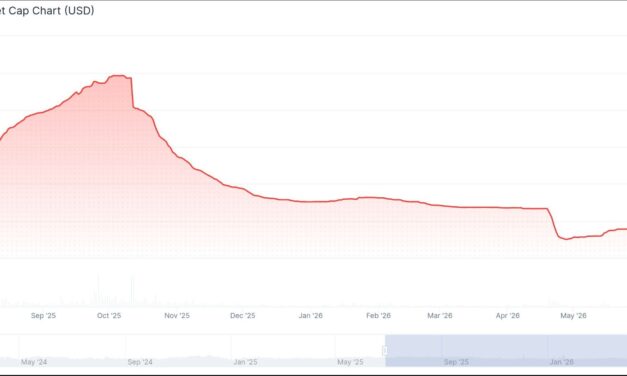
Stablecoin infrastructure company StablecoinX has completed its merger with TLGY Acquisition Corp, a publicly traded special purpose acquisition company, allowing it to begin trading on Nasdaq on Friday.StablecoinX is the first public stablecoin infrastructure company focused on supporting the Ethena ecosystem through decentralized verifier nodes and software infrastructure, and will trade under the symbol “USDE,” according to a statement on Thursday.“We believe Ethena has emerged as one of the most important platforms powering the next generation of digital dollars,” said Edward Chen, CEO and Chairman of StablecoinX.  The Nasdaq debut is a big bet that stablecoins are becoming the plumbing of global finance, and comes despite a broader crypto bear market and Ethena’s relatively small 1.4% market share of the stablecoin market compared with those offered by its competitors, such as Tether and Circle.Ethena’s USDe is a yield-bearing synthetic dollar-pegged stablecoin. Unlike USDt (USDT) or USDC (USDC), which are backed by actual dollars, USDe (USDE) maintains its $1 peg through a derivatives strategy. It is backed by crypto collateral in Bitcoin and Ether and short futures positions on those same assets, enabling the long and short positions to cancel out the price volatility, helping to keep its value at approximately $1.Ethena’s delta-neutral strategy works well in normal markets but is vulnerable during periods when futures funding rates go negative. USDe supply fallsWhile stablecoin circulation has grown in recent years, USDe market capitalization has declined by 70% since its peak in October to around $4.5 billion today, ranking it sixth among stablecoins.  USDe supply has fallen since the bull market peak. Source: CoinGeckoStablecoinX’s treasury also holds approximately 3 billion Ethena governance tokens (ENA), or around 20% of the total supply, valued at approximately $275 million. The company announced a $360 million capital raise to purchase ENA on Sunday.However, the asset is currently trading at $0.08, down 94% from its April 2024 all-time high. Related: Yield-bearing stablecoins surge as Washington fights over yieldThe company has three business lines: a decentralized verifier node (DVN) serving as a cross-chain message verifier for the Ethena ecosystem, a middleware software stack called “Stablecoin Harness” and distribution services, which are currently in development. The company says the three businesses reinforce one another, though the broader crypto bear market presents a challenging backdrop for its Nasdaq debut. Crypto SPACs and crypto treasuries have had a tough time this year as the broader market has tanked 52%, with $2.3 trillion leaving the space since October and crypto falling out of favor among investors. Pre-merger TLGY fell 6.93% on Thursday on OTC markets to end the day trading at $9.40, according to Google Finance data. Magazine: AI is banking the unbanked in Africa… faster than crypto

Čítaj viac
SBI to acquire Bitbank in $289M deal creating Japan's biggest crypto exchange

Japan’s SBI Holdings has signed agreements to acquire full control of crypto exchange Bitbank through a 46.7 billion Japanese yen ($289 million) transaction, advancing a deal first disclosed in May that would create the country’s biggest crypto exchange.On Thursday, SBI said that its wholly owned subsidiary SBICAH will acquire shares from Bitbank CEO Noriyuki Hirosue and other shareholders before subscribing to a third-party share allotment. The exchange will then buy back shares held by MIXI and Ceres, leaving SBI with 100% indirect ownership. SBI expects the transaction to close around October, subject to regulatory clearance.The acquisition would expand SBI’s regulated crypto exchange footprint and customer base, giving it another potential distribution channel for the stablecoins, tokenized assets and onchain financial products.Bitbank’s daily trading volume has hovered below $50 million for most of the last four months, CoinGecko data showed. Volume is dominated by the BTC/JPY pair (39.5%), followed by XRP/JPY and ETH/JPY (both at 19.7%).SBI said combining Bitbank with SBI VC Trade would give the group about 1.1 trillion yen in assets under custody and roughly 2.92 million crypto accounts, based on figures from the end of April. The company said the combined business would rank first among Japanese crypto exchanges by assets under custody and among the largest by account numbers.Bitbank trading volume has hovered below $50 million for most of the last four months. Source: CoinGeckoSBI builds broader digital asset ecosystemThe Bitbank deal is the latest in a series of moves by SBI to build infrastructure, including crypto trading, stablecoins and tokenized financial markets. In February, SBI and Startale Group unveiled Strium, a layer-1 blockchain designed to support around-the-clock trading and settlement of tokenized equities and real-world assets. Related: Circle, Nomura eye Japan corporate FX with stablecoin settlement: ReportOn Wednesday, SBI and Startale launched the yen-pegged stablecoin, JPYSC. The token is issued by SBI Shinsei Trust Bank and distributed by SBI VC Trade. The stablecoin is initially limited to transfers within SBI VC Trade accounts, while public blockchain circulation will roll out after resolving outstanding legal and tax conditions, according to SBI. The same day, Ripple and SBI Group launched the dollar-backed Ripple USD (RLUSD) stablecoin in Japan also through SBI VC Trade. At launch, RLUSD became available to institutional and retail customers after receiving approval under Japan’s regulatory framework for foreign-issued stablecoins. Magazine: Japanese pension fund tips 1% in crypto, G7 urges action on NK hackers: Asia Express

Čítaj viac

Spark migrates $150M in stablecoin to Uniswap to advance shared liquidity

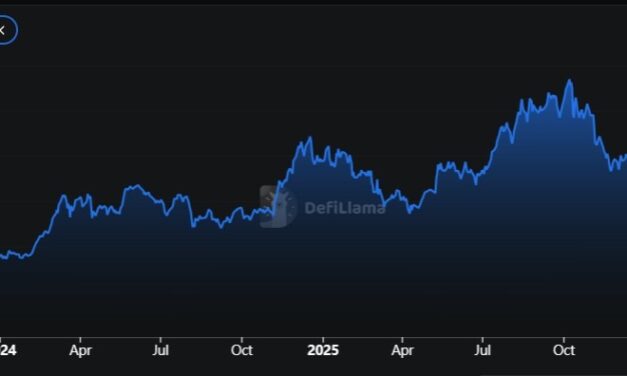
Decentralized finance (DeFi) protocol Spark has deployed approximately $150 million in stablecoin liquidity across two Uniswap v4 pools on Ethereum as part of a collaboration aimed at creating shared liquidity and exchange infrastructure for stablecoin issuers.A Spark spokesperson told Cointelegraph that the initial deployment is live in two pools pairing USDS with PayPal USD (PYUSD) and USDT, with USDS serving as the foundation. Spark described the deployment as one of the largest automated market maker (AMM) liquidity migrations in DeFi.“These pools represent the initial deployment of approximately $150 million of liquidity and establish the first phase of the Stablecoin FX Layer,” the spokesperson said. “This initial deployment focuses on bootstrapping shared liquidity on Uniswap v4.”Earlier this month, Standard Chartered identified Uniswap as a potential beneficiary of tokenized assets moving into DeFi. It forecast that total assets held in DeFi could reach $2.7 trillion by 2030, with Uniswap potentially emerging as a liquidity venue for the growing market. The deployment announced Thursday lays the groundwork for a planned programmable liquidity system that could reduce the need for banks, financial technology firms and stablecoin issuers to build separate liquidity networks while testing whether Uniswap can make onchain capital more efficient without weakening market depth.Spark plans programmable liquidity expansionSpark said it plans to introduce its Shared Liquidity Layer and DualPool hook in subsequent phases using Uniswap v4’s programmable architecture to coordinate how liquidity is distributed across stablecoin markets. A liquidity hook enables protocols to seamlessly integrate with platforms for capital access and developing yield and trading strategies. Spark said a hook is intended to allow capital not immediately needed for trades to be deployed into governance-approved products, liquidity venues and yield-generating strategies.The implementation of the DualPool hook will go through a separate security review, testing and production-readiness process before deployment. The first phase uses standard Uniswap v4 pools rather than the planned programmable framework.Related: Aave positioned to capture tokenized asset growth in DeFi: Standard CharteredSpark said the planned framework is intended to give future stablecoin issuers access to shared liquidity rather than requiring them to individually bootstrap pools, coordinate market makers and manage inventory across different venues.The spokesperson told Cointelegraph that Spark is working with additional partners across the stablecoin ecosystem but is not yet ready to disclose those integrations.Uniswap seen as winner as tokenized assets move onchainIn a June 15 note to clients, StanChart’s bank’s head of digital assets research, Geoff Kendrick, said that tokenized treasures, equities, bonds and other assets could bring more trading activity and liquidity to decentralized exchanges as their DeFi use expands. DeFi total value locked as of June 25. Source: DefiLlamaThis new $150 million migration offers a more immediate test of StanChart’s infrastructure thesis, though it involves stablecoins rather than tokenized securities. The migration also follows Uniswap’s push into institutional tokenized-asset trading. On Feb. 12, BlackRock said it would bring its $2.1 billion tokenized Treasury fund, BUIDL, to Uniswap, allowing eligible institutional investors and market makers to trade the security through decentralized infrastructure. Magazine: Japanese pension fund tips 1% in crypto, G7 urges action on NK hackers: Asia Express

Čítaj viac

Circle, Nomura eye Japan corporate FX with stablecoin settlement: Report

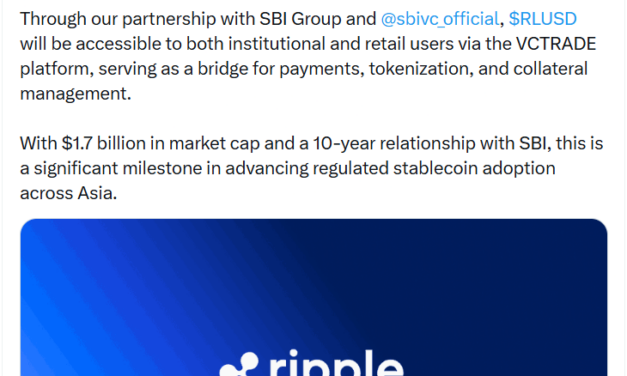
Stablecoin issuer Circle and Japan’s largest investment bank Nomura have reportedly partnered to enable instant foreign exchange settlement for Japanese companies as early as 2027.The service would enable companies to convert yen into dollar-denominated stablecoins for cross-border transactions and instant settlement, reducing delays caused by banking hours and time zone differences, Nikkei reported on Thursday.The partnership would bring one of the world’s largest dollar stablecoins into Japan’s corporate foreign exchange market, expanding the use of stablecoins for business-to-business cross-border settlement.Circle is the issuer of the world’s second-largest stablecoin, USDC (USDC), which has a market capitalization of $73.8 billion, CoinMarketCap data shows.Cointelegraph has reached out to Circle and Nomura but had not received a response by press time.Stablecoin initiatives in Japan have been accelerating as financial institutions explore regulated blockchain-based settlement. On Wednesday, SBI Holdings and Startale Group announced JPYSC, a trust bank-backed yen stablecoin designed for institutional and cross-border settlement, while Ripple USD (RLUSD), the world’s 10th-largest dollar stablecoin by market capitalization, officially launched in Japan.Source: RippleRelated: SBI eyes Bitbank deal as Japan’s crypto exchange market consolidatesJapan moves closer to crypto ETFs, lower tax on digital assetsJapan has been one of the first major economies to establish a legal framework for stablecoins, allowing banks, trust companies and licensed money transfer providers to issue regulated tokens under the Payment Services Act.The Payment Services Act also currently governs cryptocurrencies in Japan, but regulators have been moving to shift digital assets under the Financial Instruments and Exchange Act, which would bring them closer to the regulatory treatment of traditional financial products.Earlier in June, Japan’s Lower House passed a bill that would bring crypto assets under the country’s financial instruments framework, potentially opening a path to exchange-traded funds, lower tax treatment, tighter exchange oversight, disclosure requirements and insider trading restrictions. The proposed changes would also lower the capital gains tax on crypto assets from the current 55% to a 20% flat rate.Magazine: Vietnam preps crypto pilot, HK pushes tokenization: Asia Express

Čítaj viac

Abracadabra takes emergency action as MIM stablecoin depeg worsens

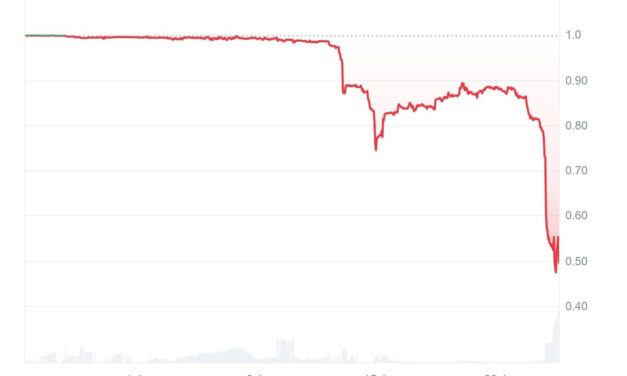
Decentralized finance platform Abracadabra said Wednesday that it launched emergency measures after its crypto-collateralized stablecoin, Magic Internet Money (MIM), fell 50% below its $1 peg. “We’re acutely aware of the MIM depeg and are taking emergency actions to remedy the situation,” the team said on Wednesday.It said effective immediately, it will begin gradually “increasing interest rates across all Cauldrons, including deprecated markets, to encourage debt repayment and reduce the outstanding MIM supply.” The MIM depeg is a stark reminder that even overcollateralized DeFi stablecoins can be fragile in thin-liquidity environments and bear markets, underscoring the persistent risks of crypto-backed money.Abracadabra describes itself as an omnichain DeFi lending platform that utilizes interest-bearing tokens as collateral to mint MIM, a dollar-pegged stablecoin that launched in May 2021. MIM’s troubles began in mid-June, when it slipped to 74 cents before a brief recovery to 89 cents, then plunged to 49 cents on Wednesday, according to CoinMarketCap. The current circulating supply of MIM is about $104 million. MIM depeg exceeds 50%. Source: CoinMarketCap“The current depeg creates a natural incentive for borrowers to repay debt at a discount, accelerating supply contraction and strengthening the path back to the peg,” the team said.“Our priority is simple: restore confidence, improve market structure, and return MIM to a healthy (and liquid) peg.”Related: DeFi TVL drops 39% in 2026 amid market downturn and record hack activityBy raising Cauldron interest rates, the protocol makes it more expensive for borrowers to maintain positions, encouraging repayment that burns MIM, contracts supply and helps restore the peg.It comes less than ten days after Abracadabra injected $100,000 into its primary liquidity pool on Curve Finance on June 15, when the stablecoin first slipped from its peg.  “This will serve as a base for liquidity to restore balance across Curve Pools after unexpected liquidity withdrawals due to recent DeFi incentive strategy changes,” it said at the time. Cauldron liquidity is thinThe DeFi stablecoin is minted by borrowing against yield-bearing tokens in Abracadabra’s “Cauldrons,” but it relies on crypto collateral and deep liquidity pools, primarily on the Curve Finance platform, to maintain its $1 peg. Thin and imbalanced liquidity in decentralized exchange pools is fueling selling pressure that makes the stablecoin vulnerable to further depegging, potentially amplified by broader market caution.The broader crypto market has fallen about 3%, or roughly $60 billion, in the past 24 hours, with Bitcoin briefly dropping below $60,000. Magazine: Japanese pension fund tips 1% in crypto, G7 urges action on NK hackers: Asia Express

Čítaj viac

Credit unions managing $25B in assets join stablecoin infrastructure program

Stablecore, a digital asset infrastructure provider for financial institutions, has launched an early-access program for US credit unions, a move aimed at helping smaller lenders evaluate stablecoins and other blockchain-based financial services before broader adoption. The program announced on Wednesday is in collaboration with Circuit, a credit union service organization (CUSO) focused on research and development, and Curql, a fintech investment collective representing more than 160 credit unions.The initiative allows participating credit unions to test stablecoin and digital asset services, including stablecoin payments, tokenized deposits, Bitcoin (BTC), crypto on- and off-ramps and staking capabilities, before deciding whether to integrate them into their existing banking platforms.The program builds on Stablecore’s broader effort to bring stablecoin and tokenized-asset services to US banks and credit unions through their existing core banking systems. In February, the company joined the Jack Henry Fintech Integration Network, operated by the eponymous core banking technology provider, giving Stablecore access to approximately 1,670 bank and credit union core clients.With the latest program, credit unions managing roughly $25 billion in combined assets will be able to explore stablecoin and digital asset services.Credit unions remain a key pillar of the US financial system, with more than 4,200 federally insured institutions nationwide. Although their numbers have declined over the years, membership and total assets have continued to grow.Total financial assets of US credit unions, as of Q1 2026. Source: FREDRelated: Chainlink joins European and Korean bank consortia to develop FX settlement networkCredit unions move to implement GENIUS Act stablecoin rulesThere are growing signs that US credit unions are increasingly preparing to adopt stablecoin services. In February, the National Credit Union Administration (NCUA), the federal regulator for federally insured credit unions, proposed a licensing framework for payment stablecoin issuers operating through credit union subsidiaries. Under the proposal, any payment stablecoin issuer operating through a subsidiary of a federally insured credit union would be required to obtain an NCUA license before issuing stablecoins.The proposal focuses on the licensing process and oversight framework, with additional rulemaking on reserve requirements, capital, liquidity and risk management expected at a later date. The proposed rules were open for public comment through April 13.NCUA proposes licensing framework for stablecoin issuers operating through credit union subsidiaries. Source: NCUARelated: CBOE weighs converting BTC, ETH continuous futures into perpetual futures: Report

Čítaj viac

OpenPayd secures MiCA license as stablecoin adoption grows in Europe

Financial infrastructure provider OpenPayd said Wednesday that it has secured authorization under the European Union’s Markets in Crypto-Assets Regulation (MiCA), allowing it to offer crypto services across the European Economic Area (EEA) via passporting.The license lets OpenPayd operate as a crypto asset service provider (CASP) to offer services such as fiat-to-stablecoin on-ramping and off-ramping, the company said in a statement seen by Cointelegraph.“Stablecoins are rapidly becoming part of mainstream financial infrastructure,” OpenPayd CEO Iana Dimitrova said, adding that MiCA gives businesses greater confidence to use digital asset technology for payments, treasury operations and growth.The license was issued by the Malta Financial Services Authority (MFSA), an OpenPayd spokesperson told Cointelegraph. The regulator has also granted MiCA licenses to crypto companies, including OKX and Gemini.The approval comes days before a July 1 MiCA transitional deadline, as crypto companies race to secure authorization under the bloc’s crypto rules. On Tuesday alone, Bitcoin Suisse secured a MiCA license in Liechtenstein and Ripple announced preliminary CASP approval in Luxembourg.OpenPayd counts Kraken, OKX among its clientsOpenPayd’s MiCA authorization comes about a year after the company launched its stablecoin infrastructure, which allows businesses to manage fiat currencies and digital assets through a single platform.The company said it processes more than $240 billion in annualized transaction volume for over 1,100 businesses worldwide, including Kraken, eToro, OKX and B2C2.Source: OpenPaydOpenPayd was founded in London in 2018 by Ozan Ozerk, a fintech entrepreneur who also founded European Merchant Bank, a Lithuania-based digital bank.Related: EU committee advances digital euro bill after key voteOpenPayd eyes Nasdaq debutOpenPayd’s MiCA license news comes as the company is pursuing a public listing in the US.Earlier in June, OpenPayd announced a proposed merger with special purpose acquisition company Titan Acquisition Corp, a deal that would see its shares trade on Nasdaq under the ticker “OP” if approved.The transaction values OpenPayd at about $1.1 billion and is expected to close in the fourth quarter of 2026, subject to shareholder and regulatory approvals.Magazine: Bitcoin decouples from tech stocks, Ether eyes ‘selling wave’: Market Moves

Čítaj viac

Blockchain.com, KuCoin expand payment rails across emerging markets

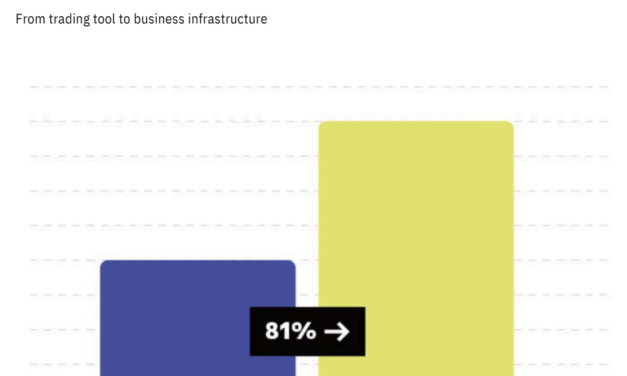
Crypto exchanges Blockchain.com and KuCoin rolled out new payment services on Wednesday that connect digital assets with local financial infrastructure in several emerging markets.Blockchain.com said it launched a Brazil-focused payments platform for institutional clients that uses USDC (USDC) and USDt (USDT) to support cross-border treasury operations, supplier payments and payroll. The company said the service is designed to give businesses a faster and lower-cost alternative to traditional international wire transfers.KuCoin, meanwhile, expanded its payment network across Mexico, Bangladesh and Zambia, adding support for Mexico’s SPEI banking system, Bangladesh’s bKash and Nagad mobile payment platforms, and mobile-money networks operated by MTN and Airtel in Zambia.KuCoin said the integrations are intended to make it easier for users to move digital assets through payment systems already widely used for remittances, merchant transactions and peer-to-peer transfers. Unlike Blockchain.com’s Brazil offering, which targets businesses managing treasury and international payment flows, KuCoin’s rollout is focused on consumer-facing payment networks.Related: Bitso brings peso-backed MXNB stablecoin to XRP Ledger via Ripple partnershipStablecoins power cross-border commerce in emerging marketsIn a recent report, Latin American exchange Bitso said stablecoin transaction volume among institutional clients grew 81% year-on-year in the first half of 2026, driven by growing use of blockchain-based settlement, treasury management and cross-border liquidity services.The report also found that financial institutions accounted for more than 60% of new business clients added during the period, suggesting banks and payment providers are increasingly incorporating stablecoin rails into existing financial operations.Bitso’s “Stablecoin Landscape in Latin America report for the first half of 2026.” Source: BitsoThe trend extends beyond Latin America. In a September 2025 report on crypto adoption in Sub-Saharan Africa, Chainalysis said stablecoins are frequently used in high-value trade flows between Africa, the Middle East and Asia, including multi-million-dollar transfers supporting sectors such as energy and merchant payments.Companies are investing in infrastructure to support that growth. Last week, Trace Finance raised $32 million to expand its cross-border settlement network across Latin America, the United States and Asia-Pacific. The company said it had processed more than $10 billion in transaction volume and would use the funding to expand infrastructure connecting blockchain-based payments with local banking and foreign-exchange networks.Despite growing adoption, regulatory questions remain. In May, Brazil’s central bank prohibited the use of virtual assets in certain regulated cross-border payment services, reinforcing requirements that Electronic Foreign Exchange providers settle transactions through supervised foreign-exchange channels.Magazine: AI is banking the unbanked in Africa… faster than crypto

Čítaj viac
Crypto isn't the problem with the US economy, says senator

Cody Carbone, CEO of the cryptocurrency advocacy group The Digital Chamber, received a largely muted response to his testimony at a Senate Banking Committee hearing on affordability.In a Tuesday hearing titled The Affordability Agenda, Carbone said that the digital asset industry could help solve affordability problems in the United States, including through faster and cheaper transactions, putting “competitive pressure” on existing payment systems, and reducing barriers to “owning and transferring assets.”However, the majority of lawmakers present did not question Carbone directly or inquire about digital assets, with the exception of Indiana Senator Tim Banks and Louisiana Senator John Kennedy. Banks asked the Digital Chamber CEO about the costs related to foreign remittances compared to US dollar-pegged stablecoins, while Kennedy largely dismissed Carbone’s testimony.“Mr. Carbone, you seem to be here to promote cryptocurrency,” said Kennedy. “I love cryptocurrency, but I don’t think that’s the problem with our economy.”The Digital Chamber CEO Cody Carbone speaking on Tuesday. Source: Senate Banking CommitteeCarbone’s remarks centered around the US Senate moving forward on the Digital Asset Market Clarity (CLARITY) Act, which the banking committee advanced in May. The full chamber is expected to vote on the legislation in a matter of weeks, but many lawmakers are calling for additional ethics provisions, potentially complicating passage in the Senate.Related: Crypto lobby urges Congress to pass staking and mining tax bill as isCLARITY Act still in limbo amid pushback from interest groupsIn addition to lawmakers’ concerns about ethics in the crypto market structure bill, last week gambling industry groups called for the Senate to clarify that the legislation would not allow the US Commodity Futures Trading Commission (CFTC) to oversee sports betting in prediction markets. The financial regulator, under Chair Michael Selig, has claimed “exclusive jurisdiction” over platforms such as Kalshi and Polymarket. Some lawmakers expect that the CLARITY Act will pass through the Senate before the chamber breaks for an August recess. As of Tuesday, no floor vote was scheduled in the Senate.Magazine: Japanese pension fund tips 1% in crypto, G7 urges action on NK hackers: Asia ExpressCointelegraph is committed to independent, transparent journalism. This news article is produced in accordance with Cointelegraph’s Editorial Policy and aims to provide accurate and timely information. Readers are encouraged to verify information independently.

Čítaj viac

Chainlink joins European and Korean bank consortia to develop FX settlement network

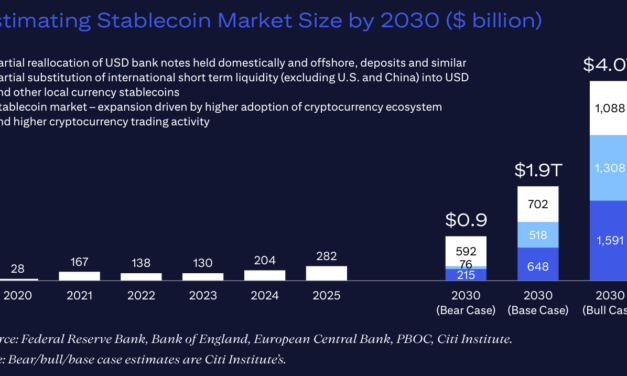
Chainlink has joined a working group with European and South Korean banking organizations to explore the use of stablecoins for foreign exchange (FX) settlement, underscoring how blockchain technology is increasingly being tested to modernize legacy financial infrastructure.On Tuesday, Chainlink announced Project Pangea alongside South Korean digital asset infrastructure company FairSquareLab, the Unified Korea Alliance (UniKA) — a consortium that includes more than a dozen Korean commercial banks — and Qivalis, a euro stablecoin consortium backed by 37 European banks.Project Pangea aims to bring together financial institutions across Europe and South Korea to evaluate direct, atomic swaps of euro- and South Korean won-denominated stablecoins using Chainlink’s data infrastructure alongside FairSquareLab’s onchain foreign exchange settlement technology.The initiative is another example of financial institutions evaluating stablecoins for wholesale financial infrastructure rather than consumer payments. According to the Bank for International Settlements, the global foreign exchange market processes roughly $9.6 trillion in daily trading volume.Project Pangea is a working group rather than a live payment network, and no production implementation timeline has been announced. The initiative reflects a broader trend of banks experimenting with tokenized deposits and regulated stablecoins to improve cross-border payments and settlement.Similar initiatives are also emerging. Fintech startup OpenFX recently raised $94 million to expand its stablecoin-based payments network, with an initial focus on Southeast Asia and Latin America.Related: Brazil bars crypto settlement in regulated cross-border payment railsStablecoins gain traction among banks and corporationsGlobal financial institutions are increasingly exploring stablecoins to improve corporate payments, cross-border settlements and foreign exchange transactions, aided by clearer regulatory frameworks in the United States, Europe and other major financial hubs.Ripple CEO Brad Garlinghouse recently described stablecoins as having a “ChatGPT moment” as more financial institutions evaluate how the technology could fit into their operations. The trend helps explain why Citigroup projects the global stablecoin market will grow to $1.9 trillion by 2030, up from roughly $315 billion today.According to Citigroup, that expansion will be driven by continued adoption within crypto markets, a gradual shift from physical US dollar banknotes to digital dollars and the growing use of stablecoins as a store of short-term liquidity in both US dollars and local currencies.Citigroup estimates the stablecoin market could grow to as much as $4 trillion by 2030 in its most optimistic forecast. Source: CitigroupRelated: Malta proposes DeFi rulebook covering DAOs under MiCA-era framework

Čítaj viac

Former BIS chief softens stance on stablecoins, backs coexistence with fiat

Agustín Carstens, former general manager of the Bank for International Settlements (BIS) and a member of the Global Finance & Technology Network’s international advisory board, praised stablecoins for their ability to promote financial inclusion and innovation.“I have come to appreciate what stablecoins can do to promote financial innovation, inclusion and to reduce costs,” said Carstens during a welcome address at Point Zero Forum on Tuesday. “We should try to establish conditions where we can live with fiat money and stablecoins.”The remarks reflected a softer stance on stablecoins than Carstens took during his time at the BIS, when he was among the most prominent crypto critics. In a January 2022 speech, he said that stablecoins may not function as “sound money” because issuers have incentives to invest reserve assets in a “risky manner” to generate returns.In one of his final speeches as BIS general manager in June 2025, Carstens also warned that stablecoins could emerge as a source of liquidity risk and still fell short of the three key tests money must fulfill to serve society.Agustín Carstens during a livestreamed welcome address at the Point Zero Forum. Source: Point Zero ForumWhile Carstens has taken a more favorable view of stablecoins, current BIS officials have remained critical of their role in the broader financial system.Carstens’ successor and current BIS general manager, Pablo Hernández de Cos, said in April that the stablecoin market remains “small” and that its structural features constrain its ability to function as money.Related: JPMorgan, Citi-backed Clearing House plans tokenized deposit network in 2027: WSJThe BIS reiterated that view in a preview released Tuesday ahead of its Annual Economic Report 2026, arguing that current stablecoin designs fall short of key properties that underpin trust in money and warning that widespread adoption could create challenges for financial stability, bank funding and monetary sovereignty.However, the BIS endorsed bringing tokenization into the two-tier banking system, arguing that digital representations of assets could enable new forms of programmable finance while preserving trust in money.Stablecoins need global regulation to flourishThe traditional financial system can benefit from stablecoins, distributed ledger technology and tokenization, but a coordinated global regulatory framework is needed to strengthen trust in stablecoin issuers, according to Carstens, who added:“If we really want a global system where stablecoins can interact with global currency, this has to be a cooperative effort worldwide. And I see this lagging behind.” He said that more regulations and a level playing field for issuers could help stablecoins “flourish in a dramatic way.”Several major jurisdictions have already introduced stablecoin-specific rules. The GENIUS Act created the first federal regulatory framework for payment stablecoins in the US. Signed into law in July 2025, it requires 100% reserves in high-quality liquid assets such as cash and short-term US Treasurys.In the European Union, stablecoin issuers are regulated under the Markets in Crypto-Assets Regulation (MiCA). The framework requires issuers to obtain authorization, publish an approved white paper, maintain full reserve backing and segregate reserve assets from company funds.Magazine: Kraken’s $600M stablecoin firm, Huione scandal deepens: Asia Express

Čítaj viac

Opera's MiniPay launches Visa debit card for stablecoin spending

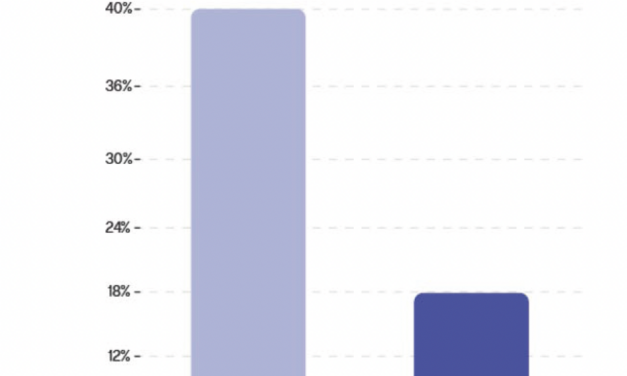
MiniPay has launched a Visa debit card that allows users in selected markets across Africa, Latin America, Southeast Asia and Europe to make purchases using stablecoins.According to Tuesday’s announcement, the card is powered by Gnosis Pay’s infrastructure, enabling users to pay directly from their MiniPay wallets while merchants receive local currency through Visa’s network.MiniPay said it has grown to more than 16 million activated wallets across 65 countries since launching in 2023, with much of its adoption concentrated in Africa and other emerging markets.The card can be added to Apple Pay and Google Pay, while eligible users in some markets will receive cashback rewards denominated in stablecoins USDt and USDC, as well as Tether Gold.MiniPay is a stablecoin wallet owned by Opera, the Nasdaq-listed software company best known for its web browser. Built on the Celo blockchain, the wallet focuses on payments, transfers and savings using dollar-backed stablecoins.Related: Bank of England eases stablecoin rules, introduces 40B pound issuance capStablecoins see adoption in emerging marketsThe launch comes as stablecoins gain traction in emerging markets. In Latin America, a recent Bitso report found that dollar-backed stablecoins overtook Bitcoin as the most-purchased crypto asset among the exchange’s users in 2025, with USDC and USDT accounting for a combined 40% of purchases.Adoption is also accelerating among businesses in the region. Bitso reported that stablecoin transaction volumes among its institutional clients rose 81% year-on-year in the first half of 2026, while banks and licensed payment providers accounted for more than 60% of new business customers added during the period.Bitso’s “Stablecoin Landscape in Latin America report for the first half of 2026.” Source: BitsoAfrica has also emerged as a key growth market for stablecoin issuers seeking to expand payment and remittance services. In March, Circle partnered with African fintech Sasai to expand USDC-powered cross-border payments across the region. The partnership integrates USDC into Sasai’s existing payments infrastructure, which supports cross-border transfers, enterprise payments and consumer wallets.Last week, Ripple acquired a stake in Flutterwave, a $3.3 billion fintech operating in 35 African countries, with plans to integrate RLUSD and other blockchain-based payment tools.The growth in stablecoin payments has coincided with a broader expansion of the market. According to DefiLlama data, the total value of stablecoins in circulation has risen to roughly $315 billion, up from about $250 billion a year ago.Magazine: Bitcoin decouples from tech stocks, Ether eyes ‘selling wave’: Market Moves

Čítaj viac
Načítava

Získaj BONUS 8 € v Bitcoinoch

nakup bitcoin z karty

Registrácia Binance

Burza Binance

Aktuálne kurzy