Top 5 kryptomien pre druhý polrok 2026: Čo sledujú obchodníci
Tento príspevok bol pôvodne publikovaný na stránke...
Čítaj viac

Tento príspevok bol pôvodne publikovaný na stránke...
Čítaj viac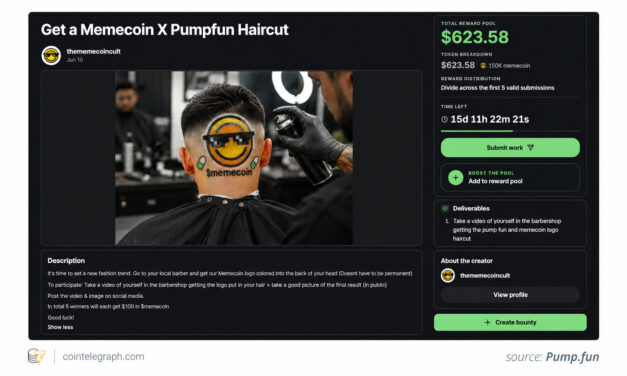
When virality moved off-screenMemecoins have never pretended to be serious. Other blockchain projects often present themselves through promises of faster payments, scalable infrastructure or decentralized applications (DApps). Memecoins, however, draw their appeal from humor, absurdity and internet culture.A photo of a dog can become a billion-dollar asset. A frog image can trigger a wave of speculation. Communities come together around shared jokes, catchphrases and collective excitement, often with little logic beyond the energy of participation.For much of their existence, memecoins were mostly limited to screens. The risks were mainly financial. Speculators could lose money chasing momentum, but the memes themselves rarely moved far beyond social media feeds and trading interfaces.That boundary is starting to weaken.Recent controversies surrounding Pump.fun, a Solana-based token launchpad, suggest that memecoin promotion may be moving in a more troubling direction. People have reportedly accepted cryptocurrency payments in exchange for shaving their heads, drinking large amounts of alcohol and having token names tattooed on their bodies.Memecoin bounty for a branded haircutWhat was once the internet’s favorite speculative pastime is no longer simply asking participants to click a buy button. In some cases, it is asking them to turn themselves into living advertisements.Whether this is a new form of community engagement or a troubling sign of the attention economy deserves serious consideration.Memecoins have always been about attentionMemecoins do not need strong technology or clear utility to attract buyers. Their value often comes from something simpler: how many people are watching, sharing and talking about them.Most cryptocurrencies try to support their value with utility, such as new technology, better efficiency or new economic models. Memecoins work differently.Their value depends largely on visibility.Dogecoin, launched as a joke in 2013, became one of the world’s largest cryptocurrencies mainly through community enthusiasm and celebrity attention. PEPE drew strength from internet meme culture. BONK benefited from momentum within the Solana ecosystem. Countless others have risen and collapsed on social energy alone.This does not make memecoins illegitimate by default. Markets have long assigned value to things that are not physical, including brands, stories and cultural relevance. But it does mean attention is the scarce resource on which everything else depends.In memecoin markets, attention brings in traders. Traders create liquidity. Liquidity can push prices higher. Rising prices attract even more attention. The cycle feeds itself. As long as the conversation continues, the asset stays alive.Did you know? Long before crypto existed, radio stations used outrageous publicity stunts to attract audiences. Some bizarre contests reportedly led to injuries, showing that the chase for attention has always carried hidden risks.How Pump.fun changed the economics of token creationPump.fun changed memecoin creation by making launches faster, cheaper and easier for nontechnical users. Launching a token once required technical knowledge, marketing support and startup capital. Pump.fun made that process much faster. With a small amount of money, almost anyone could create a token within minutes.The result was dramatic. Millions of tokens have reportedly been launched through the platform. Supporters see this as a major step toward open access.However, open access also brought unintended effects.Viral bounty for quitting on cameraWhen almost anyone can launch a memecoin, standing out becomes the real challenge. Creation is no longer the main obstacle. Attention is.This made marketing one of the most valuable parts of the memecoin economy. In markets built around attention, competition often moves toward more extreme behavior.Paying people to go viralPump.fun’s GO bounty marketplace turned memecoin promotion into something more direct. It allowed users to pay others for promotional tasks, including stunts designed to attract attention. The idea was simple. Users could offer rewards in exchange for promotional tasks. Some tasks were fairly harmless. Others moved into more troubling territory, with participants accepting bounties that involved shaving their heads, drinking alcohol on camera and performing increasingly bizarre public stunts.A bounty stunt turned into a permanent typoOne of the more widely shared examples involved Arivu, a resident of Tamil Nadu, India. He tattooed the ticker “$boutywork” across his forehead in an attempt to complete a bounty. The episode carried a strange irony: The ticker itself contained a spelling error.What was meant to be a promotional act became a permanent physical mark tied to a short-lived internet moment. Traders continued speculating on the related tokens. The internet moved on to its next distraction, but the tattoo remained.Did you know? The term “meme” was coined by evolutionary biologist Richard Dawkins in 1976 to describe how ideas spread through culture. Internet memes later became powerful enough to influence financial markets.Why extreme behavior can seem financially rationalOn the surface, these examples may look simply absurd. Why would someone permanently change their appearance or take real risks to promote a speculative token?The answer lies in the economics of attention.Online audiences adjust quickly. What gets a reaction today can feel ordinary tomorrow. Influencers and advertisers understand this well. To stay visible, creators often feel pressure to raise the stakes.More extreme behavior can generate stronger reactions. Stronger reactions can lead to wider distribution. That, in turn, attracts more attention. In memecoin markets, attention can directly affect trading activity.Outrage can also work as promotion. People who criticize extreme stunts may still amplify them by sharing screenshots, publishing commentary and keeping the topic alive. The stunt becomes part of the token’s identity. In some cases, the controversy may be the product from the start.How creator incentives feed risky speculationModern memecoin culture now looks like a mix of reality television and high-risk online speculation. Participants are not only chasing financial returns. They are also competing for social recognition, where virality itself can feel like a form of currency.Several psychological forces help explain this behavior.The first is asymmetric upside. A relatively small sacrifice can seem reasonable when there is even a small chance of a meaningful financial reward.The second is financial pressure. For people facing real money problems, crypto rewards can look significant compared with local wages.Third, internet fame has value of its own. A viral moment can bring followers, influence and future opportunities that go beyond any single token.Finally, fear of missing out can be powerful. When people see others receiving attention and possible rewards, they may ignore risks they would normally treat with caution.None of these motivations are unique to crypto. What crypto adds is speed and speculative intensity. Together, they can make each of these forces much stronger.Creative marketing or exploitation?Supporters of these practices argue that critics are overstating the concern. From their view, participation is voluntary.People often accept risk in exchange for money, attention or entertainment. Reality television contestants take part in humiliating challenges. Influencers promote questionable products. Professional athletes risk serious injury for income and recognition. The argument is that crypto bounties should not be treated as entirely different.There is some truth to this view. Not every bounty is malicious. Community-driven campaigns can also be creative, funny and participatory. Some memecoin communities attract attention precisely because they reject traditional corporate marketing.Critics, however, see a more complicated picture. Consent is not always simple, and financial pressure can affect judgment. Participants may underestimate long-term consequences when immediate rewards are placed in front of them.Platforms may also benefit indirectly from the higher engagement and trading activity that sensational content creates. Audiences, meanwhile, may start expecting bigger and riskier stunts to stay interested.This leaves an uncomfortable ethical question: At what point does voluntary participation become exploitation?A pattern crypto has seen beforeThe current controversies are not entirely new. Pump.fun has faced criticism before over its livestreaming features. Reports suggested that some creators used increasingly extreme behavior to attract investors and viewers.This allegedly included sexually explicit content, threatening behavior and other sensational performances meant to increase token visibility. The platform later suspended livestreaming before bringing it back with moderation measures.The broader pattern is familiar. New formats attract audiences. Competition increases. Participants push their behavior further to stand out. Public backlash builds, and platforms tighten their rules in response.This cycle has played out many times across television, social media and influencer culture. Crypto may simply be repeating a familiar pattern, with token incentives adding another layer of motivation.Did you know? Behavioral economists have found that social proof can strongly influence decision-making. When people see others joining risky trends, they may view those risks as less serious and be more likely to copy them.The regulatory gray areaThese developments raise difficult questions for regulators. Bounty programs are not easy to categorize.Depending on how they are structured, they could be seen as marketing campaigns, promotional contests, informal work arrangements, high-risk reward systems or something existing laws were not designed to handle.Consumer protection authorities may ask whether participants are clearly told about the risks. Labor regulators may consider whether people driven by financial need deserve extra safeguards. Securities regulators could examine whether token-based rewards change the legal nature of promotional activity.The answers are likely to differ across jurisdictions.Without clearer standards, platforms may face a long period of regulatory uncertainty.The future of memecoin marketing remains uncertainOptimists see recent incidents as isolated excesses rather than signs of a wider trend. They believe the model can still improve.In this view, bounty systems could mature into more constructive forms of community engagement. Well-structured bounty systems could reward creativity without encouraging harmful behavior.Others expect the opposite. They argue that competition for attention will keep pushing participants toward riskier acts until a serious incident forces major regulatory action.The most likely outcome may fall somewhere in between. Platforms may adopt stricter moderation rules. Some types of challenges may be banned outright. Communities may also reject tactics they see as exploitative.Over time, the market may learn where audiences draw the line.
Čítaj viac
Solana (SOL) captured 95% of all tokenized equity trading activity across blockchains last week, setting a new record with $1.29 billion in trading volume. The surge comes as SOL trades more than 75% below its all-time high near $295, leaving SOL traders divided on whether the asset is nearing a cycle bottom. SOL onchain activity continues to expand across several metrics, even as a SOL price reversal remains the central focus for market traders.Tokenized equities on Solana hit record activityData shows Solana generated $21 million in weekly app revenue, ahead of Ethereum, Hyperliquid, and Base. Over the past month, Solana applications produced $82.84 million in revenue, compared with $67.43 million on Hyperliquid and roughly $51 million on Ethereum.App revenue generated by chains. Source: DefiLlamaSolana has also led the charge for tokenized equity trading on its chain. Independent reporting from Solana Floor noted that the network recorded its largest week on record for tokenized stock trading, with $1.29 billion in volume, accounting for 95% of activity across all chains.According to Solana Floor, last week’s volume exceeded the total for the entire previous month, driven largely by the release of SpaceX’s IPO token, SPCX. At the same time, the total value locked (TVL) on Solana stands near $5.7 billion. TVL measures the value of assets deposited across decentralized finance applications and serves as a gauge of onchain capital participation.Solana’s TVL chart. Source: DefiLlamaThat figure sits well below Solana’s all-time high TVL of roughly $13 billion from September 2025, showing that capital committed to DeFi applications has not returned to peak-cycle levels despite strong transaction activity and revenue generation.Related: These XRP price charts hint at potential 25% relief rally in JulySOL traders remain split on accumulation timingMarket analysts and traders remain divided on whether SOL has already entered a durable bottoming phase.Crypto trader Ardi said Solana is approaching the area that attracts the trader’s attention for the next bull cycle. Ardi noted that SOL has already fallen about 77% to $60, from its cycle peak near $295. Drawing on historical drawdown compression seen in Bitcoin and Ether, Ardi said an 80%–85% decline would place SOL in the $45-$60 range, the most attractive accumulation zone.SOL/USD, one-week analysis by Ardi. Source: XCrypto trader Bluntz took a more constructive view, arguing that the price forming a weekly bullish divergence with respect to the relative strength index (RSI) following an 80% drawdown often appears near the market lows. The trader implied that SOL could trend higher sooner rather than later based on this setup. Meanwhile, crypto trader Dyme urged caution, noting that Solana spent roughly 500 days from May 2022 to October 2023, building a base before its last major recovery. The comparison suggests that SOL may require a longer period of sideways trading before a durable bottom forms. SOL/USD, one-week chart analysis by Dyme. Source: XTrading Stable founder Ryan Clark also questioned the recent optimism, noting that SOL continues to trade below the key weekly 50-period and 200-period simple moving averages. The analyst, popularly known as HORSE, said that a move back above the $90 region would provide a stronger technical signal. For now, the debate centers on whether demand SOL can build higher before the price reaches the $45-$60. Related: Altcoin selling tops $266B as capital rotates out of crypto: Is altseason extinct?
Čítaj viac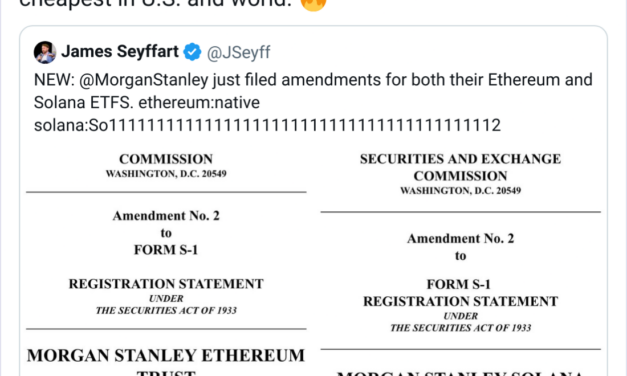
Morgan Stanley has updated its filings for its Ether and Solana exchange-traded funds, revealing that it plans to charge the lowest fees among its rivals.The company filed amended Form S-1 statements with the Securities and Exchange Commission for each ETF on Thursday, showing it plans to undercut the current market offerings and charge fees of 0.14% for each of its products.The current lowest-fee spot Ether (ETH) ETF in the US is the Grayscale Ethereum Staking Mini ETF (ETH) at 0.15%, while Franklin Templeton’s spot Solana (SOL) ETF, the Franklin Solana ETF (SOEZ), charges the lowest fee among its competitors at 0.19%, according to Farside Investors.It is the second time that Morgan Stanley has updated its ETF filings since it first filed for the ETFs in January, with amendments typically a signal that the SEC is close to approving the products for trading, which would make them the 11th spot Ether ETF and seventh spot Solana ETF to launch in the US.Bloomberg ETF analyst Eric Balchunas posted to X on Friday that the fees make them “the cheapest in [the] US and [the] world.”Source: Eric BalchunasLow fees have been a tactic for Morgan Stanley as it looks to make a late entry into the spot crypto ETF market dominated by issuers such as BlackRock and Fidelity. Its Bitcoin (BTC) ETF, which launched in April, set its fees at 0.14%, below Grayscale’s 0.15% fee on its mini Bitcoin ETF.Related: Grayscale HYPE ETF ‘likely imminent’ as new update shows competitive fee: AnalystThat fee likely helped Morgan Stanley’s Bitcoin fund to record a respectable first-day inflow of $30.6 million. The ETF has since seen total inflows of $331 million, surpassing ETFs from Invesco, Franklin Templeton and CoinShares, which all launched in January 2024.Morgan Stanley’s latest filings also show that Figment, Galaxy Blockchain Infrastructure and Coinbase Canada will provide the staking services for each of the ETFs, with each fund having a 5% staking fee for the rewards earned by the product.The Ethereum ETF, called the Morgan Stanley Ethereum Trust, will feature the ticker “MSSE,” while the Solana ETF, dubbed the Morgan Stanley Solana Trust, will trade under MSOL. Magazine: Does ‘Paper Bitcoin’ mean there’s an unlimited supply of BTC?
Čítaj viac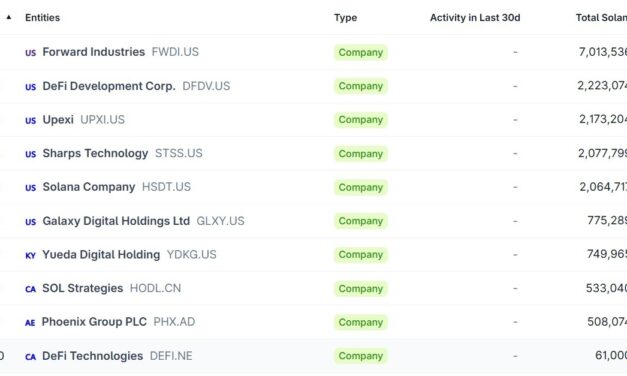
Solana treasury companies are resisting acquisition attempts by Forward Industries, with two firms rejecting proposed combinations and a third allowing its offer to expire without responding.Forward said Monday that Solana Company (HSDT), formerly Helius Medical Technologies, rejected an all-stock proposal that would have given its shareholders 0.386 newly issued Forward shares for each HSDT share. According to Forward, the offer valued HSDT at $1.63 per share.“On June 12th, HSDT responded that its board voted to decline Forward’s offer and chose to not engage in further discussion. We are disappointed and surprised that the HSDT board has chosen to reject Forward’s offer without any discussion or communication,” Forward said in its press release.Forward also said SkyAI did not respond to an acquisition proposal valuing the company at $1.55 per share before the offer expired Friday. Separately, Brera Holdings rejected a nonbinding all-stock proposal from Forward on June 9 that valued its shares at $7.19 each.The responses complicate Forward Industries’ efforts to consolidate public companies with exposure to Solana (SOL). The company has argued that combining Solana-focused firms would create greater scale and liquidity than operating as standalone companies.Top 10 Solana treasury companies by holdings. Source: CoinGeckoForward has positioned itself as the largest Solana treasury company, holding about 7 million SOL acquired for nearly $1.6 billion, according to CoinGecko. The company launched its treasury strategy in September 2025 and has since staked its holdings.Related: Sharplink, Forward Industries among crypto firms considered for Russell indexesCoinGecko data shows that Forward’s tokens are currently worth approximately $525 million, implying an unrealized loss of over $1 billion from the reported acquisition costs. Treasury firms face pressure to gain scale August Widmer, a partner at investment firm Echo Base, told Cointelegraph in a statement that investors lost interest in treasury companies over the past year because the vehicles were generally riskier and less efficient than dedicated structured products.“Now, firms are forced to desperately try to consolidate in an effort to capture enough market share to keep themselves afloat,” Widmer said.Widmer added that consolidation may be the only viable path for the sector, but argued that the rejections showed that smaller operators were not yet prepared to accept that outcome.“Consolidation is the only viable option and few firms have earned their right to be independent,” Widmer said, adding that the denials indicate that “there’s still further to fall in this market before that reality is accepted.”Forward did not immediately respond to a request for comment.Magazine: China’s 107 Bitcoin memory thief, Bithumb CEO booked: Asia Express
Čítaj viac
Tento príspevok bol pôvodne publikovaný na stránke...
Čítaj viac
Tento príspevok bol pôvodne publikovaný na stránke...
Čítaj viac Tento príspevok bol pôvodne publikovaný na stránke...
Čítaj viac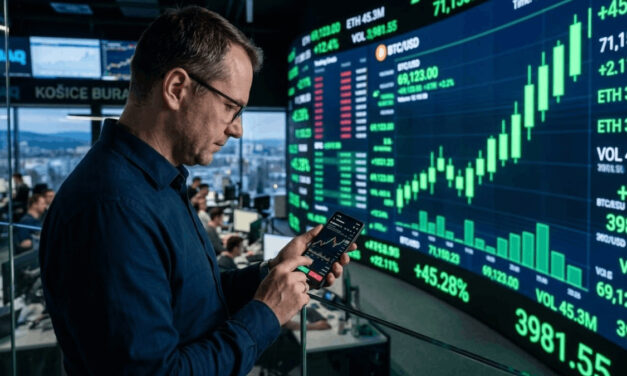
Tento príspevok bol pôvodne publikovaný na stránke...
Čítaj viac
Tento príspevok bol pôvodne publikovaný na stránke...
Čítaj viac
Tento príspevok bol pôvodne publikovaný na stránke...
Čítaj viac
Tento príspevok bol pôvodne publikovaný na stránke...
Čítaj viac

