Značka: Markets

Bitcoin hits $64K as gold gains while oil shakes off Trump Oman threat

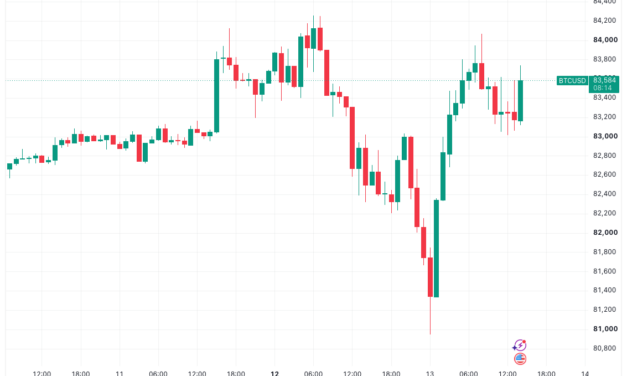
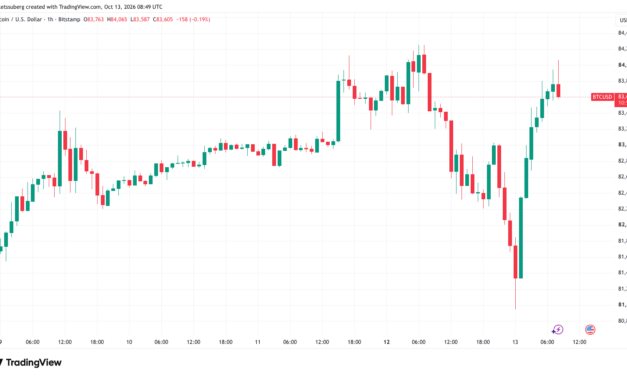
Bitcoin (BTC) returned to $64,000 after Monday’s Wall Street open as US stocks gave way to gold.Key points:Bitcoin continues a rebound from Sunday’s weekly close, gaining 2% on Monday.Oil stays steady after US president Donald Trump threatens to bomb Oman over the Strait of Hormuz.Bitcoin funding rates hit 20-month highs of 0.022 last week, data reveals. Bitcoin inches up as US-Iran rhetoric spreads to OmanData from TradingView showed BTC/USD up by more than 2% on the day, rebounding from Sunday’s weekly close. BTC/USD one-hour chart. Source: Cointelegraph/TradingViewUS equities turned lower as an agreed 60-day ceasefire between the US and Iran was set to expire, with the S&P 500 index down 0.5% from Thursday’s all-time highs. S&P 500 one-hour chart. Source: Cointelegraph/TradingViewSpeaking to Fox News, Trump threatened Oman with military action amid an ongoing dispute over the reopening of the Strait of Hormuz oil route.“If Oman gets in the way, we’ll bomb the s*** out of them,” he told the network.Oil markets appeared unfazed by the tensions, with WTI crude flat at $82.35 per barrel at the time of writing.Safe haven gold was more volatile, gaining just over 1% to start the week to reach a daily high of $4,427 per ounce. Earlier, Cointelegraph reported on a combination of retail and government interest fueling gold’s multiweek highs.XAU/USD one-hour chart. Source: Cointelegraph/TradingViewData from investment research platform Bytetree tracking the 30-day change in inflows to gold-backed exchange-traded funds (ETFs) put the figure at nearly $12 billion through Aug. 13.In a note on Monday quoted by Investing.com, Bank of America strategist Michael Hartnett wrote that long gold remained the trade, describing it as “still [sic] best hedge against dollar debasement, bond collapse, asset inflation, capitalist populism vs socialist populism politics of 2020s.”Related: BTC price loses 200-week trend line as 2022 repeats: Five things to know in Bitcoin this weekFunding rates hit levels not seen since late 2024In its latest Market Color bulletin published on Monday, trading company QCP Capital noted Bitcoin’s continued ability to weather macro tailwinds without a major breakdown from its current range.“Rather than treating individual price levels as directional signals, the more useful observation is that BTC remains close to the lower end of its recent range. A sustained move outside that range would provide more information about market positioning than the relatively contained moves seen within it,” it wrote.Earlier, Cointelegraph reported on expectations that a return to $61,000 would trigger an unwinding of BTC long positions, adding to downside BTC price momentum.The latest data from CoinGlass showed liquidations remaining muted as BTC/USD returned toward $64,000, with 24-hour cross-crypto liquidations at $180 million.Crypto liquidation history (screenshot). Source: CoinGlassIn a sign of long BTC becoming an increasingly crowded trade, derivatives market funding rates hit 20-month highs of 0.022 on Aug. 14, per data from onchain analytics platform CryptoQuant.“The derivatives market sentiment is positive within the current BTC price range, indicating that most traders are taking long positions,” it commented on the readings.CryptoQuant previously noted that futures trading volume on Binance was outweighing spot markets by almost eight times.Bitcoin funding rates chart. Source: CryptoQuant

Čítaj viac

BTC price loses 200-week trend line as 2022 repeats: Five things to know in Bitcoin this week

Bitcoin (BTC) is starting the new week at around $63,000, but bear-market history continues to repeat with weekly close below a key long-term trend line.Key points:Bitcoin has been trading in a range between $57,700 and $67,300, but last week’s close came with a drop below the key 200-week moving average at $64,216.Markets are pricing in near-70% odds of a hold by the Federal Reserve in September, as July meeting minutes are due this week.Japan Q2 GDP figures fall short of expectations at 1.1% as analysis warns of “global tightening” that could impact Bitcoin and risk assets. Bitcoin sees weekly close below 200-week moving averageBitcoin price action enjoyed a modest rebound after Sunday’s weekly close, seeing local highs of $63,655 on Bitstamp.BTC/USD one-hour chart. Source: Cointelegraph/TradingViewData from TradingView shows BTC/USD continuing to tread water as the week begins, failing to challenge either side of a narrow trading range.Analyst Benjamin Cowen, however, drew attention to the fact that BTC/USD is now back below its 200-week simple moving average (SMA). As Cointelegraph reported, this moving average was a defining feature in the 2022 bear market, when it turned resistance in August before BTC entered its long-term bottoming phase.“What is interesting is how in both summer 2022/2026, Bitcoin capitulated below the 200W SMA, then bounced, then gave it up in mid-August,” he wrote in a post on X.BTC/USD one-week chart with 200 SMA. Source: Cointelegraph/TradingViewCommenting, trader and analyst Rekt Capital added that price had failed to reach his own weekly-close target of $63,220, thus positioning for further downside in future.“A rejection from $63,220 would fully confirm the breakdown and send price lower within the current ~$58,000-$66,000 Range (blue-blue)” he told X followers alongside an explanatory chart.BTC/USD one-week chart. Source: Rekt Capital on X.comFed minutes due amid policy dissentFriday sees the release of preliminary Purchasing Managers’ Index (PMI) data for the manufacturing and services sectors. The data has recently been in an uptrend diverging from relatively weak employment figures, which have seen several months of downward revisions. Last week’s Consumer Price Index (CPI) and Producer Price Index (PPI) releases, meanwhile, painted a softer-than-expected picture of US inflation trends.  This sparked a rethink on future interest-rate hikes by the Federal Reserve. The latest data from CME Group’s FedWatch Tool shows near-70% odds that the Fed will hold rates at their current 3.50-3.75% range, compared with 42% odds a month ago.Fed target-rate probability comparison for September FOMC meeting (screenshot). Source: CME Group“A pair of reports showing moderating inflation is helping keep the outlook for monetary policy from turning too hawkish,” trading resource Mosaic Asset Company summarized in analysis released on Sunday.Mosaic noted that while CPI came in at 3.4% year-on-year, this was still far above the Fed’s 2% target — a goal that chair Kevin Warsh continues to state will be achieved. On Wednesday, the Fed will publish the minutes of its July meeting.  Rate hikes were paused in the prior meeting with the largest split among officials over the move since 1970.Last week, Cleveland Federal Reserve Bank president Beth Hammack, who was one of three dissenting voices calling for a 0.25% rate hike in July, questioned whether public patience would tolerate it if the return to 2% rates took several years.“Maybe we’d get there, but if it takes another three to four years to get there, is that OK? Is that enough?” she said at an event with the Dayton Area Chamber of Commerce in Kettering, Ohio, quoted by Bloomberg.Japan on the radar as GDP disappointsJapan’s central bank is on the radar for risk-asset traders this week after Q2 GDP figures significantly missed expectations. Quarter-on-quarter and year-on-year GDP increased 0.3% and 1.1%, respectively — below the anticipated 0.5% and 2.0%.The timing of the print comes as markets see the Bank of Japan (BoJ) hiking rates from current 1.0% levels in September amid surging bond yields and continued weakening in the yen. Previously, Cointelegraph reported on a rare joint intervention in yen currency markets by Japan and the US after JPY/USD weakened to new 40-year lows.BoJ interest-rate probabilities (screenshot). Source: RateProbabilityThe GDP print, meanwhile, included the first drop in private consumption in eight quarters, signaling that existing stimulus measures were failing to prop up consumer confidence.“The boost to consumption from policy measures is already fading, and inflation will increase in H2 as firms will pass on increased costs, deteriorating consumers’ purchasing power,” Norihiro Yamaguchi, lead Japan economist at Oxford Economics, told CNBC.The yen avoided major volatility on the back of the GDP data, lingering near 159 per dollar on Monday.USD/JPY four-hour chart. Source: Cointelegraph/TradingViewResponding to the aftermath, Axel Adler Jr., a contributor to onchain analytics platform CryptoQuant, noted potential implications for risk assets to come. Japan’s 10-year bond yield hit 2.93% on Monday, its highest levels since 1996.“For now, this is not a signal to sell risk assets. But the market is approaching an important point: JGB > 3% + further BOJ rate hikes + a stronger yen + rising US Treasury yields,” he wrote in an X post. “If these factors align, Japan’s rate normalization could turn into a global tightening of financial conditions and hit stocks and Bitcoin.”Japan 10-year bond yields one-day chart. Source: Cointelegraph/TradingViewBitcoin forgotten as consumer sentiment lows contrast with stocks gainsRising stocks paired with record-low consumer sentiment are flashing a new warning sign for Bitcoin, which is increasingly being overlooked.In the latest edition of its regular newsletter, The Week Onchain, crypto analytics platform Glassnode revealed a striking divergence between Bitcoin and equities in terms of sentiment.“Consumer Confidence remains among the weakest readings of the past decade even after two consecutive improvements, while the US Stock Market Index set a fresh all-time high on August 7 and holds just beneath it,” it summarized.The softer US inflation prints helped send the S&P 500 to all-time highs of 7,816 on Thursday. At the same time, the consumer sentiment survey by the University of Michigan is expected to drop 7.6% in August.“Weak sentiment next to record prices looks like a contradiction until the driver is named: households that expect living costs to rise and the economy to soften are moving out of cash and into assets. The equity market, carried above all by the AI trade, is where that capital lands,” Glassnode commented.US consumer sentiment data. Source: University of MichiganBitcoin continues to be left out of this capital rotation. A sign of change, Glassnode argued, would be a sustained rebound in institutional inflows to the US spot Bitcoin exchange-traded funds (ETFs).Last week, these saw net outflows of $267.2 million, per data from UK-based investment company Farside Investors. Just one out of five trading days finished with net inflows, totaling a mere $7.8 million.US spot Bitcoin ETF netflows (screenshot). Source: Farside InvestorsExchange BTC reserves grow with whale inflows in focusBitcoin supply dynamics are the latest troubling feature for its price trajectory, CryptoQuant analysis reports.Related: Here’s what happened in crypto todayWhales have started to dominate exchange inflows, exacerbating an existing absence of retail interest and causing exchange BTC reserves to reverse higher. Binance’s whale ratio reached 0.71 on Aug. 10, its highest since early March. “Exchange deposits do not necessarily mean immediate selling, but they increase the amount of BTC available for trading or hedging,” CryptoQuant commented.Binance exchange whale ratio. Source: CryptoQuantBinance’s BTC reserves totaled 674,332 BTC on Sunday, up 2.57% month-to-date and at their highest since November 2025.“The long-running trend of BTC leaving exchanges may therefore be weakening,” CryptoQuant continued.Binance BTC reserves. Source: CryptoQuantAs Cointelegraph reported, exchange activity has been driven by derivatives markets as BTC/USD trades in a tight range since early June. On Binance, futures trading volume was eight times that of spot markets in early August.

Čítaj viac

Bitcoin could bottom in October, altcoins are ‘basically dead,’ Swan CEO says

Bitcoin could bottom in October before recovering to around $130,000 ahead of the 2028 halving, according to Swan Bitcoin CEO Cory Klippsten.Bitcoin’s (BTC) price peaked above $126,000 in early October 2025, meaning that the “market should bottom in October,” Klippsten told Cointelegraph. He argued that Bitcoin has so far bottomed about 12 months after each previous bull market peak, while cautioning against extrapolating from only a few previous cycles.Klippsten’s prediction for an October bottom builds on a June interview with Cointelegraph, when he said Bitcoin may bottom earlier than in previous cycles as long-term holders accumulated a record share of supply, or 14.7 million BTC.In the latest interview, Klippsten said Bitcoin could fall to $57,000, or even $53,000, before a quick recovery, and could reach around $130,000 ahead of the 2028 halving.Other analytics providers are eyeing an earlier bottom. Markus Thielen, founder of 10x Research, said that Bitcoin could confirm a bear-market bottom in August with a monthly close above $63,000, which would turn several of the analytics firm’s cycle indicators bullish.Related: H100 becomes Europe’s No. 2 Bitcoin treasury after 2,455 BTC dealAltcoins are dead as money, crypto will become TradFiKlippsten said altcoins are “basically dead” as competitors to Bitcoin as money, arguing that the best outcome for crypto and decentralized finance (DeFi) is to “become part of TradFi.”When asked about his thoughts on altcoins that may outperform the broader market, Klippsten pointed to Hyperliquid, arguing that centralized crypto businesses will eventually be brought under traditional finance regulation.“Hyperliquid is a business and it has a token. If it’s a business that’s centralized, it will eventually just get sucked up by TradFi and be thought of as an exchange and a bank.” Hyperliquid generated $5.9 million in revenue during the past week, ranking as the industry’s fifth-largest DeFi protocol by weekly revenue, according to DefiLlama.The Hyperliquid (HYPE) token rose 130% year-to-date, while Bitcoin’s price fell 28% during the same period, TradingView data shows.BTC and HYPE tokens, year-to-date chart. Source: Cointelegraph/TradingViewIn a July report, crypto market maker Wintermute argued that the growing presence of institutional investors has changed the dynamics of altcoin markets, resulting in altcoin rallies becoming narrower and more selective. Wintermute said liquidity was concentrating in the assets institutions favored while activity across the market’s “long tail” weakened. Magazine: Bitcoiners turn to dice throws as self-custody setups are re-evaluated

Čítaj viac

Bitcoin price drops to $62.5K as trader warns weekly close may spark more losses

Bitcoin (BTC) declined into Friday’s Wall Street open as traders increasingly saw a BTC price breakdown next.Key points:Bitcoin stays below $63,000, heading steadily closer to new August lows while US stocks build on record highs.Analysis says that $63,220 must be reclaimed by the weekly close to avoid a deeper rout.Markets look to PCE inflation data as the next key test for risk assets.Bitcoin price sags with stocks at all-time highsData from TradingView showed BTC/USD down 1.3% on the day at $62,570, near its lowest levels month-to-date.BTC/USD four-hour chart. Source: Cointelegraph/TradingViewDespite encouraging US inflation data lifting risk assets and reducing the odds of interest-rate hikes, Bitcoin failed to follow US equities, which closed Thursday’s session at all-time highs. The S&P 500 and tech-heavy Nasdaq Composite Index were both green at the time of writing, up 0.11% and 0.14%, respectively.BTC/USD vs. S&P 500 one-hour chart. Source: Cointelegraph/TradingViewCommenting on Bitcoin price performance, trader and analyst Rekt Capital warned that Sunday’s weekly close needed to be above $63,220.“A Weekly Close below the orange level would probably set price up for a breakdown,” he wrote in a post on X.The analyst noted that $63,000 was now failing as support after weakening throughout August, having previously noted that the 50-month exponential moving average (EMA) at $65,827 was back as resistance, copying the 2022 bear market.BTC/USD one-week chart. Source: Rekt Capital on X.comCointelegraph previously reported on increasing chances of a long liquidation event for Bitcoin as it approaches an area of liquidity around $61,000 amid growing open interest (OI) in derivatives markets.“Traders have added substantial risk, most of it long, into a market that shows no matching demand,” onchain analytics platform Glassnode summarized in the latest edition of its regular newsletter, The Week Onchain.PCE in focus after Bitcoin ignores inflation reliefIn its latest analysis, trading and investment company QCP Capital drew attention to crypto markets’ refusal to rally on improving US inflation conditions — a phenomenon it described as “increasingly important.”Related: Bitcoin speculators keep BTC price ‘pinned’ below $68.7K: Glassnode“Last week, BTC demonstrated resilience in absorbing several negative headlines without a sustained breakdown,” it wrote, adding:“This week has reinforced the distinction between resilience and momentum: the range remains intact, but softer inflation data have so far generated only a muted response from crypto.”QCP added that macro traders are now focused on the Aug. 26 Personal Consumption Expenditures (PCE) index release, known as the Federal Reserve’s preferred inflation gauge. The index’s last print in July marked its first monthly decline since 2020, per data from the Bureau of Economic Analysis.US PCE data percentage change (screenshot). Source: BEA

Čítaj viac

JPMorgan boosts Bitcoin, Ether ETF positions in Q2 filing

JPMorgan’s reported position in BlackRock’s Bitcoin exchange-traded fund increased by about 25% in the second quarter, while its Ether ETF position more than quadrupled, according to its latest securities filing. The Form 13F filing with the US Securities and Exchange Commission, submitted Wednesday, covers holdings as of June 30 and includes 17 other investment managers across JPMorgan. That makes it difficult to determine whether individual positions reflect a directional market view, Jonatan Randin, senior market analyst at PrimeXBT, told Cointelegraph.“It gives you some idea of what they are doing but not their opinion about the future direction of a specific market,” Randin said.JPMorgan reports larger Bitcoin, Ether ETF positionsThe filing showed about 10.4 million shares in BlackRock’s iShares Bitcoin Trust ETF (IBIT) in Q2, up from 8.3 million shares in Q1 with a reported value of roughly $356 million.Its position in the iShares Ethereum Trust ETF (ETHA) rose more sharply, climbing more than fourfold to about 1.17 million shares from roughly 267,000.Randin said a 13F can combine holdings from different parts of an institution, including positions related to client activity and inventory, making it difficult to determine the purpose behind individual holdings. Form 13F filings also exclude short positions, meaning JPMorgan’s reported long holdings do not show its net exposure.XRP appears in JPMorgan’s holdingsBeyond Bitcoin and Ether, Randin pointed to small positions reported in XRP investment products.JPMorgan reported 181 shares of Grayscale’s XRP product worth $3,763 and 113 shares of Bitwise’s XRP ETF worth $1,356 in Q2, after reporting no positions in either product in Q1.Randin linked the timing to regulatory developments around XRP and the emergence of spot XRP investment products in the US.“From my point of view this adds credibility to the regulatory improvements surrounding XRP,” he said.Related: Crypto whales accumulate as bear market nears late stage: CryptoQuantAdditionally, JPMorgan cut positions in several Bitcoin miners, which Randin said have become less straightforward proxies for Bitcoin as some expand into artificial intelligence and high-performance computing.“If that was the reason for holding them, trimming that part of the portfolio makes a lot of sense regardless of your view of the future direction of price,” he said.Magazine: Sorry everyone, Bitcoin is headed down to $43,500: Michael Terpin

Čítaj viac

Bitcoin Eyes New August Lows as Binance Longs Face a ‘Cleanout’

Bitcoin (BTC) long positions are “facing liquidation” as volatility shows signs that a range breakout is finally coming.Key points:Bitcoin long positions face multiple threats as BTC price action heads toward new August lows, analyst warns.The correlation between Binance open interest and price reached 0.25 on Thursday as both fell.The Bitcoin bull market is not ready to make a comeback, CryptoQuant CEO Ki Young Ju says.Bitcoin longs feel the squeeze as price dropsInsights published on onchain analytics platform CryptoQuant by community analyst “BorisD” on Thursday suggest that leveraged long BTC positions are being flushed out as BTC/USD targets month-to-date lows.BTC/USD one-hour chart. Source: Cointelegraph/TradingViewThe analysis focuses on the relationship between price and open interest (OI) on Binance. OI represents total active derivative positions, both long and short, and reflects capital commitment in a given market. While price has traded in a narrow range since June, CryptoQuant data show that Binance OI has gradually increased, reaching $8.15 billion on Wednesday as futures increasingly steer the market while spot traders sit on the sidelines. Bitcoin open interest on Binance. Source: CryptoQuantWith price now seeing downside volatility on lower time frames, the correlation between price and OI has entered a state of flux, potentially squeezing long positions that have built up in the low $60,000 zone.“In the Bitcoin market, the Binance Open Interest (OI) Correlation and liquidation warning signals clearly reveal the process of leveraged positions being flushed out. Initially, as the price fell, the correlation shifted to the negative side, indicating that OI was rising despite declining prices,” the analyst wrote.“This showed a double-sided squeeze and [an] increasingly complex liquidity structure — driven by long positions trying to buy the dip on one end, and additional short positions entering the market on the other.”BTC/USD vs. Binance OI data. Source: CryptoQuantThe latest correlation data showed a reading of 0.25, a number that the analyst said reflects declining long positions as price continues to fall, suggesting the “anticipated cleanout has begun.”“The simultaneous drop in both price and OI indicates that leveraged long positions are giving up, getting stopped out, or facing liquidation,” the analyst continued.Data from CoinGlass put total 24-hour cross-crypto liquidations at $236 million at the time of writing.Crypto liquidation history (screenshot). Source: CoinGlassCryptoQuant CEO: “Stars haven’t aligned” for Bitcoin bull marketIn his latest market commentary, CryptoQuant CEO Ki Young Ju said conditions for a renewed Bitcoin bull market have yet to emerge.Related: Bitcoin speculators keep BTC price ‘pinned’ below $68.7K: Glassnode“The stars haven’t aligned for a Bitcoin bull run just yet,” he wrote on X alongside a basket of onchain indicators still in “bear” territory.Bitcoin onchain indicator heatmap. Source: Ki Young Ju on X.comCointelegraph has previously reported on several composite onchain indicators reaching similar conclusions about the current stage of the BTC price cycle. One of them, from onchain analytics platform Glassnode, is currently in its longest “capitulation” phase since the end of Bitcoin’s last bear market in 2022.

Čítaj viac

Bitcoin keeps traders guessing near $64K as stocks gain on cool US PPI data

Bitcoin (BTC) edged away from weekly lows on Thursday after the US Producer Price Index (PPI) narrowly cooled in July.Key points:Bitcoin avoids further downside as US PPI data provides a boost to US equities.Cleveland Fed president stays hawkish on the outlook for interest-rate policy. Bitcoin long liquidations make $61,000 a key level to watch.July PPI extends cooler US inflation trendBTC/USD was up around 0.5% on the day near $63,900 with volatility broadly absent, data from TradingView showed.BTC/USD one-hour chart. Source: Cointelegraph/TradingViewThe July US Producer Price Index (PPI) print was unchanged month-on-month at 0.2%, while year-on-year increased 4.7% versus an anticipated 4.9%, per data from the Bureau of Labor Statistics (BLS).“In July, a 0.2-percent increase in the index for final demand services and a 2.2-percent advance in prices for final demand construction offset a 0.7-percent decrease in the index for final demand goods,” the BLS release said. “Falling gasoline and energy prices provided the biggest relief,” Econoday analysts highlighted.US PPI one-month % change. Source: BLSUS stocks gained at the Wall Street open as PPI further cooled market bets on interest-rate hikes from Federal Reserve policymakers. The S&P 500 index and tech-heavy Nasdaq Composite index were up 0.87% and 0.94%, respectively, at the time of writing.CME Group’s FedWatch Tool showed 65.6% odds of those policymaker holding rates at the current 3.50-3.75% level at the Federal Open Market Committee (FOMC) September meeting. Wednesday’s July Consumer Price Index (CPI) numbers matched expectations, already resulting in a boost to the rate-pause outlook.Fed target-rate probability comparison for September FOMC meeting (screenshot). Source: CME GroupAfter their biggest split over the interest-rate path since 1970 in July, Fed officials continued to strike a cautious tone over policy. Speaking at an event with the Dayton Area Chamber of Commerce in Kettering, Ohio, Cleveland Federal Reserve Bank president Beth Hammack questioned whether even recent cooler data prints would be enough to bring inflation down to the Fed’s 2% target.“Maybe we’d get there, but if it takes another three to four years to get there, is that OK? Is that enough?” she said, quoted by Bloomberg.Hammock was one of three officials to vote in favor of a 0.25% rate hike in July.Related: Bitcoin speculators keep BTC price ‘pinned’ below $68.7K: GlassnodeBitcoin faces long position liquidations at $61,000With BTC price action still acting within a tight range, market participants’ attention focused on the extremes.Rafael Schultze-Kraft, cofounder of onchain analytics platform Glassnode, suggested that $61,000 could become a flashpoint thanks to the large potential long position liquidations that would occur if price were to reach it.“Long liquidation risk has built up around $61K in the past weeks. If we get there, I’d expect forced selling to add momentum to the downside,” he wrote in a Tuesday X post.Previously, Cointelegraph reported on $63,000 now forming another key BTC price level as repeated retests increased the odds of support failure.Bitcoin futures liquidation heatmap. Source: Rafael Schultze-Kraft on X.com

Čítaj viac

Bitcoin speculators keep BTC price ‘pinned’ below $68.7K: Glassnode

Bitcoin (BTC) recent buyers are the latest hurdle to a breakout from a stubborn trading range in place since June.Key points:Bitcoin short-term holders are keen to sell into range highs as they seek to break even on their investment.BTC price action remains stuck in its near three-month range as a result, Glassnode suggests.Nearly 9% of the BTC supply has a cost basis between $62,000 and $65,000.Bitcoin short-term holders seeking breakeven exitIn the latest edition of its weekly newsletter, crypto analytics platform Glassnode highlighted the ongoing significance of Bitcoin’s speculative investor base.Short-term holders (STHs) — those holding BTC acquired within the past six months — are currently around 7.2% underwater on their investment in aggregate. The cohort’s cost basis, also known as realized price, which Glassnode calculates at $68,700, thus forms a key resistance level to clear.“The cost-basis ladder frames the stalemate. Spot sits just above the Median Realized Price at $63.0K, the level that splits every coin’s cost basis down the middle, and below the Short-Term Holder Cost Basis at $68.7K, the average entry of the market’s most recent buyers,” it wrote. “That cohort is underwater, which historically makes it quick to sell into recoveries, while the median level has absorbed every test from above for more than a month.”Bitcoin realized price data. Source: GlassnodeBTC/USD has been wedged in a narrow range between $58,000 and $68,000 since the start of June. As Cointelegraph reported, a separate battle between buyers and sellers continues within that range, with a 50-month trend line near $65,800 now keeping price even more constricted. Analysis sees this as a classic phenomenon during Bitcoin bear markets, with a downside resolution increasingly likely.This week, trader and analyst Rekt Capital additionally warned that $63,000 was weakening as local support, with price gaining progressively less ground with each rebound from that level.BTC supply dynamics add weight to current spot rangeBitfinex Alpha, the research arm of crypto exchange Bitfinex, noted that a significant portion of the BTC supply has moved onchain during the range-bound period.Related: Bitcoin miners earn under 0.7% of revenue from fees in new 10-year low“The reason the boundaries are so stubborn is due to ownership. The $62,000-$65,000 band holds 1,794,308 BTC at this cost basis, 8.93% of circulating supply per the UTXO Realised Price Distribution (URPD), with the largest holdings at ~$63,800,” it reported on Wednesday.URPD records the price at which coins last moved onchain, with the 1.79 million BTC tranche equal to approximately 8.9% of the total circulating supply.“With price trading inside this band, the largest concentration of holders across any narrow $3,000 range keeps moving between profit and loss and a large volume of coins changes hands as a result,” Bitfinex added.Immediately above the current STH cost basis lies another psychologically significant level — Bitcoin’s old all-time high of $69,400 from November 2021. Bitcoin URPD chart. Source: Bitfinex Alpha

Čítaj viac

Bitcoin eyes $63K as US CPI relief sends September Fed rate pause odds to 60%

Bitcoin (BTC) saw weakness around Wednesday’s Wall Street open as markets reacted to key US inflation data.Key points:Bitcoin ignores good news around US inflation figures as it dips below $63,500.Fed rate-hike odds cool further as attention now switches to Thursday’s PPI numbers.Bitcoin is eroding $63,000 support, the latest market analysis warns.Bitcoin falls despite US inflation data matching expectationsData from TradingView showed BTC/USD dropping below $63,500, erasing the day’s gains.BTC/USD one-hour chart. Source: Cointelegraph/TradingViewUS stocks were calm after the July print of the US Consumer Price Index (CPI) matched expectations, at 0.1% month-on-month and 3.4% year-on-year.“The index for shelter rose 0.1 percent in July, accounting for roughly two-thirds of the monthly all items increase. The index for food also increased 0.1 percent over the month, as the index for food away from home increased 0.3 percent. In contrast, the energy index declined 1.5 percent in July,” an official release from the Bureau of Labor Statistics (BLS) reported.US CPI 12-month % change. Source: BLSWhile not repeating the surprise move to the downside seen in June, CPI inflation avoided injecting volatility into risk assets. Among safe havens, gold remained stable after reaching its highest levels in nine weeks on Tuesday.Fabian Dori, CIO at Sygnum Bank, put the focus on expectations for future Federal Reserve policy changes. Cooling CPI combines with weak labor-market figures to potentially bolster the case for the Fed avoiding interest-rate hikes — an outcome that would benefit crypto and risk-asset liquidity conditions.“An in-line CPI print after Friday’s –23k jobs report points to gradual cooling without a recession scare or a fresh hawkish re-pricing. September rate odds should stay roughly stable, leaving the macro backdrop for risk assets largely unchanged,” he said in emailed comments.The latest data from CME Group’s FedWatch Tool saw 60% odds of the Fed holding rates at the current 3.50-3.75% level at its September meeting — up from 30% a month ago.Fed target-rate probability comparison for September FOMC meeting (screenshot). Source: CME GroupThursday provides the week’s second US macro report with potential implications for market volatility in the form of July Producer Price Index (PPI) numbers, which in June followed CPI in coming in below expectations.“An in-line CPI print does not resolve much after Friday’s payrolls miss. The more interesting detail is that the Bitcoin options market is still charging a material premium for protection” Andrei Grachev, managing partner at DWF Labs, told Cointelegraph. “On the end-August expiry, downside strikes near $60,000 have been costing more than equivalent upside strikes near $70,000.”“Tomorrow’s PPI is the next check on whether that premium starts to ease,” he added.Related: Crypto companies urge AI firms to give Bitcoin developers early accessBTC price $63,000 support “progressively weakening”Discussing BTC price strength, trader and analyst Rekt Capital had more words of caution for Bitcoin bulls. In a post on X, he warned that each bounce from $63,000 was more and more lacking in trajectory. Related: Bitcoin miners earn under 0.7% of revenue from fees in new 10-year low“The progressively weakening support at ~$63k (orange) is clear. 6.27% — > 5.83% — > 3.18% — > and now 1.15% thus far,” he commented alongside an explanatory chart, adding:“At some point the bounces will become so weak that the floor will simply break.”BTC/USD one-week chart. Source: Rekt Capital on X.comRekt Capital previously warned that Bitcoin bear-market history was repeating as its 50-month exponential moving average (EMA), currently at $65,827, had become new resistance.In an update on Wednesday, Bitfinex Alpha, the research arm of crypto exchange Bitfinex, reiterated the strength of the overhead resistance zone.“Equities spent the past two weeks setting all-time highs (ATH) while bitcoin met resistance at the same $65,000-65,500 region level six times. Between 5 and 10 August, the market printed six consecutive daily highs above $65,000 but bitcoin has not recorded a single daily close above that level since 26 July,” it noted.Magazine: Inside the fake crypto startup that fooled North Korean IT workers

Čítaj viac

Bitcoin miners earn under 0.7% of revenue from fees in new 10-year low

Bitcoin (BTC) transaction fees now account for just 0.69% of miner revenue as major players pivot to AI.Key points:Bitcoin miners now rely on block subsidies more than at any time in the past decade, data shows.Bitcoin hash rate has declined by 33% since October 2025.Analysts warn that miners switching to AI could affect the network.Bitcoin miner fee revenue share returns to 2016 levelsData from onchain analytics platform Glassnode shows that fees as a proportion of miner revenue remain near decade lows after falling to just 0.52% in April.Miners face ongoing pressure as declining Bitcoin prices and rising electricity costs squeeze profits and force smaller players out of the market. Glassnode co-founder Rafael Schultze-Kraft noted that fees had made up less than 1% of miner revenue for almost a year.“Bitcoin was below $400 the last time fee share was this low,” he said on X. Bitcoin fees as a portion of miner revenue. Source: Rafael Schultze-Kraft on X.comWhen transaction fee revenue drops, miners increasingly depend on the fixed block subsidy for income — the amount of newly minted BTC awarded for each mined block, currently 3.125 BTC. Bitcoin’s value has fallen nearly 50% since its October 2025 all-time high, dragging down the US dollar value of the block subsidy and further squeezing miners’ profit margins.The latest data from onchain analytics resource Checkonchain puts the estimated average cost of producing one Bitcoin at $78,254 as of Tuesday — almost 23% above the current spot price.Bitcoin estimated average production cost. Source: CheckonchainBitcoin’s network hash rate, an estimated measure of the computing power securing the network, reflects a mining sector in flux. Hash rate has declined from its October 2025 peak of 1.3 zettahashes per second (ZH/s) to 861 exahashes per second (EH/s), Checkonchain shows — a drop of 33%. Bitcoin hash rate net position change. Source: CheckonchainAnalyst: AI pivot is “concerning development”In analysis published at the weekend, independent analyst William Clemente acknowledged the downturn, while noting that miners would have been incentivized to boost activity through automated difficulty readjustments. With difficulty itself now rising again, miners’ shift toward more lucrative AI computing has become conspicuous.Related: Bitcoin sell pressure ‘closer to exhaustion’ after $4B USDT market-cap drop: CryptoQuant“There is no other way to slice it, hash rate has been in a decline. This has taken place as miner margins got squeezed post 2022 from more competition are higher energy prices, but more importantly the pivot of many into AI/HPC, which so far have shown to be prudent business decisions for the public names that have done it,” he wrote.As Cointelegraph reported, Bitcoin miner CleanSpark recently refocused on AI, switching to operating data centers after missing profit targets. Another miner, Keel Infrastructure, shut down all its US mining operations after revenue fell 50% in the second quarter.“This dynamic has been reinforced as Bitcoin has underperformed AI related assets & the rate of change in demand for compute,” Clemente added.Charles Edwards, founder of hedge fund and AI platform Capriole Investments, directly linked the drop in hash rate to public miners’ AI pivot.“This is the least talked about, concerning Bitcoin development in 2026,” he argued on X, noting that the trend had accelerated since April.

Čítaj viac

Bitcoin drops to one-week low as retail buys gold at highest prices since June

Bitcoin (BTC) headed lower around Tuesday’s Wall Street open as investors’ appetite for gold sent the precious metal to nine-week highs.Key points:Bitcoin takes a backseat as gold steals the limelight climbing to $4,435 per ounce.Analysis eyes the Bitcoin-gold positive correlation still in place.Key resistance near $66,000 keeps BTC price action in check ahead of the US CPI inflation print.Retail investors pile into gold ETFsData from TradingView showed BTC/USD abandoning a low-timeframe rebound to drop back below $64,000.BTC/USD four-hour chart. Source: Cointelegraph/TradingViewThe pair finished down 1.5% on Monday thanks to concerns over the US-Iran war and the latest impasse over the reopening of the Strait of Hormuz oil route. US stocks tracked sideways amid a fresh 5% surge in oil prices.As uncertainty grew, new data showed increasing demand for safe haven gold, which hit $4,435 per ounce on Tuesday, its highest level since June 5. Chinese appetites for the precious metal were already on the radar in August.XAU/USD one-day chart. Source: Cointelegraph/TradingViewTrading resource The Kobeissi Letter highlighted particular interest from the retail sector — currently a key missing component in crypto markets. NYSE ARCA-traded SPDR Gold Shares (GLD) exchange-traded fund attracted daily retail inflows of $50 million on Aug. 5 — the highest single-day tally since mid-March for the largest US physical gold-backed ETF product. The day’s total inflow was $637 million, while the US spot Bitcoin ETFs saw a combined inflow of $244.4 million.“So far in August, investors have added +$1.4 billion to $GLD , putting the ETF on track for its first monthly inflow since February. Investor appetite for gold is back,” Kobeissi Letter said in a post on X.GLD retail-investor netflows data. Source: The Kobeissi Letter on X.comDespite lackluster August BTC price performance, the biggest crypto retained its positive correlation to gold on a 90-day rolling basis, data from onchain analytics platform CryptoQuant showed. “Bitcoin–gold correlation is back to digital-gold-era levels,” CEO Ki Young Ju wrote as an annotation to his data infographics on X.Bitcoin-gold 90-day correlation data. Source: Ki Young Ju on X.comRelated: Bitcoin sell pressure ‘closer to exhaustion’ after $4B USDT market-cap drop: CryptoQuantFamiliar BTC price resistance in place as CPI nearsWithin low time frames, BTC/USD continued to be contained by a long-term trend line, the 50-month exponential moving average (EMA) at $65,827. As Cointelegraph reported, this coincided with an area of potential short liquidations. Since the start of June, the pair has managed just three daily closes above the 50-month EMA.BTC/USD one-day chart with 50-month EMA. Source: Cointelegraph/TradingViewThat’s leading market participants to maintain their monitoring of the zone below $66,000 as rangebound behavior continued.“It’s still stuck in this range, meaning that this recent correction was most likely just a liquidity grab from leveraged longs being positioned in the markets. Consolidation here, and preferably a slight bounce upwards to $64,500 would trigger that we’re not continuing the cascade,” trader and analyst Michaël van de Poppe told X followers on Tuesday.“If there’s a breakout above $65,800, the likelihood of running to $73,000 is there.”BTC/USDT one-day chart. Source: Michaël van de Poppe on X.comWednesday sees the first of this week’s key risk-asset volatility catalysts in the form of the US Consumer Price Index (CPI) print for July. Crypto markets have historically weakened into major US inflation data releases, while July’s soft print sparked daily gains of over 4%. 

Čítaj viac

SharpLink reports $394M in Q2 net loss fueled by ETH decline

SharpLink, the second-largest Ether treasury company, reported a net loss of $394 million for the second quarter of 2026, compared to a $103 million net loss during the same period last year. The loss included $321 million in unrealized crypto losses and $76 million in impairments on staked Ether (ETH) tokens, according to a Monday announcement. The Miami, Florida-based Ether treasury company said it generated $11.5 million in revenue, including $11.1 million from ETH staking. Cash and cash equivalents totaled $56 million, up from $28 million in December 2025.SharpLink holds 632,784 Ether, worth $1.2 billion, and 181,321 ETH, or $343 million, through various liquid staked Ether tokens, which exposes the company to the second-biggest crypto’s price movement. Ether fell around 23% during the second quarter of 2026, according to CoinMarketCap. SharpLink resumed its Ether purchases with a $7.8 million buy in late June, after pausing buying for eight months. It bought another 10,000 Ether for about $16 million days later.SharpLink’s stock price fell 3.9% on Monday, extending its 30% year-to-date decline, according to Yahoo Finance data.The company ranks as the second-largest Ether treasury company, with its current 863,000 ETH holdings worth $1.46 billion. Bitmine is the largest corporate Ether holder, with 5.54 million ETH, worth $9.4 billion, according to StrategicEthReserve data.Magazine: Ethereum’s EEZ could pull other blockchains into its orbitThis article is produced in accordance with Cointelegraph’s Editorial Policy and is intended for informational purposes only. It does not constitute investment advice or recommendations. All investments and trades carry risk; readers are encouraged to conduct independent research.

Čítaj viac
Načítava

Získaj BONUS 8 € v Bitcoinoch

nakup bitcoin z karty

Registrácia Binance

Burza Binance

Aktuálne kurzy