Značka: law

Circle, Nomura eye Japan corporate FX with stablecoin settlement: Report

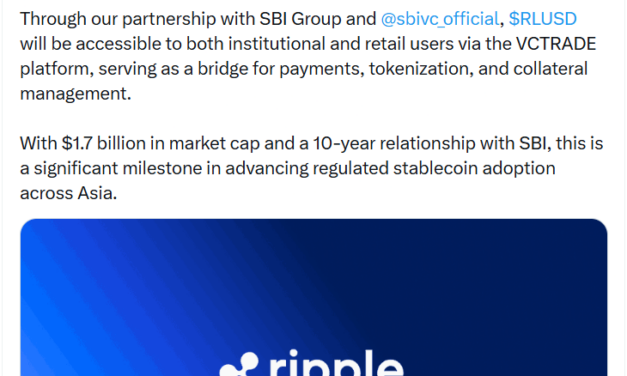
Stablecoin issuer Circle and Japan’s largest investment bank Nomura have reportedly partnered to enable instant foreign exchange settlement for Japanese companies as early as 2027.The service would enable companies to convert yen into dollar-denominated stablecoins for cross-border transactions and instant settlement, reducing delays caused by banking hours and time zone differences, Nikkei reported on Thursday.The partnership would bring one of the world’s largest dollar stablecoins into Japan’s corporate foreign exchange market, expanding the use of stablecoins for business-to-business cross-border settlement.Circle is the issuer of the world’s second-largest stablecoin, USDC (USDC), which has a market capitalization of $73.8 billion, CoinMarketCap data shows.Cointelegraph has reached out to Circle and Nomura but had not received a response by press time.Stablecoin initiatives in Japan have been accelerating as financial institutions explore regulated blockchain-based settlement. On Wednesday, SBI Holdings and Startale Group announced JPYSC, a trust bank-backed yen stablecoin designed for institutional and cross-border settlement, while Ripple USD (RLUSD), the world’s 10th-largest dollar stablecoin by market capitalization, officially launched in Japan.Source: RippleRelated: SBI eyes Bitbank deal as Japan’s crypto exchange market consolidatesJapan moves closer to crypto ETFs, lower tax on digital assetsJapan has been one of the first major economies to establish a legal framework for stablecoins, allowing banks, trust companies and licensed money transfer providers to issue regulated tokens under the Payment Services Act.The Payment Services Act also currently governs cryptocurrencies in Japan, but regulators have been moving to shift digital assets under the Financial Instruments and Exchange Act, which would bring them closer to the regulatory treatment of traditional financial products.Earlier in June, Japan’s Lower House passed a bill that would bring crypto assets under the country’s financial instruments framework, potentially opening a path to exchange-traded funds, lower tax treatment, tighter exchange oversight, disclosure requirements and insider trading restrictions. The proposed changes would also lower the capital gains tax on crypto assets from the current 55% to a 20% flat rate.Magazine: Vietnam preps crypto pilot, HK pushes tokenization: Asia Express

Čítaj viac
US arbitration giant rolls out ‘legal layer’ for agentic commerce

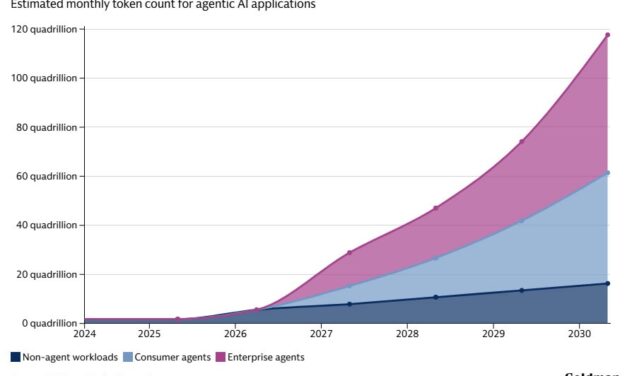
The American Arbitration Association and a broad coalition of tech, crypto, and enterprise companies have launched the Legal Context Protocol, an open standard designed to add a legal layer to agentic AI transactions.The not-for-profit American Arbitration Association (AAA) announced LCP with Integra Ledger on Wednesday, aimed at addressing legal issues that could arise during agent-to-agent transactions.“The legal infrastructure that has supported e-commerce over the last 20 years… like click-throughs and terms of service — none of that translates… when agents are negotiating with other agents,” said Bridget McCormack, the president and CEO of AAA, when talking about the protocol during a podcast in May. “There had to be some understanding about how legal context attaches to agentic transactions.” The new protocol comes as enterprise and financial institutions are looking at ways to use agentic AI in commerce. Gartner projects the agentic payment economy will reach $15 trillion in spending by 2028.The LCP aims to make legal terms, consent, and dispute resolution “discoverable and verifiable” when AI agents transact on behalf of people and organizations, the AAA explained. LCP, which doesn’t require a blockchain, complements existing payment and identity protocols, such as x402 and Machine Payments Protocol, by answering under what terms, governed by what law, and with what recourse a transaction occurred.“Payment infrastructure is actively being built for AI agents. The legal layer — what was agreed, under what terms, and how disputes will be resolved — is not,” said David Fisher, CEO of Integra Ledger, a co-founding partner in the project.As AI agents start making decisions and transacting on our behalf, “we need to know there’s a clear answer to what happens if something goes wrong,” said Mance Harmon, co-founder of Hedera. Related: AI agents with crypto could escape and become ‘unstoppable,’ experts warnThe AAA, founded in 1926, is the largest private provider of alternative dispute resolution services in the world. It has partnered with Integra Ledger, a firm providing open protocols and middleware that give AI agents verifiable identity.  Founding contributors to the protocol include tech and crypto firms, including Google, IBM, Circle, Wayfair, the Stellar Development Foundation, Ava Labs, Cardano, Hedera, Crossmint, the Aptos Foundation, Sei Labs and Mysten Labs, the original contributor to Sui.Huge predictions for agentic AI market growthAgentic AI payments have been a big narrative in 2026, with varying predictions on how fast and how much it will grow in the near future.In March, Digital Applied estimated the agentic AI market will grow by more than 30 times over the decade, from $7.6 billion today to $236 billion by 2034. McKinsey research’s global projections push those estimates as high as $5 trillion by 2030.Agentic AI is expected to drive a “24-fold increase in token consumption by 2030” as consumers and enterprises adopt the technology, predicted Goldman Sachs researchers in May.Estimated monthly token count for agentic AI applications. Source: Goldman SachsMagazine: AI is banking the unbanked in Africa… faster than crypto

Čítaj viac

FTX exec’s wife scheduled for November trial on campaign finance charges

Michelle Bond, the wife of former FTX Digital Markets co-CEO Ryan Salame, who is serving a 7.5-year prison sentence after reaching a plea agreement with prosecutors, is scheduled to stand trial in November following delays stemming from motions related to her husband’s plea deal.On Wednesday, Judge George Daniels in the US District Court for the Southern District of New York ordered a trial start date of Nov. 9 for Bond, who faces four charges related to campaign finance law violations. The proceedings came a week after the judge denied Bond’s motion to dismiss the indictment, based on claims that prosecutors had promised Salame she would not be charged if she pleaded guilty.Bond’s case is one of the final criminal proceedings related to the collapse of cryptocurrency exchange FTX, which filed for bankruptcy in 2022. The event led to criminal charges for Salame and other executives, including former CEO Sam “SBF” Bankman-Fried and former Alameda Research CEO Caroline Ellison.In an August 2024 indictment, prosecutors alleged that Bond and Salame “illegally funded” the former’s 2022 campaign for the US House of Representatives. Salame allegedly used $400,000 of FTX funds as part of a “sham” payment in violation of campaign finance laws. Bond ran as a Republican in New York’s 1st congressional district but lost in the primary to Nicholas LaLota.2022 campaign post on X (then Twitter) Source: Michelle BondSalame, charged in 2022 along with Bankman-Fried and others, was sentenced to 90 months in prison in 2024 after pleading guilty to conspiracy to make unlawful political contributions. He initially attempted to vacate his plea after claiming that prosecutors misled him over charging Bond, but ultimately reported to prison in October 2024 and left the matter to his wife’s case.Bankman-Fried, angling for a presidential pardon, loses appealSalame, Bankman-Fried and Ellison were the only three people tied to FTX to receive prison time. Two other executives, Nishad Singh and Gary Wang, were given time served after testifying against SBF at trial. Ellison, meanwhile, was released early in January after serving less than her two-year sentence.Related: US lawmakers warn against presidential pardon for Sam Bankman-FriedAside from Bond’s expected trial, Bankman-Fried was the only one connected to the crypto exchange to have his day in court. He was found guilty on seven felony charges and sentenced to 25 years in prison in 2024.Although Bankman-Fried filed to appeal his conviction and sentence, he also recently applied for a presidential pardon from Donald Trump. The Second Circuit Court of Appeals rejected SBF’s appeal earlier this month, leaving the US Supreme Court or a presidential pardon as his only likely path to freedom over the next 20 years. Magazine: AI is banking the unbanked in Africa… faster than crypto

Čítaj viac

Kalshi sues Illinois officials over prediction markets restrictions

Prediction markets company Kalshi has filed a lawsuit against state officials in Illinois over legislation it says “expressly bans sports event contracts” on its platform.In a Tuesday filing in the US District Court for the Northern District of Illinois, Kalshi alleged that Illinois Governor JB Pritzker, Attorney General Kwame Raoul, and other officials on the state’s gaming board “usurped” the authority of the US Commodity Futures Trading Commission (CFTC) over prediction markets. Specifically, the company alleged that legislation signed into law last week in Illinois, requiring prediction market platforms to be licensed in the state to offer sports event contracts, violated federal law. Kalshi claimed that it would be “irreparably harmed” when the law, Illinois Senate Bill 3019, takes effect on July 1.“If Kalshi complies with the new state law by ceasing to offer its sports event contracts in Illinois, that would put Kalshi in violation of the CFTC’s uniformity requirements, harm Kalshi’s commercial interests, and require the company to implement complex and expensive technological solutions to limit access in Illinois — incurring costs that would not be recoverable when Kalshi ultimately prevails in the action,” said the complaint.Source: PACERThe Illinois law, passed as part of a state budget package for the fiscal year 2027, included a 0.2% tax on crypto transactions and has already been heavily criticized by many in the industry. The legislation amended the state’s definition of an “exchange wager” to include “an agreement, contract, transaction, or swap that is offered, traded, or executed on a prediction market or exchange tied to a sporting contest or sporting event,” making prediction market companies subject to the same rules as entities offering sports betting.Related: Mark Zuckerberg ordered Meta staff to develop moneyless prediction market: NYT“[…] Kalshi faces similar irreparable harms if it attempts to comply with SB 3019 by offering sports events contracts in compliance with Illinois’s costly and restrictive licensing and regulatory regime,” said the company. “Nor can Kalshi avoid these harms by simply disregarding the unlawful state requirements because an enforcement action by Illinois could subject Kalshi to criminal penalties.”Legal fights eventually headed to the Supreme Court?Kalshi’s lawsuit was the latest in a jurisdictional fight between federal and state authorities over sports betting on prediction markets. The CFTC, headed by Commissioner Michael Selig, has claimed exclusive authority over the companies under the Commodity Exchange Act, arguing that the platform’s event contracts are “swaps” within its jurisdiction. The agency has filed several lawsuits against state authorities over this claim, most recently in response to Kentucky’s restrictions on prediction markets.Some experts expect that the legal battles will end up at the US Supreme Court, given the opposing claims by federal regulators and state gaming officials.Magazine: AI is banking the unbanked in Africa… faster than crypto

Čítaj viac

Trump cancels signing of housing bill with CBDC ban

US President Donald Trump cancelled the signing ceremony for a housing bill containing a ban on a central bank digital currency (CBDC) as he looked for Republicans in Congress to prioritize a controversial voting bill.In a Wednesday morning Truth Social post, Trump said that the signing for the 21st Century ROAD to Housing Act, passed by the US Senate and House of Representatives, would be cancelled “until such time as we pass the desperately needed SAVE America Act.”Source: Donald TrumpThe housing bill, passed by the House on Tuesday, included a provision barring the US Federal Reserve from issuing or creating a CBDC “or any digital asset that is substantially similar” until the end of 2030. However, the legislation also included a carve-out for stablecoins, allowing “dollar-denominated currency that is open, permissionless and private.”Many had expected Trump to sign the bill, aimed at tackling housing affordability, into law on Wednesday without issues. However, the president said in March that he would “not sign other bills” until the SAVE America Act was passed. The legislation would require voters to provide proof of US citizenship in person to register, with critics saying the measure would disenfranchise citizens already eligible to vote.Related: US Senate passes housing bill with CBDC ban until 2030Senate Republicans largely supported the housing bill, which passed the chamber in a 85-5 vote on Monday. Tim Scott, the Republican who chairs the Senate Banking Committee, expressed support for the legislation as recently as Wednesday morning before Trump’s announcement, as did Democratic Senator Elizabeth Warren, who co-sponsored the bill.“I don’t say this often these days, but Congress actually passed something good,” said Warren.Could Trump’s position also impact crypto market structure?Given the president’s opposition to signing any bill into law other than the SAVE America Act, it’s unclear whether Trump also intends to veto or delay signing of crypto-related bills. As of Wednesday, the US Senate was still waiting to potentially vote on the Digital Asset Market Clarity (CLARITY) Act, a bill expected to change the roles of financial regulators in overseeing and enforcing digital asset laws. However, Trump said in May that he intended to codify a “future-proof digital asset market structure,” likely referring to CLARITY.If Trump vetoes either bill, Congress could override him with a two-thirds majority in both chambers.Magazine: AI is banking the unbanked in Africa… faster than crypto

Čítaj viac

Catholic leaders, US authorities challenge CLARITY Act over illicit activity

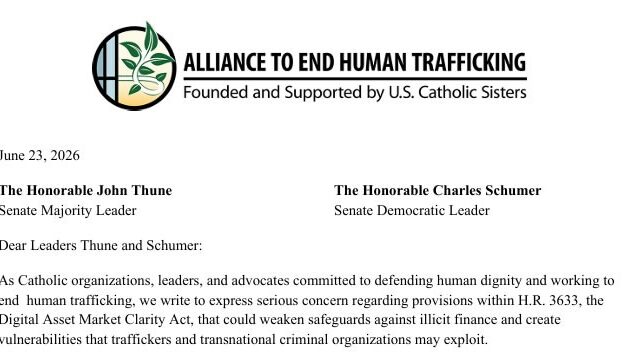
A group of law enforcement organizations and a coalition of Catholic organizations have become the latest two groups urging caution over the US CLARITY Act, which is heading for a key hearing in July.  In letters sent Tuesday, four law enforcement organizations reached out to White House officials with concerns that the CLARITY Act could create oversight gaps when it comes to illicit activity. “Regulatory certainty should not come at the expense of accountability, transparency, victim protection, or public safety,” they said. The Alliance to End Human Trafficking, founded by US Catholic Sisters, said these oversights could make it harder to crack down on human trafficking. The CLARITY Act, which is set for a House hearing on July 17, aims to establish a regulatory framework for digital assets but has garnered a number of critics. It cleared the Senate Banking Committee in May, with most Democrats voting against it, while the banking industry has also pushed back, arguing the bill would allow crypto firms to offer stablecoin yields without facing the same requirements as traditional financial institutions.The law enforcement group includes the National District Attorneys Association, the National Association of Assistant United States Attorneys, the International Association of Chiefs of Police and the National Sheriffs’ Association.In the letter addressed to Acting Attorney General Todd Blanche and White House digital assets adviser Patrick Witt, the group said it was concerned with the Blockchain Regulatory Certainty Act, or Section 604 of the legislation, which it claims would create oversight gaps, hinder illicit-activity probes and weaken Know-Your-Customer and Anti-Money-Laundering requirements compared with traditional finance.Section 604 of the market structure bill addresses the regulatory framework for digital asset service providers and seeks to protect non-controlling developers, open-source contributors, self-custody tools and certain DeFi infrastructure from being automatically classified as money transmitters.The letter said there was no concern with individuals who write or publish software code or with responsible technological innovation, but with exemptions on crypto transactions that may affect law enforcement’s ability to investigate. “Our concern is with broad exemptions that may shield individuals or entities whose activities facilitate the movement of digital assets, create obstacles to legitimate oversight, or weaken longstanding investigative and enforcement authorities relied upon by law enforcement.”However, Lindsay Fraser, chief policy officer at the Blockchain Association, said the letter showed a “fundamental misunderstanding” of the CLARITY Act. “Section 604 does one narrow thing,” she said. “It prevents non-custodial software developers from being misclassified as money transmitters when they do not custody assets or control transactions.”“It does not immunize criminals. It does not limit sanctions enforcement. It does not stop prosecutions for money laundering, fraud, or terrorist financing.”Anti-trafficking advocates push backMeanwhile, the Alliance to End Human Trafficking sent a similar letter Tuesday to Senate Republican Leader John Thune and Senate Democratic Leader Chuck Schumer, also flagging Section 604 but from a human rights abuse perspective. Related: Crypto isn’t the problem with the US economy, says senatorCertain provisions under Section 604 could create “broad carveouts and regulatory ambiguities” that may make it “more difficult to responsibly monitor illicit financial activity tied to trafficking, organized crime, child exploitation, sanctions evasion and other forms of abuse,” it said. “The test of any financial system is not simply whether it generates wealth or innovation, but whether it safeguards human life and dignity.”Screenshot of June 23 AEHT letter. Source: Punchbowl NewsCLARITY Act proponent Senator Cynthia Lummis took the opposite view, stating Thursday that “Regulatory ambiguity doesn’t just hurt builders. It helps criminals… The CLARITY Act closes the gaps bad actors exploit.”“The CLARITY Act is clear: writing code is not money transmission. That distinction will matter for a generation of builders,” she added on Tuesday. Magazine: Japanese pension fund tips 1% in crypto, G7 urges action on NK hackers: Asia Express

Čítaj viac

Starmer steps down: What Andy Burnham means for crypto in the UK

Amid waning poll numbers and pressure from inside the Labour Party, Prime Minister Keir Starmer has stepped down. During Starmer’s tenure, the government introduced a moratorium on cryptocurrency donations to political campaigns, citing concerns that crypto could become a vector for foreign influence in UK elections. Beyond the ban, the UK has charted a cautious path on crypto regulation under the Labour government. Starmer’s departure from Number 10 has started discussions about his successor. A frontrunner has emerged in Andy Burnham, a member of parliament for Makerfield and former Mayor of Greater Manchester. Burnham has expressed optimism about the blockchain industry’s ability to support economic development. But it remains to be seen whether that enthusiasm can translate into real policy moves.Burnham wanted Manchester to be a “Web 3 powerhouse”A graduate of Cambridge, Burnham served as a Cabinet minister under both Tony Blair and Gordon Brown, both as Health Secretary and Culture Secretary. From 2010 to 2015, he served as Shadow Education Secretary and Shadow Health Secretary under Ed Miliband before unsuccessfully contesting the Labor leadership bid in 2015.From 2015-2016, he was Shadow Home Secretary under Jeremy Corbyn before leaving Westminster to become Mayor of Manchester in 2017. As mayor, Burnham has consistently framed digital technology as an economic development tool and a way of driving growth and jobs in the city. This framing was evident at a Stand With Crypto and Manchester Blockchain Alliance event, where he said, “I’m bought in.”He further noted his commitment to “make [Manchester] the Web3 powerhouse that we want it to be.”Whether this will translate into a coherent national policy is another matter. As mayor, Burnham championed a model dubbed “Manchesterism,” which prioritized devolution, regional economic control and public-private partnerships.It’s a bottom-up approach that, some observers in the crypto industry say, needs to be amplified if it’s to bring national-level change to the industry.Nick Jones, founder and CEO of UK digital assets services platform Zumo, told Cointelegraph, “Burnham’s rhetoric on crypto has to date been heavily influenced by his role as Mayor of Greater Manchester. For example, he has previously drawn parallels between digital innovation and historical developments, pointing out that Manchester was the home of the Industrial Revolution and has the potential to become the home of the Web3 revolution.”“But such soundbites were to be expected in the context of his role. If he becomes Prime Minister, he will be well aware of the need to amplify that ambition and ensure the UK as a whole sits at the heart of the world’s future financial system,” he said.Related: UK central bank is warming up to stablecoins, but says industry input is lackingBenoit Marzouk, the CEO of GBP stablecoin tGBP, told Cointelegraph that Burnham’s Manchester experience “is not a handicap.” Rather, his experience outside Westminster, “could help implement and accelerate the right policies for the digital asset industry across the UK.”Burnham has not yet published a detailed digital assets policy. His public comments about crypto reflect broader enthusiasm rather than specific regulatory commitments. He has not yet addressed the Financial Conduct Authority’s crypto framework, stablecoin law, or the crypto political donation ban on public record. The donation ban, politics, and what Burnham could actually doIn March, Stamer’s government banned crypto donations to political campaigns over concerns of foreign influence in British elections. The ban followed an independent review by Philip Rycroft, a former civil servant turned consultant, who found that the pseudonymous nature of crypto assets created unacceptable risks to political financing transparency.Reversing a policy introduced on the recommendation of an independent review carries political risk. Labor’s left could scrutinize any move that appears to open the party to crypto money, which Reform UK has used to fund its leading performance in recent local elections.According to Reuters, crypto donations from billionaires based overseas put Reform well ahead of Labour in the fundraising race. Reform’s leader Nigel Farage is under investigation for an undisclosed 5 million pound ($6.6 million) gift from British Thai-based businessman Christopher Harborne. Despite obvious ethics concerns, Farage said he should be able to spend the gift however he wishes, be it for campaigning, or on Ferraris and betting on horses.Amid political concerns over the temporary moratorium, a 180-degree ban reversal from Burnham seems unlikely. Marzouk expects Burnham to exhibit “pragmatism rather than political announcements.” For tGBP, success in the first year of a Burnham premiership would include a finalized stablecoin framework, pilot programs involving government and GBP stablecoins and continuing work on tokenization.Tom Rhodes, chief legal officer for UK stablecoin issuer Agant, told Cointelegraph, “We don’t expect the next PM to interfere with any specific policies. The regulators remain independent and cryptoasset regulation is nearly settled.”Jones said that Burnham is “on record strongly backing the underlying economic potential of our nascent sector.”“If he does become the next Prime Minister, it’s unlikely his position will change. I believe he would continue to pursue the current growth-focused policy approach.”The transition period could be bumpy, stalling momentum, according to Jones. “Any potential cabinet reshuffle could displace ministers who are familiar with the evolving regulatory regime at the critical inflection point when regulators and industry alike are preparing for authorization, and that would be a problem.”Labour is yet to announce an official timetable for replacing Starmer, although the former PM has said that he’d like to see nominations open on July 9, after a NATO summit. According to Sky News, it could be a week later, on July 16, when parliament goes on summer recess. The winner must receive more than half the votes cast. If no one receives the necessary votes, then ballots are recast based on preference. Magazine: Bitcoin decouples from tech stocks, Ether eyes ‘selling wave’: Market Moves

Čítaj viac

Kalshi adds India to growing list of restricted jurisdictions

Prediction market Kalshi has added India to its list of restricted jurisdictions, according to a members’ agreement document updated on Wednesday.The document now lists a total of 55 restricted jurisdictions whose residents are blocked from accessing the platform.India’s Ministry of Electronics and Information Technology warned virtual private network (VPN) providers in April to stop facilitating access to “illegal and blocked online betting and prediction market platforms.”The development adds to growing regulatory pressure on prediction markets. In May, Spanish authorities blocked access to Polymarket and Kalshi over local gambling laws, while Indonesia blocked access to Polymarket after the platform listed contracts on whether President Prabowo Subianto would leave office before the end of his term.Other countries, including Singapore, Poland, Portugal, Hungary, Ukraine and Brazil, have also blocked or prohibited prediction market platforms such as Kalshi and Polymarket.Kalshi updated the members’ agreement document. Source: KalshiPrediction markets face scrutiny over sports and political contractsPolitical betting and sports-related event contracts have drawn increased regulatory scrutiny.In January, US lawmakers proposed legislation aimed at restricting political prediction market trading by government officials after a Polymarket user netted over $400,000 on a contract related to the removal of then-Venezuelan President Nicolás Maduro, fueling insider trading concerns.Kentucky was the latest state to sue five prediction market platforms, including Kalshi and Polymarket, accusing them of “operating unlicensed and illegal sports betting and gambling platforms,” as Cointelegraph reported on Thursday.Related: Kalshi in early IPO talks with investment banks: ReportKalshi and Polymarket are two of the largest prediction market platforms, with $3.7 billion and $3.2 billion in weekly trading volume, respectively.Kalshi and Polymarket, key stats, top categories. Source: Defirate.com Sports betting was the largest category on both platforms, accounting for $328 million in daily volume for Kalshi and $196 million for Polymarket, according to data from Defirate.Magazine: Should users be allowed to bet on war and death in prediction markets?

Čítaj viac

EU committee advances digital euro bill after key vote

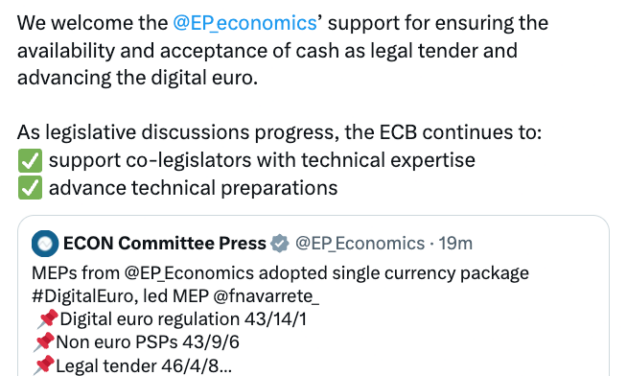
The creation of an EU-issued digital euro moved a step closer Tuesday after a key European Parliament committee vote.The EP’s Economic and Monetary Affairs Committee (ECON) approved its position on the digital euro package with a 43–14 vote, according to an official announcement on Tuesday.Fernando Navarrete Rojas, a member of the European Parliament (MEP), said the package “protects citizens’ freedom to choose how they pay,” adding that the digital euro would “complement cash, never replace it.”The vote marks a key step in shaping the rules for the EU’s potential central bank digital currency (CBDC), as the European Central Bank (ECB) targets a 2029 digital euro launch.Privacy and offline payments at coreUnder the approved draft, the digital euro would be issued by the ECB and function both online and offline.Online payments would use an account-based system, while offline payments would operate through local device storage, similar to cash in terms of user control.“The offline functionality would be equivalent to using physical cash, as losing the device would mean losing the offline money with no refund possible,” the announcement read.Source: ECBThe proposal includes privacy-by-design features, including technologies such as zero-knowledge proofs (ZKPs) to verify transactions without exposing personal data. “The ECB would not have access to personal identification data,” the announcement said.Digital euro won’t pay interestThe draft also introduces holding limits to protect financial stability, with caps on how much digital euro individuals can hold. These limits would be set by the European Commission based on ECB recommendations and reviewed regularly.The currency would not pay interest, and businesses would only be allowed to hold digital euros temporarily to accumulate incoming payments for up to 24 hours. Businesses would generally be required to accept the digital euro, with some exceptions for very small firms and self-employed operators who do not already accept digital payments.Related: ECB signs standards deals to cut digital euro integration costsBasic services such as account access and payments would be free, while additional services could carry capped fees for providers. Offline transactions would remain free under the proposal.Wider rollout and institutional rolesThe legislation also outlines a broader distribution model involving banks, payment providers and regulated crypto firms. Post offices and e-money providers could also distribute the digital euro across the eurozone.Before launch, the ECB would need to finalize technical rules, run pilot tests and coordinate with payment providers. A rollout period of at least two years would follow approval of the final law.Related: ECB official says stablecoins risk importing old market flawsThe latest approval marks clearing a key hurdle to rollout of digital euro after the ECB laid groundwork for a CBDC in 2020.The project has faced repeatedly delays due to unfinalized legislation, with ECB Executive Board member Piero Cipollone projecting as recently as September that the digital euro would likely not launch until 2029.EU consortium moves ahead with regulated stablecoinLast month, Qivalis, a European banking consortium developing a regulated euro stablecoin, expanded to 37 member institutions after adding 25 new banks across 15 countries.The new members include ABN AMRO, Rabobank, Nordea and Intesa Sanpaolo. The Amsterdam-based consortium is targeting a second-half 2026 launch, according to a statement shared with Cointelegraph.“We are not merely building payment rails; we are ensuring that European principles around data protection, financial stability and regulatory rigour are embedded into the next generation of digital money,” said Howard Davies, chairman of Qivalis’ supervisory board.The move comes as European institutions race to establish alternatives to US dollar-dominated stablecoins, which currently account for 98% of the market, according to CoinGecko.“Europe does not have to choose between the digital euro and successful private payment solutions. We need both to work together,” MEP Rojas said in an email response to Cointelegraph’s query. “The agreement recognizes the right dual approach: existing standards and infrastructure should be reused wherever possible and, where new standards are necessary, they should be open and accessible to banks, payment providers and innovative solutions.”Magazine: Clarity Act risks repeat of Europe’s mistakes, crypto lawyer warns

Čítaj viac

Former BIS chief softens stance on stablecoins, backs coexistence with fiat

Agustín Carstens, former general manager of the Bank for International Settlements (BIS) and a member of the Global Finance & Technology Network’s international advisory board, praised stablecoins for their ability to promote financial inclusion and innovation.“I have come to appreciate what stablecoins can do to promote financial innovation, inclusion and to reduce costs,” said Carstens during a welcome address at Point Zero Forum on Tuesday. “We should try to establish conditions where we can live with fiat money and stablecoins.”The remarks reflected a softer stance on stablecoins than Carstens took during his time at the BIS, when he was among the most prominent crypto critics. In a January 2022 speech, he said that stablecoins may not function as “sound money” because issuers have incentives to invest reserve assets in a “risky manner” to generate returns.In one of his final speeches as BIS general manager in June 2025, Carstens also warned that stablecoins could emerge as a source of liquidity risk and still fell short of the three key tests money must fulfill to serve society.Agustín Carstens during a livestreamed welcome address at the Point Zero Forum. Source: Point Zero ForumWhile Carstens has taken a more favorable view of stablecoins, current BIS officials have remained critical of their role in the broader financial system.Carstens’ successor and current BIS general manager, Pablo Hernández de Cos, said in April that the stablecoin market remains “small” and that its structural features constrain its ability to function as money.Related: JPMorgan, Citi-backed Clearing House plans tokenized deposit network in 2027: WSJThe BIS reiterated that view in a preview released Tuesday ahead of its Annual Economic Report 2026, arguing that current stablecoin designs fall short of key properties that underpin trust in money and warning that widespread adoption could create challenges for financial stability, bank funding and monetary sovereignty.However, the BIS endorsed bringing tokenization into the two-tier banking system, arguing that digital representations of assets could enable new forms of programmable finance while preserving trust in money.Stablecoins need global regulation to flourishThe traditional financial system can benefit from stablecoins, distributed ledger technology and tokenization, but a coordinated global regulatory framework is needed to strengthen trust in stablecoin issuers, according to Carstens, who added:“If we really want a global system where stablecoins can interact with global currency, this has to be a cooperative effort worldwide. And I see this lagging behind.” He said that more regulations and a level playing field for issuers could help stablecoins “flourish in a dramatic way.”Several major jurisdictions have already introduced stablecoin-specific rules. The GENIUS Act created the first federal regulatory framework for payment stablecoins in the US. Signed into law in July 2025, it requires 100% reserves in high-quality liquid assets such as cash and short-term US Treasurys.In the European Union, stablecoin issuers are regulated under the Markets in Crypto-Assets Regulation (MiCA). The framework requires issuers to obtain authorization, publish an approved white paper, maintain full reserve backing and segregate reserve assets from company funds.Magazine: Kraken’s $600M stablecoin firm, Huione scandal deepens: Asia Express

Čítaj viac

Crypto industry looks to stablecoins and DeFi revisions in MiCA 2.0

In May, the European Commission opened a comment period, seeking feedback on regulations for the cryptocurrency and blockchain industries. The comment period will precede eventual revisions and additions to the Markets in Crypto Assets (MiCA) legislative framework. Some have already dubbed the expected new framework “MiCA 2.0.”Katie Harries, director and head of policy for Europe at Coinbase, told Cointelegraph that there are several key areas where “refinements could help ensure the framework remains competitive in the next phase of digital asset regulation.”With an updated version of EU crypto law, the crypto industry is looking for more regulatory clarity in DeFi, stablecoins and tokenization.MiCA was just the first stepFull application and enforcement of MiCA rules began on December 30, 2024, with the first licenses issued in the first months of 2025.While the legislative process was long and complex, the EU still managed to create a regulatory framework for crypto ahead of the United States. Per Harries, “MiCA helped set an early global benchmark for digital asset regulation and gave the EU a first-mover advantage.”It represented an “important first move” for the EU which created a “a single, harmonised rulebook for crypto” among its member states. “It gave consumers greater protection and transparency, while providing businesses with the regulatory clarity needed to build, invest and grow across the bloc.”Harries said that, for Coinbase, MiCA provided a foundation on which it can expand its business in Europe into “the next phase of adoption across both retail and institutional markets.”Now, Brussels is looking to recalibrate its landmark legislation. The consultation is split into four parts:Regulatory scope and definitions for crypto assets other than asset-referenced tokens (ARTs) and e-money tokens (EMTs)Requirements for EMTs, ARTs and their issuersDefining legal framework for crypto-asset service providers (CASPs)Topics that MiCA 1.0 didn’t cover e.g., DeFi and prediction marketsStablecoin discussion has regulatory consequencesPer Catarina Veloso, director of regulatory and compliance at Notabene, part 2, which would affect stablecoins, is “longest and arguably the most politically charged section of the consultation.”How stablecoins are used, be it as a mainstream retail payment instrument, a wholesale settlement rail, or a “complement to existing payment methods for cross-border payments,” could have a significant effect on how stablecoin policy is made. “If stablecoins are treated mainly as crypto trading instruments, the focus is likely to remain on investor protection and market integrity. If they are treated as payment infrastructure, then redemption, liquidity, reserve management, operational resilience and supervisory reporting become much more central.”What risks they carry “depend heavily on how they are used, at what scale, by whom, and in connection with which parts of the financial system.”Harries said that Coinbase would like to see MiCA 2.0 “make euro stablecoins more competitive by recalibrating rules around reserves, rewards and the multi-issuance model.” Allowing a greater share of stablecoin reserves to be held in “high-quality sovereign assets could reduce risk without compromising safety.”Another aspect is stablecoin rewards. Currently, EMT issuers are prohibited from offering interest. But, per Veloso, “this can weaken the competitiveness of euro-denominated stablecoins and push users either toward foreign-currency stablecoins or toward yield structures outside the regulated perimeter.”Harries said that “MiCA should allow non-interest incentives such as cashback and loyalty programmes, which are standard features across payments and help drive competition and consumer choice.”Bringing DeFi and prediction markets into the foldPresently, MiCA does not cover CASPs that are fully decentralized and operate without any kind of intermediary. Veloso noted that, while it sounds simple, “decentralisation is rarely binary.”To form an informed policy around DeFi, EU regulators must know how to assess whether a CASP is fully decentralized and “what indicators should matter: control over the protocol, governance rights, admin keys, front-end control, revenue capture, upgradeability, or the ability of identifiable persons to influence outcomes.”According to Miroslav Đurić, a senior associate at Taylor Wessing, many CAPSs already connect their clients with DeFi platforms. But since these platforms are exempt from MiCA, regulators are now asking “whether CASPs should meet their fiduciary duty vis-à-vis clients by conducting due diligence over DeFi platforms that they make accessible to their clients.”“The Commission appears to be ready to explore different approaches incl. some that might only permit CASPs to connect their clients with DeFi platforms that are certified (under some new certification regime).”Prediction markets are also a hot topic currently considered in the EU. Currently there is no unified regulatory structure, and prediction markets are banned in some countries. The Commission is seeking comments on whether these offer any economic benefit for consumers, and whether they fall under MiCA or Markets in Financial Instruments Directive (MiFD).Đurić said this will depend on the nature of the contracts themselves. “Depending on the event contracts available on the platform […] a platform operator can easily become subject to requirements stipulated under different, sometimes conflicting regulatory frameworks: ranging from MiFID II over gambling to MiCA regulatory framework.”What’s next?Crypto industry observers say they intend to remain in dialogue with Brussels throughout the process. Harries said that a new, effective MiCA will require “dialogue between industry, policymakers and regulators, learning from how the framework is working in practice and refining areas where greater clarity or flexibility can help support the next phase of growth across the region.”The period for comment ends on Aug. 31, but according to Đurić, the total process could take years. “Given the level of complexity of the points raised in the consultation as well as the usual pace at which the EU legislative process moves […] it is hardly expectable that any concrete legislative proposals will be adopted before 2028.”

Čítaj viac

Republican lawmaker proposes prediction markets insider trading ban, not including White House officials

Wisconsin Representative Bryan Steil, who chairs the House subcommittee on digital assets, introduced a law to prevent certain public officials from “wagering on public policy issues and political outcomes,” notably without mentioning lawmakers in the White House.In a Thursday notice, Steil said he had introduced the Stop Lawmakers from Predicting Act, which could bar “members of Congress, their spouses, and dependent children” from using policy-aligned event contracts on prediction markets platforms like Kalshi and Polymarket. The bill proposed that elected officials in violation pay a $2,000 fee or 10% of the value of the prohibited bets on the platforms.Source: Committee on House AdministrationThe proposed law did not specifically bar US lawmakers from using prediction markets platforms or making bets on sporting events, but prohibited wagers on specific government policies, government actions and “political outcomes,” presumably including election results. If passed by Congress and signed into law by the president, the law could take effect in 180 days after enactment.Steil’s bill was the latest attempt by members of Congress to address lawmakers potentially using insider information to profit on event contracts. The issue drew attention from many in the public after an incident involving a soldier who allegedly made more than $400,000 betting on the removal of Venezuela President Nicolás Maduro, who was ousted by US forces in January.Related: Polymarket weighs KYC requirements amid global crackdown on prediction marketsAlthough the proposed law follows attempts from other lawmakers to crack down on insider trading on prediction markets, Steil’s legislation did not extend to White House officials, including President Donald Trump and Vice President JD Vance. Trump’s son, Donald Trump Jr., is a strategic adviser to Kalshi and an adviser to Polymarket, which was also a sponsor of the UFC Freedom 250 event at the White House on Sunday. Cointelegraph reached out to Steil’s office for comment but did not receive an immediate response.Federal regulator still fighting for control of prediction marketsUnder Trump, the Commodity Futures Trading Commission (CFTC) and its chair Michael Selig have claimed that the federal agency has “exclusive jurisdiction” in the regulation and enforcement around prediction markets. The CFTC has already filed multiple lawsuits against state-level authorities restricting or banning the platforms, claiming that under the Commodity Exchange Act, event contracts can be regulated as “swaps” and not bets.Some experts believe that the legal fight could be headed to the Supreme Court next. Magazine: The end of anon? AI could unmask crypto’s hidden identities

Čítaj viac
Načítava

Získaj BONUS 8 € v Bitcoinoch

nakup bitcoin z karty

Registrácia Binance

Burza Binance

Aktuálne kurzy