Značka: latest news

US senator probes Tether after reported deal with ex-Trump crypto adviser

Senator Richard Blumenthal has requested information from Tether CEO Paolo Ardoino after a Wall Street Journal report said that the stablecoin issuer had inked a $6.3 million deal with a marketing company co-founded by former White House crypto adviser Bo Hines.In a Thursday letter to Ardoino, the Connecticut lawmaker said that the Senate Permanent Subcommittee on Investigations demanded “records and information related to contracts, payments, communications, and lobbying” between Tether and Nxum, Hines’ company. The probe into Nxum, Tether and Hines, according to Blumental, was part of what the senator called the Trump administration’s “self-enrichment and self-dealings with cryptocurrency firms.”“While Hines failed to divest his one-third stake in Nxum […] he worked closely over encrypted messaging applications with Nxum to coordinate lobbying, advocacy, and browbeating of members of Congress that were opposed to, or had sought changes to, pending stablecoin legislation,” said Blumenthal. “Those messages also reportedly demonstrate that Tether was directly coordinating Nxum’s lobbying efforts on the GENIUS Act which would regulate stablecoins, with CEO Paolo Ardoino demanding that Nxum ‘obliterate’ the legislation’s opponents.”The lawmaker added:“The highly unusual terms and nature of Tether’s business relationship with both Nxum and Bo Hines raise alarming ethical and legal concerns, indicating that Tether was likely well aware of the illegality and impropriety of issuing payments to a current White House official with such a direct role in shaping cryptocurrency legislation that was instrumental to its business.”Hines worked as executive director as President’s Council of Advisers on Digital Assets from January to August 2025, when he left the White House to join Tether as a “strategic adviser.” He later became CEO of Tether US. Harry Jung, another crypto adviser in the Trump administration, left his position in July 2026 and joined Nxum as a managing director in August.Related: Trump didn‘t mention ‘crypto’ once in White House cybercrime roundtableTrump, his family and members of his administration continue to face scrutiny over accusations that they are reaping financial windfalls from crypto policies on laws over which they have control or influence. The president disclosed earning $1.4 billion from investments related to crypto in 2025.Cointelegraph reached out to Tether for comment on the investigation and report but did not receive an immediate response.Crypto ties could be a factor in midterm electionsWhile Blumenthal has limited authority as the Democratic ranking member of the Senate Permanent Subcommittee on Investigations, the results of the 2026 midterm elections could potentially change party control in the House of Representatives and Senate. This could give the Connecticut lawmaker and other Democratic additional authority to conduct investigations into Trump and his administration’s ties to the crypto industry, including those which could present conflicts of interest.As of Friday, event contracts on prediction market platforms Kalshi and Polymarket favored Democrats retaking majority control of both chambers of Congress in 2027, with 92% and 68% chances on Kalshi for the House and Senate, respectively. US Election Day is on Nov. 3.Magazine: New DeepSeek ban in US, Swiss-Asia crypto ties deepen: Asia Express

Čítaj viac

New York AG seeks $1.37B from NovaTech founders over Ponzi scheme

New York Attorney General Letitia James has asked a court to order defunct crypto and forex trading platform NovaTech’s founders, Cynthia and Eddy Petion, and related companies to pay $1.37 billion over its Ponzi scheme.The AG is seeking the return of about $1.13 billion in investor funds, plus $232.5 million in interest, according to a Thursday court filing.The court found the Petions and the companies liable by default in August 2025 after they failed to respond to the lawsuit.Four people who recruited investors into NovaTech have separately agreed to pay nearly $6 million in settlements intended to benefit victims, according to the AG’s office.More than 11,000 New Yorkers lost tens of millions of dollars through NovaTech and an earlier crypto mining scheme, AWS Mining, the AG’s office said. The complaint alleged that promoters targeted Haitian and other immigrant communities through prayer groups, social media and WhatsApp, promising high returns and recruitment bonuses.The filing says that investors deposited about $1.16 billion into NovaTech’s crypto wallets between August 2019 and May 2023. Of that, only about $26 million was deposited with the platform’s trading provider, B2Broker, for trading, according to the attorney general.The motion separately seeks about $6.15 million, including interest, over AWS Mining.AWS Mining collapsed in 2019. NovaTech collapsed in 2023, leaving tens of thousands of investors unable to withdraw their funds. James sued NovaTech, AWS Mining and other associated companies in June 2024.Cointelegraph sought comment from the New York Attorney General’s Office on how any recovered funds would be distributed to victims and what steps could be taken to enforce the judgment, but had not received a response by publication.Related: Cysic dangles a 10% bounty, hacker pours loot into Tornado Cash

Čítaj viac

Was crypto self-custody ever designed for beginners?

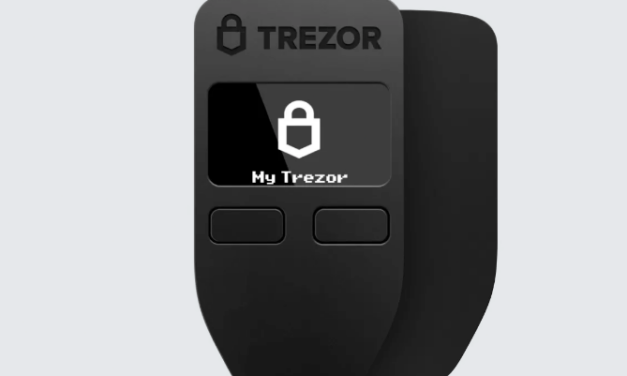
Crypto executives are divided over whether self-custody was ever designed for beginners, while approaches such as multisignature wallets and seedless backups come with their own security and usability trade-offs.“We don’t expect every driver to be a mechanic, and we shouldn’t expect everyone who wants to own their assets to become a security expert,” Safe Labs CEO Rahul Rumalla told Cointelegraph. Making self-custody easier to use could be critical to Bitcoin’s broader adoption, as the ability to “be your own bank” remains one of its defining features.Recent incidents involving Ledger and Coldcard have exposed weaknesses in hardware wallets, widely recommended as one of the safest ways to hold crypto because they keep private keys offline. Implants in some Ledger devices stole recovery phrases, while a Coldcard firmware bug allowed attackers to recreate private keys and steal funds.Related: Ledger’s early implant warnings deserved more action, Karpelès saysMichael Tanguma, CEO of Bitcoin custody provider Onramp, compared Bitcoin custody to personal computers in the 1970s, when users needed technical skills to assemble and operate them.“Self-custody was never designed with newcomers in mind,” he told Cointelegraph. He said simpler designs helped computers reach a wider audience and that Bitcoin custody now faces a similar challenge.Trezor Model One, the world’s first hardware wallet, was released in 2014. Source: TrezorRumalla disagreed, saying self-custody was “always meant for everyone” and that “being able to own and control your assets is the whole point of crypto.”He added that self-custody “does not mean doing everything yourself.”Multisig improves security, but not without a costMultisignature, or multisig, wallets require multiple keys to authorize transactions, but managing them can be difficult for beginners.“Traditional multisig implementations can introduce additional complexity involving signer coordination, key backups, recovery procedures, and transaction approvals,” Justin Hutzler, chief technology officer of Synergy Network, said.Single signature versus multisig. Source: BitGoMultiple approvals also cannot prevent every attack. Safe Labs’ Rumalla said several signers could still authorize a malicious transaction if they were all deceived by the same compromised interface.Related: Can crypto users trust the supply chain behind hardware wallets?Seedless wallets remove one risk, introduce othersTangem says its seedless design simplifies self-custody by removing the need to manage a recovery phrase. Users must instead safeguard the physical devices that provide access to their funds.A private key is generated on one card, with backup copies stored on up to two additional devices. Tangem confirmed to Cointelegraph that losing every device would permanently lock users out of their funds.The company said it had received no reports of users losing all their cards.Keeping the cards safe also does not protect users from approving a malicious transaction. Zach Herbert, CEO of rival hardware wallet maker Foundation, said seedless backups can preserve self-custody, but criticized Tangem’s lack of a built-in screen, which leaves users relying on their smartphones to verify transaction details.“An attacker does not need to extract your private key if they can trick you into authorizing a transaction that empties your wallet,” he said.Magazine: 5 alternatives to Ledger to store your Bitcoin

Čítaj viac

Ethereum delays Glamsterdam Hoodi testnet launch over security risks

Ethereum developers have postponed the Glamsterdam hard fork on the Hoodi testnet after researchers identified gas-related security risks that could affect how existing smart contracts handle failed transactions.The Ethereum Foundation (EF) said that the upgrade, originally scheduled for Oct. 26, would be delayed to allow developers to investigate how some proposals interact with smart contracts deployed on Ethereum. On Oct. 13, Blockchain security firm ChainSecurity warned that two proposals included in Glamsterdam, EIP-8037 and EIP-8038, could weaken safeguards against a type of attack called insufficient gas griefing. The postponement raises uncertainty over Glamsterdam’s mainnet timeline. Ethereum developers had been considering early December, with plans to finalize a schedule following successful Hoodi testing. Gas changes could undermine existing smart contract safeguardsIn its analysis, ChainSecurity said that under the new rules, gas could be returned to a contract after an operation fails, allowing it to continue running when it previously would have stopped. The researchers said the changes could interfere with existing security checks that rely on how much gas remains available during a transaction. In attacks known as insufficient gas griefing, a malicious caller deliberately provides too little gas for a legitimate smart contract operation to succeed. ChainSecurity warned that Glamsterdam’s proposed changes could undermine safeguards against such attacks, potentially allowing contracts to permanently record failed operations. For example, an affected contract could remove a user’s claim or disable the option to retry it, leaving the user unable to complete an otherwise valid operation.ChainSecurity said Glamsterdam would not make all gas-related security checks unreliable. Some safeguards could still work, but developers would need to review them to ensure they account for the upgrade’s new gas rules.Related: Ethereum Foundation warns some tools may break with Glamsterdam upgradeThe findings prompted concern among Ethereum contributors. In an Oct. 21 comment on GitHub, pseudonymous security researcher pcaversaccio described the risks as “serious” and called for a reassessment of the hard fork.  On Friday, ChainSecurity said it had identified “13 real-world examples” and was coordinating responsible disclosure with affected projects. The security firm did not disclose details of the 13 real-world examples or identify the affected projects. However, the company said developers should check their contracts as soon as possible. The findings follow an earlier Ethereum Foundation warning that Glamsterdam’s gas model could break wallets, indexers, and gas estimators that rely on fixed assumptions. The upgrade was previously activated on Sepolia on Oct. 6, ahead of its now-postponed Hoodi deployment.Magazine: 5 alternatives to Ledger to store your Bitcoin

Čítaj viac

Bitcoin Core changes security policy as AI makes bugs easier to find

Bitcoin Core is changing how it handles security vulnerabilities, explaining that large language models have made certain software flaws significantly easier to discover. In an email to the Bitcoin Development Mailing List on Thursday, Bitcoin Core developer Antoine Poinsot said that in the past, vulnerabilities were generally kept under lengthy disclosure embargoes to give users time to upgrade before details became public.Maintaining that secrecy generally meant fixes could not be backported to older software versions, leaving users waiting until the next major release. However, Poinsot said LLMs have made some flaws so easy to rediscover that delaying fixes offers little protection.“The embargo period achieves little but it delays the availability of a fixed release,” said Poinsot. “We are therefore updating our policy disclosure to accommodate those.”The change comes as AI-assisted security research puts pressure on developers across Bitcoin’s software ecosystem.Under the updated policy, vulnerabilities deemed “easily discoverable” will receive fixes as soon as possible across all maintained major versions, with security advisories published alongside the updates. “This classification applies to vulnerabilities that can be discovered with minimal effort, such as through a simple LLM prompt,” it said. Related: PHP flaw draws millions of exploit attempts, Cloudflare CEO warnsOther vulnerabilities will continue to follow disclosure schedules based on severity, ranging from critical flaws that threaten Bitcoin’s fundamental security to lower-risk bugs with limited impact on individual nodes. Bitcoin Core said low-severity vulnerabilities will be disclosed two weeks after the release of a major version containing the fix, while medium and high vulnerabilities will be disclosed two weeks after the last affected release hits its “End of Life,” typically a year after the fix is released in the new major version. “Critical bugs are not considered in the standard policy, as they would most likely require an ad-hoc procedure,” it said.“I’ve disagreed with Antoine’s approach to security in the past, but this is a good update,” said Luke de Wolf, host of the Bitcoin Infinity Show and author of “Defending Bitcoin.”   In August, the volunteer Bitcoin Red Team reported nearly 5,000 potential issues across 390 projects, although only around a fifth of its findings had been reproduced at that point.That month, Core Lightning developers urged operators to upgrade or take their nodes offline after receiving multiple AI-generated vulnerability reports, while withholding technical details for two weeks.Magazine: New DeepSeek ban in US, Swiss-Asia crypto ties deepen: Asia Express

Čítaj viac
Načítava

Získaj BONUS 8 € v Bitcoinoch

nakup bitcoin z karty

Registrácia Binance

Burza Binance

Aktuálne kurzy