
Autor Zoltan Vardai

Polymarket hit by $2.9M theft, users to be refunded

A third-party vendor compromise discovered Thursday allowed attackers to inject a malicious script into Polymarket’s frontend, affecting multiple users.Blockchain analyst Specter said the malicious script appeared to facilitate a phishing attack that drained an estimated $2.94 million from at least 11 Polymarket user wallets.Polymarket said on X that the compromise has been contained and that the affected dependency has been removed. It added that users would be fully refunded.Cointelegraph has approached Polymarket for comment but did not receive a response before publication.The attack was the 89th reported crypto security breach of the second quarter, according to DefiLlama data, extending the most-hacked quarter on record by incident count.Source: SpecterCrypto exploit losses reach $74.9M across 29 June incidentsCrypto exploit losses climbed to $74.9 million across 29 reported incidents in June, surpassing May’s $60.5 million total but remaining far below April’s $644 million, according to DefiLlama data.Total value hacked by monthly sum, 1-year chart. Source: DefiLlama.The largest June incidents included the $36 million Humanity Protocol exploit, the $4.7 million Secret Network bridge exploit, two separate Aztec exploits worth $2.1 million each and a $1.7 million bridge exploit on Taiko.Related: About 60% of World Cup bettors on Polymarket are first-time crypto usersOver the past 30 days, private key compromises accounted for 43% of reported exploit losses, making them the leading attack vector, according to DefiLlama. Fake proof exploits accounted for 10%, followed by reverse MEV honeypots at 8%, which present deceptive trading opportunities to lure and manipulate automated trading bots.About a month before Polymarket’s latest attack, the prediction market disclosed a separate $600,000 exploit that was traced to a six-year-old private key used for internal top-up operations. Josh Stevens, Polymarket’s vice president of engineering, said the platform’s contracts and user funds remained safe and that all permissions tied to the key had since been revoked.Total value hacked by technique over the past 30 days. Source: DefiLlamaPolymarket currently holds over $450 million in total value locked, up 301% from $112 million a year ago, according to DefiLlama.Magazine: Should users be allowed to bet on war and death in prediction markets?

Čítaj viac

60% of World Cup bettors on Polymarket were first-time crypto users

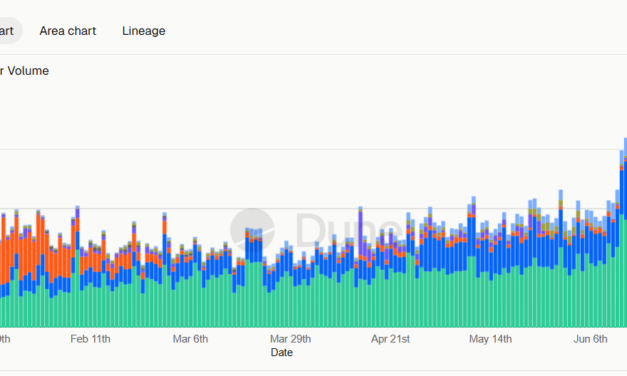
About 60% of users who placed their first World Cup bets on Polymarket had never interacted with blockchain protocols before, suggesting prediction markets are becoming an entry point into crypto.The finding is based on a 90-day Bitget Wallet study shared with Cointelegraph on Thursday that tracked the onchain activity of 857,000 active Polymarket users.Bitget Wallet said the findings suggest some users are entering crypto through prediction markets instead of beginning with token trading or DeFi protocols.Alvin Kan, chief operating officer at Bitget Wallet, told Cointelegraph that earlier crypto onboarding efforts largely focused on making blockchain technology easier to understand through simpler wallets and better user interfaces, but users were still expected to learn how crypto worked before they could participate.“Prediction markets shifted that dynamic. Users show up because they have a view on something happening in the world,” Kan said.Daily prediction market taker volume. Source: DuneDaily taker volume, which measures contracts bought or sold by traders filling existing orders, reached a record $713 million on Saturday, according to Dune data. The milestone came more than a week after the World Cup kicked off on June 11.Related: CBOE debuts prediction market with S&P 500 contractsWorld Cup contracts drive $3.1 billion in volume to PolymarketA June 11 Bernstein report predicted that the 2026 FIFA World Cup would generate more than $3 billion in incremental sports betting handle and between $5 billion and $10 billion in additional consumer prediction market volume. The World Cup winner contract alone has generated more than $3.1 billion in trading volume on Polymarket, according to platform data.World Cup winner event contract. Source: PolymarketSports contracts ranked among the biggest drivers of prediction market trading over the past 30 days. On Kalshi, they generated $8.5 billion over the past 30 days, making them the platform’s largest category. On Polymarket, sports also ranked first with more than $4.9 billion in trading volume during the same period, according to Defirate data.Top categories on Kalshi and Polymarket. Source: DefirateThe surge in sports-related trading has also intensified regulatory scrutiny in the US.On June 17, Kentucky sued five prediction market platforms, including Kalshi and Polymarket, accusing them of operating unlicensed sports betting platforms. At least 17 other states have taken prediction market operators to court, attracting the involvement of the Commodity Futures Trading Commission and the White House.The CFTC later sued eight states, arguing they had interfered with the federal regulator’s exclusive authority over federally regulated event contracts.Magazine: Should users be allowed to bet on war and death in prediction markets?

Čítaj viac

Circle, Nomura eye Japan corporate FX with stablecoin settlement: Report

Stablecoin issuer Circle and Japan’s largest investment bank Nomura have reportedly partnered to enable instant foreign exchange settlement for Japanese companies as early as 2027.The service would enable companies to convert yen into dollar-denominated stablecoins for cross-border transactions and instant settlement, reducing delays caused by banking hours and time zone differences, Nikkei reported on Thursday.The partnership would bring one of the world’s largest dollar stablecoins into Japan’s corporate foreign exchange market, expanding the use of stablecoins for business-to-business cross-border settlement.Circle is the issuer of the world’s second-largest stablecoin, USDC (USDC), which has a market capitalization of $73.8 billion, CoinMarketCap data shows.Cointelegraph has reached out to Circle and Nomura but had not received a response by press time.Stablecoin initiatives in Japan have been accelerating as financial institutions explore regulated blockchain-based settlement. On Wednesday, SBI Holdings and Startale Group announced JPYSC, a trust bank-backed yen stablecoin designed for institutional and cross-border settlement, while Ripple USD (RLUSD), the world’s 10th-largest dollar stablecoin by market capitalization, officially launched in Japan.Source: RippleRelated: SBI eyes Bitbank deal as Japan’s crypto exchange market consolidatesJapan moves closer to crypto ETFs, lower tax on digital assetsJapan has been one of the first major economies to establish a legal framework for stablecoins, allowing banks, trust companies and licensed money transfer providers to issue regulated tokens under the Payment Services Act.The Payment Services Act also currently governs cryptocurrencies in Japan, but regulators have been moving to shift digital assets under the Financial Instruments and Exchange Act, which would bring them closer to the regulatory treatment of traditional financial products.Earlier in June, Japan’s Lower House passed a bill that would bring crypto assets under the country’s financial instruments framework, potentially opening a path to exchange-traded funds, lower tax treatment, tighter exchange oversight, disclosure requirements and insider trading restrictions. The proposed changes would also lower the capital gains tax on crypto assets from the current 55% to a 20% flat rate.Magazine: Vietnam preps crypto pilot, HK pushes tokenization: Asia Express

Čítaj viac

Iran-linked entities moved $3.8B through CoinEx, TRM says

Wallets with identifiable links to sanctioned Iranian entities have moved over $3.84 billion through cryptocurrency exchange CoinEx since 2019, making it one of the main channels used to bypass US economic sanctions, according to blockchain analytics company TRM Labs.About 60 Iranian platforms were tied to the funds, with $2.7 billion of this flowing between CoinEx and Nobitex, Iran’s largest domestic cryptocurrency exchange, at an average rate of about $1 million per day since 2018, wrote TRM Labs in a Wednesday report.By 2024, CoinEx was Nobitex’s largest external counterpart, nearly nine times that of the next-largest exchange, a pattern that TRM Labs called “inconsistent with independent market behaviour.”The report comes three weeks after the US Treasury sanctioned four Iranian crypto exchanges as part of its “Economic Fury” campaign. Days before the sanctions, Treasury Secretary Scott Bessent said the Treasury had seized $1 billion in crypto from Iranian exchanges and wallets since the start of the war.In a statement published Thursday on X, CoinEx denied having any commercial relationship with the Iranian government or domestic Iranian exchanges and said it has never provided funding channels to sanctioned parties. The exchange also disputed TRM Labs’ interpretation of blockchain data, saying onchain fund flows do not demonstrate a platform’s knowledge of or participation in illicit activity.Iranian exchanges: CoinEx exposure & share volume, 2025. Source: TRM LabsTop Iranian exchanges route up to 10% of volume through CoinExMost of the major Iranian domestic exchanges route about 5% to 10% of their trading volume through CoinEx, indicating a “coordinated arrangement rather than organic adoption,” according to TRM Labs.CoinEx’s share of illicit transaction volume is nearly 8%, above the 0.3% threshold found at other compliant exchanges. Related: US authorities freeze $344M in crypto linked to IranCoinEx-affiliated mining pool ViaBTC accounted for another $154 million in traced exposure to Nobitex through mining payouts and supplied emergency liquidity to Nobitex following Predatory Sparrow’s $90 million hack in June 2025.Cointelegraph contacted ViaBTC for comment on TRM Labs’ findings but had not received a response by publication.Nobitex was at the center of Iran’s “digital dollar pipeline” and handled about 50% of the country’s crypto trading volume, according to a June 2 report by blockchain forensics platform Chainalysis.In May, Nobitex was reportedly linked to members of a powerful family with ties to Supreme Leader Ali Khamenei.In January, the Office of Foreign Assets Control sanctioned UK-registered Zedcex and Zedxion for being used as front companies for the Iranian Revolutionary Guard Corps (IRGC).Magazine: Inside the Iranian Bitcoin mining industry

Čítaj viac

DeFi TVL drops 39% in 2026 amid market downturn and record hack activity

Total value locked (TVL) in decentralized finance (DeFi) has fallen by about 39% in 2026 so far, declining to just over $70 billion from roughly $115 billion in January.A Wednesday report from crypto data aggregator CryptoRank attributed the decline to the broader market correction that followed the October 2025 crypto market peak.After Bitcoin reached a record high above $122,000, a market-wide liquidation event on Oct. 10, 2025, erased more than $19 billion in leveraged positions and accelerated a deleveraging cycle across digital assets.Despite the decline, CryptoRank noted that the current drawdown remains far smaller than during the 2021-2022 bear market, suggesting a more resilient DeFi market.DeFi TVL, 1-year chart, monthly. Source: CryptoRankFallout from Kelp DAO exploit accelerated the DeFi TVL decline: analystCryptoRank said security incidents added another layer of pressure on DeFi in 2026, with 121 hacks and roughly $942 million in losses year-to-date. While exploits were not the primary driver of the decline, the data provider said their frequency likely weighed on user confidence and reinforced capital outflows from DeFi.According to Nicolai Søndergaard, senior research analyst at crypto intelligence platform Nansen, the fallout from the $293 million Kelp DAO exploit on April 18 compressed into days what would otherwise have been weeks of DeFi outflows. Aave users withdrew about $15 billion in deposits in the four days following the exploit.Related: CryptoQuant warns on Strategy’s dividend coverage as cash reserve falls 38%The second quarter of 2026 became the most-hacked quarter on record by incident count, with 83 exploits targeting crypto protocols. However, the $755 million stolen during the quarter remained well below the $3.56 billion lost in the fourth quarter of 2020, the costliest quarter for crypto hacks on record.The falling total value stolen is not due to more robust industry security but a sign that hackers are expanding their attack surface, according to Dmytro Matviiv, CEO of crowdsourced security and bug bounty platform HackenProof. He told Cointelegraph that the lower aggregate losses are “misread as progress,” but only the leading protocols have become harder to exploit, forcing attackers to expand their attack surface.Alvin Kan, chief operating officer at Bitget Wallet, said that the cyber exploits are making users more cautious, but added that these may also result in capital leaving “weaker” DeFi protocols for those with “stronger venues and clearer yield models,” leading to more industry consolidation.Magazine: Bitcoin, the ‘canary in the coal mine,’ XRP transaction demand falls 91.5%: Market Moves

Čítaj viac

Získaj BONUS 8 € v Bitcoinoch

nakup bitcoin z karty

Registrácia Binance

Burza Binance

Aktuálne kurzy

