Autor Turner Wright

Trump cancels signing of housing bill with CBDC ban

US President Donald Trump cancelled the signing ceremony for a housing bill containing a ban on a central bank digital currency (CBDC) as he looked for Republicans in Congress to prioritize a controversial voting bill.In a Wednesday morning Truth Social post, Trump said that the signing for the 21st Century ROAD to Housing Act, passed by the US Senate and House of Representatives, would be cancelled “until such time as we pass the desperately needed SAVE America Act.”Source: Donald TrumpThe housing bill, passed by the House on Tuesday, included a provision barring the US Federal Reserve from issuing or creating a CBDC “or any digital asset that is substantially similar” until the end of 2030. However, the legislation also included a carve-out for stablecoins, allowing “dollar-denominated currency that is open, permissionless and private.”Many had expected Trump to sign the bill, aimed at tackling housing affordability, into law on Wednesday without issues. However, the president said in March that he would “not sign other bills” until the SAVE America Act was passed. The legislation would require voters to provide proof of US citizenship in person to register, with critics saying the measure would disenfranchise citizens already eligible to vote.Related: US Senate passes housing bill with CBDC ban until 2030Senate Republicans largely supported the housing bill, which passed the chamber in a 85-5 vote on Monday. Tim Scott, the Republican who chairs the Senate Banking Committee, expressed support for the legislation as recently as Wednesday morning before Trump’s announcement, as did Democratic Senator Elizabeth Warren, who co-sponsored the bill.“I don’t say this often these days, but Congress actually passed something good,” said Warren.Could Trump’s position also impact crypto market structure?Given the president’s opposition to signing any bill into law other than the SAVE America Act, it’s unclear whether Trump also intends to veto or delay signing of crypto-related bills. As of Wednesday, the US Senate was still waiting to potentially vote on the Digital Asset Market Clarity (CLARITY) Act, a bill expected to change the roles of financial regulators in overseeing and enforcing digital asset laws. However, Trump said in May that he intended to codify a “future-proof digital asset market structure,” likely referring to CLARITY.If Trump vetoes either bill, Congress could override him with a two-thirds majority in both chambers.Magazine: AI is banking the unbanked in Africa… faster than crypto

Čítaj viac
Mark Zuckerberg ordered Meta staff to develop moneyless prediction market: NYT

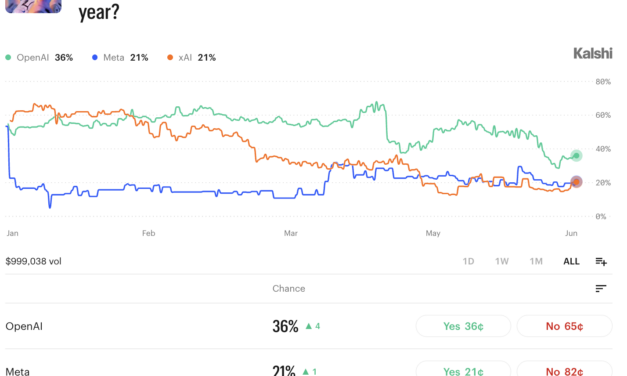
Meta CEO Mark Zuckerberg has reportedly directed his staff to create a prediction markets mobile app called “Arena” in what could become a challenge to platforms like Kalshi and Polymarket.According to a Tuesday New York Times report citing two employees with knowledge of the matter, Zuckerberg ordered the development of the prediction markets app that would allow users to place wagers using a points system rather than money. The app will reportedly function independently of Meta’s existing platforms, including Facebook and Instagram.The news outlet said insiders described the effort as experimental but a top priority for the company. If launched, it could challenge Kalshi’s and Polymarket’s market share for prediction markets, with Meta reporting its apps drew in 3.56 billion users daily as of March.Meta has previously attempted to launch products with potential impacts on the crypto and blockchain industry, including its planned Libra stablecoin in 2019 that was later rebranded to Diem and dropped in 2022. In April, the company rolled out USDC payouts for certain Facebook creators in Colombia and the Philippines, with some US lawmakers expressing concerns about Meta’s US plans for stablecoins.Related: Republican lawmaker proposes prediction markets insider trading ban, not including White House officialsMeta reportedly planned to cut 10% of its staff in April amid the company pivoting to artificial intelligence, a move expected to affect about 8,000 people.Source: KalshiPrediction markets still under scrutiny in USWhile US regulators like the Commodity Futures Trading Commission (CFTC) remain engaged in legal battles with several state authorities over prediction markets, lawmakers are also considering legislation to address issues like insider trading and profiting from nonprofit information while in office.Some of lawmakers’ concerns stemmed from a soldier allegedly making more than $400,000 on a Polymarket event contract related to the capture of Venezuela President Nicolás Maduro, removed by US forces in January to face a criminal trial in New York City. The solder, Gannon Ken Van Dyke, is scheduled to go to trial in December.Magazine: Japanese pension fund tips 1% in crypto, G7 urges action on NK hackers: Asia ExpressCointelegraph is committed to independent, transparent journalism. This news article is produced in accordance with Cointelegraph’s Editorial Policy and aims to provide accurate and timely information. Readers are encouraged to verify information independently.

Čítaj viac

Crypto isn't the problem with the US economy, says senator

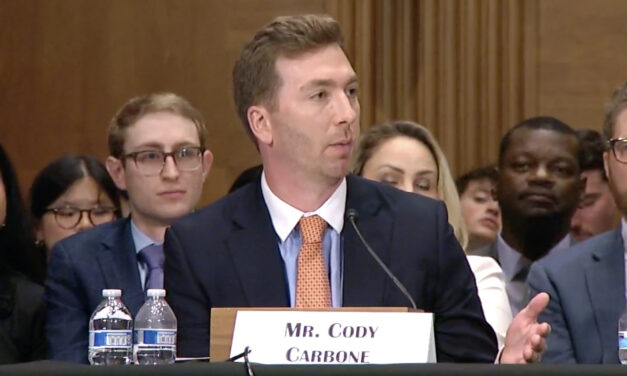
Cody Carbone, CEO of the cryptocurrency advocacy group The Digital Chamber, received a largely muted response to his testimony at a Senate Banking Committee hearing on affordability.In a Tuesday hearing titled The Affordability Agenda, Carbone said that the digital asset industry could help solve affordability problems in the United States, including through faster and cheaper transactions, putting “competitive pressure” on existing payment systems, and reducing barriers to “owning and transferring assets.”However, the majority of lawmakers present did not question Carbone directly or inquire about digital assets, with the exception of Indiana Senator Tim Banks and Louisiana Senator John Kennedy. Banks asked the Digital Chamber CEO about the costs related to foreign remittances compared to US dollar-pegged stablecoins, while Kennedy largely dismissed Carbone’s testimony.“Mr. Carbone, you seem to be here to promote cryptocurrency,” said Kennedy. “I love cryptocurrency, but I don’t think that’s the problem with our economy.”The Digital Chamber CEO Cody Carbone speaking on Tuesday. Source: Senate Banking CommitteeCarbone’s remarks centered around the US Senate moving forward on the Digital Asset Market Clarity (CLARITY) Act, which the banking committee advanced in May. The full chamber is expected to vote on the legislation in a matter of weeks, but many lawmakers are calling for additional ethics provisions, potentially complicating passage in the Senate.Related: Crypto lobby urges Congress to pass staking and mining tax bill as isCLARITY Act still in limbo amid pushback from interest groupsIn addition to lawmakers’ concerns about ethics in the crypto market structure bill, last week gambling industry groups called for the Senate to clarify that the legislation would not allow the US Commodity Futures Trading Commission (CFTC) to oversee sports betting in prediction markets. The financial regulator, under Chair Michael Selig, has claimed “exclusive jurisdiction” over platforms such as Kalshi and Polymarket. Some lawmakers expect that the CLARITY Act will pass through the Senate before the chamber breaks for an August recess. As of Tuesday, no floor vote was scheduled in the Senate.Magazine: Japanese pension fund tips 1% in crypto, G7 urges action on NK hackers: Asia ExpressCointelegraph is committed to independent, transparent journalism. This news article is produced in accordance with Cointelegraph’s Editorial Policy and aims to provide accurate and timely information. Readers are encouraged to verify information independently.

Čítaj viac

CFTC chair says perp trading not suitable for all assets it regulates

Commodity Futures Trading Commission (CFTC) Chair Michael Selig on Tuesday acknowledged fundamental differences in the traditional commodity markets it has long regulated and its more recent role overseeing aspects of the cryptocurrency and blockchain industry.He told the American Cotton Shippers Association Annual Convention that considering the agency’s roots in overseeing asset classes that range from corn to hog bellies, the perpetual contracts tied to digital assets weren’t “suitable for all asset classes, especially in products like agriculture.”“We fully recognize and understand that 24-7 trading and the perpetual model is not a natural fit for traditional commodity markets, like agriculture, that observe limited trading hours and rely on physical delivery,” said Selig.The CFTC chair’s remarks followed the agency approving perpetual futures contracts tied to the spot price of Bitcoin for prediction markets platform Kalshi and issuing a no-action position for similar products on cryptocurrency exchange Coinbase in May. Kraken also subsequently launched perpetual futures trading for US users through its CFTC-regulated platform Bitnomial.Related: Crypto lobby urges Congress to pass staking and mining tax bill as isSelig’s position as sole commissioner at the CFTC, both in claiming that the agency has “exclusive jurisdiction” in overseeing prediction markets and approving crypto perpetual futures, has prompted legal backlash from many companies and state level authorities. Last week, the Chicago Mercantile Exchange (CME) Group sued the agency in the District of Columbia, alleging that the perpetual contract approvals violated the Commodity Exchange Act.Still no commissioner nominations from TrumpDespite the urging of many US lawmakers, President Donald Trump has made no move to fill out the CFTC’s five-person leadership panel. Selig has been the only Republican commissioner and chair following the departure of Caroline Pham in December 2025.The US Senate is expected to take up a vote on the Digital Asset Market Clarity (CLARITY) Act in a matter of weeks, which could change the roles of the CFTC and Securities and Exchange Commission in overseeing digital assets.Magazine: Japanese pension fund tips 1% in crypto, G7 urges action on NK hackers: Asia ExpressCointelegraph is committed to independent, transparent journalism. This news article is produced in accordance with Cointelegraph’s Editorial Policy and aims to provide accurate and timely information. Readers are encouraged to verify information independently.

Čítaj viac

New York, Maryland and Utah to hold primaries with crypto PAC money hanging over voters

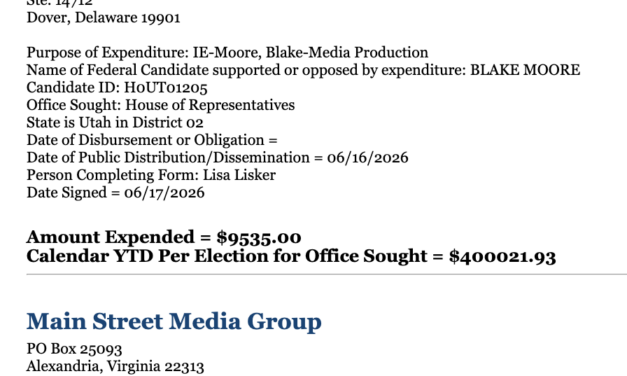
Political action committees (PACs) backed by cryptocurrency companies and aligned interest groups have bet more than $8 million to support candidates in Tuesday’s primaries across three US states, which could impact the makeup of the country’s Congress in 2027.As of Monday, the Protect Progress PAC, an affiliate of Fairshake that supports Democratic candidates, reported spending more than $516,000 on media for April McClain Delaney, running in Maryland’s 6th congressional district. However, much of the PAC’s attention has been focused on two races in Maryland and New York, where it reported combined expenditures of more than $5.5 million and $1.4 million, respectively, for primary races in the states’ 5th and 15th congressional districts, for Adrian Boafo and Ritchie Torres.Filings with the Federal Election Commission (FEC) showed that Protect Progress had spent about $24,000 on ads to oppose Quincy Bareebe and $74,000 for media opposing Harry Dunn, both running against Boafo in Maryland’s 5th district. Dunn and Bareebe, along with Rushern Baker, who is running in the same primary, issued a statement on June 15 against what they called the “influence of dark money and special interests” in the race: “We are calling on Governor Moore, Senator Alsobrooks, and Congressman Hoyer to answer directly: Do you support nearly $8 million in outside spending from crypto billionaires and AIPAC in a Maryland Democratic primary? If not, they should say so publicly and call on Adrian Boafo to reject it.”Defend American Jobs, another Fairshake affiliate, reported spending more than $400,000 on Republican Blake Moore’s primary in Utah’s 2nd congressional district. All expenditures followed what a Fairshake spokesperson called the “biggest spend of the cycle” in last week’s Alabama primary runoff, resulting in a win for Republican Barry Moore after the PAC spent more than $12 million on ads.Source: FECRelated: NYSE owner ICE to launch oil-linked futures with OKXThe Fellowship PAC, another committee backed by $11 million from Cantor Fitzgerald and Anchorage, disclosed $300,000 in spending to support Torres’ New York run.Are Colorado and Arizona next?With the three US state primaries to be decided on Tuesday, many expect Fairshake and other crypto-aligned PACs to turn their attention to Colorado and Arizona, which are scheduled to hold primaries on June 30 and July 21, respectively. As of Monday, none of the PACs had disclosed significant spending in any congressional races in the two US states. However, in 2024, Fairshake and its affiliates poured more than $10 million into media to support Ruben Gallego’s Senate race in Arizona and $2.1 million for Democratic Representative Yadira Caraveo in Colorado’s 8th district.Magazine: Bitcoin decouples from tech stocks, Ether eyes ‘selling wave’: Market Moves

Čítaj viac

Získaj BONUS 8 € v Bitcoinoch

nakup bitcoin z karty

Registrácia Binance

Burza Binance

Aktuálne kurzy