Autor Nate Kostar

Custodia, Vantage propose token that toggles between bank deposits and stablecoins

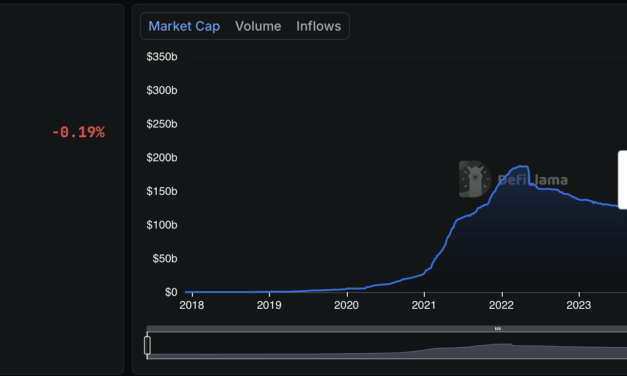
Custodia and Vantage Bank have proposed a token that automatically switches between a bank deposit and a stablecoin as it moves between participating banks and external users.According to a white paper shared with Cointelegraph on Thursday, the token would operate as a deposit issued by a participating bank when held within a banking consortium and as a stablecoin backed by cash and short-term Treasurys when transferred outside the so-called Hazel network.The companies said the system has been running on Ethereum (ETH) since March and is being tested by participating banks ahead of a broader rollout planned for later this year. The platform is designed to support tokenized deposits, stablecoins and other blockchain-based financial assets through a shared banking infrastructure.According to the white paper, participating institutions would not need to replace existing core banking systems, with the platform operating alongside current ledgers and payment infrastructure.The companies said it was designed for banks and credit unions of all sizes, including community banks, and aims to let institutions participate in tokenized payments without moving customer deposits outside the banking system.Wyoming-based Custodia and Texas-based Vantage said they expect the Hazel network to become broadly available to banks and their customers in the fourth quarter of 2026.Related: UK crypto advocates launch campaign against banks blocking exchange transfersBanks seek alternatives to stablecoinsThe proposal comes as banks increasingly look for ways to offer blockchain-based payment services without losing customer deposits to stablecoin issuers.Earlier this month, The Wall Street Journal reported that The Clearing House, whose owners include JPMorgan Chase, Bank of America and Citigroup, plans to launch a tokenized deposit network in the first half of 2027, allowing banks to settle payments using blockchain-based representations of customer deposits.Banking groups have also pushed back against legislation that could allow stablecoin issuers to offer yield-bearing products. JPMorgan CEO Jamie Dimon recently said banks would continue fighting provisions in the CLARITY Act, a US crypto market structure bill, arguing they could let crypto companies compete for deposits without obtaining bank charters. The bill advanced out of the Senate Banking Committee in May and still requires approval from both chambers of Congress.According to DefiLlama data, the total stablecoin market capitalization stands at roughly $315 billion, up from about $251 billion a year ago.Source: DefiLlama Magazine: Vietnam preps crypto pilot, HK pushes tokenization: Asia Express

Čítaj viac

Wealthsimple launches Kalshi-powered prediction market app for Canadian investors

Canadian fintech Wealthsimple is launching a prediction markets app powered by Kalshi, giving that country’s retail investors access to thousands of event-based contracts following regulatory approval earlier this year.The standalone app, called Wealthsimple Predict, is scheduled to launch this summer and will offer Canadian users access to about 4,000 event contracts listed on Kalshi across categories including financial markets, economic indicators and climate.Source: KalshiThe Canadian Investment Regulatory Organization (CIRO) in March authorized the firm to offer prediction market contracts tied to those categories. It is the second investment dealer authorized by CIRO to offer prediction market trading in Canada. The contracts will be regulated as derivatives and must have settlement periods of at least 30 days.The Canadian rollout comes as Kalshi expands beyond prediction markets. On Thursday, the company said that its perpetual futures products were now live for trading, following a May 31 announcement that marked the company’s entry into the crypto perpetual futures market.Source: KalshiRelated: Kentucky sues Kalshi, Polymarket, joining prediction market legal battleCME pushes back against CFTC’s crypto derivatives stanceKalshi’s expansion beyond prediction markets is already facing pushback from established derivatives exchanges. On Thursday, CME Group sued the US Commodity Futures Trading Commission (CFTC) over its approval of cryptocurrency perpetual futures contracts offered by Kalshi and similar products by Coinbase, arguing the regulator misclassified the products under federal law. The filing followed comments from CME CEO Terrence Duffy a day earlier that the exchange planned to challenge the approvals in court.CME CEO Terry Duffy. Source: CNBC Fast MoneyThe lawsuit comes amid a broader push to bring crypto perpetual futures onshore. In May, the CFTC approved Bitcoin perpetual futures contracts for Kalshi and issued a no-action position allowing Coinbase to offer similar products. Since then, Coinbase expanded US institutional access to global crypto derivatives markets, while Kraken launched perpetual futures trading this week through its CFTC-regulated Bitnomial exchange.Related: BBB National Programs refers prediction market Kalshi to state regulators over ad inquiryCountries push back against prediction marketsDespite gaining traction in Canada, prediction markets continue to face regulatory resistance in several jurisdictions. In May, Spanish regulators ordered internet providers to block access to Kalshi and Polymarket while investigating whether the platforms were operating in violation of national gambling regulations.Asian regulators have also moved against prediction markets. Indonesia recently banned Polymarket after users traded contracts tied to whether President Prabowo Subianto would leave office early, while Japanese crypto exchange Bitbank warned users over Polymarket-linked transfers and South Korean police reportedly investigated local users over alleged gambling violations.In the United States, at least 11 states have challenged prediction markets in recent months. At the center of the dispute is whether event contracts should be regulated under state gambling laws or as federally regulated derivatives overseen by the CFTC.Speaking at Bitso’s Stablecoin Conference in Mexico City on June 16, Digital Chamber CEO Cody Carbone said the growing conflict between the CFTC and state gambling regulators is likely headed for the US Supreme Court.Source: CointelegraphMagazine: The end of anon? AI could unmask crypto’s hidden identities

Čítaj viac

HIVE secures $220M AI infrastructure contract with Bell and Cohere

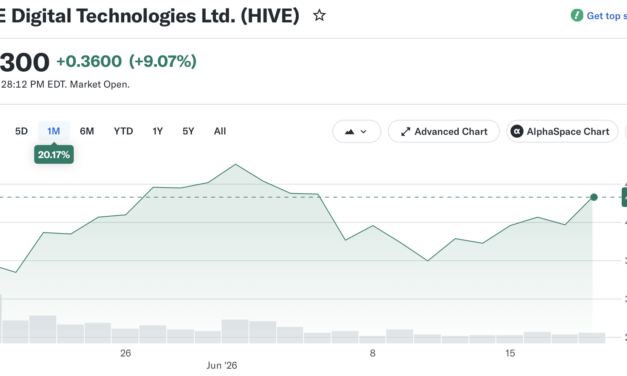
Canadian Bitcoin miner HIVE Digital Technologies said its AI subsidiary BUZZ HPC has signed a three-year GPU cloud contract worth approximately $220 million with Bell AI Fabric for AI startup Cohere, expanding the company’s push into high-performance computing (HPC) and AI infrastructure.The agreement calls for BUZZ HPC to deploy 2,304 NVIDIA Grace Blackwell GPUs at a Bell Canada data center in British Columbia, where the infrastructure will support Cohere’s artificial intelligence models and services for enterprise and government customers.After the deployment enters service, HIVE expects the project to contribute about $70 million in contracted annual recurring revenue, increasing its contracted HPC revenue target to more than $100 million, according to the company.HIVE said it will fund the purchase of the AI infrastructure using a portion of the proceeds from the $115 million convertible note financing it completed in April.The company’s stock price was up around 9% at the time of writing and almost 24% in the past month, according to Yahoo Finance data. Sector tracking exchange-traded fund CoinShares Bitcoin Mining ETF (WGMI) was up 5.4% on the day, and up more than 30% in the past month. HIVE stock is the fund’s eighth-biggest holding.Source: Yahoo FinanceRelated: Georgia targets illegal crypto mining in Mestia crackdown: ReportHIVE grows AI business as Bitcoin holdings declineThe deal is the latest move in HIVE’s broader expansion into AI infrastructure. In May, the company said its BUZZ HPC subsidiary planned a 320-megawatt AI data center campus near Toronto, capable of supporting more than 100,000 GPUs.Earlier this month, HIVE reported that revenue from its HPC division increased to $19.5 million in fiscal 2026, nearly doubling from a year earlier. The company also said contracted annual recurring revenue from the business reached $35 million, supported by deployments of Nvidia-powered GPU clusters and new enterprise contracts.HIVE also reported a decline in its Bitcoin (BTC) treasury holdings, which fell to 150 BTC from 481 BTC a quarter earlier.Source: BitcoinTreasuries.NETRelated: Nvidia’s $20 billion debt boom reinforces Bitcoin miners’ AI pivotHashrate declines as AI investments growOn Thursday, The Energy Mag (formerly The Miner Mag) noted that Bitcoin mining difficulty, a measure of how hard it is for miners to produce new blocks, fell 10.09% on June 14, one of the largest downward adjustments in the network’s history.The publication attributed the decline to weaker mining economics, Bitcoin’s price decline, seasonal power curtailment in Texas and broader power-market dynamics. It also argued that miners dedicating power to AI and HPC projects could alter future hashrate growth by reducing the amount of capacity available for Bitcoin mining.Bitcoin mining difficulty. Source: Coinwarz.comThe decline came days after Cointelegraph reported that Bitcoin mining profitability had fallen to record lows, making it harder for some operators to remain profitable.Meanwhile, miners continue expanding into AI and high-performance computing. On Tuesday, IREN completed its acquisition of Spanish data center developer Nostrum Group, while TeraWulf recently added a Kentucky development site that it said could eventually support more than 1 gigawatt of AI and HPC capacity.Magazine: Does ‘Paper Bitcoin’ mean there’s an unlimited supply of BTC?

Čítaj viac

Blockchain.com deepens onchain stock offerings as tokenized equities market grows

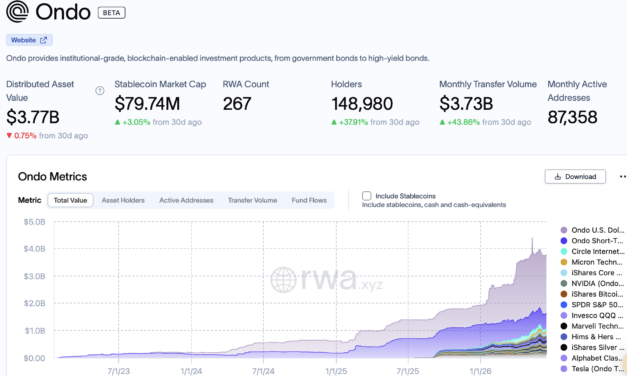
Crypto platform Blockchain.com has added 173 tokenized stocks and exchange-traded funds through a partnership with Ondo Finance, bringing its catalog of tokenized traditional assets to more than 430 offerings across Ethereum, Solana and BNB Chain.According to an announcement on Wednesday, the new listings include tokenized exposure to private company shares, active exchange-traded funds, Treasury products and covered-call strategies, with Blockchain.com highlighting SpaceX’s SPCX token among the additions.The expansion also adds themed baskets tied to AI infrastructure, energy, robotics, autonomous vehicles and quantum computing, alongside income-focused products from Global X and other issuers.A recent proposal by the US Securities and Exchange Commission to scrap two rules in its national market system regulations has been described by Galaxy head of research Alex Thorn as “one of the biggest unlocks yet for tokenized stocks” as it would remove “one of the biggest structural barriers to tokenized US equities trading in DeFi.”Blockchain.com said the assets are available immediately through Ondo’s routing and liquidity infrastructure, which supports trading across all 173 new listings at launch.Ondo is one of the largest tokenization platforms by asset value, with roughly $3.8 billion in distributed assets across 267 tokenized products, according to RWA.xyz data.Source: RWA.xyzThe launch comes a week after Blockchain.com introduced a SpaceX-linked perpetual contract for institutional clients, expanding its push into tokenized and traditional financial markets.Related: Tokenization could push DeFi assets to $2.7T by 2030: Standard CharteredOnchain stocks building momentumThe tokenized equities market has grown rapidly this year. RWA.xyz data shows tokenized equities hold roughly $1.57 billion in distributed value, up nearly fivefold from about $330 million a year ago.The market includes tokenized shares of public companies, exchange-traded funds (ETFs) and private firms. Among the largest tokenized equity assets by value are Strategy, Circle, Nvidia and Exodus shares.Source: RWA.xyzCompetition has been intensifing as crypto exchanges and wallet providers race to offer onchain access to traditional financial assets. Earlier this month, Exodus launched a marketplace for more than 200 tokenized stocks, ETFs and other real-world assets through a separate partnership with Ondo Finance.Several crypto platforms also introduced products tied to SpaceX’s IPO, ranging from tokenized IPO access and pre-IPO contracts to perpetual futures linked to the company’s shares. Binance said its SpaceX tokenized IPO offering attracted more than $557 million in USDC deposits from users seeking exposure to the listing.However, the SpaceX IPO also highlighted some of the sector’s challenges. Several exchanges, including Binance, Bybit, Bitget Wallet and MEXC, were forced to cancel tokenized SpaceX offerings and issue refunds after failing to secure share allocations. Many of those products relied on Kraken-owned xStocks for distribution and settlement infrastructure.The IPO was reportedly nearly four times oversubscribed, attracting more than $250 billion in investor demand for a $75 billion offering, according to Reuters.Magazine: Bitcoin, the ‘canary in the coal mine,’ XRP transaction demand falls 91.5%: Market Moves

Čítaj viac

Kalshi adds software partner as it looks to boost prediction market surveillance

Prediction market Kalshi has partnered with compliance software provider StarCompliance to launch a monitoring platform designed to help financial companies oversee employee activity on prediction markets, as the sector faces increased scrutiny over insider trading and the use of non-public information.According to Wednesday’s announcement, the system is intended to flag employee activity based on transaction volume, trading patterns, market categories and work-hour activity, while giving firms a centralized way to manage investigations and audit records tied to prediction market exposure across onchain and offchain environments.The launch comes days after a federal judge set a December trial date for US Army Master Sgt. Gannon Ken Van Dyke, who prosecutors allege used non-public information about a military operation targeting Venezuelan President Nicolás Maduro to earn more than $400,000 on prediction market platform Polymarket. Van Dyke has pleaded not guilty to the charges.StarCompliance said the product is designed to address potential risks around material non-public information, as employees at financial firms may be able to use sensitive business or market information to trade event contracts.The new monitoring capability extends StarCompliance’s existing employee compliance platform, which already tracks traditional securities and digital asset activity, to include prediction market trading through Kalshi.Related: Coinbase eyes World Cup boost as prediction markets surge: BernsteinPrediction markets face growing regulatory and lawmaker scrutinyThe launch comes as prediction markets face increasing scrutiny in the United States, where at least 11 states have taken legal or regulatory action against platforms such as Kalshi and Polymarket.At the center of the dispute is whether event contracts should be regulated under state gambling laws or as federally regulated derivatives overseen by the Commodity Futures Trading Commission (CFTC). The conflict has produced a patchwork of lawsuits, cease-and-desist orders and proposed legislation. Nevada became the first state to temporarily block Kalshi’s operations earlier this year, while Arizona accused the company of operating an illegal gambling business by offering event contracts to state residents.Prediction market operators and the CFTC have pushed back. At the end of May, Kalshi sued Minnesota after the state enacted what CFTC Chair Michael Selig described as the country’s first outright ban on prediction markets. Around the same time, the CFTC joined Kalshi in a separate legal challenge against Rhode Island officials over the regulation of event contracts.Last week, the CFTC sued New Mexico officials after the state accused Kalshi of offering unlicensed sports betting. The case marked the eighth state targeted by the agency as it seeks to block state-level restrictions on prediction market platforms. Last month, Representative James Comer asked CEOs of Kalshi and rival Polymarket for information on their responses to insider trading after “suspiciously timed trades” related to US military actions against Iran.Source: Representative James ComerPrediction market jurisdiction fight could reach Supreme CourtSpeaking on a panel at Bitso’s Stablecoin Conference in Mexico City on June 16, industry advocacy group Digital Chamber’s CEO Cody Carbone said the dispute between federal regulators and state authorities will likely play out over the next few years. He said:It’s going to be a very heated battle that the courts are going to have to weigh in on.The advocacy executive said the Trump administration has broadly backed Selig’s efforts to position the CFTC as the primary regulator of prediction markets, though he expects ongoing disputes with state gambling regulators to eventually reach the US Supreme Court.He added that US lawmakers are also debating what types of event contracts should be permitted, including markets tied to politics and war, while insider trading concerns are likely to remain a focus of future legislation and regulatory oversight.Magazine: The end of anon? AI could unmask crypto’s hidden identities

Čítaj viac

Získaj BONUS 8 € v Bitcoinoch

nakup bitcoin z karty

Registrácia Binance

Burza Binance

Aktuálne kurzy