
Autor Nate Kostar

Opera's MiniPay launches Visa debit card for stablecoin spending

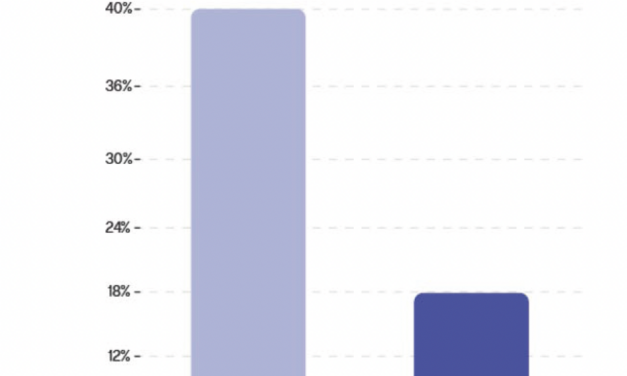
MiniPay has launched a Visa debit card that allows users in selected markets across Africa, Latin America, Southeast Asia and Europe to make purchases using stablecoins.According to Tuesday’s announcement, the card is powered by Gnosis Pay’s infrastructure, enabling users to pay directly from their MiniPay wallets while merchants receive local currency through Visa’s network.MiniPay said it has grown to more than 16 million activated wallets across 65 countries since launching in 2023, with much of its adoption concentrated in Africa and other emerging markets.The card can be added to Apple Pay and Google Pay, while eligible users in some markets will receive cashback rewards denominated in stablecoins USDt and USDC, as well as Tether Gold.MiniPay is a stablecoin wallet owned by Opera, the Nasdaq-listed software company best known for its web browser. Built on the Celo blockchain, the wallet focuses on payments, transfers and savings using dollar-backed stablecoins.Related: Bank of England eases stablecoin rules, introduces 40B pound issuance capStablecoins see adoption in emerging marketsThe launch comes as stablecoins gain traction in emerging markets. In Latin America, a recent Bitso report found that dollar-backed stablecoins overtook Bitcoin as the most-purchased crypto asset among the exchange’s users in 2025, with USDC and USDT accounting for a combined 40% of purchases.Adoption is also accelerating among businesses in the region. Bitso reported that stablecoin transaction volumes among its institutional clients rose 81% year-on-year in the first half of 2026, while banks and licensed payment providers accounted for more than 60% of new business customers added during the period.Bitso’s “Stablecoin Landscape in Latin America report for the first half of 2026.” Source: BitsoAfrica has also emerged as a key growth market for stablecoin issuers seeking to expand payment and remittance services. In March, Circle partnered with African fintech Sasai to expand USDC-powered cross-border payments across the region. The partnership integrates USDC into Sasai’s existing payments infrastructure, which supports cross-border transfers, enterprise payments and consumer wallets.Last week, Ripple acquired a stake in Flutterwave, a $3.3 billion fintech operating in 35 African countries, with plans to integrate RLUSD and other blockchain-based payment tools.The growth in stablecoin payments has coincided with a broader expansion of the market. According to DefiLlama data, the total value of stablecoins in circulation has risen to roughly $315 billion, up from about $250 billion a year ago.Magazine: Bitcoin decouples from tech stocks, Ether eyes ‘selling wave’: Market Moves

Čítaj viac

Franklin Templeton launches dedicated crypto division after closing 250 Digital acquisition

Global asset manager Franklin Templeton has completed its acquisition of crypto asset manager 250 Digital, closing a deal first announced in April and expanding its digital asset business with a new division focused on cryptocurrency investing. As part of the transaction, Franklin Templeton absorbed 250 Digital’s investment team and cryptocurrency strategies into a newly created division called Franklin Crypto. The unit will be led by former 250 Digital executives Christopher Perkins and Seth Ginns alongside Franklin Templeton digital assets executive Tony Pecore.The acquisition follows CoinFund’s decision earlier this year to spin out its liquid strategies business into 250 Digital as the crypto investment firm sharpened its focus on venture investing.Franklin Templeton said Franklin Crypto will offer institutional investors actively managed cryptocurrency strategies, combining the investment capabilities of the former 250 Digital team with the asset manager’s global distribution network. The company did not disclose the financial terms of the acquisition.The new division builds on the asset manager’s existing digital asset business, which includes a dedicated unit focused on digital asset research, portfolio construction and institutional risk management. Franklin Templeton manages approximately $1.78 trillion in assets and operates in more than 35 countries, according to the company. Related: Blockworks acquires Messari in crypto data consolidation pushFranklin Templeton broadens crypto and tokenization effortsThe acquisition is the latest in a series of moves by Franklin Templeton to expand its digital asset business across cryptocurrency investing and tokenized financial products.In February, the company announced a partnership with Binance that lets institutional investors use tokenized money market fund shares as collateral for cryptocurrency trading. Under the framework, the tokenized fund shares remained in regulated custody while their collateral value is reflected within Binance’s trading system.In March, Franklin Templeton partnered with Ondo Finance to offer tokenized exchange-traded funds (ETFs) on blockchain networks, expanding access to its investment products beyond traditional brokerage accounts. Last week, the firm also proposed two ETFs that would reinvest stock dividends into Bitcoin-linked investments, creating a hybrid strategy spanning equities and digital assets.RWA.xyz data shows Franklin Templeton’s tokenized assets have more than tripled over the past year, rising from about $768 million in June 2025 to more than $2.5 billion today. The broader tokenized asset market has also expanded rapidly, with onchain RWA value rising from about $11.8 billion to $32.2 billion over the past year.The value of Franklin Templeton’s tokenized assets. Source: RWA.xyz Magazine: Bitcoin, the ‘canary in the coal mine,’ XRP transaction demand falls 91.5%: Market Moves

Čítaj viac

MoneyGram joins Solana as validator, expanding role in blockchain infrastructure

MoneyGram has become a validator on the Solana blockchain, allowing the remittance company to participate directly in securing the network and processing transactions.As part of its validator operations, the company is staking Solana’s native SOL (SOL) token and processing transaction blocks. MoneyGram also joined the Solana Developer Platform, a program that supports companies building financial applications on the network.MoneyGram said it now uses blockchain infrastructure and stablecoins across its treasury, product development and payments operations after more than five years of integrating digital assets into its business, which serves more than 60 million customers through nearly 500,000 retail locations worldwide.The validator initiative follows MoneyGram’s May launch of MGUSD, a US dollar stablecoin on the Stellar network that enables users to hold digital-dollar balances, transfer funds internationally and convert them into local currencies through the MoneyGram app.Related: MoneyGram deepens blockchain payments push via Tempo partnershipRemittance companies expand stablecoin adoptionThe validator launch comes amid broader adoption of stablecoins across the remittance industry, where companies are increasingly turning to blockchain networks to move money internationally.In May, Western Union rolled out its dollar-backed stablecoin USDPT on Solana. The company said the token debuted in Bolivia and the Philippines and is expected to expand to more than 40 countries in 2026.Speaking at Bitso’s stablecoin conference in Mexico City last week, Western Union’s vice president of Digital Assets, Malcolm Clarke, said the new stablecoin could reshape the economics of funding and settling transactions across its global remittance network while enabling around-the-clock money movement.Clarke said the company processes more than $100 billion in annual transaction volume and estimated that prefunding requirements, idle capital and banking fees consume between 6% and 9% of those flows. Using stablecoins for settlement, combined with returns generated from the reserve assets backing those stablecoins, could instead produce profit margins of roughly 2% to 3%, he said.Beyond remittances, stablecoins are also gaining traction as treasury and settlement tools. According to Bitso’s Stablecoin Landscape in Latin America report for the first half of 2026, stablecoin transaction volumes among the crypto exchange’s institutional clients rose 81% year on year, driven by liquidity management, cross-border payments and treasury operations.Bitso’s “Stablecoin Landscape in Latin America report for the first half of 2026.” Source: BitsoStablecoin adoption is also gaining momentum in Africa’s payments sector. Last week, Ripple acquired a stake in African fintech company Flutterwave, a cross-border payments provider operating in 35 countries. Flutterwave said it plans to integrate Ripple’s RLUSD stablecoin, Ripple Payments and the XRP Ledger into its payment network.Magazine: Bitcoin decouples from tech stocks, Ether eyes ‘selling wave’: Market Moves

Čítaj viac
WhiteBIT secures MiCA license in Austria ahead of July 1 EU deadline

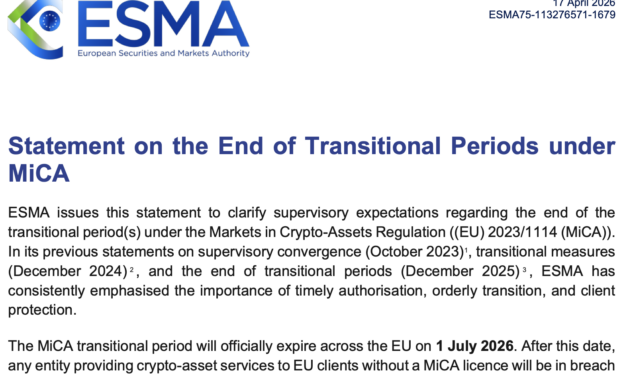
Crypto exchange WhiteBIT has obtained authorization under the European Union’s Markets in Crypto-Assets Regulation (MiCA) from Austria’s Financial Market Authority, allowing the company to offer regulated crypto services across the European Economic Area through a single license.Under MiCA, crypto companies authorized in one European Union member state can passport their services across the European Economic Area without obtaining separate licenses in each jurisdiction. WhiteBIT said the authorization will support the launch of a dedicated European platform, whitebit.eu.WhiteBIT said W Group, its parent company, serves more than 35 million customers globally. Founded in 2018, the exchange has partnerships with Visa, FACEIT, FC Barcelona, Juventus and Ukraine’s national football team.Austria did not extend grandfathering provisions for virtual asset service providers beyond Dec. 31, 2025, making it one of the first European Union jurisdictions to fully transition to the MiCA framework. According to comments previously provided to Cointelegraph by Austria’s Financial Market Authority, the regulator has licensed nine crypto-asset service providers under MiCA and described application volume as “significant.”Related: Polish president vetoes crypto bill for third time ahead of MiCA deadlineMiCA deadline approaches for crypto firmsWhiteBIT’s approval comes less than two weeks before the European Union’s MiCA transition period expires on July 1. After that date, crypto companies operating under legacy national registrations must either hold a MiCA license or stop serving clients in the bloc.The approaching deadline has increased scrutiny on exchanges that have yet to secure authorization. Earlier this week, Reuters reported that Greece’s market regulator was preparing to reject Binance’s MiCA application, while The Big Whale said France may be the exchange’s last remaining path to a MiCA license before the deadline.Data shared with Cointelegraph by OKX Europe suggests the MiCA transition could affect a meaningful share of Europe’s crypto market. The company found that roughly 7.6 million of the 18.5 million crypto app downloads recorded in Europe between May 2025 and May 2026 were linked to exchanges that were not listed on public MiCA authorization registers.Statement on the end of transitional periods. Source: ESMAThe European Securities and Markets Authority has said companies that remain unauthorized after July 1 should implement wind-down and client migration plans rather than continue operating while applications remain under review.Magazine: The end of anon? AI could unmask crypto’s hidden identities

Čítaj viac

Franklin Templeton files ETFs that turn stock dividends into Bitcoin exposure

Global asset manager Franklin Templeton has filed for two exchange-traded funds (ETFs) designed to convert dividend income from US stocks into Bitcoin exposure, according to a June 18 filing with the US Securities and Exchange Commission (SEC).The proposed Franklin US Equity Bitcoin DRIP Index ETF and Franklin US Innovation Bitcoin DRIP Index ETF would track indexes that systematically reinvest stock dividends into a Bitcoin allocation, creating a rules-based Bitcoin exposure alongside traditional equity holdings.According to the filing, the funds would launch with a 5% allocation to Bitcoin exposure and a 95% allocation to US equities. Under the index methodology, regular and special dividends from the stock holdings would be reinvested into the index’s Bitcoin allocation, while quarterly rebalances would maintain the Bitcoin allocation within predefined limits.The filing states that the funds may gain Bitcoin exposure through a range of instruments, including Bitcoin exchange-traded products, futures contracts, options and Bitcoin-backed depositary receipts. The funds may also hold certain Bitcoin-related investments through a wholly owned Cayman Islands subsidiary.While the Equity ETF would track a broad US large-cap stock index, the Innovation ETF would track an index composed of the 100 largest non-financial companies listed on Nasdaq.Both funds would be structured as passive index ETFs tracking proprietary VettaFi indexes. The filing states that the underlying indexes would be rebalanced quarterly and reconstituted semiannually.Related: Bitcoin taps $63K on Juneteenth as July Fed rate-hike odds near 40%ETF issuers experiment with new Bitcoin strategiesFranklin Templeton’s filing comes as asset managers increasingly experiment with Bitcoin investment products that extend beyond traditional spot ETFs.Much of that innovation has focused on income generation. In January, BlackRock filed for the iShares Bitcoin Premium Income ETF, which would use an options strategy tied to Bitcoin and its spot Bitcoin ETF to generate additional returns. Goldman Sachs followed in April with plans for a Bitcoin income ETF that would invest in spot Bitcoin exchange-traded products and sell call options against those holdings to generate yield while reducing sensitivity to Bitcoin’s price swings. The following month, Hamilton ETFs entered the market with a proposed leveraged Bitcoin income fund in Canada built around covered-call strategies and short-term options contracts.Franklin Templeton’s filings come amid weaker demand for US spot Bitcoin ETFs, which recorded six consecutive weeks of net outflows between May 15 and June 18, according to SoSoValue data. US spot Bitcoin ETF weekly net flows. Source: SoSoValueMagazine: Bitcoin, the ‘canary in the coal mine,’ XRP transaction demand falls 91.5%: Market Moves

Čítaj viac

Získaj BONUS 8 € v Bitcoinoch

nakup bitcoin z karty

Registrácia Binance

Burza Binance

Aktuálne kurzy

