
Autor Martin Young

Tether stablecoin flips Ether by market cap as ETH routs to $1.5K

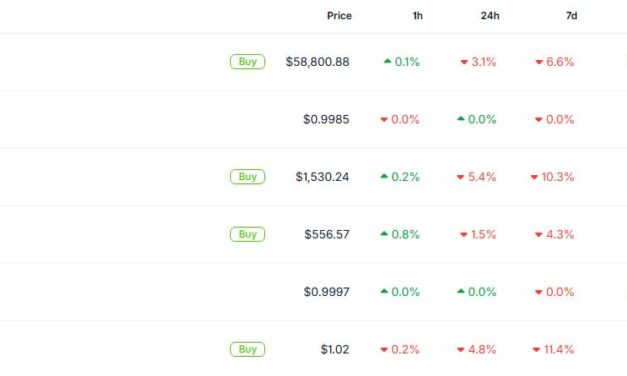
Tether stablecoin USDt has become the second-largest cryptocurrency by market capitalization as Ether fell to a yearly low on Friday. Ether’s market capitalization dropped below $185 billion following a 5.2% price crash over 24 hours, sending the asset tumbling to $1,510 on Coinbase, according to TradingView. This allowed USDt, with a $186 billion market capitalization, to surpass the cryptocurrency. “[The] stablecoin overtake really highlights how the market still favors stability over ETH’s volatility right now,” Andri Fauzan Adziima, research lead at Bitrue Research Institute, told Cointelegraph. The development reflects accelerating stablecoin growth, which currently represents almost 15% of the entire crypto market capitalization. Stablecoin supply retracted more than 30% in the last bear market, but they’re hitting record highs this time, wrote 21Shares on Thursday, adding: “To us, that is the strongest evidence yet that stablecoins are one of crypto’s defining use cases – demand that no longer depends on the cycle.”USDt flips ETH in market capitalization. Source: CoinGeckoAlvin Kan, chief operating officer of Bitget Wallet, told Cointelegraph that the flip is a “notable milestone that highlights the explosive growth and dominance of stablecoins in today’s crypto ecosystem.”“It demonstrates strong demand for reliable, liquid on- and off-ramps during periods of volatility, while serving as a reminder that ETH must continue delivering compelling utility and narrative momentum to maintain its position.” Kan said the development is positive for the broader market, as deeper stablecoin liquidity supports higher trading volumes and ecosystem innovation.Related: Sharplink buys ETH after 8-month pause as token hits 2026 lowETH prices are currently back at crucial support levels last visited in October 2023 and April 2025.The Ethereum ecosystem has been under pressure recently following staff cuts at the Ethereum Foundation, with an executive exodus and a 20% workforce reduction.However, a new non-profit organization called Ethlabs was launched this week by key EF developers and researchers and backed by Ether treasuries Bitmine and Sharplink. ETH prices are at a critical long-term support level. Source: TradingViewNot all are bearish  Some have taken Ether’s decline as an opportunity. Ether treasury company Sharplink bought the dip, making its first purchase in eight months, scooping up 5,000 ETH on Thursday. Tom Lee’s Bitmine has also been accumulating at these low prices, adding a further 76,881 ETH last week. Meanwhile, Circle’s USDC (USDC) also flipped Ripple’s XRP (XRP) in market capitalization as XRP fell back towards $1, its lowest level since November 2024, resulting in a market capitalization decline to $64 billion compared to USDC at $73.6 billion.Magazine: AI is banking the unbanked in Africa… faster than crypto

Čítaj viac
StablecoinX bets on Ethena ecosystem with Nasdaq debut on Friday

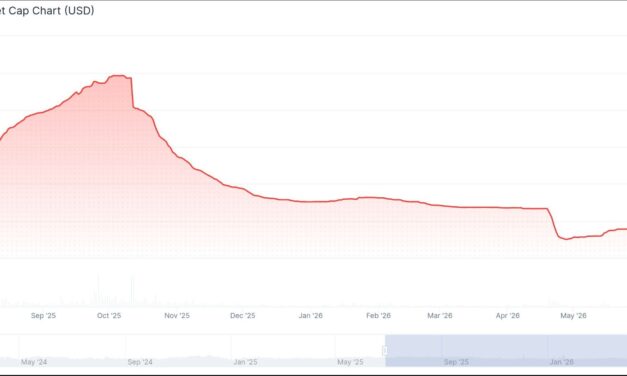
Stablecoin infrastructure company StablecoinX has completed its merger with TLGY Acquisition Corp, a publicly traded special purpose acquisition company, allowing it to begin trading on Nasdaq on Friday.StablecoinX is the first public stablecoin infrastructure company focused on supporting the Ethena ecosystem through decentralized verifier nodes and software infrastructure, and will trade under the symbol “USDE,” according to a statement on Thursday.“We believe Ethena has emerged as one of the most important platforms powering the next generation of digital dollars,” said Edward Chen, CEO and Chairman of StablecoinX.  The Nasdaq debut is a big bet that stablecoins are becoming the plumbing of global finance, and comes despite a broader crypto bear market and Ethena’s relatively small 1.4% market share of the stablecoin market compared with those offered by its competitors, such as Tether and Circle.Ethena’s USDe is a yield-bearing synthetic dollar-pegged stablecoin. Unlike USDt (USDT) or USDC (USDC), which are backed by actual dollars, USDe (USDE) maintains its $1 peg through a derivatives strategy. It is backed by crypto collateral in Bitcoin and Ether and short futures positions on those same assets, enabling the long and short positions to cancel out the price volatility, helping to keep its value at approximately $1.Ethena’s delta-neutral strategy works well in normal markets but is vulnerable during periods when futures funding rates go negative. USDe supply fallsWhile stablecoin circulation has grown in recent years, USDe market capitalization has declined by 70% since its peak in October to around $4.5 billion today, ranking it sixth among stablecoins.  USDe supply has fallen since the bull market peak. Source: CoinGeckoStablecoinX’s treasury also holds approximately 3 billion Ethena governance tokens (ENA), or around 20% of the total supply, valued at approximately $275 million. The company announced a $360 million capital raise to purchase ENA on Sunday.However, the asset is currently trading at $0.08, down 94% from its April 2024 all-time high. Related: Yield-bearing stablecoins surge as Washington fights over yieldThe company has three business lines: a decentralized verifier node (DVN) serving as a cross-chain message verifier for the Ethena ecosystem, a middleware software stack called “Stablecoin Harness” and distribution services, which are currently in development. The company says the three businesses reinforce one another, though the broader crypto bear market presents a challenging backdrop for its Nasdaq debut. Crypto SPACs and crypto treasuries have had a tough time this year as the broader market has tanked 52%, with $2.3 trillion leaving the space since October and crypto falling out of favor among investors. Pre-merger TLGY fell 6.93% on Thursday on OTC markets to end the day trading at $9.40, according to Google Finance data. Magazine: AI is banking the unbanked in Africa… faster than crypto

Čítaj viac
US arbitration giant rolls out ‘legal layer’ for agentic commerce

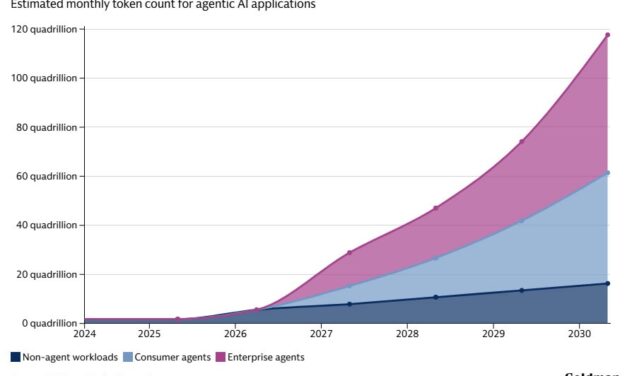
The American Arbitration Association and a broad coalition of tech, crypto, and enterprise companies have launched the Legal Context Protocol, an open standard designed to add a legal layer to agentic AI transactions.The not-for-profit American Arbitration Association (AAA) announced LCP with Integra Ledger on Wednesday, aimed at addressing legal issues that could arise during agent-to-agent transactions.“The legal infrastructure that has supported e-commerce over the last 20 years… like click-throughs and terms of service — none of that translates… when agents are negotiating with other agents,” said Bridget McCormack, the president and CEO of AAA, when talking about the protocol during a podcast in May. “There had to be some understanding about how legal context attaches to agentic transactions.” The new protocol comes as enterprise and financial institutions are looking at ways to use agentic AI in commerce. Gartner projects the agentic payment economy will reach $15 trillion in spending by 2028.The LCP aims to make legal terms, consent, and dispute resolution “discoverable and verifiable” when AI agents transact on behalf of people and organizations, the AAA explained. LCP, which doesn’t require a blockchain, complements existing payment and identity protocols, such as x402 and Machine Payments Protocol, by answering under what terms, governed by what law, and with what recourse a transaction occurred.“Payment infrastructure is actively being built for AI agents. The legal layer — what was agreed, under what terms, and how disputes will be resolved — is not,” said David Fisher, CEO of Integra Ledger, a co-founding partner in the project.As AI agents start making decisions and transacting on our behalf, “we need to know there’s a clear answer to what happens if something goes wrong,” said Mance Harmon, co-founder of Hedera. Related: AI agents with crypto could escape and become ‘unstoppable,’ experts warnThe AAA, founded in 1926, is the largest private provider of alternative dispute resolution services in the world. It has partnered with Integra Ledger, a firm providing open protocols and middleware that give AI agents verifiable identity.  Founding contributors to the protocol include tech and crypto firms, including Google, IBM, Circle, Wayfair, the Stellar Development Foundation, Ava Labs, Cardano, Hedera, Crossmint, the Aptos Foundation, Sei Labs and Mysten Labs, the original contributor to Sui.Huge predictions for agentic AI market growthAgentic AI payments have been a big narrative in 2026, with varying predictions on how fast and how much it will grow in the near future.In March, Digital Applied estimated the agentic AI market will grow by more than 30 times over the decade, from $7.6 billion today to $236 billion by 2034. McKinsey research’s global projections push those estimates as high as $5 trillion by 2030.Agentic AI is expected to drive a “24-fold increase in token consumption by 2030” as consumers and enterprises adopt the technology, predicted Goldman Sachs researchers in May.Estimated monthly token count for agentic AI applications. Source: Goldman SachsMagazine: AI is banking the unbanked in Africa… faster than crypto

Čítaj viac

Abracadabra takes emergency action as MIM stablecoin depeg worsens

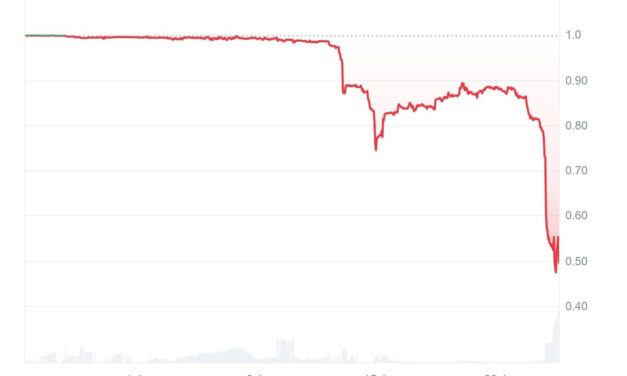
Decentralized finance platform Abracadabra said Wednesday that it launched emergency measures after its crypto-collateralized stablecoin, Magic Internet Money (MIM), fell 50% below its $1 peg. “We’re acutely aware of the MIM depeg and are taking emergency actions to remedy the situation,” the team said on Wednesday.It said effective immediately, it will begin gradually “increasing interest rates across all Cauldrons, including deprecated markets, to encourage debt repayment and reduce the outstanding MIM supply.” The MIM depeg is a stark reminder that even overcollateralized DeFi stablecoins can be fragile in thin-liquidity environments and bear markets, underscoring the persistent risks of crypto-backed money.Abracadabra describes itself as an omnichain DeFi lending platform that utilizes interest-bearing tokens as collateral to mint MIM, a dollar-pegged stablecoin that launched in May 2021. MIM’s troubles began in mid-June, when it slipped to 74 cents before a brief recovery to 89 cents, then plunged to 49 cents on Wednesday, according to CoinMarketCap. The current circulating supply of MIM is about $104 million. MIM depeg exceeds 50%. Source: CoinMarketCap“The current depeg creates a natural incentive for borrowers to repay debt at a discount, accelerating supply contraction and strengthening the path back to the peg,” the team said.“Our priority is simple: restore confidence, improve market structure, and return MIM to a healthy (and liquid) peg.”Related: DeFi TVL drops 39% in 2026 amid market downturn and record hack activityBy raising Cauldron interest rates, the protocol makes it more expensive for borrowers to maintain positions, encouraging repayment that burns MIM, contracts supply and helps restore the peg.It comes less than ten days after Abracadabra injected $100,000 into its primary liquidity pool on Curve Finance on June 15, when the stablecoin first slipped from its peg.  “This will serve as a base for liquidity to restore balance across Curve Pools after unexpected liquidity withdrawals due to recent DeFi incentive strategy changes,” it said at the time. Cauldron liquidity is thinThe DeFi stablecoin is minted by borrowing against yield-bearing tokens in Abracadabra’s “Cauldrons,” but it relies on crypto collateral and deep liquidity pools, primarily on the Curve Finance platform, to maintain its $1 peg. Thin and imbalanced liquidity in decentralized exchange pools is fueling selling pressure that makes the stablecoin vulnerable to further depegging, potentially amplified by broader market caution.The broader crypto market has fallen about 3%, or roughly $60 billion, in the past 24 hours, with Bitcoin briefly dropping below $60,000. Magazine: Japanese pension fund tips 1% in crypto, G7 urges action on NK hackers: Asia Express

Čítaj viac

Catholic leaders, US authorities challenge CLARITY Act over illicit activity

A group of law enforcement organizations and a coalition of Catholic organizations have become the latest two groups urging caution over the US CLARITY Act, which is heading for a key hearing in July.  In letters sent Tuesday, four law enforcement organizations reached out to White House officials with concerns that the CLARITY Act could create oversight gaps when it comes to illicit activity. “Regulatory certainty should not come at the expense of accountability, transparency, victim protection, or public safety,” they said. The Alliance to End Human Trafficking, founded by US Catholic Sisters, said these oversights could make it harder to crack down on human trafficking. The CLARITY Act, which is set for a House hearing on July 17, aims to establish a regulatory framework for digital assets but has garnered a number of critics. It cleared the Senate Banking Committee in May, with most Democrats voting against it, while the banking industry has also pushed back, arguing the bill would allow crypto firms to offer stablecoin yields without facing the same requirements as traditional financial institutions.The law enforcement group includes the National District Attorneys Association, the National Association of Assistant United States Attorneys, the International Association of Chiefs of Police and the National Sheriffs’ Association.In the letter addressed to Acting Attorney General Todd Blanche and White House digital assets adviser Patrick Witt, the group said it was concerned with the Blockchain Regulatory Certainty Act, or Section 604 of the legislation, which it claims would create oversight gaps, hinder illicit-activity probes and weaken Know-Your-Customer and Anti-Money-Laundering requirements compared with traditional finance.Section 604 of the market structure bill addresses the regulatory framework for digital asset service providers and seeks to protect non-controlling developers, open-source contributors, self-custody tools and certain DeFi infrastructure from being automatically classified as money transmitters.The letter said there was no concern with individuals who write or publish software code or with responsible technological innovation, but with exemptions on crypto transactions that may affect law enforcement’s ability to investigate. “Our concern is with broad exemptions that may shield individuals or entities whose activities facilitate the movement of digital assets, create obstacles to legitimate oversight, or weaken longstanding investigative and enforcement authorities relied upon by law enforcement.”However, Lindsay Fraser, chief policy officer at the Blockchain Association, said the letter showed a “fundamental misunderstanding” of the CLARITY Act. “Section 604 does one narrow thing,” she said. “It prevents non-custodial software developers from being misclassified as money transmitters when they do not custody assets or control transactions.”“It does not immunize criminals. It does not limit sanctions enforcement. It does not stop prosecutions for money laundering, fraud, or terrorist financing.”Anti-trafficking advocates push backMeanwhile, the Alliance to End Human Trafficking sent a similar letter Tuesday to Senate Republican Leader John Thune and Senate Democratic Leader Chuck Schumer, also flagging Section 604 but from a human rights abuse perspective. Related: Crypto isn’t the problem with the US economy, says senatorCertain provisions under Section 604 could create “broad carveouts and regulatory ambiguities” that may make it “more difficult to responsibly monitor illicit financial activity tied to trafficking, organized crime, child exploitation, sanctions evasion and other forms of abuse,” it said. “The test of any financial system is not simply whether it generates wealth or innovation, but whether it safeguards human life and dignity.”Screenshot of June 23 AEHT letter. Source: Punchbowl NewsCLARITY Act proponent Senator Cynthia Lummis took the opposite view, stating Thursday that “Regulatory ambiguity doesn’t just hurt builders. It helps criminals… The CLARITY Act closes the gaps bad actors exploit.”“The CLARITY Act is clear: writing code is not money transmission. That distinction will matter for a generation of builders,” she added on Tuesday. Magazine: Japanese pension fund tips 1% in crypto, G7 urges action on NK hackers: Asia Express

Čítaj viac

Získaj BONUS 8 € v Bitcoinoch

nakup bitcoin z karty

Registrácia Binance

Burza Binance

Aktuálne kurzy

