Autor Ezra Reguerra

Binance can serve Philippine traders under SEC framework, BlockShoals says

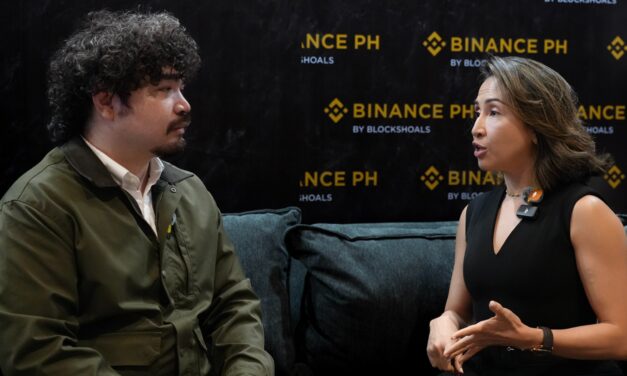
Binance is allowed to provide crypto trading access to users in the Philippines through its arrangement with BlockShoals Technologies, but neither company is authorized to handle peso transfers or perform other activities regulated by the country’s central bank, according to legal adviser Marie Antonette Quiogue.Quiogue, head of legal at BlockShoals, told Cointelegraph in an interview on Friday at Philippine Blockchain Week 2026 that Binance’s local operations fall under the Securities and Exchange Commission’s (SEC) crypto asset service provider (CASP) framework. She said BlockShoals serves as a crypto asset intermediary, introducing Philippine users to Binance’s global trading platform.The arrangement forms part of Binance’s effort to reestablish a presence in the Philippines after regulators moved to restrict access to the exchange over licensing concerns in 2024. Under the structure presented by BlockShoals, the company participates in the SEC’s Strategic Sandbox, or StratBox.The Bangko Sentral ng Pilipinas (BSP), the nation’s central bank, told Cointelegraph that neither Binance nor BlockShoals is authorized to operate as a virtual asset service provider (VASP).“Participation in the regulatory sandbox does not exempt an entity from complying with applicable laws, rules, and regulations, including any licensing requirements imposed by relevant regulators,” the BSP said, adding that it was coordinating with the SEC on the matter.Cointelegraph’s Ezra Reguerra (left) with BlockShoals head of legal Marie Antonette Quiogue (right). Photo: CointelegraphBlockShoals argues SEC framework permits trading accessQuiogue did not dispute the BSP’s statement and acknowledged that neither Binance nor BlockShoals had applied for a local VASP license. The legal adviser argued that the absence of a VASP license does not prevent the companies from providing services under SEC jurisdiction. “Trading, the activity of trading, is clearly under the jurisdiction of the SEC,” Quiogue said. “Binance and BlockShoals, we are not moving pesos, which is clearly under the jurisdiction of the BSP.”Related: Meta rolls out stablecoin payouts for creators in Philippines, ColombiaShe said the regulatory structure requires BlockShoals and Binance to obtain authorization from the relevant regulator whenever they introduce services outside the SEC’s remit. “If BlockShoals and Binance will be offering any product that is regulated by any other government agency, you have to get an authority from them,” she said. Binance returns after Philippine access restrictionsBinance first drew regulatory scrutiny in the Philippines in November 2023, when the SEC warned the public that the platform was not authorized to sell or offer securities in the country because it had not obtained the necessary license and registration. In March 2024, the commission said it had asked the National Telecommunications Commission to block access to the Binance website and related webpages. Local internet providers subsequently began restricting access to the platform following the order. At the time of publication, Binance’s platform was accessible to users in the Philippines. Magazine: China’s 107 Bitcoin memory thief, Bithumb CEO booked: Asia Express

Čítaj viac
G7 calls for joint action on North Korean crypto theft, cybercrime

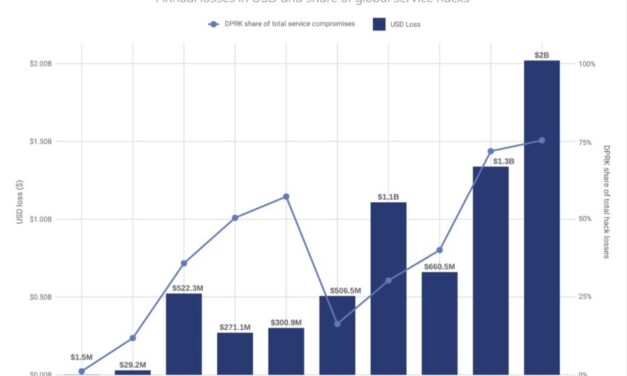
Group of Seven (G7) leaders have renewed their call for joint action against North Korean cryptocurrency thefts and cybercrime.In a statement adopted at this week’s G7 summit in Évian-les-Bains, France, the leaders expressed “deep concern” over North Korea’s nuclear and ballistic missile programs. The United Nations and security researchers have linked North Korea’s crypto thefts to funding for the country’s weapons programs.The G7 leaders did not specify how members should act on the call, making no mention of measures such as exchange screening, sanctions or actions against mixing services often discussed in connection with North Korean crypto laundering.The G7 also referenced North Korean cryptocurrency thefts after its June 2025 summit in Canada, when the group’s chair called for members to jointly address “DPRK cryptocurrency thefts fueling” the country’s nuclear and ballistic missile programs.The renewed call comes amid a series of high-profile exploits with suspected links to North Korean actors, including the roughly $285 million Drift Protocol exploit in April and the $36 million Humanity Protocol breach in June.DPRK hack activities from 2016 to 2025. Source: ChainalysisNorth Korean hackers stole $2 billion in 2025North Korean hackers stole at least $2 billion in crypto in 2025, according to Chainalysis, pushing the all-time total attributed to DPRK-affiliated actors to at least $6.75 billion.Chainalysis said the hackers generated bigger returns last year, despite carrying out fewer confirmed attacks, often by embedding information technology workers inside crypto companies or impersonating recruiters and investors to obtain access to internal systems. Related: North Korea ‘industrialized’ crypto theft, laundered billions: CertiKOn May 15, a CrowdStrike report described North Korean actors as the largest threat group targeting crypto users by value stolen. The cybersecurity company said the campaigns prioritized high-value targets, with proceeds “almost certainly laundered to fund the regime’s military programs.”Meanwhile, North Korea has rejected the allegations that it poses a cyber threat. In a May 3 statement published by state news agency KCNA, a Foreign Ministry spokesperson accused the US of spreading false information and described claims of a North Korean cyber threat as politically motivated “slander.”Magazine: The end of anon? AI could unmask crypto’s hidden identitiesCointelegraph is committed to independent, transparent journalism. This news article is produced in accordance with Cointelegraph’s Editorial Policy and aims to provide accurate and timely information. Readers are encouraged to verify information independently.

Čítaj viac

Grayscale applies traditional finance models to AAVE, sees $175 value

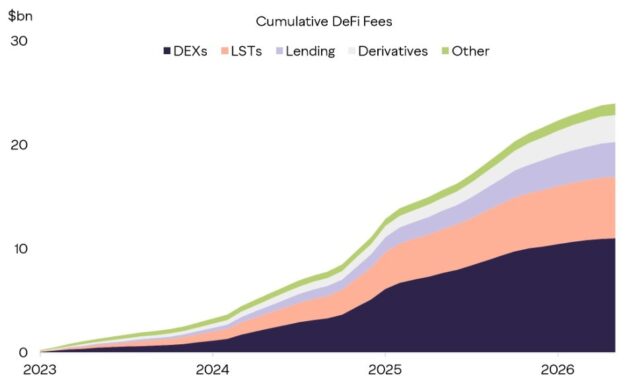
Aave’s native cryptocurrency could reach $175 under a one-year base-case scenario as asset managers increasingly apply traditional finance valuation models to decentralized finance (DeFi) tokens, according to a new report by Grayscale Research.The digital asset manager said Aave could generate about $60 million in net income in 2026 and placed the token’s current fair value at $80 to $100. The analysis used discounted cash flows, earnings multiples and comparisons with banks and fintech companies. Aave traded at $75 on Thursday, according to CoinGecko. Grayscale said Aave’s revenue rose more than sixfold between 2023 and 2025, while the protocol operates at an estimated 50% margin. It argued that Aave’s lending activity, GHO stablecoin and institutional products could support future earnings growth.However, protocol revenue alone doesn’t guarantee token value, the research added. Fees may be paid to liquidity providers, used for operating costs or retained by a decentralized autonomous organization, while token holders generally lack legally enforceable claims held by shareholders. Grayscale’s analysis applies valuation methods commonly used for equities, banks and fintech companies to a DeFi protocol, reflecting the firm’s view that some crypto assets generate sufficiently measurable revenue and earnings to be evaluated using traditional financial frameworks.Cumulative DeFi fees. Source: Grayscale ResearchCoinShares applies long-term valuation models to HYPE and Ether CoinShares has taken a similar approach to Hyperliquid’s HYPE token and Ether (ETH), using protocol fees, buybacks and other economic drivers to create long-term valuation frameworks. The asset manager’s 2031 base case values HYPE at $147 and ETH at $4,935, although most of the projected ETH value comes from the token’s collateral and monetary role rather than cash flows. CoinShares described Hyperliquid as a more direct example of token-level value accrual because 99% of protocol fees are used to buy back HYPE through its Assistance Fund. For Ether, it used a sum-of-the-parts framework combining projected cash flows with a larger monetary and collateral premium. Related: Botanix to shut down after 4 years, cites weak demand for Bitcoin DeFiThe valuation work by Grayscale and CoinShares comes as some financial institutions forecast stronger growth in DeFi markets.Standard Chartered forecasts that tokenized assets could lift DeFi assets to $2.7 trillion by 2030. The bank said Uniswap is positioned to become a major venue for tokenized markets, adding that traditional finance partnerships could help Uniswap attract more activity.Magazine: The end of anon? AI could unmask crypto’s hidden identities

Čítaj viac

CoinMENA, Standard Chartered partner on UAE payment rails

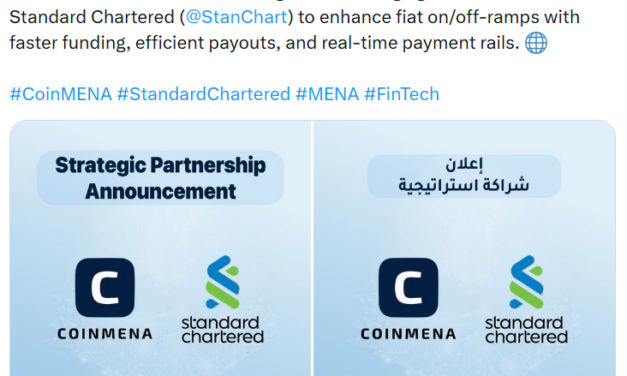
Crypto exchange CoinMENA has entered a banking agreement with Standard Chartered to strengthen fiat payment infrastructure for customers in the United Arab Emirates.Under the agreement, CoinMENA will use Standard Chartered to support fiat on- and off-ramps, client money accounts and virtual account-based transaction management, according to a press release shared to Cointelegraph. The exchange said the arrangement would improve transparency and liquidity settlement with approved global counterparties. In the announcement, Standard Chartered UAE, Middle East and Pakistan CEO Rola Abu Manneh said the UAE had established itself as a leading regulatory environment for digital assets, creating opportunities for financial institutions and regulated firms to collaborate. The agreement reflects growing efforts by crypto firms in the UAE to secure access to regulated banking infrastructure as the country’s digital asset sector matures and attracts greater institutional participation. Banking partnerships have increasingly become a priority for exchanges seeking reliable fiat payment rails and settlement services.“We believe the industry’s future depends on strong banking, regulatory, and operational foundations, not just technology,” CoinMENA co-founders Dina Sam’an and Talal Tabbaa said in a joint statement.Source: CoinMENARevolut moves closer to UAE launchSeparately, the Central Bank of the UAE (CBUAE) approved Revolut’s applications for Stored Value Facilities and Retail Payment Services licenses, according to Bloomberg.Revolut reportedly plans to build out its technology, operations and local capabilities before making its services available in the country. UAE customers are expected to gain access to multi-currency accounts, physical and virtual cards, and domestic and international transfers through the company’s app.Related: UAE-linked ADI Chain gains Ledger support amid stablecoin growthThe London-headquartered fintech is also reportedly considering expansion across the Middle East and North Africa, including Turkey and Morocco.However, Revolut has not publicly confirmed whether its local offering will include digital asset trading, transfers, staking or access to its Revolut X exchange. The reported licenses cover stored-value and retail payment services rather than explicit authorization for virtual asset activities.Cointelegraph reached out to Revolut for comment but did not receive a response before publication.Magazine: China’s 107 Bitcoin memory thief, Bithumb CEO booked: Asia Express

Čítaj viac
China pays closer attention to stablecoins as cross-border role expands

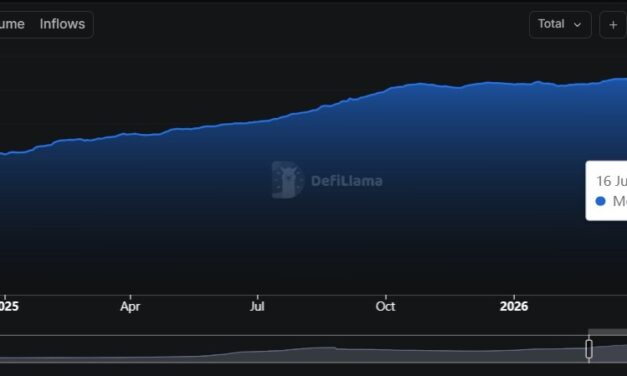
China’s central bank is paying closer attention to stablecoins as privately issued digital currencies take on a potentially larger role in the international monetary system and cross-border payments.Wang Xin, director general of the Research Bureau at the People’s Bank of China (PBOC), urged authorities to closely monitor the impact of stablecoins while improving international coordination and regulation, Chinese news outlet The Paper reported on Wednesday. “We also need to pay attention to several new areas, such as whether stablecoins will play a more important role in cross-border payments, and how regulation, international coordination and cooperation should proceed,” Wang reportedly said, according to a machine translation. He also warned that growing uncertainty and a potential weaponization of payments could disrupt normal cross-border transactions. The remarks reflect growing attention among Chinese regulators to the potential role of stablecoins in cross-border payments and the international monetary system.Related: Chinese court treats Bitcoin as property in 107 BTC memory theft caseWhile Wang advocated for stronger oversight and cautious exploration, he did not endorse stablecoins or announce policy changes. In addition to stablecoins, Wang warned about central bank digital currencies (CBDCs). He said the role of CBDCs in cross-border payments also warrants closer observation, along with improved policy cooperation. China’s stablecoin scrutiny comes amid rapid growthWang’s remarks come months after the PBOC and seven other Chinese agencies banned the unauthorized issuance of renminbi-pegged stablecoins and tokenized real-world assets on Feb. 6. The rules applied to foreign and domestic entities and covered onshore and offshore versions of the yuan, requiring issuers to obtain government approval, reinforcing China’s preference for state-controlled digital money over privately issued tokens.Stablecoin market cap dropped back to $315 billion after rising to as high as $322 billion. Source: DefiLlamaStablecoins account for a growing share of digital asset market activity. In the first quarter of 2026, the overall stablecoin supply grew by about $8 billion to reach $315 billion for the first time, according to data from CEX.io.CEX.io said that stablecoin transaction volume exceeded $28 trillion in the quarter, while representing 75% of the total crypto trading volume. Despite this, CEX.io estimated that bots generated roughly 76% of the transaction volume.Magazine: Vietnam preps crypto pilot, HK pushes tokenization: Asia Express

Čítaj viac

Získaj BONUS 8 € v Bitcoinoch

nakup bitcoin z karty

Registrácia Binance

Burza Binance

Aktuálne kurzy