Autor Ezra Reguerra

South Korea adds token securities to capital market overhaul

South Korea’s financial regulator folded token securities infrastructure into a broader overhaul of the country’s capital markets, alongside plans for faster settlement, longer trading hours and greater use of artificial intelligence.On Tuesday, the Financial Services Commission (FSC) said it had launched a capital market infrastructure review meeting to coordinate reforms across government agencies and market operators. According to the FSC, plans for token securities will be further discussed separately through a public-private council before being linked to the wider initiative. The initiative includes a roadmap for shortening the securities settlement cycle, expected by October, and a Korea Securities Depository (KSD) system for settling over-the-counter trades in unlisted shares and fractional investment products by the end of 2026. The move places tokenized securities within the country’s broader effort to modernize traditional financial markets, potentially bringing blockchain-based investment products closer to systems used for mainstream securities settlement and trading. FSC Vice Chairman Kwon Dae-young said the initiative would build on broader efforts to improve the capital market, guided by four policy priorities: trust, shareholder protection, innovation and market access.South Korea prepares token securities framework for 2027South Korea’s token securities initiative predates the latest capital-market review. In January, the National Assembly approved amendments recognizing blockchain-based distributed ledgers as valid securities registries and permitting the issuance and circulation of token securities. According to the FSC, the framework is scheduled to take effect in February 2027, after regulators complete subordinate rules and supporting infrastructure. At the second meeting of its public-private token securities council in May, the FSC said it was targeting July for the release of proposed subordinate regulations and guidelines. Related: South Korea reviews Hana Bank’s Dunamu stake under banking rules: ReportTechnical infrastructure is also under development. Samsung SDS said in May that it had won a KSD contract to build a token securities management platform that connects the depository’s existing electronic securities account system to blockchain-based data. The company aims to complete the platform by February 2027, when the new framework is scheduled to take effect.According to the FSC, detailed token securities plans will continue to be discussed by the public-private council before being linked to the broader review, part of South Korea’s preparations for a real-time, continuously accessible and integrated digital market.Magazine: Japanese pension fund tips 1% in crypto, G7 urges action on NK hackers: Asia Express

Čítaj viac

Dash eyes Philippines as market for crypto payments

Dash is exploring the Philippines as a potential market for crypto payments, citing demand for lower-cost transactions and the country’s openness to digital finance tools. In an interview with Cointelegraph at the Philippine Blockchain Week 2026, Daria Chernozub, global adoption lead at Dash Blockchain, said the project focuses on emerging markets where users face high fees and need simpler payment options. “We believe that Dash brings the technology and the payment solutions for people who are suffering from high commissions [and] who need something easy to use,” Chernozub said, adding that the Philippines fits that profile because consumers are open to learning about new technologies.She said Dash is still assessing the local market and prioritizing legal compliance before any launch. She said Dash had begun communicating with major market participants and had prepared a legal opinion letter for discussions with regulatory and financial industry bodies.Dash’s assessment comes as the Philippines seeks to attract foreign technology companies, though industry participants say the regulatory process for crypto firms remains significantly more demanding than basic corporate registration. Daria Chernozub (left) with Cointelegraph’s Ezra Reguerra (right) at the Philippine Blockchain Week. Source: Daria ChernozubCorporate registration takes minutes, crypto compliance can take years Philippine Securities and Exchange Commission Commissioner (SEC) Rogelio Quevedo told Cointelegraph during an interview at Philippine Blockchain Week 2026 that foreign investors can register a corporation online from anywhere in the world in about 20 to 30 minutes.Quevedo said the government is ready to assist foreign investors and described the SEC’s online registration system as part of the agency’s broader push toward digitization and innovation. His comments suggest that formally setting up a local entity has become easier, though crypto companies may still face additional licensing and compliance requirements before operating. Related: Dash Evolution chain integrates Zcash Orchard privacy poolMarie Antonette Quiogue, BlockShoals’ head of legal and CEO of Arden Consult, said during a separate interview at the event that the SEC has created a framework for foreign crypto exchanges willing to enter a regulated environment.Quiogue said the regulated path comes with significant obligations and cited the roughly two years BlockShoals spent developing its arrangement with Binance.Beyond regulation, Quiogue pointed to the Philippines’ young population, high mobile usage and widespread English proficiency as factors that could attract overseas crypto companies.Magazine: China’s 107 Bitcoin memory thief, Bithumb CEO booked: Asia Express

Čítaj viac

Japanese corporate pension fund plans 1% crypto allocation: Nikkei

A Japanese corporate pension fund serving about 1,200 small and medium-sized businesses plans to allocate roughly 1% of its assets to cryptocurrency during fiscal 2026.According to Nikkei, the Nationwide Business Corporate Pension Fund, based in Okayama, will invest in a passive fund managed by a major hedge fund that holds multiple crypto assets. The pension fund reportedly manages about 21.3 billion yen in assets, or about $130 million. Japanese crypto news site CoinPost reported that the fund is adding crypto as part of an effort to diversify its exposure. The fund reportedly allocates 80% of its assets to yen, 15% to US dollars and 5% to other currencies.The move suggests crypto is beginning to gain acceptance among Japan’s more conservative institutional investors as the country prepares to integrate digital assets more closely with traditional finance. Japan brings crypto closer to traditional financeThe planned pension allocation comes as Japanese lawmakers and financial institutions prepare for digital assets to play a larger role in the country’s traditional financial system. On June 11, Japan’s House of Representatives passed legislation that would bring crypto assets under the Financial Instruments and Exchange Act, subjecting them to rules more closely aligned with those governing conventional financial products.The legislation is expected to proceed to the House of Councilors and could create a path for crypto exchange-traded funds and a shift to a 20% flat tax on digital-asset gains. Related: Polymarket seeks Japan entry despite gambling law hurdles: ReportJapanese financial groups are also developing new ways for retail and institutional investors to access crypto. SBI Shinsei Bank has begun testing a deposit-linked rewards program offering vouchers redeemable for Bitcoin, Ether or XRP, ahead of a planned permanent launch this autumn.On June 12, Metaplanet, Japan’s largest publicly listed Bitcoin holder, also agreed to acquire Siiibo Securities for 2.1 billion yen. The company said the acquisition would support the development and distribution of Bitcoin-linked yield products through a newly formed securities arm.Magazine: China’s 107 Bitcoin memory thief, Bithumb CEO booked: Asia ExpressCointelegraph is committed to independent, transparent journalism. This news article is produced in accordance with Cointelegraph’s Editorial Policy and aims to provide accurate and timely information. Readers are encouraged to verify information independently.

Čítaj viac

Pudgy Penguins expands retail footprint with Target trading card rollout

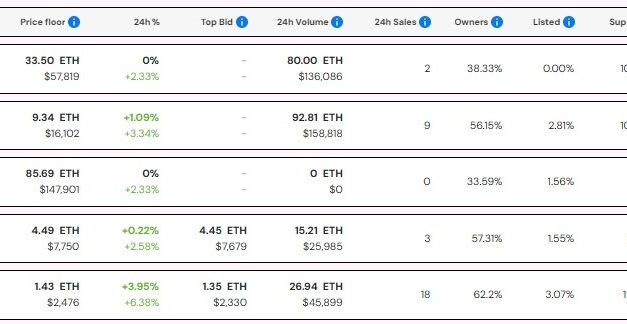
Non-fungible token (NFT) project Pudgy Penguins has expanded the retail reach of its trading card game through a nationwide rollout at Target stores in the United States. According to a press release sent to Cointelegraph, the launch of Vibes Series 3 marks the game’s biggest retail expansion to date and brings the total number of circulated cards to 15 million. The new set includes additional gameplay mechanics, original artwork and appearances from characters in the Moonbirds collection. The rollout shows how Pudgy Penguins is extending its NFT-born intellectual property into mainstream consumer products as it aims to build a broader entertainment franchise beyond digital assets. Pudgy Penguins developed Vibes in partnership with Orange Cap Games, with Series 3 following two earlier releases. The digital collectible project is the fourth-largest NFT collection by market capitalization, according to data tracker NFT Price Floor. Top five NFT collections by market capitalization. Source: NFT Price FloorPudgy Penguins builds beyond NFTsThe project has also expanded into toys, gaming, licensing and other consumer products.Pudgy Penguins has spent years turning its Ethereum-based NFT collection into a broader consumer brand. Its physical toys entered more than 2,000 Walmart stores in 2023, and CEO Luca Netz said in May 2024 that more than 1 million toys had been sold over the preceding 12 months.The project’s licensing model also allows NFT holders to receive 5% of net revenue from physical products featuring their individual penguins.Related: Binance to end NFT support on exchange, shift service to walletThe franchise has pursued a similar expansion through gaming. In 2025, Pudgy Penguins launched the skill-based Pengu Clash game on The Open Network. At the time, Netz described gaming as a vehicle for bringing the project’s intellectual property to wider audiences.It also launched a mobile game called Pudgy Party in August 2025. According to Pudgy Penguins, the game’s downloads exceeded 1 million. However, the project said on Monday that it would halt further development of the game and focus its resources on a browser-based game called Pudgy World. Magazine: Vietnam preps crypto pilot, HK pushes tokenization: Asia ExpressCointelegraph is committed to independent, transparent journalism. This news article is produced in accordance with Cointelegraph’s Editorial Policy and aims to provide accurate and timely information. Readers are encouraged to verify information independently.

Čítaj viac

Philippine SEC signals readiness for RWA tokenization

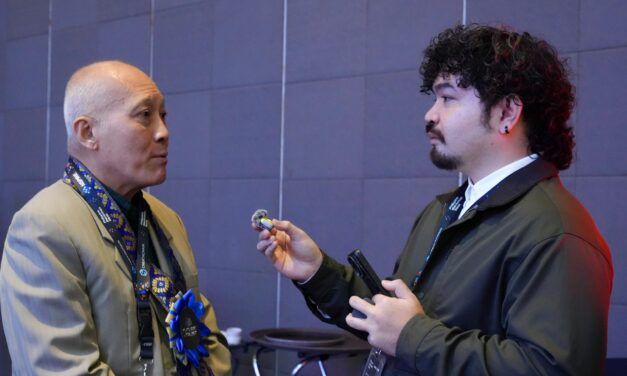
The Philippine Securities and Exchange Commission  (SEC) has signaled that the country is ready to accommodate the tokenization of real-world assets (RWAs), with Commissioner Rogelio Quevedo saying he believes the necessary legal and regulatory foundations are in place. Speaking onstage at the Philippine Blockchain Week 2026, Quevedo said the SEC was “now fully convinced that we have the proper law [and] the proper regulatory mind and background” to accept asset tokenization. He said the technology could spur innovation in the capital markets and “revolutionize” stock exchanges. In an interview with Cointelegraph, Quevedo said tokenized investment products could provide overseas Filipino workers (OFWs) with more legitimate investment options. “Our OFWs, they have the capital. They do not know where to place their money. They do not know how to make their money earn,” he said, pointing to investment scams that have targeted Filipinos seeking returns.Quevedo also told Cointelegraph that the regulator’s enhanced enforcement capabilities have made it better prepared to oversee emerging technologies. “We are also using artificial intelligence to go after these unscrupulous scams,” he told Cointelegraph, adding that the SEC was working with Google, TikTok and other online platforms to remove illegal investment offerings. The remarks frame regulated tokenization as both a capital-markets innovation and a potential investor-protection tool in the Philippines, where the SEC continued to pursue unregistered investment schemes.Philippine SEC Commissioner Rogelio Quevedo (left) and Cointelegraph’s Ezra Reguerra (right) at the Philippine Blockchain Week 2026. Photo: CointelegraphPhilippine SEC tests tokenized assets under regulatory sandboxQuevedo’s remarks build on the SEC’s Strategic Sandbox, or StratBox, which allows fintech companies to test new products and business models in a live but controlled environment under regulatory supervision.The framework allows the SEC, within the scope of its legal authority, to waive or modify certain legal and regulatory requirements for individual sandbox participants. However, participation does not automatically exempt a company from existing laws, and the sandbox cannot be used to circumvent legal or regulatory requirements.Related: Meta rolls out stablecoin payouts for creators in Philippines, ColombiaIn November 2025, the SEC said four companies had been admitted to the sandbox, including one testing a tokenized real estate offering. Two participants were testing access to United States equities, while BlockShoals Technologies received in-principle approval to test crypto-related products and services. Magazine: China’s 107 Bitcoin memory thief, Bithumb CEO booked: Asia Express

Čítaj viac

Získaj BONUS 8 € v Bitcoinoch

nakup bitcoin z karty

Registrácia Binance

Burza Binance

Aktuálne kurzy