
Autor Cointelegraph by Zoltan Vardai

Kast hires former SEC official Stephanie Allen to lead policy communications

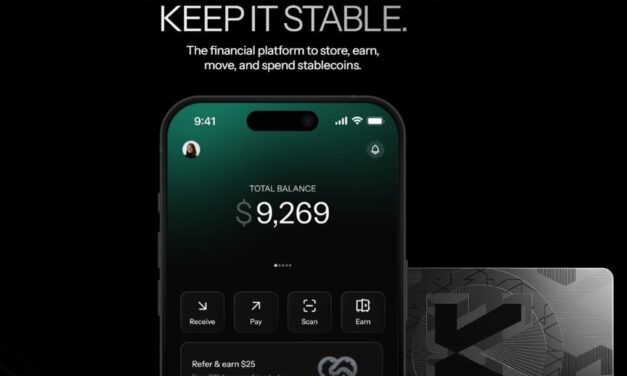
Stablecoin payments company Kast Kast has hired former US Securities and Exchange Commission (SEC) communications official Stephanie Allen as head of corporate and policy communications, as the company builds out its licensing and policy operation following an $80 million funding round last month.Kast said Thursday that Allen will work with senior leadership on policy and communications as the company prepares to launch Kast Business and expand further across North America, Latin America and the Middle East. The company said the hire is tied to its next phase of growth and regulatory engagement.Allen previously served as acting director of the SEC’s Office of Public Affairs and earlier held senior media relations and speechwriting roles at the agency. Kast said she also advised the SEC’s Crypto Task Force, though that role does not appear in the SEC’s public biography of Allen.The hire reflects how stablecoin companies are adding policy and communications talent as they move closer to regulated financial services and try to expand across multiple jurisdictions. For Kast, the appointment comes as it pushes deeper into business accounts, cross-border payments and compliance-heavy growth markets.“We’re excited to welcome Stephanie to the Kast team,” said KAST’s chief corporate affairs officer, Brad Jaffe. “Her knowledge of the policy and regulatory landscape stemming from her leadership position at the SEC and deep U.S. public and private sector experience will help drive KAST’s momentum.”The hire comes over a month after Kast raised $80 million to fund the expansion of its payment infrastructure platform, reaching a $600 million valuation.KAST stablecoin payment firm, homepage. Source: Kast.xyzKast offers payment cards and US dollar-denominated accounts to users in over 150 countries, with plans to launch savings and remittance products under its neobank interface. Related: Fireblocks launches tool for institutions to earn yield on stablecoinsStablecoin momentum coolsStablecoin transfer volume dropped 19% to $8.31 trillion over the past month, while stablecoin market capitalization rose 2.06% to $305.29 billion over the same period, Cointelegraph reported Tuesday, citing data from RWA.xyz.The data suggests that the growing value held in dollar-denominated stablecoins does not translate to growing onchain activity, as fewer dollars are being moved across blockchains despite the growing stablecoin supply.30-day stablecoin net flows as of April 28, 2026. Source: RWA.xyzStill, asset manager Fidelity’s Q2 Signals Report showed that Ethereum’s stablecoin transfer values had recently exceeded historical averages, with transfer value over the past 12 months surpassing $18 trillion. Fidelity said that the network activity signals that stablecoins are increasingly being used for payments, settlement and onchain access to US dollars, despite the broader crypto market sentiment.Stablecoin transfer volume reached a record $1.8 trillion in February, according to data provider Allium. Magazine: Will the CLARITY Act be good — or bad — for DeFi?Cointelegraph is committed to independent, transparent journalism. This news article is produced in accordance with Cointelegraph’s Editorial Policy and aims to provide accurate and timely information. Readers are encouraged to verify information independently.

Čítaj viac

OKX rolls out protocol for autonomous AI agents to pay and transact

Cryptocurrency exchange OKX has launched an open payments protocol for artificial intelligence agents, joining a growing push by crypto and payments companies to build infrastructure that lets software agents pay for services and transact with less human input.The new cross-chain Agent Payments Protocol (APP) is designed to let AI agents operate and communicate autonomously. OKX said Wednesday that the cross-chain standard can handle agent-to-agent payments, recurring or top-up payment flows and other automated payment arrangements across business processes. The company also said agents will be able to negotiate with each other, escrow funds and release them on verified task delivery.OKX said the framework is built around its self-custodial Agentic Wallet and Payment SDK, with support on X Layer and broader cross-chain implementation. The company is pitching the protocol as a way for AI agents to move from simple payment requests to more autonomous commercial activity.The launch comes as competition intensifies to build payment rails for AI agents. Google has promoted its AP2 protocol, Coinbase has its x402 standard, and Visa and Stripe-linked efforts have also moved into the space, with companies apparently trying to quickly define the rails for machine-to-machine commerce.APP compared to the existing payment protocols. Source: OKXOKX targets end-to-end AI agent commerceOKX is pitching APP as a broader commerce layer rather than a simple payment button.The company said AI agents can query real-time market data feeds, while the service responds with an HTTP 402 payment request, and agents pay per call with automatic settlement.Related: Stablecoin issuers and fintechs race to own payment rails Agents can then hire a specialized sub-agent to complete the research task, APP opens an escrow account, and payment is released upon verification after the work is delivered.OKX AI agent framework. Source: OKXDevelopers can also use OKX’s payment tools on X Layer, where the company says some stablecoin transfers can be executed without gas fees.The growing race to enable machine payments could also support stablecoin usage, as they can help unlock machine-to-machine payments by making microtransactions viable and enabling programmable, conditional payments between software agents without a human in the loop, Bernstein said in March.Magazine: Crypto wanted to overthrow banks, now it’s becoming them in stablecoin fight Cointelegraph is committed to independent, transparent journalism. This news article is produced in accordance with Cointelegraph’s Editorial Policy and aims to provide accurate and timely information. Readers are encouraged to verify information independently.

Čítaj viac
South Korea’s Shinhan Card taps Solana to test real-world stablecoin payments

One of South Korea’s largest credit card providers, Shinhan Card, signed a memorandum of understanding with the Solana Foundation to test stablecoin payment technology and explore the use of non-custodial wallets through a more advanced follow-on proof of concept (PoC). Following a joint pilot project completed at the beginning of April, the new partnership will conduct a more “advanced” PoC to explore the commercial feasibility of stablecoin payments for merchants and customers seeking an improved payment experience, Shinhan Card announced on Thursday.The partnership will also explore developing a “hybrid financial model” that combines traditional finance (TradFi) and decentralized finance (DeFi) infrastructure.The move signals that South Korea’s second-largest credit card provider is exploring the implementation of blockchain technology to improve retail merchant payment interactions. Shinhan Card is South Korea’s second-largest credit card issuer with a 16.9% market share, which was overtaken by Samsung Card’s 17.02% market share for the top spot in March, KED Global reported.Related: European investors may switch banks for better crypto access, survey findsShinhan Card to develop smart contract-based DeFi servicesShinhan Card said that the partnership’s ultimate goal is to explore DeFi-linked services of its own, which implement blockchain oracles, a technology used to connect information in offchain and onchain environments.The credit card giant said it will also explore the “execution stability” of smart contracts, which are self-executing, digital agreements with terms written in code, used to disintermediate transactions.On April 9, Shinhan Card said it completed a successful PoC with the Solana Foundation on six key areas, including blockchain-based peer-to-peer payments, digital asset integrated payment infrastructure, stablecoin-based check and credit hybrid products, stablecoin-based cross-border remittances and settlement, stablecoin payments and IC chip-based card payment services for crypto wallets.Shinhan said the earlier PoC could serve as a blueprint for bridging the existing fiat-based payment systems with the digital asset ecosystem to discover new business models that can “increase customer convenience in the payment and settlement areas” and strengthen its competitiveness in “next-generation financial markets.” Other large stablecoin issuers exploring stablecoins for improved payments and settlement include Visa, Mastercard and BC Card.Visa is among the more advanced examples, having launched USD Coin (USDC) settlement services for some US-based financial institutions on the Solana blockchain in December 2025.Magazine: Singapore isn’t a ‘crypto hub’ — it’s something better: StraitsX CEOCointelegraph is committed to independent, transparent journalism. This news article is produced in accordance with Cointelegraph’s Editorial Policy and aims to provide accurate and timely information. Readers are encouraged to verify information independently.

Čítaj viac
Lazarus-linked macOS malware hits crypto and fintech firms

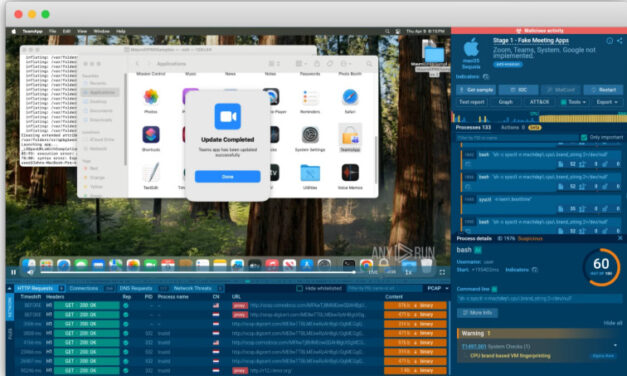
Security researchers have linked a new macOS malware campaign to the Lazarus Group, the North Korea-linked hacking operation behind some of the crypto industry’s biggest thefts.Flagged on Tuesday, the new “Mach-O Man” malware kit is distributed via “ClickFix” social engineering schemes across traditional businesses and crypto companies, according to Mauro Eldritch, offensive security expert and founder of threat intelligence company BCA Ltd.Victims are lured into a fake Zoom or Google Meet call where they are prompted to execute commands that download the malware in the background, allowing attackers to bypass traditional controls without detection to gain access to credentials and corporate systems, the security researcher said in a Tuesday report.Researchers said the campaign can lead to account takeovers, unauthorized infrastructure access, financial losses and the exposure of critical data, underscoring how Lazarus continues to expand its targeting beyond crypto-native companies.The Lazarus Group is the main suspect in some of the largest-ever cryptocurrency hacks, including the $1.4 billion hack of Bybit exchange in 2025, the industry’s largest so far. Fake Mach-O Man Kit apps. Source: ANY.RUN“Mach-o Man” kit seeks to implement hidden stealer malwareThe final stage of the campaign is a stealer designed to extract browser extension data, stored browser credentials, cookies, macOS Keychain entries and other sensitive information from infected devices.Final staging director for Stealer malware. Source: Any.runAfter collection, the data is archived into a zip file and exfiltrated through Telegram to the attackers. Finally, the malware’s self-deletion script removes the entire kit using the system’s rm command, which bypasses user confirmation and permissions when removing files.The novel malware kit was reconstructed by the security expert through cloud-based malware sandbox Any.run’s macOS analysis capabilities.Related: CZ sounds alarm as ‘SEAL’ team uncovers 60 fake IT workers linked to North KoreaEarlier in April, North Korean hackers used AI-enabled social engineering schemes to steal about $100,000 worth of funds from crypto wallet Zerion, after gaining access to some team members’ logged-in sessions, credentials and the company’s private keys, Cointelegraph reported on April 15. [embedded content]Magazine: 53 DeFi projects infiltrated, 50M NEO tokens could be ‘given back’: Asia ExpressCointelegraph is committed to independent, transparent journalism. This news article is produced in accordance with Cointelegraph’s Editorial Policy and aims to provide accurate and timely information. Readers are encouraged to verify information independently. Read our Editorial Policy https://cointelegraph.com/editorial-policy

Čítaj viac

Aave deposits fall by $15B as Kelp exploit sparks flight from DeFi lender

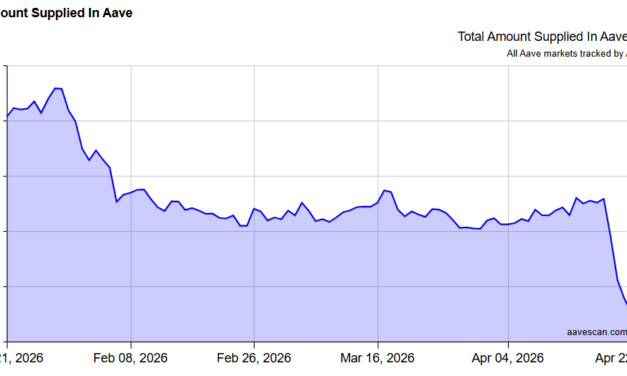
Aave, the largest decentralized lending protocol, has seen around $15 billion in deposits withdrawn since the Kelp Dao exploit on Saturday. Total value supplied to Aave fell from $45.8 billion on Saturday to $30.8 billion on Wednesday, according to Aavescan data.The decline followed an attack that drained about 116,500 restaked Ether (rsETH), worth roughly $293 million, from Kelp DAO’s LayerZero-powered rsETH bridge. The exploiter then used part of the stolen funds to borrow on Aave. Aave’s incident report said 89,567 rsETH were deposited on the protocol and that the resulting shortfall could range from about $123 million to $230 million, depending on how losses are ultimately allocated.The outflows reflect fears of contagion from Aave’s bad debt and broader capital flight from decentralized finance (DeFi), according to institutional digital asset trading platform Talos.The bad debt created by the Kelp exploiter resulted in Aave’s v3 Wrapped Ether (WETH) market temporarily reaching 100% utilization and leaving no liquidity available for immediate withdrawals, Talos said in a Tuesday report.Total amount supplied in Aave, 3-month chart. Source: AavescanSparkLend’s total value locked (TVL) rose by $1.3 billion since the Kelp DAO exploit, signaling that the fourth-largest lending protocol was absorbing some of the funds withdrawn from Aave, blockchain analyst EmberCN said in a Wednesday post on X.Related: Crypto hackers stole $17B over past 10 years: DefiLlamaKelp exploit spreads through DeFi lendingThe episode highlights how DeFi’s interconnectedness is a double-edged sword, as the Kelp DAO exploit spread across lending markets and escalated into a “broader liquidity crunch,” Tanay Ved, senior research associate at Talos, told Cointelegraph.She said the asset bundled risks across restaking, bridging and lending layers, allowing the impact to spread far beyond the initial exploit, adding that the incident reinforces the need for a more robust collateral framework and a more holistic security approach to address the systemic vulnerabilities of yield-bearing assets.Aave v3 Market Utilization Rate percentage across USDC, USDT, WETH, USDe. Source: TalosAave said it had unfrozen WETH reserves on the Ethereum Core V3 market on Tuesday, enabling users to supply WETH to the V3 lending protocol, but WETH reserves across Ethereum Prime, Arbitrum, Base, Mantle and Linea remain frozen.Related: Kelp DAO attacker moves $175M in Ether after exploit: ArkhamTraders bet Kelp DAO won’t socialize lossesOn Monday, Aave’s risk manager outlined two potential scenarios for addressing the bad debt. The first scenario involves spreading the losses across all rsETH token holders on Ethereum mainnet and layer-2s, leaving about $123 million in bad debt on Aave.The alternative would shift the shortfall entirely to layer-2 networks, resulting in about $230 million in bad debt on Aave.Traders took to prediction markets to bet on the outcome, with 20% of traders wagering on Kelp DAO socializing the losses across rsETH holders on mainnet, rather than L2 holders bearing the shortfall, Polymarket data shows.Magazine: 53 DeFi projects infiltrated, 50M NEO tokens could be ‘given back’: Asia ExpressCointelegraph is committed to independent, transparent journalism. This news article is produced in accordance with Cointelegraph’s Editorial Policy and aims to provide accurate and timely information. Readers are encouraged to verify information independently. Read our Editorial Policy https://cointelegraph.com/editorial-policy

Čítaj viac

Získaj BONUS 8 € v Bitcoinoch

nakup bitcoin z karty

Registrácia Binance

Burza Binance

Aktuálne kurzy

