
Autor Cointelegraph by Zoltan Vardai

Coinbase shifts New York prediction markets fight to federal court

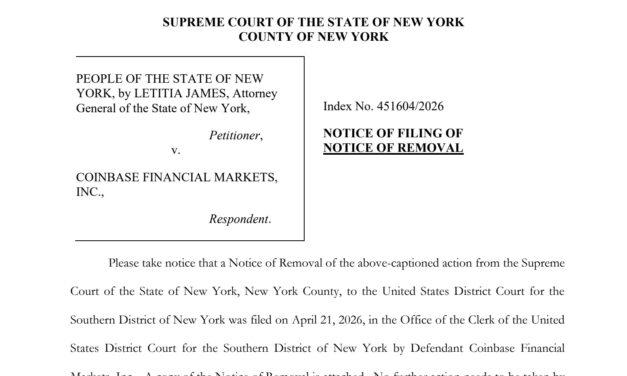
Coinbase’s chief legal officer, Paul Grewal, said Wednesday that the company had removed New York Attorney General Letitia James’ prediction markets lawsuit from state court to federal court, arguing that the case turns on disputed questions of federal law over how event contracts are regulated.The move escalates a legal fight that could help define whether prediction markets fall under federal commodities regulation and the scope of the US Commodities and Futures Trading Commission’s (CFTC) or state gambling laws, with broader implications for the oversight of platforms like Coinbase and Gemini.“We have removed this action to federal court,” wrote Grewal in a Wednesday X post, adding that New York’s claims raise “disputed and substantial questions of federal law” and are subject to “complete preemption.”It comes in response to a Tuesday lawsuit filed by New York’s Attorney General Letitia James against Coinbase Financial Markets and Gemini Titan, alleging their prediction market offerings violate New York gambling law by allowing users to bet on sports, entertainment and elections without a state gaming license, including users between 18 and 20 years old.Related: Kalshi, Polymarket face trading halt in Nevada after court rulingsThe lawsuit seeks fines, forfeiture of alleged illegal profits and restitution for customers, while also asking the court to stop the companies from offering similar products in New York without complying with state law.Cointelegraph has approached Coinbase for comment on the matter and a copy of the court filing.Notice of Removal. Source: Paul GrewalState regulators battle for prediction markets jurisdictionState regulators have stepped up pressure on prediction market platforms in recent months, with 11 states having pursued legal action against them, seeking to assert control over federal regulators.Coinbase’s Grewal said in a Tuesday X post that prediction markets are “federally regulated national exchanges” under the CFTC and the company will continue to “fight for the federal oversight of these markets that Congress intended.”Coinbase launched prediction markets across 50 US states, including New York, on Jan. 28, offering trades on “any real-world outcomes” across sports, politics, culture and more.The New York Attorney General’s lawsuit is the latest sign that state regulators are seeking to assert their jurisdiction over emerging prediction markets, contradicting the CFTC’s stance, which said it has exclusive jurisdiction over prediction markets registered as designated contract markets, such as Polymarket and Kalshi. On April 2, the CFTC filed three separate lawsuits against the gaming regulators of Illinois, Connecticut and Arizona, arguing that those states could not apply their gambling laws and licensing requirements to event contracts listed on CFTC-regulated platforms.On April 8, the CFTC and US Department of Justice (DoJ) asked a federal court to block Arizona from enforcing state gambling law against Kalshi’s event contracts, arguing that they fall under the CFTC’s exclusive authority.Magazine: Will the CLARITY Act be good — or bad — for DeFi?Cointelegraph is committed to independent, transparent journalism. This news article is produced in accordance with Cointelegraph’s Editorial Policy and aims to provide accurate and timely information. Readers are encouraged to verify information independently. Read our Editorial Policy https://cointelegraph.com/editorial-policy

Čítaj viac
European investors may switch banks for better crypto access, survey finds

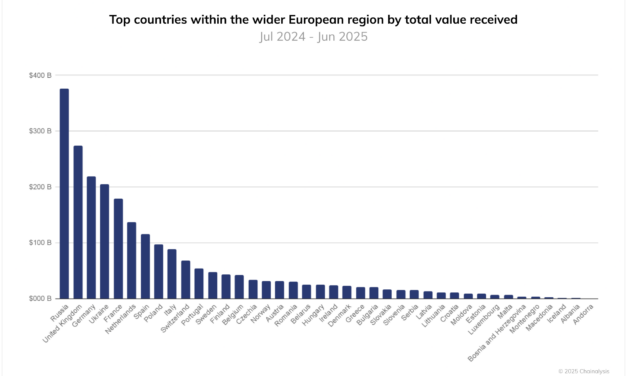
Cryptocurrency offerings are starting to influence how European investors are choosing their bank providers, but regulatory uncertainty continues to hinder mainstream adoption, according to a new survey.A Börse Stuttgart Digital survey released Tuesday found that 35% of European investors would consider switching banks if another institution offered better cryptocurrency investment options, suggesting crypto is starting to influence how some customers choose financial providers.Nearly one in five respondents said they expect their main bank to offer crypto access within the next three years, according to the survey, which covered about 6,000 investors in Germany, Italy, Spain and France. The findings suggest crypto is moving closer to the mainstream banking relationship, at least among investors already open to digital assets.Still, regulations and a lack of education remain the biggest hurdles to adoption, with 76% seeing crypto assets as insufficiently regulated, while over 60% feel poorly informed about digital assets.MiCA increased trust in digital assets for nearly half of European investorsEuropean Union regulation appears to be helping on that front. The EU’s Markets in Crypto-Assets Regulation (MiCA) went into full effect for crypto asset service providers on Dec. 30, 2024.Nearly half of the surveyed investors said that the MiCA framework increased their trust in digital assets, making them “safer and more attractive.”“Trust and clear regulation are essential for the next phase of crypto adoption in Europe. With MiCAR bringing transparency and legal certainty, investors gain the clarity they expect,” said Matthias Voelkel, the CEO of Börse Stuttgart Group.The results land as traditional financial institutions across Europe keep inching deeper into crypto. Börse Stuttgart Digital said in January 2025 that it had become the first German provider of crypto asset services to receive an EU-wide MiCA license through its custody subsidiary, positioning itself as a regulated infrastructure provider for banks, brokers and asset managers.Related: Deutsche Börse invests $200 million in Kraken parent PaywardSpain leads European crypto adoptionAmong the surveyed countries, Spain showed the highest crypto adoption rate with nearly 28% of investors already owning digital assets. Germany was second with 25%, Italy followed with 24% and France with 23%.Of the respondents, 25% said they had already invested in crypto, and 36% said they are likely to invest again within the next five years, showing “sustained interest despite market volatility,” according to the report.Top countries within the wider European region by total value received, July 2024 – June 2025. Source: ChainalysisAccording to a Chainalysis report published in October 2025, Russia had the largest crypto market in Europe with $376 billion of value received between July 2024 and June 2025, trailed by the United Kingdom with $273 billion and Germany with $219 billion.Magazine: Will the CLARITY Act be good — or bad — for DeFi?Cointelegraph is committed to independent, transparent journalism. This news article is produced in accordance with Cointelegraph’s Editorial Policy and aims to provide accurate and timely information. Readers are encouraged to verify information independently. Read our Editorial Policy https://cointelegraph.com/editorial-policy

Čítaj viac
Crypto hackers stole $17B over past 10 years: DefiLlama

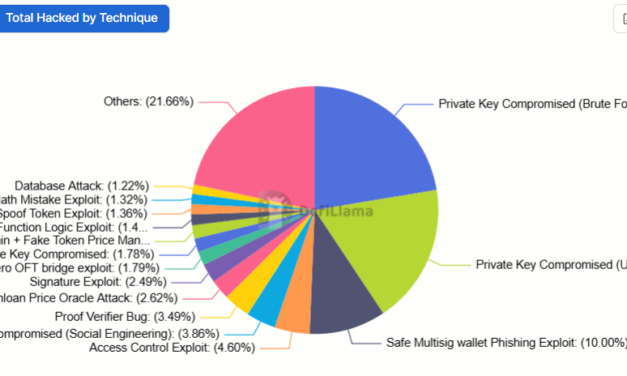
Private key compromises are emerging as one of crypto’s costliest attack vectors, with hackers stealing more than $17 billion across 518 recorded incidents over the past decade, according to data platform DefiLlama.In data shared Tuesday, DefiLlama’s dashboard shows a large share of those incidents stemmed from compromised private keys, alongside phishing and other credential-based attacks.Total hacked by the technique. Source: DefiLlama Around 22.3% of the incidents were attributed to private key compromises through “brute force,” 18.2% to private key compromises via “unknown methods,” and 10% occurred due to phishing attacks on multi-signature wallets. The figures add to evidence that some of the industry’s biggest losses are increasingly coming from weaknesses in wallet security, signing infrastructure and user behavior, rather than from flaws in protocol code alone.The findings come days after the crypto industry suffered its largest hack so far in 2026 on Saturday, when an attacker drained about 116,500 restaked Ether (rsETH), worth roughly $290 million to $293 million at the time, from Kelp DAO’s LayerZero-powered rsETH bridge.Source: DefiLlamaDeFi protocols lost $600 million in two months: GSR ResearchThe recent wave of losses has also hit decentralized finance hard. More than $600 million was stolen from DeFi protocols over the past 60 days, according to a Monday report from crypto trading company GSR, with the Kelp exploit and the April 1 exploit involving Solana-based decentralized exchange Drift Protocol accounting for most of the total.The attacks are raising new questions about whether improving smart contract audits alone is enough to protect users. In its report, GSR said attackers appear to be shifting toward “operational security, signing infrastructure, developer tooling, and the humans behind them” as smart contract security continues to improve.That shift is pressuring a sector already facing narrower returns. “DeFi yields have compressed toward TradFi rates, raising the question of whether depositing onchain is still worth the risk,” GSR wrote.Major DeFi exploits. Source: GSR Research“Lazy” hacks are spreading due to AI and malwareCybersecurity companies say advances in malware and artificial intelligence are making social engineering and wallet-targeting attacks easier to scale, which involve scammers tricking victims into sending crypto to illicit addresses by first sending them small transactions, hoping that investors copy and paste the attacker’s address from the transaction history.Related: ZachXBT asks MemeCore to explain valuation and token supplyThe rise of hacking-as-a-service tools is also lowering the barrier to entry for would-be attackers, according to Dyma Budorin, co-founder and CEO of cybersecurity firm Hacken.“If people are getting these links, their wallets can be completely drained,” Budorin told Cointelegraph in an interview at EthCC 2026. “The platform on the darknet will take the commission for their tools and [scammers] get the bigger portion of the drained wallets.”Budorin added that hackers are usually seeking out the easiest targets that require the least effort to scam.Dyma Budorin, co-founder and CEO at Hacken, interview at EthCC 2026. Source: CointelegraphWeb3 projects lost $482 million in the first quarter of 2026, as phishing and social engineering scams drove $306 million of those losses as the largest attack vector, according to a report by Hacken.Even so, some parts of the threat picture have improved. Scam Sniffer said in a January report that losses tied to crypto phishing attacks fell sharply in 2025, suggesting users were becoming more aware of the threat, even as wallet-drainer scripts and new malware strains continued to circulate.Magazine: 53 DeFi projects infiltrated, 50M NEO tokens could be ‘given back’: Asia ExpressCointelegraph is committed to independent, transparent journalism. This news article is produced in accordance with Cointelegraph’s Editorial Policy and aims to provide accurate and timely information. Readers are encouraged to verify information independently. Read our Editorial Policy https://cointelegraph.com/editorial-policy

Čítaj viac

Kelp DAO attacker moves $175M in Ether after exploit: Arkham

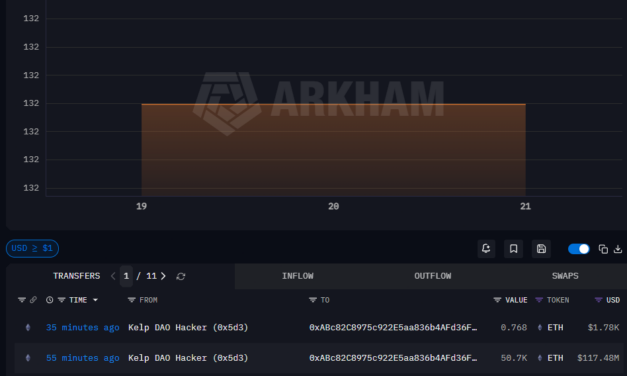
The attacker behind the roughly $290 million Kelp DAO exploit began moving tens of thousands of Ether to newly created blockchain addresses on Tuesday, in an apparent effort to start laundering the stolen funds.The wallet tagged by Arkham as linked to the Kelp DAO exploit moved about 75,700 Ether (ETH) worth roughly $175 million across three transactions on Tuesday, including a 25,000 ETH transfer to one newly created address and transfers of 50,700 ETH and 0.7 ETH to another.Blockchain investigator ZachXBT wrote in a Tuesday Telegram post that addresses tied to the exploit had begun moving funds through THORChain and Umbra. He flagged three THORChain transactions totaling about $1.5 million and a separate $78,000 transfer through Umbra.On Saturday, an attacker drained about 116,500 restaked Ether (rsETH), worth roughly $290 million to $293 million at the time, from Kelp DAO’s LayerZero-powered rsETH bridge.LayerZero said Kelp DAO’s 1/1 decentralized verifier network (DVN) setup created a single point of failure by relying on a single verifier path for cross-chain messages. LayerZero said it had previously advised against that configuration.Fallout spreads across DeFiThe transfers came hours after Arbitrum said its 12-member security council had taken emergency action to freeze 30,766 ETH tied to the exploit and move the funds into an “intermediary frozen wallet” accessible only through Arbitrum governance.Kelp DAO attacker-tagged wallet, latest transactions. Source: Arkham The exploit also hit other DeFi protocols, including Aave, where the attacker used the stolen funds as collateral to borrow against the protocol. Early estimates put the hole at about $195 million, but Aave’s Monday incident report later outlined two potential outcomes: roughly $123.7 million in bad debt under one scenario and about $230.1 million under another.The transfers suggest the attackers had begun moving funds through non-custodial protocols that can complicate tracing and recovery. THORChain does not require traditional Know Your Customer checks.During the $1.4 billion Bybit hack in 2025, attackers converted about 83% of the stolen Ether into Bitcoin (BTC), with 72% of the funds moving through THORChain, according to Bybit CEO Ben Zhou. Zhou said at the time that 77% of the stolen funds were still traceable.Related: ZachXBT asks MemeCore to explain valuation and token supplyAave unfreezes Ethereum V3 market as borrow rates spikeOn Tuesday, Aave said it had unfrozen Wrapped Ether (WETH) reserves on the Ethereum Core V3 market, enabling users to supply WETH to the V3 lending protocol once again. However, WETH reserves across Ethereum Prime, Arbitrum, Base, Mantle and Linea remain frozen.Source: Julio MorenoMeanwhile, the thinning liquidity saw Aave’s borrowing rates for USDt (USDT) rise from 3% to 14%, marking the highest figures since December 2024, wrote Julio Moreno, the head of research at analytics platform CryptoQuant, in a Monday X post.Fears over a potential contagion caused significant outflows from Aave, as its total value locked (TVL) fell by about $10 billion since the exploit to $16.4 billion as of Tuesday, DefiLlama data shows.Magazine: 53 DeFi projects infiltrated, 50M NEO tokens could be ‘given back’: Asia ExpressCointelegraph is committed to independent, transparent journalism. This news article is produced in accordance with Cointelegraph’s Editorial Policy and aims to provide accurate and timely information. Readers are encouraged to verify information independently. Read our Editorial Policy https://cointelegraph.com/editorial-policy

Čítaj viac

ZachXBT asks MemeCore to explain valuation and token supply

Onchain investigator ZachXBT publicly challenged MemeCore on Monday to justify the valuation and supply distribution of its M token, asking the project to explain its market cap and why “insiders hold >90% of supply.”“Please provide a single data point to support your $6B mkt cap at a top 20 token and why insiders hold >90% of supply,” wrote ZachXBT in a Monday X response to Memecore, a project advertising itself as the layer–1 blockchain for the “Meme 2.0 economy.”The comments add fresh scrutiny to MemeCore after a sharp rally, though live valuation metrics differed across major trackers. CoinMarketCap ranked the token No. 21 at about $4.33 billion on Monday, while CoinGecko ranked it No. 20 at about $5.97 billion.Bubblemaps showed concentrated M token holdings, with wallet “0x8b8” holding 50 million tokens worth about $178 million and a Binance deposit address appearing as the largest visible holder. But Bubblemaps analyst 0xToolman told Cointelegraph the pattern looked more like team-held allocations than evidence of coordinated trading, adding that some of those tokens may not yet be in circulation.M token, top 250 holders by amount. Source: BubblemapsCointelegraph has contacted MemeCore for comment on the matter and details surrounding the token’s distribution.ZachXBT has not posted definitive blockchain data proving that 90% of the supply is held by insiders, but pledged to investigate the token after the recent meltdown of the Rave DAO (RAVE) token sent shockwaves across the industry.Related: Suspected insider wallets rack up $1.2M betting on ZachXBT’s Axiom exposéRAVE token’s 90% meltdown sparks insider concernsOn Saturday, ZachXBT accused RaveDAO of orchestrating a pump-and-dump scheme, citing concentrated token holdings and suspicious exchange flows, after the RAVE token soared from $0.25 to nearly $28 within days before crashing over 80%.RaveDAO has denied any role in the token’s surge and collapse, Cointelegraph reported on Sunday. Both Binance and Bitget confirmed they are reviewing the situation.The RAVE token fell 92% during the past week and was trading above $0.69 at 12:46 p.m. UTC on Monday, CoinMarketCap data shows.RAVE/USD, 1-year chart. Source: CoinMarketCapZachXBT claimed that RAVE was just one of several tokens spotting “manipulation” signs on major exchanges.“Other projects with highly questionable price action recently include: SIREN, MYX, COAI, M, PIPPIN, RIVER,” he wrote in a Saturday X post, pledging to investigate these price movements to identify the responsible parties.Magazine: Meet the onchain crypto detectives fighting crime better than the copsCointelegraph is committed to independent, transparent journalism. This news article is produced in accordance with Cointelegraph’s Editorial Policy and aims to provide accurate and timely information. Readers are encouraged to verify information independently. Read our Editorial Policy https://cointelegraph.com/editorial-policy

Čítaj viac

Získaj BONUS 8 € v Bitcoinoch

nakup bitcoin z karty

Registrácia Binance

Burza Binance

Aktuálne kurzy