Autor Cointelegraph By Zhiyuan Sun

'One currency change every generation,' how monetary skepticism spearheaded cryptocurrency adoption in Czechia

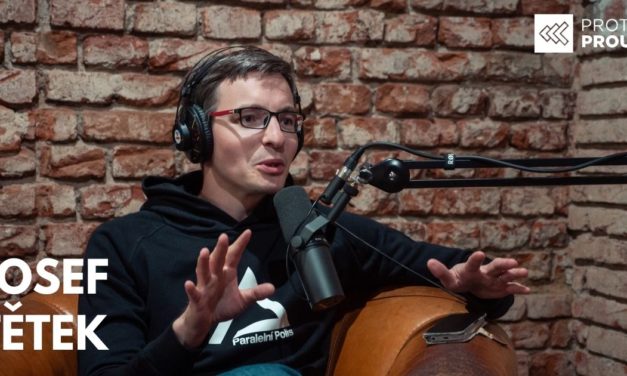
Czechia, a country of 10.7 million people in Central Europe, is known for its beautiful capital (Prague), rich history, and good beer. Within the last decade, however, one can now add cryptocurrency adoption to that list. In fact, the Trezor wallet, the first cryptocurrency hardware wallet in the world, was invented here in 2014, and is still going strong. Its parent company, SatoshiLabs, has expanded into creating secure chips for electronic hardware via Tropic Square and advancing cryptocurrency education via Invity.What’s more, the country also gave birth to the world’s first Bitcoin (BTC) mining pool — Braiins (Slush Pool), with close to 1.3 million BTC mined since 2010. Then there’s General Bytes, one of the world’s largest crypto ATM chains with close to 8,000 machines installed. Furthermore, the country’s biggest e-commerce retailer, Alza, accepts BTC purchases and has been writing deep-dive articles on Bitcoin and technology in the past years.But what drove this small nation of 10.7 million people, out of all places, to create a disproportionally large presence in the crypto sphere? In an exclusive interview with Cointelegraph, Josef Tětek, SatoshiLabs’ in-house economist, explains the phenomena in detail. Tětek also happens to be Trezor wallet’s brand ambassador, writes for Bitcoin Magazine, and holds a Master’s Degree (equivalent) in economic policy from the Prague University of Economics and Business. Here’s what he had to say:“In the geographical region that is now the Czech Republic, there have been seven different currencies in circulation over the past 140 years. First, there was one backed by gold and then, two forms of silver coins [during the rule of the Austria-Hungarian Empire]. After the country gained its independence in 1918, there was the gold-standard Czechoslovak koruna [crown].”During the interwar era, Czechoslovakia was an industrial powerhouse led by Škoda Works, one of the largest European industrial conglomerates making everything from cars to tramways to aircraft to military equipment. It was also stood as the only Central European country with a parliamentary democracy after 1933.However, faith in the Czechoslovak koruna, and the country as a whole quickly faded with the Munich Betrayal of 1938 — where its allies Britain and France gave the silent nod for Germany to annex the heavily industrialized and fortified regions outlying Czechoslovakia. With the country left without natural barriers to defend against the German war machine, it quickly became a puppet state for the former, leading to another currency change.But the reestablishment of the Czechoslovak koruna was again short-lived. Immediately after the Allied victory in World War II in 1945, an iron curtain had spread from the Baltics to the Black Sea. The newly independent Czechoslovak Third Republic became a satellite state of the Soviet Union after merely three years, with a new form of Soviet-controlled koruna.To further the policy of Stalinism, in 1953, leaders of the Czechoslovak Communist Party devalued all personal savings denominated in koruna by a ratio of 50:1. As Tětek told Cointelegraph:“Many people still remember it [the 1953 event] to this day, such as our parents and grandparents. Basically, it was large-scale theft [by the state].”Then, in 1989 came the Velvet Revolution that toppled the Communist Party and gave birth to the fifth Czechoslovak Republic. But at first, independence did not restore faith in the new koruna. (It also did not help that Slovakia left the union in 1993). Inflation in the early 1990s in the country remained almost consistently above 10% every year.To sum it up as to what makes the Czech people drawn to cryptocurrencies, especially to their decentralized nature, Tětek writes:“There was basically a currency change every generation in Czechia. So we tend to be skeptical of the official monetary regime. However, combined with a high percentage of people receiving high-quality technical education, the factors drove the adoption of crypto in Czechia.”Portrait oJosef Tětek | Source: Podcast Proti Proudu

Čítaj viac

The team behind the world's first hardware wallet says it's still thriving after 8 years

Like all things, Trezor, a household name in the crypto community with over 1 million units sold, came from humble beginnings. The idea all started out in 2011 after a Bitcoin (BTC) conference in Prague, Czechia — which, by the way, was just voted the most beautiful city in the world in a Time Out magazine survey. Two crypto enthusiasts, Pavol “Stick” Rusnák and Marek “Slush” Palatinus, envisioned a small, single-purpose computer that would securely store users’ Bitcoin private keys.In 2013, the two founded SatoshiLabs. The following year, the first-ever Trezor wallet — Trezor One — launched. Then came the Trezor Model T, which added a touchscreen to the device. Both are still found on the market worldwide, with their firmware patched each month or so. With the invention of seed recovery and passphrase protection, Trezor set the norm for the industry in terms of hardware wallet security.During an exclusive interview with Cointelegraph, Kristýna Mazánková, head of PR at SatoshiLabs, and Josef Tětek, Trezor’s brand ambassador, discusses how Trezor still remains true to its goal of privacy and security after all these years. When asked about the vulnerability of their customers’ data, they said:”We don’t have any data on our customers [in our servers] because every 90 days, we wipe whatever is stored. So that’s something that is super important to us because we understand that everything is theoretically hackable.”They noted that, “When it comes to security, the key feature is it’s a standalone physical device. It’s not possible to hack it remotely.””If somebody were to get your hardware wallet, there is an additional layers of protection, such as the PIN code, which locks the device. Even if they were to get around that, there’s always the recovery seed.”Tětek then explained that it’s still not the end of the world if hackers manage to find one’s recovery seed, as the inclusion of a passphrase makes the recovery seed useless by itself. “If you have your Trezor setup, with a recovery seed written down and protected with both PIN and passcode, there’s no way to hack the device at all,” says Tětek. However, he warned:”Without the passphrase production, there is the possibility to read the seed from the device if you have very specialized equipment.”When asked about just how on Earth a hacker managed to hack a Trezor wallet and recovered $2 million in ‘lost’ crypto in January, Mazánková and Tětek told Cointelegraph:”It was like a double coincidence that the owner didn’t update their firmware for five years and didn’t have a password set up. So I think the engineer conducted about 1,000 tries to make sure he didn’t fry the chip before extracting it because if he had one mistake on the chip, he would fry the chip, and the wallet would become non-recoverable.”Privacy and security aside, since the release of Model One and Model T, there have been additional features, such as doing everything on display, desktop, or web applications when connected. In addition, one can buy and sell Bitcoin and other cryptocurrencies directly to an address via Trezor Suite.This year Trezor is also focusing on integrating CoinJoin into its hardware wallet. Made possible by Bitcoin’s Taproot upgrade last November, CoinJoin collates multiple Bitcoin transactions into a single arrangement to obfuscate who owns which coin afterward, thereby significiantly improving user privacy. Another major update on the table is being able to run one’s own node directly from the Trezor Suite.

Čítaj viac

CoinMarketCap removes allegedly fake SHIB wormhole addresses

Late Wednesday, Twitter user @shibainuart reported that CoinMarketCap had removed three listed Shiba Inu (SHIB) addresses on the Binance Smart Chain (BNB), Solana (SOL), and Terra (LUNA) blockchains. Only the ERC-20 (ETH) SHIB token is visible on the site at the time of publication. A massive firestorm brewed on Twitter about three weeks prior after Shiba Inu developers alleged that “CoinMarketCap has knowingly listed three fake contract addresses for SHIB. Do not interact with these addresses as your funds will be irreversibly lost.”Report: CoinMarketCap removes wormhole addresses from the Shiba Inu $SHIB page within their platform. Leaving only the #Ethereum contract intact. pic.twitter.com/X0wc0hW4pi— MILKSHAKE (@shibainuart) February 8, 2022In response, CoinMarketCap stated that the addresses were wormhole addresses designed to facilitate cross-chain transactions. While the addresses are gone, the warning can still be seen on the SHIB token main page on the site. CoinMarketCap has not issued a statement as to the reasons behind the removal of the wormhole addresses.The Shiba Inu developers appear to have acknowledged this explanation in a community letter published on Jan. 19. However, they also cited the potential risk vulnerabilities of cross-chain bridges. Last month, Ethereum co-founder Vitalik Buterin explained, due to scaling, 51% attacks on one single small-cap chain in a network of 100 interoperated blockchains could cause a system-wide contagion. Last week, the largest decentralized finance hack took place on cross-chain bridge Wormhole. Hackers fraudulently minted $321 million worth of wrapped Ether on Solana and transferred them onto the Ethereum network for redemption. In addition, the developers believed that CoinMarketCap behaved unprofessionally during their correspondence, for example, in their lack of communication and use of “display of erroneous contracts,” “incorrect social media links,” “incorrect display of circulating supply,” etc., as reasons for standing by the claim that the contracts are “fake.”

Čítaj viac

'China's crypto ban had little impact on Neo,' says organization's developers

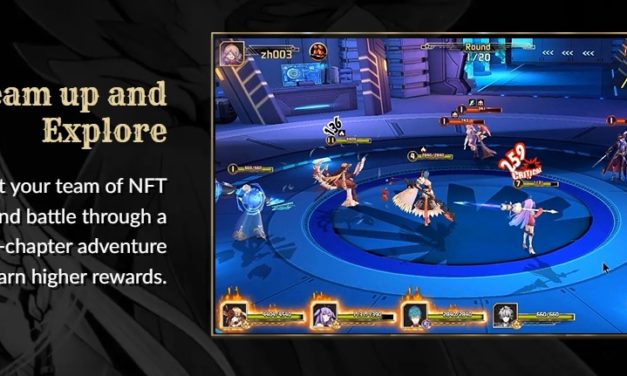
Once hailed as the “Ethereum of China,” Neo’s token price has fallen on hard times ever since the world’s most populous nation introduced a series of acute bans on cryptocurrency operations last year. In an exclusive interview with Cointelegraph, Neo’s developers — who wished to remain anonymous — explained that partners run most projects sponsored by Neo Global Development, or NGD, from a wide range of countries outside China that serve users all over the world.In addition, Neo continues to expand inside China. It is currently one of seven open permission blockchains servicing the nation’s Blockchain-based Service Network, or BSN. One of the group’s goals is to expand the adoption of nonfungible tokens in the country.There’s also been quite a few decentralized finance, or DeFi projects, and decentralized applications, or dApps, since the launch of the Neo 3.0, sometimes stylized as Neo N3, mainnet last year. One example is Defina Finance, an anime-styled NFT metaverse game that uses a play-to-earn model. Total trading volume in the Defina marketplace has exceeded $100 million at time of publication. Defina began expanding to Neo N3 in 2021 in partnership with NGD.But according to the project’s team, the “coolest” development is probably that of Rentfuse. Our sources from Neo explained:”Rentfuse is a protocol designed to manage NFT rental agreements between owners and tenants for gaming or other functions. Neo leadership is working with Rentfuse to establish it as an NFT leasing standard for the Neo ecosystem.”Its developers, too, appear to be fond of the greater Neo community. “We reached thousands of people through Neo socials to let people know more from us, and we have developed the core contracts of Rentfuse,” so said Michael Fabozzi, founder of Rentfuse, in a statement to Cointelegraph. “Thank you for believing in us.”Meanwhile, sources at GhostMarket, a multi-chain Neo NFT marketplace that recently raised $2 million in strategic funding and completed an initial DEX offering on Flamingo Finance, told Cointelegraph:”Neo’s $10 million N3’s early adoption program [last year] was vital for Neo to attract and onboard new projects and was very much needed to exponentially scale Neo ecosystem.”When asked about what made Neo unique in a sea of smart-contract, proof-of-stake blockchains, they explained that out of many highlights, Neo 3.0 has a native built-in oracle for HTTPS or NeoFS requests. A distributed data storage solution also exists for scalability and privacy on the NeoFS Network.In addition, interoperability protocol Poly. Network enabled cross-chain communications between Neo and Ethereum (ETH), Binance Chain (BNB), and more. There’s also NeoID, which is a self sovereign identity initiative allows developers to customize the precise level of attribute verification needed to ensure that contract operates correctly.Defina Finance gameplay | Source: Defina Finance

Čítaj viac

OpenSea once again delists CryptoPunks v1 as legal battle heats up

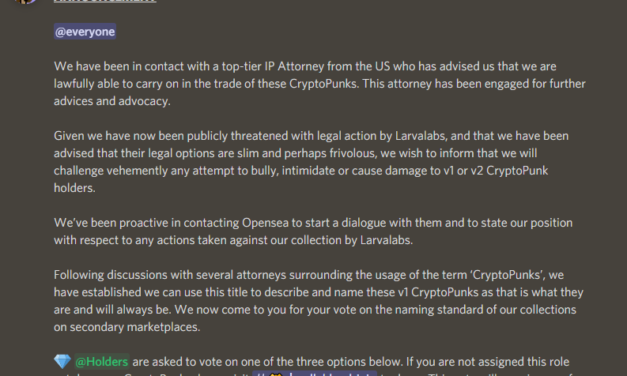
Late Monday, popular nonfungible tokens, or NFTs, platform OpenSea once again delisted the CryptoPunks v1 collection, which spiraled into existence along with the iconic CryptoPunks v2 collection due to a smart contract bug. This was allegedly due to a Digital Millennium Copyright Act takedown notice issued by CryptoPunks v2 developers Larva Labs to OpenSea. As the company is also the creator of the CryptoPunks v1 collection, this move has struck some as strange.LL has forced @opensea to remove V1 Punks collection because of a DMCA takedown. We are responding via a counter-notice from our counsel in due course. We look forward to updating you further. In the meantime, trade using https://t.co/KjPg88vDqE or @LooksRareNFT pic.twitter.com/1qmgdQrR7l— V1 Punks (@v1punks) February 7, 2022For many years, OpenSea banned the CryptoPunks v1 collection as users shunned their authenticity. However, the collection’s recent listing on competing NFT platforms, such as LooksRare, led to an increase in recognition and led OpenSea to rescind its first ban. At the time of publication, the wrapped CryptoPunks v1 collection had surpassed 315.44 Ether (ETH) ($974,000) in total volume traded and continues to operate.But the battle for the authenticity of the NFT collection appears to be heating up. In an announcement posted in the official CryptoPunks v1 Discord, developer Velinova.eth alleges that they’ve spoken with a “top-tier IP attorney from the U.S.” who claims they are “lawfully able to carry on in the trade of these CryptoPunks.” Meanwhile, the community is preparing a counter-notice to the OpenSea takedown. On top of that, its NFT holders have chosen to rename the collection to “CryptoPunks V1 313 WPV1,” partly to reflect the NFTs’ wrapped nature for patching up the aforementioned bug.CryptoPunks V1 community announcement | Source: Discord The issue of CryptoPunks’ authenticity may have significant financial consequences. With a total of 824,947.17 ETH traded ($2.55 billion), CryptoPunks v2 is the most popular NFT collection globally. However, a part of the collection’s high demand stems from its scarcity as its supply is fixed at 10,000 Punks. If another 10,000 images from CrptoPunks v1 are legitimized, it could potentially dilute the brand, leading to a rapid decrease in the NFTs’ price.

Čítaj viac

Získaj BONUS 8 € v Bitcoinoch

nakup bitcoin z karty

Registrácia Binance

Burza Binance

Aktuálne kurzy