Autor Cointelegraph By Zhiyuan Sun

Report: 74% of stolen funds from ransomware attacks went to Russian-affiliated wallet addresses in 2021

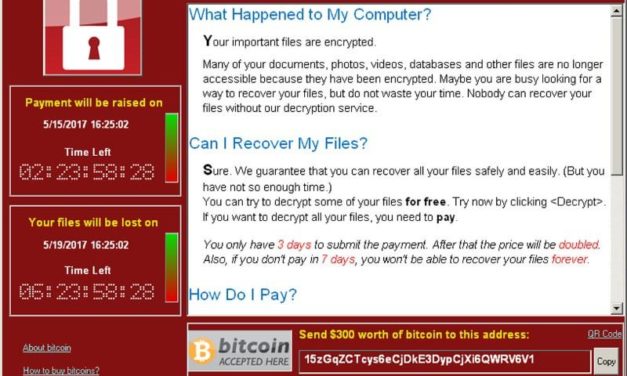
According to a new report published by blockchain analytics firm Chainalysis on Monday, approximately 74%, or over $400 million USD, of ransomware revenue last year were funneled into high-risk wallet addresses that are likely to have been based in Russia. The report analyzed ransomware hacks throughout 2021 and determined their affiliation to Russia through three key characteristics:Traces of Russia-based cybercriminal organization Evil Corp being behind a given breach; the group has alleged ties to the Russian government.Ransomeware programmed only against victims of non-former-Soviet countries.Ransomware strains that share documents and announcements in the Russian language.In addition to the selection criteria, it appears that web traffic data confirms the vast majority of extorted funds are laundered through Russia. Another 13% of funds sent from ransomware addresses to services went to users who were likely in Russia — more than any other region. Such ransomware strains typically infect a user’s computer via a program exploit, or when downloading unknown files, etc. They then encrypt the victim’s files and demand payment through, most often, Bitcoin (BTC) or Monero (XMR) to a wallet address to make the files accessible.One famous case occurred last year when Russia-based hacking entity Darkside, through exploiting a single leaked password, infected the computer systems of Colonial Pipeline. As a result, the pipeline’s operators were forced to pay over $4 million in crypto ransom — of which $2.3 million was recovered — to regain access to their encrypted files, but not before causing a brief fuel crisis during the ordeal.Russian ransomware encryption hack | Source: Reuters

Čítaj viac

Are we misguided about Bitcoin mining's environmental impacts? Slush Pool's CMO Kristian Csepcsar explains

It’s a controversial topic in the blockchain community that comes up from time to time — just how much impact Bitcoin (BTC) mining has on the environment. Last year, Tesla’s CEO Elon Musk brought forth a sharp correction in the cryptocurrency market by tweeting that Tesla would abandon plans to accept BTC, citing “rapidly increasing use of fossil fuels for Bitcoin mining and transactions.” However, a recent report published by CoinShares notes that despite the widespread use of coal, oil and gas for Bitcoin mining, the network accounts for less than 0.08% of the world’s CO2 production.During an exclusive interview with Cointelegraph, Kristian Csepcsar, chief marketing officer at Slush Pool, the oldest Bitcoin mining pool, gave insight on what he believes are current misconceptions regarding Bitcoin mining’s environmental impact. When asked about the drawbacks of using electricity derived from oil and gas mine Bitcoin, Csepcsar says there are more than meets the eye:”We’re literally burning the gas into the atmosphere just because it’s not economical to do anything with it [Flaring]. Instead, we can put it into a motor to produce electricity and use that to mine Bitcoin.”Flaring is the process of burning surplus natural gas during oil extraction due to a lack of pipeline infrastructure to bring it to market. Recently in the U.S. and Canada, Bitcoin miners have found clever ways to instead funnel the natural gas to generate electricity, instead of simply burning it into the atmosphere, thereby solving a critical environmental problem.But Csepcsar remains skeptical of certain renewable sources of Bitcoin mining, calling them “marketing noise,” specifically, solar energy. As he told Cointelegraph:”On our blog, we published research that we are not big promoters of solar mining; when you calculate the profitability, it’s not that good; it’s a very tough business.” Cespcsar further elaborates that approximately 70% of all solar panels are produced in China and that there has not been a lot of research on the environmental impact during their manufacturing process:Producing them creates a lot of harmful chemicals. And nobody talks about that. Everyone just thinks that the solar panels grow on trees, and then the sun shines on them. But, no, the process of creating them is brutal.On a final note, Slush Pool does not possess metrics regarding the source of energy used by its Bitcoin miners. When asked why this is, Cespcsar gave an answer that was surprising but perhaps true to the philosophy of decentralization and privacy: “We don’t want to look at that as a pool operator. In order to have those numbers, we would need to KYC our miners, conduct audits on their operations, or even filter transactions [for analytics]. That’s not the ethos we want to keep.”

Čítaj viac

Intel to enter crypto space with blockchain accelerator shipping later this year

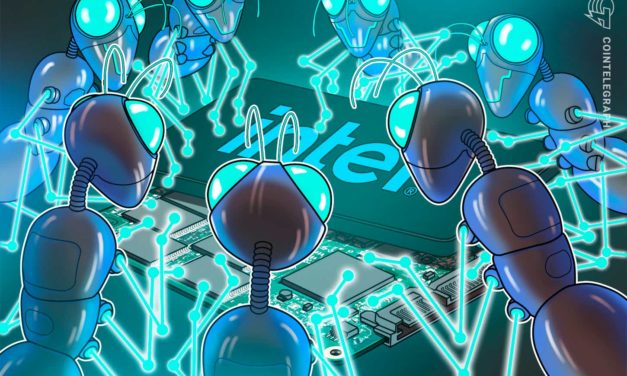
On Friday, Raja M. Koduri, senior vice president of accelerated computing systems and graphics group at Intel, declared their intent to contribute to the development of blockchain technologies, beginning with the introduction of energy-efficient crypto mining accelerators that will be released this year. Previously, Intel had announced it would unveil the next generation of Application-Specific Integrated Circuit mining machines at the next International Solid-State Circuits Conference later this month.The company would also form a new International Solid-State Circuits Conference within Koduri’s division. It would be responsible for building custom silicon platforms for optimizing blockchain mining performance and the design of supercomputers.In addition, the firm believes that its circuit innovations will deliver a blockchain accelerator that has over 1000 times better performance per watt, or energy used per units time, than the mainstream GPUs used to mine blockchain networks, which utilize SHA-256 encryption. Regarding the development, Intel said:”Argo Blockchain, BLOCK (formerly known as Square), and GRIID Infrastructure are among our first customers for this upcoming product. This architecture is implemented on a tiny piece of silicon to have minimal impact on the supply of current products.”Intel has had an odd, low-profile relationship with the cryptocurrency space over the years. The difficulty of mining Bitcoin has increased to the point that ASICs are required over GPUs for a chance at profitability. As for Ethereum mining, NVIDIA and AMD currently dominate the sphere with their GPUs sold en mass to local miners. Prior to unveiling its Bitcoin mining hardware, Intel had not seen much action in the crypto space, aside from taking a small stake in Coinbase stock last year.

Čítaj viac

The world's first and oldest Bitcoin mining pool has mined nearly 1.3 million BTC since inception

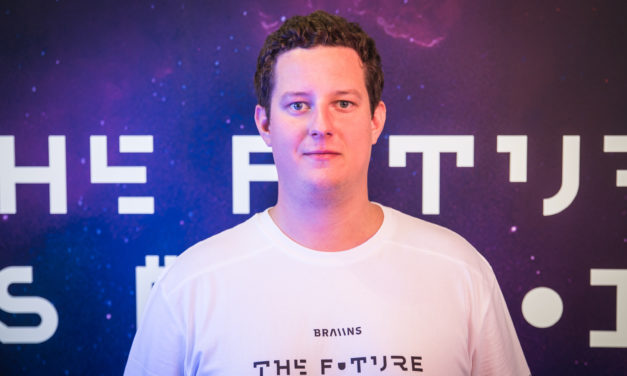
All things have their humble beginnings; in 2010, the first Bitcoin (BTC) mining project was created in Prague, Czechia, and was simply called Bitcoin.cz. Soon afterward, founder Mark “Slush” Palatinus decided to move on to other ventures, such as creating the world’s first cryptocurrency hard wallet, Trezor. As a result, Braiins, a company doing embedded Linux development and research, took over the mining pool and renamed it accordingly.Fast forward to today, Braiins (Slush Pool) has grown to become one of the biggest Bitcoin mining pools. There are now over 15,000 users in the space, with its total hash rate accounting for 5% to 8% of that of the overall Bitcoin network. The company derives 100% of its income via BTC and charges a 2% commission from its mining firmware. In an exclusive interview with Cointelegraph, Kristian Csepcsar, chief marketing officer at Braiins, explained why crypto enthusiasts are still choosing the world’s oldest mining pool after all these years, despite so many competitors available.One of the first aspects discussed was why firmware is so critical in the process, to which Csepcsar gave the example of grid balancing in Texas. He explained, “You turn on the mining machine when there’s a lot of electricity in the grid, but you might have to turn them off in milliseconds when demand is high from households.””Now imagine a big farm of 60,000 machines; it’s very hard to regulate them without the aid of firmware, which solves the problem easily.”But it’s not just the technological aspect that’s alluring novel miners to the Braiins mining pool. It’s also about the ethos of the company. “Other mining pools want to support as many forks of Bitcoin as possible because it’s just a revenue stream and is good for business,” said Csepcsar. “But we are not about that; during the Bitcoin Cash (BCH) fork in 2017, we decided to stay true to our central vision and not expand our mining pool to BCH because it was just a fad.”Kristian Csepcsar at Braiins headquarters | Source: Kristian CsepcsarAnd true to his words, Braiins today does not mine any other digital currencies other than BTC. Contrary to popular belief, Braiins isn’t sitting on a huge pile of digital money as you’d expect. Csepcsar explains:”Nobody expected Bitcoin to succeed that quickly. So we were selling a lot more initially [when the price was very low] to fund operations. In addition, there was a hack of the cloud service early on that resulted in 3,000 BTC stolen. So like, we’re not sitting on Satoshi level wealth.”When asked about how the firm stays strong cryptocurrency bear markets, when the price of digital currencies can often plunge 70% to 80% in a very short period of time, Csepcsar responded:”The good thing is that we started early. All the co-founders were already far enough in their careers to have money from their previous job in big tech companies. We’re Bitcoiners, and we don’t believe in numbers going up forever. There are always going to be crashes. And so we prepare for that.”In addition, Braiins is fiercely independent, having never accepted money from venture capitalists or external investors. Some crypto enthusiasts would argue there is a need for centralized institutions, such as security regulators, to step in and regulate the volatility of digital currencies, so investors and businesses alike could plan for slow and steady (albeit controlled) growth. But not Csepcsar, as he tells Cointelegraph:”Imagine if we traded Bitcoin the same as the NASDAQ, eight hours a day, Monday to Friday instead of 24/7. Bitcoin is growing fast like an exponential technology, and we want it to remain that way. Restrictions make everything slower and less efficient.”

Čítaj viac

How HashEx is developing new auditing methods to outsmart hackers, as told by founder Dmitry Mishunin

As the cryptocurrency market has grown, so too have the number of bad actors looking to exploit vulnerable decentralized finance, or DeFi, protocols, and projects for their own gain. Earlier this month, the Ethereum-Solana Wormhole token bridge suffered the biggest hack of 2022, with $321 million lost due to a signature verification vulnerability. Such exploits have become increasingly sophisticated over the years.But blockchain security firms like HashEx are keeping up the pace just as hackers upgrade their tactics. During the past few years, HashEx has audited more than 700 DeFi smart contracts that secure over $2 billion worth of investors’ funds. One notable project that utilizes HashEx is Trader Joe, a popular decentralized exchange on the Avalanche (AVAX) blockchain. In an exclusive interview with Cointelegraph, Dmitry Mishunin, CEO and founder of HashEx, explains just how the firm is upgrading its auditing process to protect crypto enthusiasts against possible breaches.The old-fashioned auditing method consists of a manual check and an automatic test of the underlying code. As Dmitry told Cointelegraph:”Traditionally, a group of auditors manually tests the logic of contracts; they’re trying to imagine some inputs values, which can break their logic. It’s like an Olympic Games for programmers. But this is only good when your auditor is experienced enough.”Sometimes, Dmitry continues, “problems cannot be conjured then tested, as they are do not arise mistakes in the logical flow of code, but from minor errors such as in the Ethereum Virtual Machine, which happens quite often.” To overcome this fault, HashEx has derived a new “stochastic (random) testing” method. Using AI, its software generates 1,000 to 100,000 randomized transactions with different trends and parameters to stress-test the smart contract. “With random transactions, it looks like a simulation of a person with a crazy idea [commonly descriptive of hackers] creating something to break the contract.”When asked about whether there have been any breaches in smart contracts audited by HashEx, Dmitry was very humble in his response. In 2020, none of the firm’s audited projects experienced any hacks. But in 2021, two minor incidents occurred out of hundreds of projects that went on to be secure. One project on the Avalanche network had a critical issue in the audited contract and lost about $100 thousand. Meanwhile, Dmitry explained that the other incident wasn’t a hack per se, as the contract had a bug that prevented the withdrawals of fees. “It’s the real world; sometimes we miss it,” says Dmitry.

Čítaj viac

Získaj BONUS 8 € v Bitcoinoch

nakup bitcoin z karty

Registrácia Binance

Burza Binance

Aktuálne kurzy