Autor Cointelegraph By Zhiyuan Sun

Blockstream and Block Inc to build solar Bitcoin mining facility powered by Tesla technology

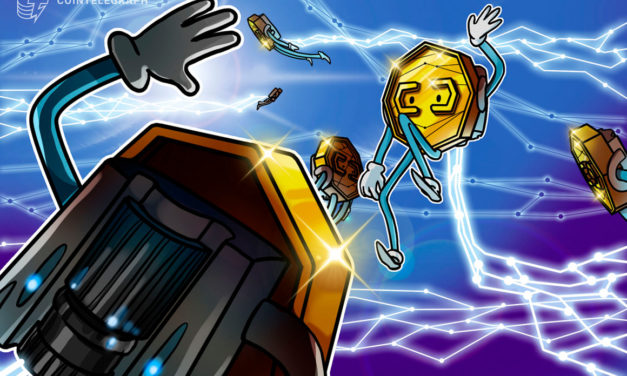
On Friday, cryptocurrency storage company Blockstream and Block Inc. (formerly Square) announced the construction of a solar-powered Bitcoin (BTC) mining facility in Texas. As told by Blockstream, the mining site will be outfitted with 3.8 megawatts (MW) of electrical capacity using Tesla’s Solar photovoltaic cell array and a 12 an MWh Megapack.Manufactured by Tesla Energy, Megapack is a powerful lithium-ion battery that provides energy storage and support. In context, one of the leading publicly-listed Bitcoin mining companies, Hut 8 Mining, has about 209 MW in total contracted mining capacity. The purpose of the venture is to investigate the feasibility of operating a zero-emission energy Bitcoin mine. Blockstream and Block began collaborating on the project last June, with Block promising to invest $5 million for its construction.In addition to its physical construction, the teams at Blockstream and Block will build a publicly accessible dashboard to report on the project’s economics. Key metrics will include power output, the number of Bitcoin mined, storage performance, total uptime, expenses and return on investment, etc. It will be accessible 24/7 from any browser.While solar Bitcoin mining is theoretically carbon-neutral, there is a great deal of controversy within the crypto community about its practicality. In June 2021, Braiins, the world’s oldest Bitcoin mining pool, published a feasibility analysis on using solar energy to mine Bitcoin and concluded that it was not profitable, even when considering near-free electricity costs and recycling surplus energy during peak sunny hours. Braiins’ chief marketing officer Kristian Csepcsar is also an outspoken critic of solar Bitcoin mining, pointing out that using traditional metrics to evaluate its “environmental friendliness” doesn’t account for variables such as the production of “brutally” harmful chemicals during the manufacturing of solar panels.

Čítaj viac

Samson Mow introduces new nation-state adoption for crypto in Bitcoin 2022

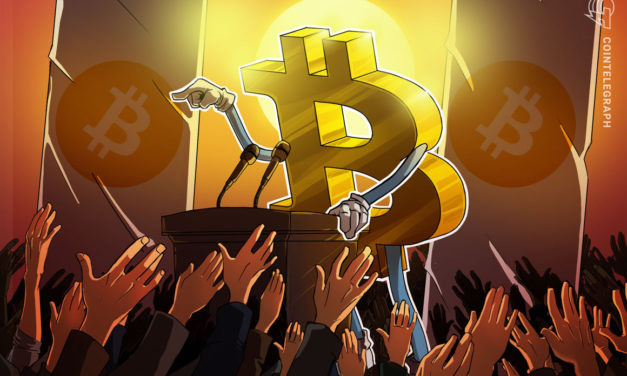
Speaking at the Bitcoin 2022 conference in Miami, Samson Mow, former chief strategy officer of Blockstream, named three new jurisdictions that would be adopting or proposing to adopt Bitcoin (BTC) as legal tender. As told by Mow, the first is that of the Caribbean island Roatán, which is part of Honduras. Honduras Prospera Inc. is the organizer and promoter of the jurisdiction. The entity’s president, Joel Bomgar, told the audience: “Bitcoin within Prospera operates as legal tender. That means no capital gains tax on BTC, you can transact freely using BTC, and you can pay taxes and fees to the jurisdiction in BTC.”In addition, Bomgar announced that starting Thursday, the Prospera jurisdiction will enable municipalities in Honduras and corporate entities outside of the United States to float Bitcoin bonds within Prospera. Furthermore, accredited investors, meaning U.S. residents who qualify for a high-net-worth or income threshold, can also directly invest in Honduras Prospera Inc. and receive securitized equity tokens.The next jurisdiction to make Bitcoin legal tender is that of Madeira, an autonomous region of Portugal. Miguel Albuquerque, president of the regional government of Madeira, said that “Individuals in Maderia are not subject to capital gains taxes when buying and selling Bitcoin,” while also touting the region’s 5% corporate tax rate in its free trade zone as one of the lowest in Europe.Finally, Mexican Senator Indira Kempis floated the possibility of legislating Bitcoin as legal tender with the Mexican president, in-line with earlier claims, commenting:”In Mexico, 67 million people are not included in our financial system. Bitcoin is the solution to this problem. Through financial inclusion and financial education, the people can have a better quality of life.”

Čítaj viac

Vitalik Buterin quietly donates $5M ETH to aid Ukraine as total tracked crypto donations reach $133M

As told by Aid for Ukraine, a joint initiative created by the Ukrainian government, FTX, Everstake and Kuna to rally crypto donations for the country, Ethereum (ETH) co-founder Vitalik Buterin made $5 million worth of ETH donations to Ukraine in early April. According to the entity, despite the large donation sum, Buterin did not make an announcement regarding the transaction. It was eventually linked to him via the Ethereum Name Service domain name “vitalik.eth,” which served as the origin of the transfer..@VitalikButerin donated almost $2.5M in $ETH to @_AidForUkraine 2 days ago, and didn’t say a word! He’s also donated $2.5M to @Unchainfund.Thanks for your enormous help, Vitalik, and thank you for creating @ethereum! The #Ethereum community is pic.twitter.com/HuvDcTM40e— Aid For Ukraine (@_AidForUkraine) April 6, 2022Half of the $5 million in donations went directly to Aid for Ukraine, while the other half went to Unchain Fund, a cryptocurrency charity initiative created by activists in the blockchain community to provide humanitarian relief for Ukrainians. Alex Bornyakov, deputy minister of Digital Transformation of Ukraine, publicly thanked Buterin’s contribution in a tweet, writing: “I couldn’t be more grateful for every crypto donation to our lifesaving initiative, Aid for Ukraine. It really helps to strengthen our country and protect its democratic values. Special thanks to Vitalik Buterin for standing with Ukraine.”Based on data gathered by Cointelegraph, the amount of tracked crypto donations sent to the Ukrainian government, military and charities has surpassed $133 million. Unchain Fund has raised more than $10 million alone, with most of its contributions stemming from NEAR tokens and ETH. But overall, it appears the pace of donations has slowed down.From Feb. 28 to March 9 alone, total tracked crypto donations to Ukraine skyrocketed from $37 million to $108 million. Some have pointed to a decline in enthusiasm for such initiatives, especially after the Ukrainian government made a U-turn on an anticipated airdrop.

Čítaj viac

UST staking goes live on Binance as Anchor reserves fall

On Wednesday, centralized cryptocurrency exchange Binance launched its new TerraUSD (UST) staking program. Although Binance did not name the underlying decentralized finance protocol responsible for the staking rewards, Do Kwon — Terra Luna’s (LUNA) co-founder — attributed the origins of the high yield to Terra’s flagship Anchor protocol. Anchor rate is now available to 30M+ binance usersThe anchor yield of web3 is living up to its name.https://t.co/awubGdRJgP— Do Kwon (@stablekwon) April 6, 2022Terra’s (Luna) ecosystem consists of its algorithmic stablecoin UST and governance/equilibrium token LUNA. The Anchor protocol alleges that it operates as a “crypto savings account,” allowing users to deposit their UST and earn up to 20% APY. The savings rate is funded via a combination of borrowers paying interest on UST loans and staking income from their collateral.At the time of publication, there is a continued imbalance between borrowers and lenders, with 12.4 billion UST worth of deposits relying on income generated by just 3.47 billion UST of loans. Anchor must tap into its reserves to pay out its promised APY when this occurs. According to data from an unofficial tracking resource called Terra.engineer, Anchor has less than 340 million UST remaining in its reserves, compared to approximately 450 million UST last month. Despite the declining reserve count, the Terra development team is using initiatives such as injecting more reserve capital and launching more income-generating methods to maintain protocol. Earlier in the day, data from Luna Foundation Guard’s (LFG) official Bitcoin (BTC) address shows that the entity purchased another 5,040 BTC ($222 million), bringing its total stack to 35,768 BTC ($1.577 billion). LFG launched in January to grow the Terra ecosystem and improve the sustainability of its stablecoins. Earlier, Do Kwon said he wanted to build a decentralized forex reserve for UST, utilizing both LUNA and BTC. LFG plans to expand its BTC reserves to $10 billion, with additional purchases after that based on how much UST is minted. 

Čítaj viac

Report: DApp daily users surge to 2.4M in Q1 2022 despite headwinds

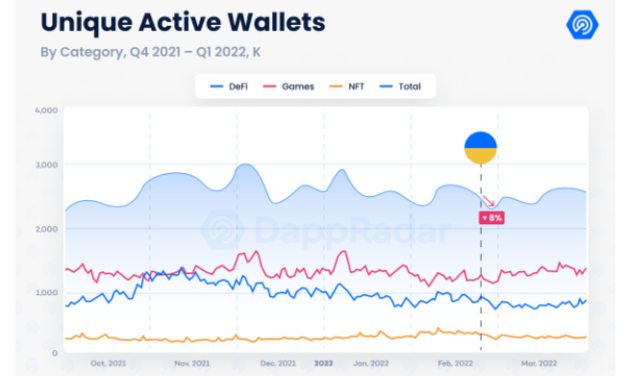
According to a new industry report published by DappRadar, the number of users engaging in decentralized applications, or DApps, every day surged 396% year over year to 2.4 million. This is only 5.8% below the same user activity level witnessed in Q4 2021.The overall growth was impressive, considering that during the quarter, the cryptocurrency sector saw a short-lived bear market, as well as experiencing $1.19 billion in decentralized finance, or DeFi, hacks, and exploits.Two of the worst affected token bridge protocols were that of Ronin and Wormhole. Last month, Axie Infinity’s Ronin bridge was breached for over $600 million after an attacker used hacked private keys to forge fake withdrawals. Meanwhile, the Wormhole protocol lost $321 million via a minting exploit in February. Though, in a rather heroic move, venture capital firm Jump Crypto dug into its own wallets and replenished the lost funds. In addition, the staff at DappRadar wrote:”The first quarter of 2022 had its ups and downs but was tainted by the war in Ukraine. This was one of the biggest events since the 2008 Global Financial Crisis that shook world markets and had a negative effect on the industry.”Number of Unique Active Wallets Interacting with DApps | Source: DappRadarGaming DApps accounted for over 50% of all user activity in Q1 2022. Simultaneously, nonfungible tokens, or NFTs, generated $12 billion in trades despite warnings of a bubble. In terms of DeFi total value locked, Ethereum (ETH) once again held the top spot with $127 billion, followed by Terra Luna (LUNA) at $29 billion and BNB Chain at $13 billion.

Čítaj viac

Získaj BONUS 8 € v Bitcoinoch

nakup bitcoin z karty

Registrácia Binance

Burza Binance

Aktuálne kurzy