
Autor Cointelegraph By Zhiyuan Sun

Canadian PM Justin Trudeau says investing in crypto is not an escape from inflation

According to a new Twitter post on Tuesday, Canadian Prime Minister Justin Trudeau gave critical remarks regarding newly elected opposition leader Pierre Pollievere’s pro-crypto platform, writing: “We’ll also call out questionable, reckless economic ideas. Telling people they can opt out of inflation by investing in cryptocurrencies is not responsible leadership.”In a separate TV appearance, Trudeau reiterated the remarks, adding that “responsible leaders” shouldn’t advocate for individuals to “invest their life savings in volatile cryptocurrencies.”On September 10, Calgary-born politician Pierre Pollievere won 68.15% of the votes in an election for the next leader of the Conservative Party of Canada, or the official opposition to the incumbent Liberal Party led by Justin Trudeau.Pollievere is a pro-crypto advocate who has pledged to transform Canada into “the blockchain capital of the world,” citing positive job creation prospects within the Web 3.0 sector and lower cost to access financial products as reasons to support the intent. In past interviews, Pollievere claims that the government is “ruining the Canadian dollar,” and that Canadians should use consider other forms of money, such as crypto. Earlier this year, Canada declared a state of emergency after a convoy of truckers, dubbed the “Freedom Convoy,” blockaded the downtown area within the nation’s capital, Ottawa. The group advocated for an end to all coronavirus-related lockdown measures and an end to vaccine mandates.In response, the Trudeau government invoked the country’s Emergency Act, empowering banks to freeze funds related to protestors’ activities. Subsequently, an Ontario judge ordered millions of Bitcoin-denominated donations to the group’s wallet address to be frozen. The RCMP, or Canada’s federal police, also requested crypto exchanges to freeze wallets held by protestors. As of July 2022, inflation in Canada stood at 7.6%, representing the highest level in the past 40 years. Meanwhile, cryptocurrencies have not held on as an “inflation hedge” this year, with the overall market cap of digital assets falling over 60% from January.

Čítaj viac

More resilient and user-controlled than the AWS: Colin Evran's vision for Filecoin

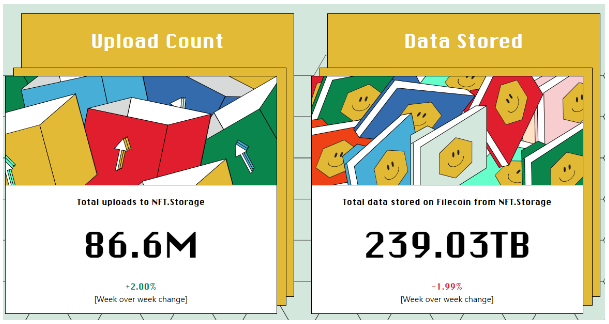
At the beginning of 2021, Filecoin was a relatively unknown decentralized peer-to-peer storage service with a total network capacity barely making a dent in the digital storage space. Less than 2 years later, the Filecoin team claims the blockchain has grown to eclipse 10% of the storage capacity of Amazon Web Service, the most popular vendor in the cloud infrastructure services market. This includes the use of the storage — by well-known blockchain firms such as OpenSea and Magic Eden — of some 239.03 terabytes of nonfungible tokens (NFTs), worth an estimated $26.6 billion as of early September. NFT storage on Filecoin | Source: NFT.StorageHow did Filecoin become so successful;? And what motivates its developers to grow the ecosystem? Colin Evran, ecosystem lead at Protocol Labs, which is the creator of Filecoin, says a big factor in his desire to join Filecoin was his disillusionment with how things operate in Web2. “It’s still going in the wrong direction,” he said. “A handful of companies are now controlling the world’s data, in my opinion, without checks and balances in many ways. And I just thought such levels of centralization over a period of many decades isn’t going to be the answer for everyday users. “I fundamentally believe if you zoom out 40 years from now, the answer is not like AWS storing 100% of the world’s data. I don’t think that’s good for society. I don’t think that’s what users really want,” he said. Evran took some lateral steps in his path toward the blockchain sector. Having finished Ivey Business School at Western University in 2006, he first became an analyst for McKinsey before venturing into the field of private equity. Then he returned to the academic world to get his masters from Stanford Business School.Colin Evran of Filecoin | Source: Twitter After graduation, Evran founded a startup in the construction tech space called “Yard Club.” Four years later, the firm was sold to Caterpillar, the world’s largest construction equipment designer. As told by Evan, the financial surety from the deal gave him the ability to focus on a project that was much more in-depth. “I really wanted to work on a piece of technology that could conceivably impact every man, woman, child, and every company in the world if it was successful. So a good friend of mine introduced me to Protocol Labs, the creator of Filecoin.”Filecoin’s InterPlanetary File System (IPFS) enables users to store and transfer content in a peer-to-peer manner. It is the heart of Filecoin, containing three components: unique identification via content addressing, content linking through directed acyclic graphs (DAGs) and content discovery via distributed hash tables. As its incentive layer, Filecoin serves to verify that all data is stored with the appropriate cryptographic proofs. Storage providers on Filecoin have two primary sources of revenue, block rewards and network fees. Block rewards are allocated proportionally based on submitted cryptographic proofs of the data they store. Currently, there are about 25,000 transactions on the Filecoin blockchain per day and in total there is about 127 pebibytes (1PiB = 1,125,900 Gigabytes) worth of data stored on it. In terms of total capacity, Filecoin developers say that the network is currently at around 10% of the AWS’ storage capacity. Filecoin network metrics | Source: Starboard Ventures At the beginning of the year, storing data on Filecoin was at less than 1% of the cost of comparable services on AWS. But now, Evran explains that some storage costs have fallen into negative territory, while the typical storage costs have also decreased to less than 0.5% of centralized providers.”With such a magnitude of cost reduction, many small businesses and freelancers worldwide can now afford to store people’s data.” He continues: “It’s similar to how Airbnb unlocked the ability for average homeowners to host guests, which wouldn’t have been possible in a hotel-dominated world.”For Evran, the novel Filecoin Virtual Machine is an exciting technological development for the ecosystem this year. “Filecoin has been a storage and retrieval market thus far. But what the FVM can unlock is a multibillion-dollar DeFi economy on top of Filecoin,” he said. “With complete compatibility with the Ethereum Virtual Machine (EVM), developers can build across the two networks. We could bring up new use cases such as on-chain voting, data-based decentralized autonomous organizations (DAOs), decentralized verifiable computation, etc.”At the moment, Filecoin storage providers have about one billion dollars in collateral to store deals and grow operations. Via further updates, it is possible to create DeFi instruments that auto-renew deals for tokenholders, creating essentially a “perpetual storage” network. Going forward, Evran explains that his vision is to see Protocol Labs and Filecoin become a hub for building decentralized technologies. “We helped seed the foundation of IPFS, which is now used by every single major blockchain from Ethereum and Polkadot. But we also want people to come to our community and develop something transformational that’s aligned with our values for Web3.” In spite of the ongoing crypto winter, Filecoin still holds its place among top players with a total market cap of $1.8 billion. 

Čítaj viac

Starbucks announces new NFT experience for coffee members

According to a new post on Monday, Starbucks says it will offer its U.S. members the ability to earn and buy digital collectible stamps in the form of nonfungible tokens, or NFTs. Dubbed “Starbucks Odyssey,” each collectible digital stamp has its ownership verified on the blockchain and will include a point value based on its rarity. As more stamps are collected, members’ points will increase, unlocking access to unique experiences. The iconic coffee chain says that rewards range from receiving a virtual espresso martini-making class to accessing unique merchandise to exclusive events invites at Starbucks Reserve Roasteries and possibly trips to the Starbucks Hacienda Alsacia coffee farm in Costa Rica.Members can earn NFTs by playing interactive coffee-themed games or taking on fun challenges on Starbucks Odyssey, which will be launched later this year. Users can also purchase the NFTs on the built-in marketplace without the need to connect their wallets or use any crypto.All stamps will feature iconic Starbucks artwork co-created with Starbucks partners and outside artists. A portion of the proceeds from selling limited-edition stamps will be donated to support the creators’ causes. The NFTs themselves are minted on a proof-of-stake blockchain created by Polygon. Regarding the development, Brady Brewer, vice president and chief marketing offic of Starbucks, said:”We are entering the Web3 space differently than any other brand while deepening our members’ connection to Starbucks. Our vision is to create a place where our digital community can come together over coffee, engage in immersive experiences, and celebrate the heritage and future of Starbucks.”

Čítaj viac

Crypto investors backed by Coinbase sue U.S. Department of Treasury after Tornado Cash sanctions

According to a new lawsuit filed in the U.S. District Court, Western District of Texas. On Thursday, six users of the Ethereum blockchain and cryptocurrency mixer Tornado Cash sued the U.S. Department of Treasury, alleging that its recent designation of 44 Tornado Cash smart contract addresses to the Specially Designated Nationals (SDN) list of the Office of Foreign Asset Control (OFAC) is “not in accordance with law.”Since Aug. 8, U.S. persons and entities have been prohibited from interacting with the sanctioned Tornado Cash smart contract addresses, blockchain or business-wise, under the threat of criminal or civil penalties for non-compliance. The plaintiffs seek to annul the designation based on three arguments. First, they argue Tornado Cash does not meet the definition of a property, a foreign country, or a national thereof, nor a person and therefore cannot be added to the SDN list.Second, they claim a violation of their First Amendment (freedom of speech) rights under the U.S. Constitution:”Tornado Cash allows Plaintiffs to engage in important, socially valuable speech. However, due to the designation, plaintiffs cannot use Tornado Cash to make donations to support important, and potentially controversial, political and social causes.”Thirdly, the plaintiffs say that because of the Treasury designation, they could not access the Ether stored in Tornado Cash pools. They argued that such alleged lack of proper pre-deprivation process was in-violating legal procedures.Later that day, cryptocurrency exchange Coinbase publicly supported the lawsuit. The firm hailed the move as “defending privacy in crypto,” and pledged to fund the lawsuit. “The sanctions exceed Treasury’s authority, harm innocent people, remove privacy and security options for crypto users, and stifle innovation,” said Coinbase. It then raised individual examples of purported benefits of Tornado Cash:”One person used Tornado Cash to donate money to Ukraine anonymously. Afterward, his wallet received potentially malicious airdrops. But because he anonymized his crypto before donating, he avoided attacks against his personal accounts. He has funds trapped in Tornado Cash.””Developers are worried that they could be held responsible for something they had nothing to do with and no ability to control,” said Coinbase in an argument claiming the Treasury’s move will stifle innovation. The U.S. Department of Treasury claims that over $7 billion worth of crypto has been laundered via Tornado Cash since its inception. Stablecoin issuers, such as Circle, have taken steps to freeze blacklisted Tornado Cash smart contract addresses due to the ban. Others, such as Tether, have refrained from such a move until they receive instructions from law enforcement. 1/7This morning, Brian Armstrong shared why Coinbase is funding and supporting a challenge by six individuals (including two CB employees) against the Treasury Department and OFAC’s novel sanctions of open source software associated with Tornado Cash. https://t.co/8l5iKAjVZg— paulgrewal.eth (@iampaulgrewal) September 8, 2022

Čítaj viac

Law enforcement recovers $30 million from Ronin Bridge hack with the help of Chainalysis

On Thursday, blockchain forensics firm Chainalysis said that law enforcement had recovered $30 million in crypto stolen from the $625 million Ronin Bridge hack in March. According to Chainalysis, Lazarus Group, the North-Korea linked entity behind the attacks, first used sophisticated money-laundering techniques such as sending stolen Ether (ETH) to crypto-mixer Tornado Cash, swapping for Bitcoin (BTC), sending Bitcoin to Tornado Cash, and then cashing out at exchanges. However, the group recently moved away from such techniques after the U.S. Department of Treasury imposed sanctions on Tornado Cash wallet addresses. Chainalysis explains that in response, Lazarus Group hackers switched to, perhaps ironically, laundering the stolen crypto via cross-chain bridges on legitimate decentralized finance platforms. “With Chainalysis tools, these cross-chain funds movements are easily traced,” the firm wrote, pointing to one transaction where hacked funds were bridged to the BNB Chain from Ethereum, then swapped for Tron’s stablecoin USDD, and then finally bridged to the BitTorrent blockchain.North-Korea-backed Lazarus Group first exploited five of the nine private keys held by transaction validators for Ronin Network’s cross-chain bridge. After gaining a majority consensus, they approved two transactions for transferring 173,600 ETH and 25 million USD Coin (USDC) from Ronin Bridge, draining it of assets.Since then, Binance has managed to recover $5.8 million in funds related to the Ronin exploit. Just four months later, Ronin developers announced that the cross-chain bridge was back after three audits. Sky Mavis, the developer of Ronin, raised over $150 million in a round backed by Binance to rebuild the protocol. 

Čítaj viac

Získaj BONUS 8 € v Bitcoinoch

nakup bitcoin z karty

Registrácia Binance

Burza Binance

Aktuálne kurzy