Autor Cointelegraph By Zhiyuan Sun

SushiSwap CTO resigns citing internal structural chaos

Late Wednesday, Joseph Delong, chief technology officer of SushiSwap, the 13th largest decentralized exchange, or DEX, by trading volume, tendered his immediate resignation from the role. Explaining his decision, Delong gave the following statement:”I wish Sushi the best and am saddened that Sushi is so imperiled within and without. The chaos that is occurring now is unlikely to result in a resolution that will leave the DAO as much more of a shadow than it once was without a radical structural transformation.”In the interest of the Sushi Community I am resigning as CTO effective immediately. I very much enjoyed the things that we built together and will look back positively on this moment. pic.twitter.com/7pZsQuPgup— Joseph Delong (@josephdelong) December 8, 2021Previously, Delong had voiced disappointment over the inability for SushiSwap to launch on Optimism, a layer two scaling solution for Ethereum (ETH). Delong also claimed to receive little support from centralized exchanges about hackers’ identities after the SushiSwap’s token launchpad experienced a $3M hack, saying it was the “hardest day of my life so far.”But it appears that it wasn’t simply the technical setbacks of the project that played a role in Delong’s decision. In a series of follow-up Tweets after the announcement, Delong posted screenshots of alleged harassment from SushiSwap users, to which he then cited “it’s the community that does it for me.””I highly recommend the installation of a C-suite from outside the DAO [Decentralized Autonomous Organization] and give them the tools to effectively manage a team. Be wary of any self-proclaimed leaders arising from the current core team.” said Delong.

Čítaj viac


Polygon to invest up to 250M MATIC into zero-knowledge tech

Ethereum scaling solution Polygon has announced it will dedicate a maximum of 250 million MATIC tokens ($627.5 million) to a deal with zero-knowledge cryptography startup Mir.Zero-knowledge algorithms enable external validators to verify encrypted transactions or documents without revealing the sensitive information hidden underneath. It is useful for complex decentralized finance applications, such as decentralized ride-share apps or decentralized health insurance, where nodes need to verify the personal data of blockchain participants without risking privacy leaks.Mir specializes in developing two subcategories of zero-knowledge proofs: PLONK and Halo. Both represent advancements over previous SNARK and STARK cryptography techniques, allowing proofs to be generated in seconds.While PLONK still requires a trusted setup for validation, Halo algorithms can accomplish the task in a decentralized manner. Speed is a core design consideration in zero-knowledge proofs. Complex information to be passed over blockchains, such as redacted photo IDs, can take up substantial size, thereby affecting the applicability of transactions.“Polygon plans to focus on ZK cryptography as the end game for blockchain scaling,” said Sandeep Nailwal, co-founder of Polygon. “We have made a strategic decision to explore and encourage all meaningful scaling approaches and technologies at this stage. We believe this is the way to establish Polygon as the leading force and contributor in the ZK field and onboard the first billion users to Ethereum.”The acquisition of Mir is a part of a greater $1 billion commitment to developing zero-knowledge technology by Polygon.

Čítaj viac

Inflation benchmark Frax Price Index to launch on Partisia blockchain

On Thursday, Frax Finance, a developer of algorithmic stablecoins, announced it would launch the Frax Price Index, or FPI, on the Partisia blockchain. The benchmark would have its stablecoin pegged to it and serve as a competitor to the standard Consumer Price Index, or CPI. Although the latter is a near-universally adopted inflation gauge, skeptics have claimed that its methodology does not account for items such as housing prices, college tuition, healthcare, etc. All of which have risen significantly in the past decade in the United States.Brian Gallagher, co-Founder at Partisia Blockchain, elaborated on the development:Together with Partisia Blockchain’s advanced privacy oracles, a variety of crowdsourced demographic purchasing data are converted into trustworthy indexes enabling FPI to disrupt the non-transparent methods so far used to report inflation data.In a previous interview with Cointelegraph, Sam Kazemian, co-founder of Frax, explained that the FPI stablecoin will have a staking component. As a result, there will be an interest-bearing yield on the FPI in addition to the core function of performing to the CPI standard, thus improving the value proposition of a stablecoin pegged to it. “And with, with the FPI, you can kind of think of it as essentially as a commitment to a peg in monetary policy,” said Kazemian.According to CoinGecko, Frax is currently the seventh-largest stablecoin with a market cap of $1.35 billion. Unlike fiat money stablecoins, algorithmic stablecoins balance funds held on the blockchain via smart contracts with supply and demand instead of relying on reserves.

Čítaj viac

Frax co-founder Sam Kazemian believes stablecoin regulations are currently too harsh

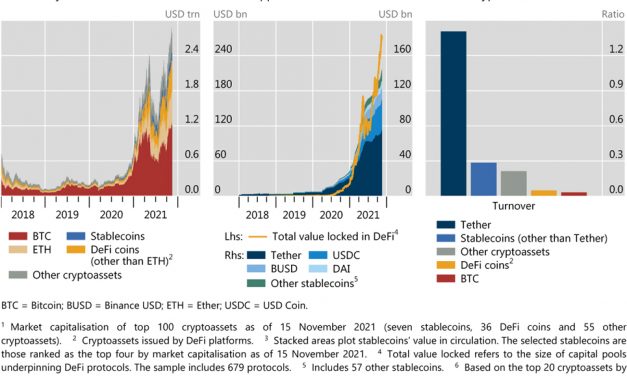
Stablecoins, or crypto assets which peg their value to less volatile fiat money, are useful tools for a variety of reasons. They can be used to cash out crypto investments, send or receive stable money abroad, and to pay for everyday consumer transactions without fear of fluctuation. A recent estimate from the Bank for International Settlements, or BIS, put the total stablecoin supply at roughly $150 billion.But central banks, the issuers of traditional fiat money around the globe, do not seem to be big fans of stablecoins. A sharp increase in supply coupled with a lack of relevant regulations has led to concerns that these stable blockchain assets could threaten the current financial order. Fiat money stablecoins, such as those created by Circle (USDC) and Tether (USDT), may require banking licenses in the future to operate. Thus far however, regulators have not been keen to take aim on algorithmic stablecoins, which are governed by automated expansion and contraction of the monetary supply.In an exclusive interview with Cointelegraph, Sam Kazemian, the co-founder of the Frax stablecoin protocol, discussed the regulatory outlook for the sector and algorithmic stablecoins in detail.Growth in cryptocurrency activities | Source: BIS Cointelegraph: There are many algorithmic stablecoins out there, such as Terra USD, Ampleforth, etc. In your opinion, what makes Frax unique?Sam Kazemian: What makes Frax unique is that we have a system where our protocol expands and contracts supply in various places across blockchain protocols, and targets the exchange rates of the Frax stablecoin out in the open market. We like to compare it to a central bank. When it issues a currency, it never says ‘hey, you can come to redeem it for this amount of gold, or you can come and redeem it at the central bank for something dollar-pegged.’ They don’t say that anymore. And so, what a central bank does, is that it targets their currency in the open market’s exchange rate.If a central bank pegs their currency to gold, what they’ll do is look at the price of gold against their national currency. If it’s lower than what they want, they’ll buy some of the currency back. If the other side is higher than what they want, then they’ll print more of the currency. Frax takes this kind of approach. That’s how we developed our algorithmic stablecoin thesis, and it’s worked well. We’ve never broken our peg, even during [the major market crash in] May.Stablecoin market capitalization statistics | Source: U.S. Treasury Stablecoin ReportCT: Do you see a potential crackdown looming in stablecoin the sector? And what is Frax doing to comply with relevant stablecoin regulations?SK: There are two parts to this. I don’t know if I would call it a crackdown, but I do see a lot of regulation coming for at least the fiat coins, which have traditional financial assets that back them; like cash equivalents, or actual cash in depository accounts. I don’t know that this affects truly decentralized stablecoins though. I believe that Frax is not only compliant, but it will keep complying with all requirements just by existing and being fully decentralized.The second part to your question is interesting because I think the current stablecoin regulation they’re proposing is a little bit reactionary. What’s currently going on is that people are saying that stablecoin issuers like a Circle and Tether need to have banking licenses. That’s the conversation. But that doesn’t make sense if you think about it, because there’s a lot of experimentation allowed in even the traditional financial space. Things like money market funds don’t have a banking charter. It’s not a bank. It’s not FDIC [Federal Deposit Insurance Corporation] insured. People either don’t realize this or they’re not informed.Money market funds are regulated in the sense that you need to have [and disclose] cash equivalents. But they are not regulated with the same harshness that they’re currently proposing [for] stablecoins. This doesn’t apply to fully decentralized ones like Frax that have absolutely no claims on real-world assets, or even advertise any form of redeemability. The whole point of Frax is that our protocol works by targeting the open market exchange. I think I’m pretty open to the belief that the regulation portion will work itself out.

Čítaj viac

'Nation should not compensate investors for crypto losses' says UK's Financial Conduct Authority CEO

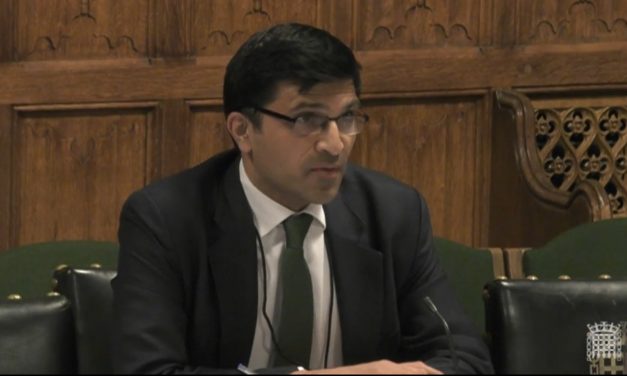
On Wednesday, Nikhil Rathi, CEO of the United Kingdom’s Financial Conduct Authority, or FCA, issued the following statement to the Treasury Committee when asked about the risks of the much-unregulated cryptocurrency sector in the country:When we talk about the compensation scheme, we have to draw some pretty clear lines. I would suggest anything is crypto-related should not be entitled to compensations, and consumers should be clear about that when investing. In the passage, Rathi refers to the FCA’s Financial Services Compensation Scheme, or FSCS, which pays out compensation to consumers when certain authorized financial institutions cannot meet claims against them, such as during bankruptcies, criminal schemes or insurance breach-of-contract. In theory, the proposed rules would prevent U.K. government from paying restitution to crypto investors who have been scammed by allegedly fraudulent cryptocurrency exchanges or decentralized finance rug pulls, as these types of investments are either unregulated or operate in legal grey areas. More than 717 million pounds were paid out to consumers this year by the FSCS in compensation for their financial loss.Nikhil Rathi speaking at the Treasury Committee hearing | Source: parliamentlive.tv”There are technologies underpinning cryptocurrencies, which, I think we would recognize, as having significant benefits and value, such as tackling financial crimes. A number of innovations, however, we have raised concerns around,” said Rathi when asked about the country’s regulatory framework. “Some of these crypto-assets, we don’t believe have intrinsic value. They have been a part of a series of organized crimes and money laundering, and anyone who invests in them must be ready to lose all of their money.”

Čítaj viac

Získaj BONUS 8 € v Bitcoinoch

nakup bitcoin z karty

Registrácia Binance

Burza Binance

Aktuálne kurzy