Autor Cointelegraph By Zhiyuan Sun

Blockchain folk hero Nandy Martin hopes to build a better community for Haitians in Miami

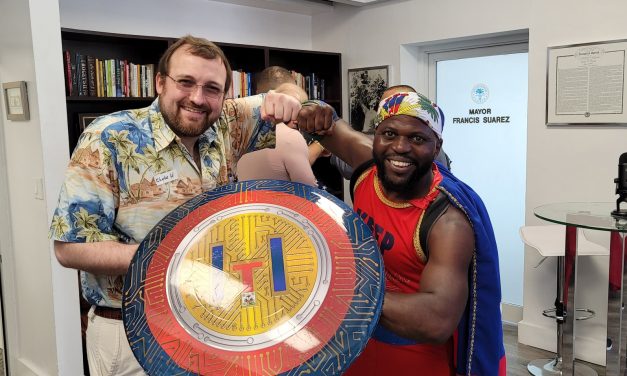
Haiti, a Western Caribbean country torn by a tragic past, natural disasters, poor leadership, and ineffective foreign aid, is not a country that comes to people’s minds when they think of blockchain adoption. For years, Haiti has been among the world’s poorest countries in terms of GDP per capita, as per data from the World Bank.But Haitian-Canadian entrepreneur Nandy Martin, colloquially known as Captain Haiti for wandering the streets of his community in his superhero attire and signature shield prop, has ambitious goals to change that. Operating from the sunny domains of his humble abode in Miami’s Little Haiti, Martin launched the Little Haiti Coin on the Cardano blockchain as an initiative to clean up his community, drive business crypto adoption, and use it as a means to promote Haitian imports. In an exclusive interview with Cointelegraph, Captain Haiti discussed the dynamics of the Little Haitian Coin and the technological roadmap of the project going forward.Captain Haiti and Cardano founder Charles Hoskinson |Source: Charles Hoskinson via TwitterCointelegraph: What inspired you to create the Little Haiti Coin and this venture?Captain Haiti: There are so many nonprofits involved in Haitian society. For the last, I will say, minimum 60 to 70 years, and the situation has gotten worse despite their best efforts. So my approach to the country is totally capitalist, by integrating it into the world’s economic system. And that’s why I’ve created the Little Haiti coin, to allow folks there to get into the crypto era. So the goods that we have and the precious minerals we have in Haiti could have a vehicle to trade them to the world, take care of our people with our social program, etc.CT: How are you turning that vision into reality?CH: We have created 1 million Little Haiti Coin on the Cardano blockchain. The way that we are doing it, we have acquired a facility and partnership for a 5000 square feet facility in Little Haiti, so its residents can come and install a wallet where they’re going to receive one Little Haiti Coin. So the goal of the facility is to get the people to install the wallet and allow them to go and purchase products or products or goods in Little Haiti that are coming from Haiti. So the utility of the token is to provide the resident of Little Haiti and provide the world a discount from 10% to 100% of goods imported from Haiti.CT: So how much remittance is coming from Haiti into the Little Haiti community in Miami?CH: Our goal is to capture one-quarter of the remittance from Haitians worldwide to Haiti, or $1 billion. That’s a great question. Because the remittance to Haiti represents 36% of Haiti’s GDP. And the first phase was to get vendors in local businesses to have the Little Haiti Coin to want to accept that in our ad. And to do that, we approached the Commissioner of Miami District 5, Jeffrey Watson. And he had granted $200,000 to 40 local businesses to help import Haitian products and make them available to tourists visiting Little Haiti.CT: What does progress look like for the Little Haiti Coin?CH: The first utility of the new Haiti coin was to clean up the neighborhood. Okay, because it is an area that is economically challenged. So do you have a lot of littering We work in partnership with the City of Miami, where anybody could sponsor to clean up one square foot of Little Haiti with $3. And what you receive and reward is one Little Haiti coin. So doing so, we had cleaned up over 300,000 square feet of Haiti.CT: So, out of all blockchains, why did you choose Cardano specifically to launch the Little Haiti coin?CH: After meeting Charles Hoskinson, at that instant, I knew that somebody that is so innovative, and somebody that has been in this world, and descriptor world for that long for that person to be so humble, and also willing to participate and play around with the shield, etc. So I had to dig into Cardano. And then I’ve discovered Cardano’s mission to help create a better world for big organizations like the small one and people like me. So I felt that I had a home in Cardano for the Little Haiti Coin.CT: Where do you see the technology heading one or two years from now?CH: Yes, the project is going fast. The first thing is, I’ve created the Captain Haiti gaming token on the Binance Chain to educate the world about crypto. We will be releasing it on January 1. We already have 10,000 downloads of the game on the Play Store.Screenshot of Captain Haiti game | Source: Captain HaitiAnd all we have to do is to get the kids to play. And as the kids are playing, we are burning the circulating supply. This ring in questions, Hey, what is circulating supply? What is inflation? What is deflation? It’s also about educating and changing the perception of people about Haiti.And then also have the Cardano Beach facility. So we provide you an NFT that gets like the deed of your square footage that you’re renting, for, say, a co-working space. And once we have the hub, we invite the whole population to create their Cardano ID right here in Little Haiti.

Čítaj viac


Former SushiSwap CTO writes short reflection about leadership failures at blockchain DEX

On Friday, Joseph Delong, former chief technology officer of decentralized exchange, or DEX, SushiSwap, published a brief reflection of experiences during his tenure.Delong unilaterally resigned two days prior, citing internal structural chaos among developers behind the popular DEX. In explaining his decision, Delong outlined failures to scale operations, lack of organization skills, problematic contributors, and poor communication as the primary reasons. On Twitter and among blockchain personalities alike, Delong received mostly praises for coming public with his experience and learning from his mistakes.According to Delong, he did not inform the Sushi community when problems began to surface amongst developers he managed, nor did he engage with users enough to build rapport for the project. In addition, Delong talked about using his personal Twitter presence to share his feelings about SushiSwap developments. This was a polarizing decision among the SushiSwap community. Some users have praised him for being authentic with his feelings, while others labeled the move as unprofessional or inconsiderate to stakeholders.Prior to being CTO at SushiSwap, Delong was a senior software engineer at ConsenSys. In part due to his leadership, SushiSwap has grown to become the 13th largest DEX by trading volume. However, the protocol also faced its share of setbacks.In summing up the experience, Delong stated:I think the imperfect birth of Sushi has led to additional problems, and in my next project, I will have the capability to structure an organization to empower the contributors. Thank you for allowing me to lead Sushi through this time, and I wish Sushi the best of luck.I wrote an article detailing my failures in leadership at Sushi https://t.co/cJOovqW45A pic.twitter.com/OjNNW0ExQY— Joseph Delong (@josephdelong) December 10, 2021

Čítaj viac

Assembly announces $100M capital raise, receives praise from IOTA co-founder Dominik Schiener

On Friday, Assembly, a decentralized layer one smart contract network built within the IOTA ecosystem, announced it had raised $100 million from private investors, including LD Capital, HyperChain Capital assembly, and Huobi Ventures. The project stated that the funds will be used to accelerate the development of decentralized finance protocols, nonfungible tokens, and play-to-earn crypto games.IOTA is a blockchain designed for facilitating internet-of-things transactions. Its proprietary technology consists of a system of decentralized acyclic graphs that can connect to one another in multiple vectors as opposed to in-series as with a regular blockchain. As a result, one new block can validate two other blocks, leading to self-sustainable transaction verification. This allegedly leads to the complete elimination of transaction fees and minimal energy cost.The Assembly mainnet is currently scheduled to launch in early 2022 with a large community focus. 70% of its native ASMB tokens are reserved for developer incentives, community-governed decentralized autonomous organizations, and grant programs.Meet $ASMB, a token to fuel innovation and growth. The vast majority of tokens are designated to ignite #Assembly’s ecosystem growth and to reward the @iota community. Visit: https://t.co/ULLTR84ZKN pic.twitter.com/fycCeywW94— Assembly (@assembly_net) December 9, 2021In a statement to Cointelegraph, Dominik Schiener, co-founder and chairman of the IOTA Foundation, claimed that there are too many Ethereum Virtual Machine, or EVM, blockchains stating:“Ultimately, all of them will face the same problems with fees, scalability, and interoperability. Most of them will fail in the long term as they offer nothing unique.”When asked about the uniqueness of the Assembly blockchain, Scheiner feels that it all comes down to flexibility:“Each smart contract chain can be fully customized to the project’s needs. In addition, Assembly is already fully EVM-compatible, and has support for WASM [WebAssembly], plus Go, Rust and TypeScript as optional smart contract languages.”Billionaire investor Stelian Balta, founder of HyperChain Capital, said:We always needed a feeless, highly scalable network for developers to build highly scalable apps in the crypto ecosystem. Assembly does that. They have been pioneers in the crypto ecosystem since 2015, and we are confident in their experience and their vision for the next decade.

Čítaj viac

Virtue Gaming launches play-to-earn crypto model to bring online poker to US players

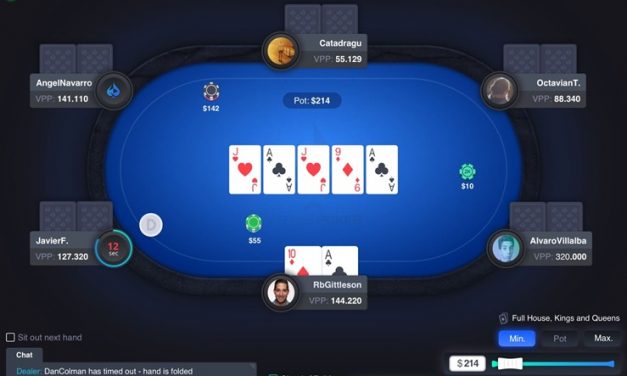
On Friday, Virtue Gaming, a decentralized online poker platform built on the Ethereum (ETH) blockchain, launched the first play-to-earn digital poker casino in the United States.In the U.S., only six states (Nevada, Delaware, New Jersey, Pennsylvania, West Virginia, and Michigan) have legalized and currently regulate online poker. The country has been slow to act on the subject due to concerns that international poker platforms would take revenue away from domestic, land-based gambling venues. Moreover, even in the said states, poker platforms must obtain licenses from each individual jurisdiction to operate.As a result, U.S. residents typically cannot access popular online poker platforms, such as PokerStars or 888 Poker, available to players in the rest of the world. To solve this issue, Virtue Gaming proposed a play-to-earn setup where the platform gives users 500 Virtual Player Points, or VPP, worth an approximate $147.37 USD.Players will receive these for free upon signup. Players who meet the minimum playtime requirements via cash games and tournaments can then cash out their VPP for USDT. U.S. players would then be able to compete with players for the rest of the world, who transfer VPP, ETH, or other cryptos into Virtue Gaming’s locked sidechain smart contracts to stake in the game. To prevent cheating, the platform implements peer-to-peer encrypted shuffling for all decks.Virtue Poker Casino UI | Source: Virtue PokerAccording to legislation, “points or credits that the sponsor of the game or contest provides to participants free of charge and can be used or redeemed only for participation in games or contests offered by the sponsor” fall outside the scope of the legal definition of a bet or wager and could theoretically give the play-to-earn model some regulatory leeway. At time of publication, there are currently over 25,000 players from outside the U.S. on the platform.

Čítaj viac

Stacks’ Mitchell Cuevas talks building integrated DeFi bridges for Bitcoin users

The Stacks ecosystem is a collection of independent entities, developers and community members working to build a user-owned internet on the Bitcoin (BTC) blockchain. Stacks’ STX cryptocurrency was distributed to the general public through the first-ever Securities and Exchange Commission-qualified token offering in the United States.Mitchell Cuevas, head of growth for the Stacks Foundation, held an exclusive ask-me-anything, or AMA, session with Cointelegraph Markets Pro users on Dec. 2. During the session, he discussed the Stacks blockchain’s technological capabilities, future growth and major developments.Cointelegraph Markets Pro User: PoW [proof-of-work] blockchains are known to be the most secure. Does Stacks PoX [proof-of-transfer] match BTC security or are there other vulnerabilities?Mitchell Cuevas: Stacks’ consensus recycles PoW already done to secure Bitcoin. It does this via Proof of Transfer, a mining mechanism that provides a new take on consensus, allowing for a Proof of Work chain to be leveraged and extended in new ways. As a result, all Stacks transactions settle on Bitcoin, enabling Stacks transactions to benefit from Bitcoin’s security. Every Bitcoin block, Stacks transactions are batched and hashed on the Bitcoin blockchain. In addition, the history of all Stacks blocks produced is recorded to Bitcoin.CT Markets Pro User: With smart contract capabilities, how long before Stacks will be able to integrate NFTs, gaming, and metaverse experiences?MC: This can already be done and is being done today. We see massive growth of NFTs, reaching about $6-7 million in daily transacted value of late. The cost varies based on network activity. The minting cost is generally somewhere from $0.15 to $0.50. NFTs can be minted on Boom at boom.money. Monday games are building an exciting metaverse style open-world game. We’ve got teams, such as Jolocom, working on various identity-related efforts, which will be important in the metaverse. It’s exciting because the idea of the metaverse was an early anchor point for folks working at Blockstack back in the day, it was our company book, and we had Neal Stephenson out to one of our summits!CT Markets Pro User: I only know of a few other platforms that build off of BTC to maximize its security, decentralization, and popularity (Lightning, RSK, Sovryn). So why do you think there aren’t more protocols integrating with BTC?MC: It’s the difficulty of it. It took core engineers and the Blockstack team a while to crack Proof of Transfer, making the fully expressive contract layer possible in a truly decentralized way. When you have the option of working with a restrictive and unmoving base like Bitcoin or something else (or creating your chain entirely), I think many will end up in that last bucket. It’s an easier path and with how hot crypto is, is I can assume it’s more immediately lucrative, so that’s where the focus has stayed.CT Markets Pro User: There were congestion issues with Stacks. Has that been resolved?MC: For the most part — the main bottleneck that was noticed was the popularity of some NFTs and the architecture of the stacks-blockchain-API. Since then, the architecture has changed a bit, so many read-only API nodes can be brought up during higher traffic events, as we noticed in the past. The API write node is still a 1:1 ratio to a Stacks node running in follower mode since any particular blockchain node can be slightly ahead/behind other nodes at any given moment, making load balancing very difficult. In addition, an upgrade to the chain is expected to go live around December 8th that will provide a 2-10x increase in capacity. There are additional exciting future scalability and speed solutions now being explored that should give developers several different options as they build.CT Markets Pro User: Can you explain microblocks? Is that the main factor to allow Stacks to scale?MC: This is a great question and one we’ve seen some confusion about in the past. However, it is essential to note that microblocks are NOT a scalability solution; they allow faster transaction confirmations. To put it simply, microblocks are intended to solve transaction latency, allowing transactions to confirm in seconds on the Stacks chain before they are later settled to Bitcoin.CT Markets Pro User: PoW blockchains have gotten labeled as substantial energy consumers thanks to one guy who will remain nameless. Where does Stacks PoX rate for energy consumption? Since it integrates with BTC, have you had to explain this difference?MC: As for Stacks, it’s a straightforward narrative: PoX recycles PoW already spent on Bitcoin. This means we’re not burning or consuming new electricity for Stacks transactions. On a more personal note, I’ve been starting to work with some NFT artists that are passionate about making sure their environmental impact is zero or minimal, and they’ve been excited about Stacks. An early launch on Stacks included Cara Delevingne, and this was a vital issue for her as her NFT was going to benefit climate-related topics.CT Markets Pro User: Each STX block is somehow recorded on the BTC blockchain. How much block space does this take? What is recorded?MC: You can check this publicly! All of the BTC transactions are showing a size of 352 Bytes. The system’s state settles on Bitcoin — creating a new Stacks block entails sending a well-formed Bitcoin transaction that records the hash of a Stacks block and where it attaches to the blockchain. Settling the system on Bitcoin grants Stacks novel security properties not seen in other blockchains — it leverages the security of Bitcoin to guarantee that all Stacks forks are public and to help to bootstrap Stacks nodes identify the canonical Stacks fork and find Stacks blocks they have not yet downloaded.CT Markets Pro User: How many full nodes are in operation? Is there a limit to the amount of decentralization that can be achieved?MC: Short answer, there were a few hundred last we checked. For the rest, great question, and buckle up for a longer answer. It’s important to note that unlike PoW based networks, like Bitcoin, the number of STX miners alone is not an accurate reflection of a miner’s relative ability to win blocks over time. As a result, it does not reflect the security or decentralization of the network. To successfully attack Stacks 2.0, a miner would need to mine a genuinely longer chain than the rest of the network. Unlike a PoW based chain, the Stacks chain quality is measured by its length and not the total amount of BTC burned (or resources expended). This means that simply spending 100x the BTC of every other miner will not result in a longer or better Stacks chain tip. Instead, a miner would have to consistently out-mine every other participant to attack the Stacks chain successfully. To do this, a “bad actor” miner needs to effectively guarantee they could win every block over the period their attack occurs.CT Markets Pro User: Any plans for interconnectivity with other blockchains? What solutions can be employed today?MC: Yep! The community has several bridge efforts, including bridges to public blockchains such as Ethereum, BSC, SOL, Polygon, Klaytn, ICON, Orbit, etc. See some of the initiatives below: Stacks Bridge — cross-chain transfer service that allows owners of ETH or STX based NFTs to move their NFTs between blockchains; Banana Bridge — Megakongs will mint on Ethereum and be transferable back forth to Stacks, and this is an essential step. This opens them to Ethereum liquidity and, perhaps more importantly, it gives Bitcoin NFTs a gateway to access some of the exciting Metaverse projects vice versa; Orbit Chain — Orbit Chain is currently bridging Stacks and will soon welcome Bitcoin to the growing $100B+ DeFi Economy. Orbit Chain has built a notable reputation for itself in the past year, having bridged more than $10B worth of assets across other top chains, including Ethereum, BSC, Polygon, Klaytn, ICON, and Ripple.CT Markets Pro User: Will the relevance of Layer-1/Layer-2 solutions on the BTC blockchain diminish over time should future updates like Taproot occur?MC: Bitcoin is probably a stable blockchain precisely because it doesn’t change and is predictable. Any proposed changes can take a long time to merge since there is an incentive for the protocol not to change, and there is a large community with many opinions about any proposed change. Bitcoin is stable and predictable — so it’s unlikely that a native on-chain solution will supersede solutions like Stacks. Is it possible? Sure — but it’s also unlikely. Notably, Taproot doesn’t come close to bringing expressive smart contracts to Bitcoin.

Čítaj viac

Získaj BONUS 8 € v Bitcoinoch

nakup bitcoin z karty

Registrácia Binance

Burza Binance

Aktuálne kurzy