Autor Cointelegraph By Zhiyuan Sun

From the Altai Mountains to the Gobi Desert: Tokenizing the history of nomadic horse riders through Mongol NFTs

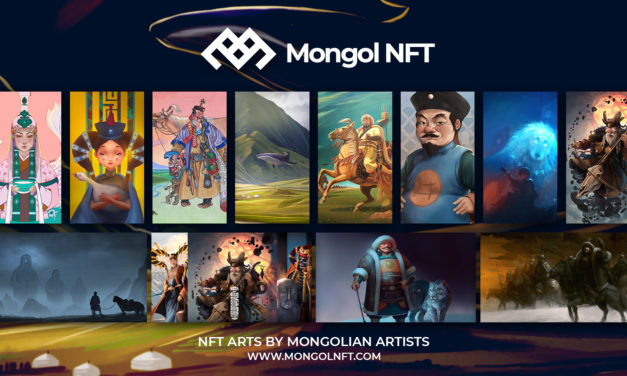
Mongolia is a land of endless steppes, hosting mystic Tibetan Buddhist monasteries and fierce horse warriors blessed by the eternal Tengri, the sky god in folk shamanism. For centuries, the harsh, cold climate of the plains forced its people to venture to the world beyond in a series of journeys and conquests. And now, blockchain enthusiasts can hear their stories in the form of nonfungible tokens through the Mongol NFT platform. Since its inception in September, the platform has surpassed 100,000 registered users and close to 400 creators in various stages of their projects. In an exclusive interview with Cointelegraph, Gabit Bazar and Adiya Bayansan, co-founders of Mongol NFT, discussed the future of the project that’s bringing Mongolia (once again) to the world stage. The culture of Mongolia throughout history. (Source: Mongol NFTs)Cointelegraph: Who are the participants on your NFT platform?Gabit Bazar and Adiya Bayansan: It’s everyone; we have many different areas of artists — they’re singers, artists, painters, movie producers, etc.CT: Which blockchain(s) is this NFT platform based on? GB & AB: It’s multi-chain. So we have Ethereum, obviously, and we’re also planning to support Polygon. And next is Solana. The creators will choose; it’s up to them. Related: The Metaverse will bring unbridled evolution to NFTsCT: What are some of the themes surrounding the artwork in these NFTs? GB & AB: We have a theme of the 13th century, for example, during the time of Genghis Khan. Another artist focuses on Tengri and the culture of the nomadic Central Asian steppes. One artist was in the Marco Polo [who journeyed east to visit Kublai Khan] Netflix show and will be producing cartoon NFTs on that topic.CT: How many NFTs have people bought and sold so far within the past year?GB & AB: We launched only about two months ago, on Sept. 17. And we already have approximately 5,000 drops in. And out of those 5,000 drops, our record selling is within five seconds. CT: And what is the vision behind the platform? GB & AB: Very simple; every country has a great history, culture, and character. […] But not everybody knows what character exactly inside, they might know, only one or two very famous artists. Such is the case with Mongolia. We want to bring its talents to the world stage. We were always behind the rest of the world by 20 years, 30 years. But with NFTs and blockchain technology, we are all starting from precisely the same point together. CT: What does the current state of cryptocurrency adoption look like in Mongolia?GB & AB: So currently, we do two things: first, someone who purchases the NFT can also use the fiat Mongolian currency (Tögrög, p. Tugrik) or use our coin called MNFT. The partner exchange is Bittrex on our end. So creators can cash out to their exchange, or they can get their Tugrik to their Mongolian bank accounts.Related: Mongolia’s largest bank to offer crypto-related servicesCT: What does the roadmap look like for Mongol NFTs in the future?GB & AB: So Mongol NFTs was the beginning of the marketplace, then we evolved to MNFT coin, where we want to make it a utility for people. They will have the specific content but are only available for MNFT holders. Exclusive video streaming and music streaming are the next steps. Because today, even though young artists can upload their songs to Spotify or iTunes, it’s hard for anyone to find out about it, so getting the economic benefit can be difficult. That’s why we want to create a Mongolian streaming service powered by MNFT coins. We want to revolutionize the industry so that the young kids who have that passion for the music, they can get on board, create their NFTs, create their music, and people can listen to it.Number two, most NFT initiatives also include buying land on The Sandbox, similar to Adidas sportives. All of those big boys have got the land. Now we’re also building the Mongol Valley in our Sandbox. So with that, why? Maybe you heard about our traditional annual wrestling festival called Naadam. Our country’s vision is to bring as many tourists as possible. We will create tourism in the metaverse. They can see the arts, the festival, go to the marketplace to get the NFTs, and use the MNFT coin to purchase. That’s the whole purpose of the metaverse. Any artists can do exhibitions or concerts; we plan to do that as an entire country. The Ministry of Culture of Mongolia is also endorsing us in terms of this initiative.

Čítaj viac
From eNaira to eHryvnia, a Caribbean fintech develops CBDC around the world

Barbados, a paradise island in the West Indies, is known for its azure beaches, tidal waves, shipwrecks, homegrown grown Barbadian (Bajan) hospitality, and more recently, an influx of remote workers. Now, one can add cryptocurrency innovations to that list as well. Bitt, a Bajan fintech firm developing blockchain technology, has successfully created the eNaira central bank digital currency, or CBDC, for Nigeria and is on the path to creating an electronic Hryvnia for Ukraine.In an exclusive interview with Cointelegraph, Brian Popelka, chief executive officer of Bitt, discussed the technology behind the eNaira and the roadmap for the firm going forward. CT: Would you please describe the technology behind the eNaira digital currency that you created?Brian Popelka: It’s really a stablecoin minted by the Central Bank of Nigeria [CBN]. So it is, unlike any of the typical cryptocurrencies or even a stablecoin, this […] Is a digital version of the fiat currency within Nigeria. So this is government money. It can be transacted by a user who has downloaded a wallet through the various app stores and at participating merchants. So the ecosystem that we’ve worked with the CBN, the Central Bank of Nigeria, to deploy our technology allows the central bank to have mint and all the rights around minting.Then, they distribute the digital version of that coin to participating financial institutions. Afterwards, those financial institutions can transact with merchants and consumers using the eNaira. So a little bit different than Bitcoin (BTC) in that it is a fiat currency. And, and while we certainly utilize smart contract technology […] We’re built on a hyper ledger transaction network. So it’s a closed-loop within the Nigerian government.Related: Eastern Caribbean CBDC expands to another two territoriesCT: And so why did the Nigerian government, out of all the fintech firms in the world, select you guys, a crypto firm that’s based in Barbados, to embark on this project?BP: Yeah, so certainly born in Barbados, we have an office out of the U.S., and we are very proud of our Caribbean roots. Because really, the idea for digital currency was hatched in a […] Developing region where the ability to move funds around digitally can have a significant impact in the Caribbean. For example, 95% of all transactions are done physically through notes and coins, 95% of them. And so part of the mandate in the Caribbean similar to Nigeria was to […] Sort of do fewer transactions, using notes and coins, which of course, helps to eliminate some costs related to the printing and management of notes and coins.But the Central Bank of Nigeria has been on this project for a long, long time. You know, for several years, they have done a lot of work to educate themselves on the process. But the reality is that we’ve been six years in the business, we have a mature product already built, we didn’t have to build it to suit Nigeria; we already have a product built. And we were already deployed in the Eastern Caribbean with the Eastern Caribbean central bank. We were one of several, and they cut it down to a dozen. And one of the key reasons that they landed on us was, of course, we’d already had it out; [We] had the deployment, and they had a very tight timeline for being able to deploy this. So we met about an eight-week timeline to be able to go live.Could a global CBDC become a reality? A Bank for International Settlements report suggests an effective system would “need to involve both public and private actors to ensure interoperability and coexistence with the broader payment system.” https://t.co/PTOyTR06LM— Cointelegraph (@Cointelegraph) October 3, 2021CT: Interesting. So what are some new features you guys plan to deploy?BP: The Central Bank of Nigeria has a long laundry list of feature sets they’re interested in providing. And we’re just there to help facilitate as the service provider. I think what you’ll see is a lot of stuff you would typically see in electronic transactions. So obviously, there’s the point of sale. Also, wallets that will be made available for people who don’t have bank accounts. Financial inclusion is a key issue that we would like to help solve. Remittances, interbank transfers, and cross-border payments are ultimately part of the roadmap. Micro-lending or peer-to-peer lending, those types of financial instruments could always be added to the network in the future.Related: Nigeria’s central bank partners with fintech firm Bitt Inc for CBDC rolloutCT: And are there any other cryptocurrency projects you guys are currently working on?BP: We are working on one in Eastern Europe [the digital Hryvnia] that we’re pretty excited about. It’s a project that we’re working with the Stellar Foundation on. We are also in a private pilot with, there’s no public announcement, but we are working with the National Bank of Belize on a project, it’s not a CBDC, but it’s a stablecoin project. And just so yeah, there’s plenty of work, and then, you know, the entire market is picking up steam. And so, we’re seeing inquiries and RFPs coming from all corners of the world. So we’re very excited about, you know, the opportunities that are revealing themselves right in front of us.

Čítaj viac

'We saw mainstream adoption for NFT art kicking off in 2021,' says NFT.NYC co-founder Cameron Bale

For the past three years, NYC.NFT has been the leading annual gathering in the nonfungible token and digital blockchain art world. This year, over 5,500 attendees and 135 sponsors joined debates, talks, workshops and briefings in the namesake event. In an exclusive ask-me-anything session, Cameron Bale, co-founder of NYC.NFT, joined Cointelegraph Markets Pro users to discuss the outlook on the NFT industry. Here’s what Bale had to say.Cointelegraph Markets Pro User: You had some amazing speakers in NFT.NYC 2021. Can you tell us a bit aboutwhat insights were shared by some of those heavily influential folks?Cameron Bale: Some people don’t realize it, but 2021 was our 3rd year hosting the event. Hardly anyone knows!! We had 500 attendees in the first year (I think beyond those people, most believe NFTs have only been around a year or so!) Personally, since our first year, I think we knew that many industries, beyond gaming and art, would be disrupted by NFTs. The coolest thing was seeing real-world applications of NFTs within some of those industries.CT Markets Pro User: Justin Herzig presented a “formula” to value NFTs. Is there such a thing? How can NFT.NYC help projects build a community?CB: I think that is an excellent idea so long as people don’t treat it as gospel. Certain signals can suggest or help predict the increasing value of a project, such as news stories, the buzz on social, growing community on Discord. People relying on this information and investing money they can’t afford to lose high risk — indicators like Justin presented need to come with a disclaimer, as I’m sure he does![embedded content]CT Markets Pro User: Other than art, what are the most critical use cases for NFT?CB: There are some pretty cool use cases out there. Anyone who joined the space early might recognize these cycles of NFTs penetrating different industries. Art and collectibles came first. In my opinion, this was because they are digestible and relatively easy to understand use cases. Following that, blockchain gaming, and then onto more focused industries, ticketing, entertainment, genetics, all sorts of cool stuff. Finally, in 2021 we saw mainstream adoption for art kicking off. Thank you, Beeple, Metakovan, and Christie’s, for bringing it to the mainstream!Now we are seeing events that shine a light on those other industries. Gaming and metaverses are starting, etc. The question above about Zuckerberg and Meta is interesting. Anyone who holds land in the Sandbox or other metaverse projects probably noticed a spike in interest in their assets following Facebook’s announcements.The NFT community is curious and optimistic about how NFTs can disrupt these different industries. Still, without adoption by mainstream media and brands who can reach millions/billions and show them HOW, we won’t see the impact we want.Related: The NFT world is gradually bridging the gap between niche and mainstreamCT Markets Pro User: What are the top NFT projects you will watch for 2022?CB: Three things guide my personal interests. (1) Does it have a meaningful utility that adds value to my life, or someone else’s — I am excited about virtual land now that the world is waking up to metaverses! (2) Is there a community — this could be literal in the sense of Discord groups or online communities, or it could be aspirational, like getting an NFT from a brand you admire and becoming part of “the tribe” (3) Do I love the art?CT Markets Pro User: How will NFT be used with consumer goods? Serialized products?CB: That’s a really broad one! Digital twins/NFT registration of high-value or luxury goods is a cool use case. We ran a trial at NFT.NYC, where we gave away 1,000 caps — each contained an NFC tag which could be scanned by tapping your phone on it.The first time it was tapped delivered you an NFT that essentially registered the product. Subsequent taps after that then showed whoever scanned the tag who owned the product (via the NFT). I think that’s an excellent example because you can verify the authenticity of the physical product by confirming that the official brand minted the attached NFT. Another one for consumer products is coupons. Of course, digital coupons have been around forever, but using NFTs as the store of value of coupons makes them tradable and composable.Related: Daft Punk meets CryptoPunks as Novo faces up to NFTsCT Markets Pro User: Will NFT.NYC 2022 tickets be minted as NFTs?CB: This was a common question at NFT.NYC 2021. We have experimented with NFT ticketing every year of the event. There are some great crypto-centric products out there (we had a great experience with Mintbase in 2020). However, in my experience, I’ve yet to find a platform that caters to the business needs of a large-scale event (think communications with attendees and badge printing, etc., or to mainstream audiences). We are focused on bringing mainstream media and newbies into the space.)

Čítaj viac

The 5 weirdest crypto stories of 2021

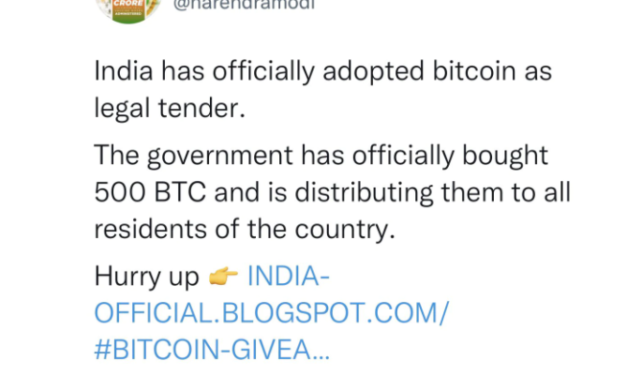
In 2021, the market cap of cryptocurrencies skyrocketed 286% year over year, uplifting a $2.17 trillion industry into the stratosphere. But, with this vast creation of wealth comes the explosion of peculiar tales throughout the sector. From the suspicious death of multiple crypto-evangelists and crypto scams involving hacked Twitter accounts of heads of states to much-promoted celebrity NFT drops that bombed at the auction, 2021 was truly a wild year for the cryptocurrency cyberspace. Without further ado, let’s look at the top strangest stories that have captivated blockchain enthusiasts this year.No 1. The death of John McAfeeOn June 23, John McAfee, crypto-evangelist and namesake founder of antivirus software company McAfee, was found dead in a Spanish jail cell in an apparent suicide by hanging. The United States, one of the few countries that impose a taxation-by-citizenship regime — that is, Americans are taxed on their worldwide income each year regardless of their country of residence — had been seeking McAfee’s extradition for failing to file his income tax returns from 2014 to 2018 and allegedly not reporting income for his crypto projects. McAfee was arrested in Spain pending U.S. tax evasion charges. Back in 2018, McAfee was allegedly charging as much as $105,000 per Tweet to promote initial coin offerings (ICOs) on social media.In another Tweet two years prior, McAfee stated: “If I suicide myself, I didn’t. I was whacked,” leading to conspiracy theories that the businessman’s death may have resulted from an orchestrated attack. McAfee is remembered for his pioneering ventures in programming, early adoption of Bitcoin (BTC) and his eccentric personality. He famously said that he would “eat [his own] dick on national television” if the price of BTC did not reach $500,000 by 2020. In November, McAfee’s original software development company was acquired by private investors for $14 billion. McAfee is survived by his widow Janice McAfee and his children (of which McAfee claimed to have at least 47).Today would have been John’s 76th birthday. As we continue to wait for news from the courts I wanted to share some of my favourite memories of John. To honor John please share any photos you may have taken of or with him using #JohnMcAfeeDidNotKillHimself & #JusticeForJohnMcAfee. pic.twitter.com/5iEQCTi7zx— Janice McAfee (@theemrsmcafee) September 18, 2021No 2. India‘s prime minister appears to tweet out a BTC scamIndian prime minister Narendra Modi‘s Twitter account was hacked again in December, with scammers claiming that India had adopted BTC as national tender, and 500 BTC are available for immediate distribution to Indian nationals who sign up via a phishing link. The tweet was briefly viewable to the public and Modi‘s 73.4 million followers before it was taken down. The year prior, a cybercrime group known as “John Wick” hacked the prime minister‘s Twitter account and posted messages asking his followers to make crypto donations.Several hypotheses exist as to why Modi became a target of these Bitcoin scam hacks. One possible motive was revenge for the ongoing Bitcoin scandal in India‘s Karnataka state. According to Indian media outlets, Karnataka police and governmental officials allegedly received 12,900 BTC in bribes from hacker Srikrishna Ramesh, who was arrested for hacking three crypto exchanges and other websites in the previous years. When Karnataka chief minister Basavaraj Bommai asked about the issue in a meeting with Modi in November, the prime minister allegedly brushed off the issue. India currently faces a chaotic regulatory environment regarding the state of crypto affairs in the country.Narendra Modi’s deleted Bitcoin Tweet | Source: India Today / TwitterNo 3. ConstitutionDAO‘s “Uno Reverse”Back in November, a group of retail investors formed a decentralized autonomous organization, or DAO, intending to pool money to purchase the last privately-owned first-edition print copy of the United States Constitution at a public auction hosted by Sotheby‘s. Constitution DAO raised $49 million via Ether (ETH) donations from 17,437 participants. On the day of the auction, however, the piece of the constitution was outbid by Ken Griffin, CEO of Citadel, whose firm owned hedge funds that shorted Gamestop shares to the discontent of many retail investors promoting the stock.The ConstitutionDAO disbanded shortly afterward and issued refunds to its stakeholders. While it may be that the “proletariat” investors have nothing to lose but their chains, it‘s clear that the “bourgeois” won‘t allow them to be unshackled so easily.hi frens,we just sent out the final batch of refunds for those who contributed directly to juicebox after the auction. if you contributed post-auction and before our previously messaged cutoff date of 12/6, you should have received your refund by now.https://t.co/g7u2ENSoYE— ConstitutionDAO (, ) (@ConstitutionDAO) December 11, 2021

No 4. Elon, Tesla and BitcoinCryptocurrencies have been on a wild roller coaster ride this year, possibly in part to Tesla‘s CEO Elon Musk. Promoting digital meme currencies such as Dogecoin (DOGE) and aside, Musk‘s indecisive approach when it came to Tesla‘s Bitcoin adoption created and wiped out many fortunes.In March, Musk sent investors into a buying frenzy after announcing that Tesla would accept BTC as payment for consumers to purchase its electric cars. Two months later, the momentum reversed and turned into a full-on market rout after Musk dropped the plans, citing environmental concerns with network mining. Then in October, Tesla said it would reconsider adding BTC as a method of payment. Through all this, however, Musk became more popular as a helmsman, leading retail investors and crypto enthusiasts alike through the storms of capital markets. He was recently elected Person of the Year by Times Magazine.Tesla & Bitcoin pic.twitter.com/YSswJmVZhP— Elon Musk (@elonmusk) May 12, 2021

No 5. The unsold NFTs of Tupac ShakurFor 29 years, former hip-hop journalist Lawrence “Loupy D” Dotson held on to a series of photographs of famed-rapper Tupac Shakur. The photos were taken at the rapper‘s “2Pacalypse Now” debut album release party in 1992 and were announced for public auction in the form of nonfungible tokens, or NFTs, in November of this year. In an interview with Cointelegraph, Loupy D stated: “I also considered photo exhibits, museums, all kinds of ways. With NFTs, it’s not just about the asset itself but the story behind the asset. I knew I needed to get my story out there in the public eye.”The OpenSea auction had notable press coverage beforehand, including from RollingStone and Fortune.com. For a week, the auction continued. However, not a single piece was sold out of the 18 Tupac photo NFTs. In his disappointment, Loupy D took them off the platform and opened them up for private inquiries. But, to be fair, the photographer may have been asking too much, as each NFT piece had a minimum bid of 25 ETH ($100,000). Earlier this year, another artist asked 200 ETH ($1 million at the time) for a photo of Tupac Shakur taken 14 days before his death in a drive-by shooting. That NFT has not sold despite the price dropping down to 10 ETH. Simply asking too much or has Tupac‘s popularity faded? You be the judge. Well, the #tupac #nfts didn’t sell at auction on #opensea, but as they say, #tmc Click link in bio for more information. https://t.co/QvPaMbDawQ pic.twitter.com/p8mc2MRSlc— Loupy D (@loupyd) November 30, 2021

Čítaj viac

US Financial Stability Oversight Council identifies stablecoins and cryptos as threats to financial system

In an annual report published on Friday, the United States Financial Stability Oversight Council, or FSOC, voiced its concern over the adoption of stablecoins and other digital assets. Regarding stablecoins, the FSOC said consumer confidence could be undermined by factors such as illiquidity, lack of appropriate safeguards, opacity regarding redemption rights, and cyber attacks. “A run on stablecoins during strained market conditions may have the potential to amplify a shock to the economy and the financial system,” the report said.The report also alerted to developments in decentralized finance, or DeFi, where the use of high leverage could trigger a fire sale when the price of the underlying asset declines. This would result in a cycle of margin calls and further price declines. In addition, the report outlined that “users of these services face risk of loss due to market value fluctuations, operational issues, and cybersecurity threats, among other risks.” In the report’s recommendations, the FSOC calls for a unified effort between federal and state authorities to enact legislation on stablecoins and digital currencies.[embedded content]Related: SEC delays decisions on Bitwise and Grayscale’s Bitcoin ETFsDespite concerns surrounding the much-unregulated nature of the crypto industry, the report highlighted their innovative potential:The development of digital assets and the use of associated distributed ledger technology may present the opportunity to promote innovation and further modernization of financial infrastructure. Regulatory attention and coordination are critically important in light of the quickly evolving market for digital assets.

Čítaj viac

Získaj BONUS 8 € v Bitcoinoch

nakup bitcoin z karty

Registrácia Binance

Burza Binance

Aktuálne kurzy