Autor Cointelegraph By Zhiyuan Sun

Terabithia cross-chain protocol bridges Internet Computer and Ethereum

On Wednesday, Psychedelic, a Web 3.0 development studio building solutions for the Internet Computer, launched Terabithia, a cross-chain contract communication and asset mirroring protocol. Beginning with the Internet Computer (ICP) and Ethereum (ETH), users will have the ability to mirror and use any ETH tokens, fungible and nonfungible, on the Internet Computer blockchain and vice versa, effectively turning ICP into a layer-two scaling solution for ETH.The protocol attempts to tackle the problem of Ethereum network congestion and high gas fees. The Internet Computer, meanwhile, uses a “reverse gas model” where developers supply the funds needed to run the applications or contracts that use their gas, known as “cycles.”When asked about the technological capacities of the Internet Computer network, Dominic Williams, founder and chief scientist of ICP developer Dfinity, told Cointelegraph:”The Internet Computer is pretty fast. For example, while Solana is the closest competitor in terms of speed, the IC is approximately 700% faster, boasting 250-millisecond reads and 2 second writes/updates.According to Williams, the Internet Computer is “far more effective at storing data than most other chains.” Whereas Ethereum currently costs $199 million to store a gigabyte worth of data annually, the same amount of storage costs just $5.52 per year on the Internet Computer. “This allows for decentralized apps that actually run at web speed, with unbounded capacity” in terms of data or cost, he said.Williams further added that “the unbounded capacity also means that NFTs can be stored entirely on-chain.” He claimed that the Internet Computer is the only blockchain to store nonfungible tokens completely on-chain “and the only one to enable zero-fee transactions.” He further added that “NFT metadata is regularly stored “off-chain” typically due to the cost of data and the inability of many blockchains to scale.”Related: Smart contracts are coming to Bitcoin through Dfinity’s Internet ComputerLast month, the total value locked on layer-two solutions on Ethereum reached an all-time high of $5.64 billion. Crypto enthusiasts have been migrating to such networks to escape soaring gas prices. While the upcoming Ethereum 2.0 upgrade may transition its consensus mechanism from proof-of-stake to proof-of-work, it does not solve the core problem of low transaction speeds, which currently only amounts to 30 transactions per second.

Čítaj viac

Opera to integrate with Polygon, opening dApp ecosystem to 80M users

On Wednesday, Opera, an internet browser with Web 3.0 application support and a built-in crypto wallet, announced an upcoming integration with Polygon (MATIC). The integration, which is scheduled to go live in the first quarter of 2022, will first open Polygon’s ecosystem to Opera’s over 80 million users on the Android mobile, then to the rest on other devices and platforms. Polygon is a layer two Ethereum (ETH) scaling solution designed for lower gas fees and faster transaction times.Through the integration, Opera users will be able to access Polygon decentralized applications, or dApps, such as Sushiswap, Curve, and Aave, as well as blockchain games and nonfungible tokens platforms such as Decentraland, Opensea, and Sandbox.Jorgen Arnese, executive vice president of Opera Mobile, said the new integration will help “remove the biggest challenge that crypto enthusiasts” face — namely, high gas fees and slow transaction speeds.Arjun Kalsy, vice president of growth at Polygon, added: “With this integration, Opera’s hundreds of millions monthly active users will be able to experience Polygon’s thriving dApp ecosystem and best in class Web 3.0 technology.”Related: Brave to integrate with Solana blockchain on its privacy-enabled browserEthereum scaling solutions such as Polygon have become vital in recent years as the network can only handle about 15 transactions per second. In times of peak network activity, like when celebrities try to drop over 10,000 NFTs all at once, gas prices can soar to absurd amounts. Fees are even higher in decentralized finance protocols such as peer-to-peer borrowing and lending, where multiple smart contract confirmations are required for loan origination.

Čítaj viac

Behind the scenes of the first AAA shooter game built on the blockchain

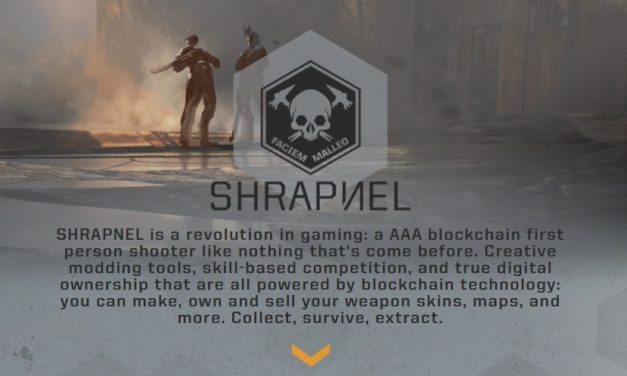
Shrapnel is the world’s first AAA shooter game built on the blockchain, at the intersection of community, creation, and ownership. The team is comprised of BAFTA and Emmy award-winning talent that has worked on blockbuster franchises such as HALO, Call of Duty, Madden, Bioshock, Destiny, Star Wars, Hawken Skylanders, Westworld, and more. It is built on blockchain gaming platform Forte. In an exclusive ask-me-anything session with Cointelegraph Markets Pro, Don Norbury, head of studio at Neon Media, the game’s developer, offered an in-depth take on what the game has to offer. Shrapnel game banner. Source: ShrapnelCointelegraph Markets Pro User: When I think of gaming, I think of Galaga, Pac-Man, Tomb Raider, Timesplitters. These games were fun and puzzling and contained adrenaline-filled additions. So how do you keep “Play-to-earn” (P2E) from being button-pushing for dollars?Don Norbury: Shrapnel is currently a core PC game for the primary game client. We have a rich website for everything beyond the “shooting people in the face” elements. Our longer-term goal is to target a mobile client, but early scoping/focus for a project’s primary game client is critical to success, given the other elements we’re tackling.We’re not making Cow-Clicker 9000 over here… we’re making an intense extraction-based shooter with creator tools. I think the P2E tracks that have been laid out are a fantastic concept and framework to understand and take into account when designing economies or understanding player/human motivations and incentives. However, the pure versions of games in that space are wildly different experiences than something like Shrapnel.Our team comes traditionally from a space where we work on something for three years before the public becomes aware of it. While we still believe a certain amount of baking is required (and creative chaos contained), we think there are fantastic ways the community can become involved in the process and grow with the project as features, utility, and agency are built and iterated on.CT Markets Pro User: Can you give us an idea of your roadmap going into 2022 and beyond?DN: We have been planning and building this project for a long time now, and you’ll see more details around the roadmap and engagement very soon — so keep an eye on our social channels. We believe tokens of both utility and nonfungible natures are table-stakes at this point, and we’re excited to share innovation in the space on the decentralized protocol front in addition to our work on making a fantastic extraction shooter.CT Markets Pro User: What makes Shrapnel different from regular multiplayer shooting games?DN: It’s an extraction shooter, lose-your-loadout high-stakes-treasure-hunting design. You bring in your gear, and you need to get loot out. There are a couple of examples of this genre in the space already, such as Escape from Tarkov and the Dark Zone mode from The Division. Still, it’s relatively unexplored and is ripe for a AAA approach where we sand off rough edges and bring a flair for the dramatic equation around world-building and mechanics. Additionally, we have a range of user-generated content tools that range from access to more complex across various asset types in the project. Finally, Shrapnel will be partially built, quite literally, by the community in ways that allow them to own the platform and their creations and to be recognized for their contribution and participation.CT Markets Pro User: What experience does Neon Media have with games? DN: Our entire careers are based in AAA game development and transmedia production. So we all have multiple decades of experience building studios, executing globally-distributed publishing projects, and building some of the biggest franchises in the industry. Studios/companies like LucasArts, Xbox, Activision, Irrational, EA, HBO… and projects like Halo, Call of Duty, Bioshock, Star Wars, Madden, Westworld. So I suppose we’re a little obsessed… maybe overly so.CT Markets Pro User: What can the Forte blockchain/NFT platform, or a Neon/Shrapnel investor, bring to the table? DN: One of the primary issues preventing wider-scale adoption of games in the crypto space is frictional elements and risk. When we think about aspects like wallet/key management, KYC/AML, or transportability of assets, these are spaces for crypto-savvy people. There is an element of familiarity and acceptance. Still, for the average gamer, this is faaaaaar too much. When we build games, we want the player to get in and experience the visceral emotional moments rapidly, even to the point of minimizing the initial install size of a client so you can get in and shoot someone in the face as quickly as possible. Forte is focused on reducing the typical friction and ensuring compliance and future-proofing to allow the game experience to thrive.CT Markets Pro User: How do you view the future of interoperability? Will this project live on one chain or several?Related: Gamer-hate: Ubisoft’s new NFT project video gets 96% dislike ratioDN: This is a great question that is near-and-dear to our hearts at Shrapnel. We are building the protocol with interoperability in mind as much as possible. One of our core pillars at Shrapnel is: “We’re not the metaverse; we’re part of it.” We see blockchain and DeFi as the TCP/IP of the metaverse, and most projects that claim “metaverse” are mostly referred to as “sandbox games.” We want every future platform to enable their expression of Shrapnel, both the parts created by our team in Seattle and all the future imaginings of the creators within the Shrapnel platform.

Čítaj viac

Medical Q&A platform Ask The Doctor files lawsuit against Shiba Inu, engages war of words on Twitter

Tuesdays can be boring, but an ongoing Twitter drama is captivating the attention of many blockchain enthusiasts. Ask The Doctor, a Canadian medical questions and answers website, announced that it would be suing Shytoshi Kusama, volunteer project lead of meme token Shiba Inu (SHIB), for alleged libel and will attempt to uncover his personal identity in court. Kusama immediately fired back, alleging that “it is illegal [for Ask The Doctor] to take people’s money for a service it never provides.”Tell your legal team that it is illegal to buy a verified account to use it to scam other people. Tell them it is illegal to take people’s money for a service you never provide. And if you REALLY want to come and get me…COME GET ME. It’s almost time anyway… I’m ready https://t.co/jTnQydUWBt— Shytoshi Kusama™ (@ShytoshiKusama) December 21, 2021The heated exchange began when Kusama quoted a promotional SHIB Tweet from Ask The Doctor the day prior, alleging, “You’re a scam account. Where are all your “doctor” tweets from tour account created in what 2009?” If the plot wasn’t already thick enough, Ask The Doctor was formerly a SHIB influencer. In a Dec. 1 tweet, the firm claimed to have added 31 billion SHIB ($1.5 million at the time) to its balance sheet. On Dec. 20, Ask The Doctor then tweeted it had eliminated its SHIB tokens from its books. Twitter users allege that the firm has been heavily promoting SHIB tokens to retail investors over the past month.You’re a scam account. Where are all your “doctor” tweets from tour account created in what 2009? Gtfoh. Go scam another token like you planned on doing with your first tweets. .@askthedr pic.twitter.com/ceFqL8KFYv— Shytoshi Kusama™ (@ShytoshiKusama) December 21, 2021

Related: Shiba Inu gains over 30% in just 2 days as Kraken announces SHIB listingAt the time of publication, Ask The Doctor continues to escalate the conflict on the social media platform. In more recent tweets, the firm alleges that SHIB is “a scam,” “heading to zero,” “facing delisting,” and stating that, without evidence, “there is a rug pull coming.” Since the conflict’ began less than 24 hours ago, Ask the Doctor appears to have lost nearly 10,000 Twitter followers with approximately 48,000 remaining. Although Ask The Doctor said it dumped its SHIB stake for business purposes, it didn’t explain why it would invest in what it believes to be a “scam” coin in the first place.

Čítaj viac

'You don't own Web 3.0,' says Jack Dorsey, criticizing its centralized nature

In a series of tweets posted on Tuesday, Jack Dorsey, the co-founder and former CEO of Twitter, as well as the founder and CEO of Square (now Block), voiced his criticism over the direction of Web 3.0 development. Elon Musk, the CEO of Tesla, joined Dorsey in the mockery. On an unrelated note, the same day, Dorsey replied, “Bitcoin will” when asked if crypto will replace the dollar.Within context, Web 3.0 is a decentralized version of the virtual world that will in part feature public blockchains, metaverse technology, nonfungible tokens and decentralized finance free from the grasp of centralized power sources, such as corporate servers. You don’t own “web3.”The VCs and their LPs do. It will never escape their incentives. It’s ultimately a centralized entity with a different label. Know what you’re getting into…— jack⚡️ (@jack) December 21, 2021However, Dorsey took aim at the fact that venture capital firms, or VCs, and limited partnerships, also known as LPs, frequently fund Web 3.0 projects in direct competition with decentralized alternatives such as initial coin offerings. By owning a controlling stake, VCs and LPs can then pressure blockchain co-founders to comply with centralized regulations despite their conflict with core crypto philosophy, such as collecting know-your-customer data.Although he didn’t have much to add, Elon Musk commented that Web 3.0 projects haven’t really lived up to their name.Has anyone seen web3? I can’t find it.— Elon Musk (@elonmusk) December 21, 2021

Related: Indian state government to accredit Web 2.0 and Web 3.0 blockchain startupsAccording to a report by PitchBook, fintech firms received $88.3 billion in aggregate funding from venture capital through the first three quarters of 2021, almost double the 2020 total of $44.9 billion. The report also highlighted the growing mainstream acceptance of cryptocurrencies as one potential growth driver, especially as more institutions look to access digital assets.As for Dorsey, the former Twitter CEO appears to be much more vocal about his intent to contribute to the Bitcoin (BTC) economy since stepping down from the social media company in November. As Cointelegraph previously reported, Dorsey plans on building a decentralized exchange for Bitcoin that will make it easier to fund a non-custodial wallet. 

Čítaj viac

Získaj BONUS 8 € v Bitcoinoch

nakup bitcoin z karty

Registrácia Binance

Burza Binance

Aktuálne kurzy