

Autor Cointelegraph By Zac Colbert

The SEC should be aiming at Do Kwon — But it’s getting distracted by Kim Kardashian

In less than a week, Terraform Labs founder Do Kwon’s passport will expire. Interpol issued a red notice for Kwon last month, and this month, his assets were reportedly frozen by the South Korean government. Kwon has been tweeting freely in response — and almost always denies the reports. “I don’t know whose funds they’ve frozen, but good for them, hope they use it for good,” he wrote in one message. Playing a game of cat and mouse with both the authorities and the public, Kwon seems to be living a life of freedom while enjoying his internet access. Meanwhile, regulators with the United States Securities and Exchange Commission have been highly vocal in reprimanding Kim Kardashian and other celebrities for shilling assorted cryptocurrency projects. Although they deserve to be rebuked, bad actors like Kwon continue to elude the long arm of regulatory bodies.Kim Kardashian shilling crypto is the tip of the icebergKardashian promised the SEC she’d pay a $1.26-million settlement after promoting EthereumMax (EMAX) on her Instagram account. Rightfully, the reality star was penalized because she failed to disclose the $250,000 she was paid to shill the shitcoin, which plummeted 98% shortly after her endorsement. (She disclosed that she was paid but not the exact amount.)Following the court ruling, SEC Chairman Gary Gensler proclaimed, “This case is a reminder that, when celebrities or influencers endorse investment opportunities, including crypto-asset securities, it doesn’t mean that those investment products are right for all investors.” He added that the case was “a reminder to celebrities and others that the law requires them to disclose to the public when and how much they are paid to promote investing in securities.”Related: Kim Kardashian’s Ethereum Max ad violated the SEC’s anti-touting provisionFine words indeed. But Gensler’s grandstanding with celebrity wrist-slapping is a case of style over substance. Clear pump-and-dump schemes shouldn’t go unpunished, but the priorities of regulatory bodies are clearly skewed. There are far bigger fish in the crypto pond that should be incurring the SEC’s wrath.The damage caused by Do KwonKardashian touting EMAX isn’t a great look for crypto, and the SEC was right to charge her. But it’s not a patch on the damage done by Kwon, which the SEC failed to avert. The May collapse of Terraform’s stablecoin and its cryptocurrency, LUNA, wiped roughly $50 billion in value out of the market over the course of a week. Before its crash, LUNA was one of the top 10 largest cryptocurrencies on the market.The SEC first issued a subpoena to Kwon and his company in 2021. Kwon, ever the anti-authoritarian, responded by saying he wouldn’t comply with the demands and would instead sue the SEC. Although little came of his countersuit, it clearly demonstrated his disregard for the agency.Related: Federal regulators are preparing to pass judgment on EthereumToday, it seems the SEC has forgotten about Kwon. It was South Korea — not the U.S. — that prompted Interpol to issue a red notice for Kwon, an official order to law enforcement across the globe to locate and arrest the wanted person.Apparently, the SEC has passed the buck to South Korea and Interpol. Instead, the agency is going after the likes of Ripple and Coinbase — despite the fact that legislators in the U.S. and beyond still haven’t even defined digital assets.The damage done by Kwon goes far beyond simple numbers. In some cases, it cost victims their lives. The last thing we need in this time of turbulence for global markets is uncertainty driven by shady and (allegedly) criminal actors. Kwon has invited regulation from authorities, so perhaps that’s part of the reason the SEC has been slow to follow South Korea’s lead in issuing a strong rebuke.Proper regulations wouldn’t necessarily be bad, but it’s hard to judge what “proper” looks like before regulators have enforced the laws that already exist.Zac Colbert is a digital marketer by day and a freelance writer by night. He’s been covering digital culture since 2007.This article is for general information purposes and is not intended to be and should not be taken as legal or investment advice. The views, thoughts, and opinions expressed here are the author’s alone and do not necessarily reflect or represent the views and opinions of Cointelegraph.

Čítaj viac
The future of DeFi is on TikTok

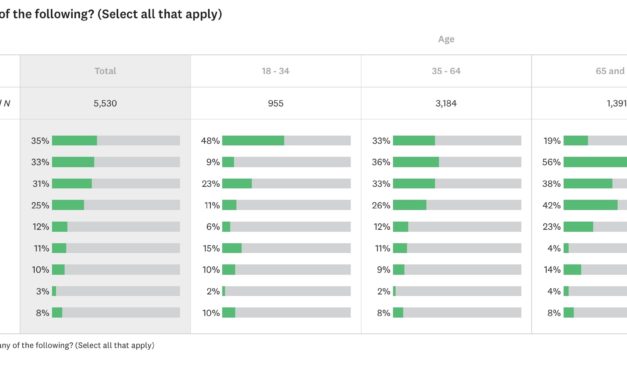
In July 2021, TikTok hit three billion downloads. The social network boasts more than one billion active monthly users. And, in the United States, TikTok is now more popular with Generation Z than Instagram.Over the last six months, Bitcoin (BTC) has seen a drop of more than 70% from its all-time high north of $69,000 in 2021. Market volatility is to be expected. But, if decentralized finance (DeFi) is looking to have a future, it needs to be embraced by more people. The aforementioned volatility (as well as the cynicism of cryptocurrency in general) puts many investors off. Fortunately, members of Generation Z are far from your typical investors.Digitally savvy and financially literateFinance on TikTok has become so popular that it has got its own portmanteau. Dubbed FinTok, finance-related content has seen a meteoric rise along with the social network itself. Last year, the #Crypto hashtag blew up, getting 1.9 billion videos. Uploads tagged #NFT increased by a mind-melting 93,000% (further fueled by the general boom in NFT interest). And, videos with the #StockTok hashtag garnered 1.4 billion views. The glut of money management videos isn’t limited to the crypto market. Last year, the #PersonalFinance hashtag accrued more than 4.4 billion views, with content covering everything from tax and budgeting to savings and debt. Considered in the context of TikTok’s primary users — Generation Z — it shows that the youth of today have a healthy appetite for financial information. They just want to consume it soundtracked by a catchy pop song and a viral dance.Related: Throw your Bored Apes in the trashYoung adults are also leading digital asset adoption. According to the “Invest in You” survey by CNBC, 18-34-year-olds accounted for 15% of cryptocurrency investments, compared to 11% for 35-64-year-olds and a measly 4% for 65+. The problem is, a considerable segment of that 18-34 year old demographic sees crypto as a short-term investment: 21% of 18-34-year-olds only regard it as a 12-month strategy.15% of 18-34-year-olds say they own cryptocurrency. Source: CNBCIt’s no surprise that Gen Z is not only embracing cryptocurrency but also educating themselves regarding finance. According to Credit Suisse’s global investment returns yearbook, Gen Z will earn a third less on traditional stock and bond investments than past generations.December’s “OK Zoomer” research report from Bank of America revealed that the COVID-19 pandemic will hit Generation Z’s professional and financial future in a similar way that the Great Recession impacted Millennials. Therefore, although the majority of Generation Z don’t have a lot of money to invest in crypto right now, they could in the future, especially if they’re as financially savvy and investment-driven as the data suggests. And, that’s where the opportunity lies for DeFi. Building trust in digital assets through transparent marketingFor the future and health of the digital asset market, DeFi firms need to engage the right audiences in specific ways targeted to those demographics.Similar to how DeFi promises to democratize finance, social media platforms such as TikTok have the potential to democratize the investing process. What was once a closed community only accessible for the likes of Wall Street bankers and qualified hedge fund managers is now open to everyone.But, if DeFi is to capitalize on the opportunities available via the trendiest social media platform, it’s going to have to get better at marketing. This means clear and concise short-form videos that are tailored to the target audience, making crypto not just accessible but fun too, while also being transparent about the risks inherent in investing.Related: The feds are coming for the metaverse — from Axie Infinity to Bored ApesShort videos are playing well on TikTok. But, they’re predominantly top-of-the-funnel activities. That’s not necessarily a bad thing. Brands can warm up the Generation Z audience now so that in a few years, when they have the money to invest, they’re knowledgeable leads ready to be converted.It’s this conversion content that’s needed. Crypto companies need to build trust in the audience over the next few years. No mean feat considering the turbulence and bad press the bear market has experienced lately.DeFi firms must stay transparent, distinguish themselves from TradFi brands and figure out what forms of video content will build long-term, trusting relationships with the younger generation. If crypto companies learn how to speak their language today, tomorrow could be bright for bitcoin and other digital assets.Zac Colbert is a digital marketer by day and freelance writer by night. He’s been covering digital culture since 2007.This article is for general information purposes and is not intended to be and should not be taken as legal or investment advice. The views, thoughts, and opinions expressed here are the author’s alone and do not necessarily reflect or represent the views and opinions of Cointelegraph.

Čítaj viac

Coinbase is fighting back as the SEC closes in on Tornado Cash

On Sept. 8, Coinbase announced it was bankrolling a lawsuit against the United States Treasury Department. The cryptocurrency exchange is funding a lawsuit brought by six people that challenges the sanctions on Tornado Cash. And on Sept. 9, Securities and Exchange Commission (SEC) Chair Gary Gensler announced he was working hard with Congress to create legislation to increase cryptocurrency regulations.But these two stories are not mutually exclusive. The sequence of events proves that governments are purely reactive rather than proactive when it comes to decentralized finance (DeFi).Tornado Cash was sanctioned by the Office of Foreign Assets Control (OFAC) back in August. OFAC claimed the smart contract mixer has helped to launder more than $7 billion worth of cryptocurrency since its creation in 2019, including over $455 million stolen by the North Korean-linked hackers Lazarus Group.Coinbase CEO Brian Armstrong said in a statement that Treasury went too far, taking “the unprecedented step of sanctioning an entire technology instead of specific individuals.” In addition to claiming the sanctions exceeded the department’s authority, Coinbase argued the measures:Remove privacy and security for crypto users;Harm innocent people; andStifle innovation.The next day, Gensler doubled down on his push for tougher regulation of the DeFi market, claiming crypto companies wouldn’t prosper without it. “Nothing about the crypto markets is incompatible with the securities laws. Investor protection is just as relevant, regardless of underlying technologies.”Related: US Treasury clarifies publishing Tornado Cash’s code does not violate sanctionsNot only does his choice of words such as “regardless of underlying technologies” betray his lack of understanding of crypto and blockchain technology, but his speech prompted an outcry from the Web3 community, with many claiming government regulation is a wolf in sheep’s clothing. Jake Chervinksy, a lawyer and head of policy at the Blockchain Association, tweeted in response, “Crypto is a novel & unique technology: how it should be regulated is a major question for Congress (not the SEC Chair) to decide.”Chair Gensler says most digital assets are securities. Decades of legal precedent say otherwise.Regardless, crypto is a novel & unique technology: how it should be regulated is a major question for Congress (not the SEC Chair) to decide.My take in WSJ:https://t.co/E7kql6Vohb— Jake Chervinsky (@jchervinsky) September 8, 2022Security legislation is worrying enough. But the Tornado Cash sanctions set an alarming benchmark for anyone involved in digital assets. Not only are blockchain technology and cryptography constantly changing — what’s secure now might not be secure in the near future and almost certainly won’t be secure next year — but there are a myriad of legitimate applications for the likes of blockchain tech.DeFi is all about privacy. The clue’s in the name — decentralized finance. Mixers such as Tornado Cash further protect the privacy of its users by mixing users’ deposits and withdrawals in liquidity pools, hiding their addresses and safeguarding their identities. Users want to protect the privacy of their transactions for a range of lawful reasons.In this case, one of the plaintiffs used the mixer to donate funds to Ukraine anonymously. Another was an early adopter of crypto and now has a significant social media following, with his public ENS name connected to his Twitter account. He used the smart contract to protect his security while transacting. Now their assets are trapped in Tornado Cash.A person’s finances include some of their most sensitive personal information. And law-abiding citizens have the right to keep this private. But it’s this very privacy that will be eroded by the sort of regulation recently proposed by Gensler, the SEC and other governments around the world.Related: Crypto investors backed by Coinbase sue U.S. Department of Treasury after Tornado Cash sanctionsAs is the case with these sanctions, arresting people for using services for lawful and even benevolent acts, not to mention locking up developers for writing open-source code that wasn’t illegal at the time of creation, feels like Orwellian-levels of dystopian.Treasury officials have since backtracked, clarifying in guidance that, in fact, “interacting with open-source code itself, in a way that does not involve a prohibited transaction with Tornado Cash, is not prohibited.” The guidance adds that copying the protocol’s code, publishing the code and visiting the website, are all allowed. Although not officially related, the timing and similarities between the two stories are telling. Gensler likened regulation to traffic control, saying — “Detroit would not have taken off without some traffic lights and cops on the beat.” Armstrong used a highways and heist analogy, saying, “Sanctioning open-source software is like permanently shutting down a highway because robbers used it to flee a crime scene.” And he’s not wrong. How many talented developers will now be dissuaded from writing game-changing code that could not only innovate industries, but help people across the world? A small number of bad actors should not hinder the progress of a technology with such huge potential to revolutionize sectors beyond even finance.The Coinbase lawsuit is a pivotal case in the history of cryptocurrency, and the result — whatever it is — will have huge ramifications for DeFi. And of course, its users.Zac Colbert is a digital marketer by day and freelance writer by night. He’s been covering digital culture since 2007.This article is for general information purposes and is not intended to be and should not be taken as legal or investment advice. The views, thoughts, and opinions expressed here are the author’s alone and do not necessarily reflect or represent the views and opinions of Cointelegraph.

Čítaj viac

Získaj BONUS 8 € v Bitcoinoch

nakup bitcoin z karty

Registrácia Binance

Burza Binance

Aktuálne kurzy