
Autor Cointelegraph by Yohan Yun

New York sues Kalshi over alleged illegal gambling operation

New York has sued prediction market platform Kalshi, alleging it operates an illegal, unlicensed gambling business by offering event contracts on sports, elections and other outcomes.The lawsuit seeks to stop Kalshi’s alleged illegal gambling operation in the state, require the company to forfeit illegal gains, pay restitution to users and pay civil penalties equal to three times those gains.“No matter what they call themselves, prediction markets like Kalshi are gambling platforms, plain and simple,” Attorney General Letitia James said in Friday’s statement. “We are taking them to court to uphold our laws and protect New Yorkers.”The lawsuit comes after the New York State Gaming Commission issued Kalshi a cease-and-desist order in October 2025, prompting the company to sue the regulator in federal court. A judge denied Kalshi’s request for a preliminary injunction in July, and an appeals court later rejected its bid to block enforcement while the appeal proceeds.Kalshi did not immediately respond to Cointelegraph’s request for comment.CFTC defends federal oversight of prediction marketsThe lawsuit adds to an escalating jurisdictional dispute over whether event contracts offered by federally regulated prediction markets are subject to state gambling laws.Just before New York filed its case, the Commodity Futures Trading Commission (CFTC) filed an emergency motion seeking to block New York’s enforcement efforts, arguing that the state’s actions interfere with the agency’s exclusive authority under the Commodity Exchange Act to regulate designated contract markets like Kalshi.Related: CFTC issues second warning to prediction markets on cookie-cutter self-certificationsThe CFTC has taken similar positions in disputes involving at least nine states, arguing that allowing states to prohibit event contracts listed by federally regulated exchanges would create conflicting state rules and undermine federal commodities regulation.Prediction markets continue to gain mainstream tractionPrediction markets allow users to buy and sell contracts tied to the outcome of future events, with prices reflecting the market’s estimate of the probability that an event will occur.Kalshi’s rival, Polymarket, has also faced regulatory scrutiny, with several countries restricting or investigating its operations over gambling and licensing concerns.Kalshi began expanding into blockchain-based infrastructure in December 2025, launching tokenized prediction markets on Solana and later adding support for multiple blockchain networks.The broader prediction market sector has also grown alongside major sporting events. According to analytics firm Chainalysis, blockchain-based prediction markets processed about $20 billion in trading tied to the 2026 FIFA World Cup, with more than 400,000 wallets participating.Magazine: The 100x obsession: Fundamentals grow in importance as crypto matures

Čítaj viac

RWA perpetual futures volume nears Bitcoin on Hyperliquid, Binance

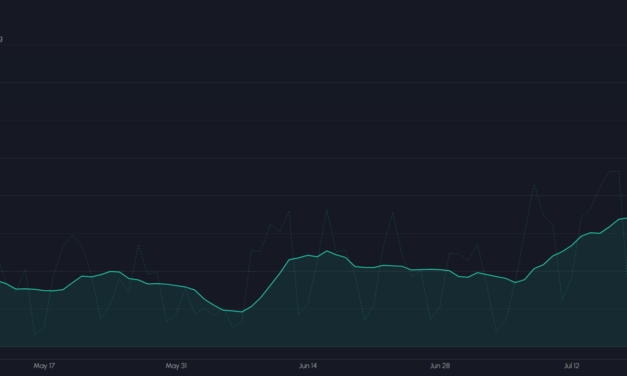
Perpetual futures tied to tokenized stocks and commodities generated nearly as much trading volume as Bitcoin perpetuals on two of the largest venues for the products over the past week, according to Talos.Combined seven-day volume across tracked real-world asset (RWA) perps reached $61.7 billion, equal to 99.2% of Bitcoin perpetual volume on Hyperliquid and Binance, where most trading activity is concentrated, Talos told Cointelegraph in an email summary citing a data snapshot taken on Thursday.Tokenized equity contracts accounted for 57.8% of the total, followed by commodities at 28.2%.The value of onchain RWAs has grown to about $36.8 billion, excluding stablecoins, according to RWA.xyz. Crypto exchanges have also expanded their offerings beyond cryptocurrencies, increasingly listing tokenized stocks and commodities alongside digital assets.Related: Tokenized RWA market grows 420% since 2025 on regulatory clarity, accessHyperliquid recorded $25.1 billion in RWA perpetual trading volume during the week of July 13 to July 19, exceeding the combined volume of all other perpetual categories on its platform.Circle co-founder and CEO Jeremy Allaire said in a July 24 X post that growing RWA trading on Hyperliquid signals crypto markets moving “away from speculating on endogenous digital commodities.”Growth continues into the new weekEarly data for the current week suggests the trend is continuing. RWA perpetual trading volume has already reached $37.2 billion, exceeding Bitcoin perpetual volume by about 9%, according to Talos’ dashboard.RWA perpetual futures volume as a percentage of Bitcoin perpetual futures volume on Hyperliquid and Binance. Source: TalosEquity-linked contracts accounted for $22.8 billion of the total, followed by commodities at $9.1 billion and indexes at $4.2 billion. ETFs contributed about $338 million, while foreign exchange, pre-IPO and other RWA contracts made up the remainder.Earlier in July, Pantera Capital said perpetual futures could become a dominant trading instrument beyond crypto, citing advantages such as 24/7 trading, the absence of contract expiries, simpler position management and continuous price discovery.Hyperliquid’s growth has drawn attention from traditional finance. Intercontinental Exchange CEO Jeffrey Sprecher, whose company owns the New York Stock Exchange, recently urged regulators to create a “level playing field” for 24/7 onchain perpetual futures, arguing that existing market structures should not prevent the development of blockchain-based trading.Despite the growth, RWA perpetuals remain a relatively small segment of the broader crypto derivatives market. Talos’ data shows aggregate futures trading volume of about $821.4 billion over the past seven days, with tracked RWA perpetuals accounting for roughly 7.5% of the total.Magazine: The 100x obsession: Fundamentals grow in importance as crypto matures

Čítaj viac

Získaj BONUS 8 € v Bitcoinoch

nakup bitcoin z karty

Registrácia Binance

Burza Binance

Aktuálne kurzy