Autor Cointelegraph By William Suberg

Bitcoin faces key support test at $78.3K as US crude oil hits three-month high

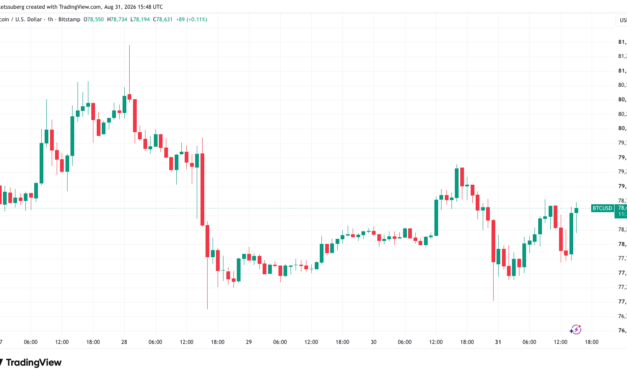
Bitcoin (BTC) dipped below $78,000 at Tuesday’s Wall Street open as risk assets fell on renewed Middle East tensions.Key points:Bitcoin briefly dropped under $78,000 for the first time since Sept. 3, following downside pressure on US equities.WTI crude oil hit three-month highs near $95 per barrel on renewed military strikes in the Middle East.Bitcoin needs to hold $78,300 to avoid a repeat of its May breakdown, analysis warns.Bitcoin, stocks fall as Middle East woes spark oil surgeData from TradingView showed BTC/USD dropping as low as $77,600 before a modest rebound, its lowest levels since Sept. 3.BTC/USD one-hour chart. Source: Cointelegraph/TradingViewNews of Houthi strikes on Saudi Arabian cities and oil infrastructure pressured US stocks at the start of the first trading session after the Labor Day holiday. The S&P 500 and tech-heavy Nasdaq Composite Index were down by 0.5% and 0.4%, respectively, at the time of writing.S&P 500 one-day chart. Source: Cointelegraph/TradingViewOil prices showed a more pronounced reaction to the events, with WTI crude surging toward $95 per barrel, its highest since June 8. Brent crude targeted the $100 mark for the first time since July 24.CFDs on US WTI crude oil one-day chart. Source: Cointelegraph/TradingViewCommenting on a concurrent record rise in US diesel prices, trading resource The Kobeissi Letter noted that “inflation expectations continue to mount as a result.” As Cointelegraph reported, this has been especially apparent in the Consumer Price Index (CPI), an inflation gauge which is again due for release on Friday.In a Truth Social post on Monday, US president Donald Trump downplayed the oil spike, pledging lower prices in the future.“Oil prices will drop precipitously, like everything else is dropping (but more!), when we WIN the war with Iran. Three Dollars a gallon, but ultimately, below Two Dollars a gallon,” he wrote.Analysis shows BTC price copying failed May breakoutDiscussing current BTC price action, trader and analyst Rekt Capital struck a cautious tone, drawing comparisons to Bitcoin’s failed May breakout.Related: New Bitcoin whales spark sell-side risk as unrealized gains hit $9BAt the time, BTC/USD reached $82,800 before reversing, then consolidating at $78,300 and eventually dropping to new macro lows near $57,000. “The retest of ~$78300 is now in progress,” he noted in a post on X.BTC/USD one-week chart. Source: Rekt Capital on X.comShould the current zone fail to hold as support, BTC/USD would seal another lower high in a series stretching back to October 2025, keeping its 2026 bear market firmly in place.“Ultimately, a Weekly Close below $78300 followed by a bearish retest just like in early May would likely confirm a breakdown,” Rekt Capital argued in separate analysis on X.

Čítaj viac
Bitcoin chips away at weekend upside as $80K hangs in the balance

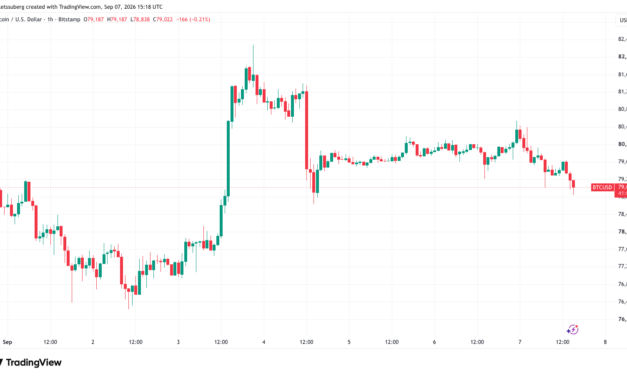
Bitcoin (BTC) drifted lower on Monday as a low-liquidity environment erased the weekend’s gains above $80,000.Key points:Bitcoin dips 2% below $80,000 after its highest weekly close since the start of May.Traders are in wait-and-see mode ahead of the week’s key volatility catalyst in the form of US inflation data.Analysis praises Bitcoin’s “resilience” as a narrow range holds since mid-August. Bitcoin needs US inflation catalyst: AnalysisData from TradingView showed BTC/USD down nearly 2% on the day at the time of writing. This price action comes after its first weekly close above $80,000 since early May.BTC/USD one-hour chart. Source: Cointelegraph/TradingViewWith US markets closed for the Labor Day holiday, thinner order books increased the chances of sudden moves to target liquidity both above and below the spot price. Data from CoinGlass showed liquidations evenly split between long and short positions over the past 24 hours, with the cross-crypto total at $178 million. Crypto liquidation history (screenshot). Source: CoinGlassLiquidity thickened over the course of Monday, with concentrations at $80,500 and $78,800 providing nearby short-term targets.Crypto liquidation heatmap. Source: CoinGlassIn comments, trading company QCP Capital flagged declining overall volatility, suggesting that traders required external catalysts. These are due in the form of US inflation data on Thursday and Friday, which is likely to impact market expectations for interest-rate hikes by the Federal Reserve.“Near-term volatility compression, despite approaching catalysts, reflects a market waiting for clarity rather than pricing in strong directional views,” QCP wrote in its latest analysis. It added that the “market is positioned for a directional break once the inflation data arrives.”BTC price “resilience” draws attentionDespite moving in a confined range since Aug. 21, BTC/USD offered bullish signals and held the majority of its 25% gains from earlier last month. Related: Here’s what happened in crypto todayBTC/USD one-day chart. Source: Cointelegraph/TradingViewIn comments sent to Cointelegraph, Ryan Lee, chief analyst at Bitget, noted that Bitcoin had digested last week’s US macro volatility trigger, which was a surprise uptick in nonfarm payrolls numbers.“Bitcoin’s resilience is notable because stronger employment would normally put upward pressure on yields and the dollar, creating a tougher environment for risk assets,” he said. “The market’s ability to absorb that repricing suggests investors are not treating a potential Fed hike as the only factor driving Bitcoin at current levels.”As Cointelegraph reported, the US spot Bitcoin exchange-traded funds (ETFs) also remain on the radar following Thursday’s $730 million net inflows. This was the cohort’s highest single-day tally since January.

Čítaj viac

Yen intervention meets US inflation data: Five things to know in Bitcoin this week

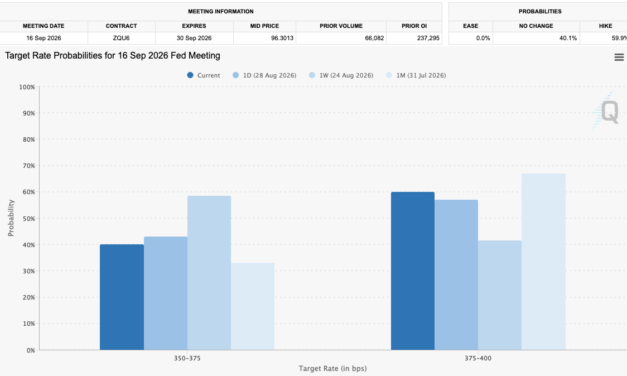
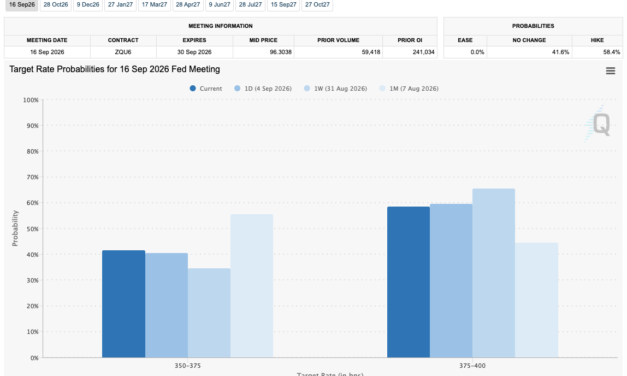
Bitcoin (BTC) sees its first weekly close above $80,000 since early May as clouds gather over the US inflation outlook.Key points:US PPI and CPI inflation numbers are due this week prior to the Fed’s Sept. 16 decision on interest-rate changes.Amid record currency interventions, analysis warns that Japan may not be able to sell US treasuries to help stabilize the yen in going forward.Bitcoin’s supertrend indicator delivers its first “buy” signal since late 2025, copying the previous bear-market recovery.CPI, PPI due as markets see 0.25% rate hike nextUS inflation data returns to the forefront this week after surprise employment data pressured crypto and risk assets. The August prints of the Producer Price Index (PPI) and Consumer Price Index (CPI) are due for release on Thursday and Friday, respectively.CPI matched market expectations at 0.1% month-on-month and 3.4% year-on-year last month, continuing on from softer-than-anticipated June results. Although the numbers paint a positive picture for inflation, Kevin Warsh, chair of the US Federal Reserve, stated that these data prints alone did not support the case for reassessing financial policy.“Each of these broad inflation measures have fallen significantly from their highs of a few years ago, but progress through the past couple of years has been more modest, and while this summer’s PCE and CPI readings were better than expected, they do not tell me that underlying trends have meaningfully improved,” he said at the Jackson Hole economic symposium in late August, referring to the Fed’s “preferred” inflation gauge, the Personal Consumption Expenditures (PCE) index.In response to the speech, markets priced in an increased likelihood of Federal Reserve rate hikes at its next meeting on Sept. 16. The latest data from the CME Group’s FedWatch Tool shows that consensus favors a 0.25% rate hike, with odds at 58.4%.Fed target rate probability comparison for September FOMC meeting (screenshot). Source: CME GroupFears of rate hikes were also spurred by last week’s nonfarm payrolls data, which came in far stronger than expected and included upward revisions of prior figures. The US economy added 162,000 jobs in August against a prior estimate of 56,000. A stronger labor market reduces the need for the Fed to loosen policy, cementing the potential for rate hikes with core inflation still above its 2% target. Markets have maintained a hawkish outlook on rates. This is despite Fed governor Christopher Waller voicing support for an ongoing rate-hike pause and US president Donald Trump renewing pressure on the Fed to enact rate cuts last week.“The Fed Board, with its great new leader, must get smart – BE PATRIOTS for a change. High interest rates put the U.S.A. at a very unfair disadvantage, ⁠and I won’t allow that to happen!” he wrote in a post on Truth Social.Both PPI and CPI have the potential to alter the outlook prior to the meeting, with crypto market volatility often accompanying inflation-data prints.Commenting, trading resource Mosaic Asset Company noted that the strong jobs numbers could still offer stocks a silver lining.“While the knee-jerk reaction is centered around the rate outlook, it’s worth keeping in mind that good news for the economy should be good news for corporate earnings. The jobs report adds to recent data pointing to an economy expanding at solid pace, which should support the bull market looking ahead,” it wrote in analysis at the weekend. Mosaic cautioned that seasonality could add an additional hurdle, with September traditionally equities’ worst-performing month, while November’s US midterm elections should make for more volatile conditions into Q4. Japanese yen interventions hit recordTraders are focused on the Japanese yen as new government data reveals the extent of its record currency interventions. On Monday, Japan’s Ministry of Finance reported that its foreign reserves had decreased by $79.57 billion from the end of July amid a record currency intervention in the yen. Japan’s currency strengthened to 155 against the US dollar as a result, still holding that area during Monday’s Asia trading session.  “Japan may have used both foreign securities and deposits, but it most likely sold U.S. Treasurys,” Atsushi Takeda, chief economist at Itochu Research Institute, told Bloomberg.USD/JPY one-day chart. Source: Cointelegraph/TradingViewThe move had potential implications beyond the yen, with US bond yields already facing pressure at the long end, prompting the Treasury to announce contingency measures set to begin on Sept. 9. Japan selling US Treasuries to fund future interventions may draw a negative response from Washington, leaving the Bank of Japan (BOJ) in a bind should yen weakness return.“That would make it difficult for the ministry and the Bank of Japan to act going forward,” Akari Nishimura, economist at the Japan Research Institute, added.Polymarket probabilities for BOJ rate decision on Sept. 18. Source: PolymarketTraders now price in an interest-rate hike by the BOJ in September, with benchmark rates already at their highest since 1995 at 1.0%. Data from Polymarket currently sees 98% odds of a 0.25% increase.Crypto markets remain highly sensitive to moves in USD/JPY and associated headlines due to the potential longer-term impact on the yen carry trade and liquidity trends. Bitcoin spot market activity still lackingBitcoin still needs more spot-market participation to exit its current low-timeframe range centered around $80,000, analysis argues.Onchain analytics platform CryptoQuant notes that upside volatility seen over the past week was accompanied by sharp upticks in open interest (OI) on derivatives exchanges. This points to derivatives traders dictating snap price moves.“Aggregate Open Interest rose from $25.2B to $27.53B: +$2.3B (+9.24%) in a single session. On the hourly timeframe, price and OI began expanding almost simultaneously around 09:00 UTC, pointing to a strong influx of new positions,” CryptoQuant reported about a previous price move on Sept. 3, when BTC/USD last rose above $82,000.CryptoQuant noted that Bitcoin’s realized cap — the aggregate value of the BTC supply measured by the price at which it last moved onchain — has not kept pace with moves in OI.“The conclusion is clear: the rally had spot/on-chain participation, but the main driver was derivatives. OI expansion, aggressive buying, positive funding, and rising leverage created a structure far more dependent on futures than on realized on-chain capital,” it continued.Cointelegraph previously reported that the lack of spot demand is a major hurdle to a sustained BTC price trend change. As BTC/USD returned investors to net profit last month, profit taking surged.CryptoQuant warns that spot demand remains negative, with values increasingly diverging from futures on a 30-day rolling basis.“While futures demand is driving the rise, spot demand continues to show a negative trend. This is not a good signal, as there can be no bullish rally without spot demand. Despite the rebound, the outflow of spot $BTC has increased further,” it commented.Bitcoin demand growth comparison (screenshot). Source: CryptoQuantLast week, Cointelegraph reported on the return of negative apparent demand, which reflects that BTC’s dormant supply growth outpaced new issuance.BTC price seals first weekly close above $80,000 in four monthsBitcoin narrowly touched $80,000 on Sunday, marking its highest weekly close since the week of May 11, per data from TradingView.BTC/USD one-week chart. Source: Cointelegraph/TradingViewThe $80,000 mark remains elusive support, however, with bulls unable to remain above it consistently as sell-side liquidity mounts immediately above this level. The latest data from CoinGlass shows liquidity concentrated around $80,560, forming a thick wall of resistance, which is keeping BTC/USD pinned in a narrow range.BTC liquidation heatmap. Source: CoinGlassLast month, onchain analytics platform Glassnode flagged large liquidity bands as key to shaping Bitcoin’s longer-term price action, highlighting a further band between $83,000 and $86,000 in particular.“While the upward impulse consumed short orders in its path, it stopped short of the dense cluster of short liquidations situated between $83K and $86K,” it wrote in the latest edition of its regular newsletter, The Week Onchain. “Below spot, the move left behind an intact band of long liquidation fuel between $60K and $63K. Price now trades between these two boundaries.”Bitcoin futures liquidation heatmap. Source: GlassnodeMarket participants, meanwhile, are considering where the current consolidation could resolve to fresh upside. Jesse Olson, developer of the Markets Sniper trading suite, sees BTC/USD repeating a bullish chart fractal from August 2023, with $76,000 now in sight as a local reversal point.BTC/USD one-day chart. Source: Jesse Olson on X.comBitcoin supertrend bull signal copies early 2023 recoverySunday’s weekly close saw a classic BTC price trend indicator flip green for the first time since November 2025.Related: Here’s what happened in crypto todayOn weekly time frames, BTC/USD closed above its supertrend line, producing a “buy” signal. Supertrend employs average trend range (ATR) data and a multiplier to calculate a simple buy and sell signal, measured by its interaction with the supertrend line. Weekly time frames draw particular attention from Bitcoin traders, as a close above the supertrend line has never occurred within a bear market. The last time that supertrend flipped from red to green was in mid-January 2023, with Bitcoin’s last bear-market bottom of $15,600 already two months behind it. Conversely, the indicator flipping from green to red has preceded the start of protracted downtrends.BTC/USD one-week chart with supertrend data. Source: Cointelegraph/TradingViewThe signal joins a growing selection of cues that has instilled confidence in some that Bitcoin already saw its macro bottom at $57,000. In August, BTC/USD closed above its 50-week exponential moving average (EMA) for the first time since late 2025 — an event that has historically been crucial for a long-term bullish price-trend reversal.

Čítaj viac

Bitcoin begins volatile monthly close as US bond yields eye new 20-year high

Bitcoin (BTC) gyrated around $78,000 at Monday’s Wall Street open as US bond yields neared 20-year highs again.Key points:Bitcoin reacts as the US Treasury Secretary comments on bond markets in a mainstream media interview.Analysis warns that bonds are “ignoring” policy changes as new 20-year highs loom for the 30-year yield.BTC price analysis sees an emerging hidden bearish RSI divergence contributing to month-end weakness.Bitcoin spikes as Bessent discusses bond yieldsData from TradingView showed BTC/USD trading in a narrow range, up around 1% on the day. BTC/USD one-hour chart. Source: Cointelegraph/TradingViewAfter falling into the start of the US trading session, the pair saw a swift rebound as US Treasury Secretary Scott Bessent hinted at further interventions in the US bond market. In an interview with CNBC, Bessent stressed that he had not yet acted to shore up the long end of the yield curve — 10-year and 30-year bonds.“I haven’t bought anything yet,” he told the network, adding that he was “fine” with yields rebounding after the announcement.This month, the Treasury announced that it would be at least doubling the size of its debt buyback transactions to $4 billion from September. At the time, yields fell, but on Monday, the 10-year yield was back at its highest levels since January 2025 at 4.76%.US 10-year bond yield one-week chart. Source: Cointelegraph/TradingViewThe 30-year yield reached 5.269% on the day, six basis points short of its highest levels since January 2007.“The bond market appears to be completely ignoring the US Treasury,” trading resource The Kobeissi Letter responded in a post on X.US 30-year bond yield one-day chart. Source: Cointelegraph/TradingViewEarlier, Ray Dalio expressed skepticism at the Treasury’s ability to control bonds, even under the new program. Forecasting a future US debt crisis, he named both Bitcoin and gold as potential hedges.“As general advice, I suggest diversifying well in asset classes and countries that have strong income statements and balance sheets and are not having great internal political and external geopolitical conflicts, underweighting debt assets like bonds, and overweighting gold and a bit of Bitcoin,” he wrote in a post on LinkedIn.US stocks, meanwhile, remained red on the day, with both the S&P 500 and Nasdaq Composite Index trading around 0.4% lower as tensions over new US-Iran strikes filtered through to markets.Bitcoin RSI sparks new bearish warningAhead of the August monthly candle close, BTC/USD maintained its 50-week exponential moving average (EMA) at $77,269 as support.Related: Bitcoin bear market ‘over’ as price metric copies 2023 recovery: CryptoQuant CEOBTC/USD one-hour chart with 50-week EMA. Source: Cointelegraph/TradingViewPreviously, Cointelegraph reported that this level is a key line in the sand for bulls. Month-to-date gains have neared 25% in Bitcoin’s best August performance since 2017.In a note of caution, trader and analyst Rekt Capital warned of a hidden bearish divergence playing out on daily time frames between price and the relative strength index (RSI). Despite bullish RSI signals on the weekly chart, the latest daily values, he warned, pointed to waning momentum.“if the Daily RSI continues to make Lower Highs (blue), that’ll contribute to mounting weakness here,” he told X followers alongside an explanatory chart.Daily RSI measured 70.7 on Monday, still within “overbought” territory.BTC/USD one-day chart with RSI data. Source: Rekt Capital on X.com

Čítaj viac

Markets pivot to September Fed rate hike: Five things to know in Bitcoin this week

Bitcoin (BTC) heads into September still battling key resistance as markets flip hawkish on Federal Reserve policy.Key points:Markets see a 60% chance of the Fed hiking interest rates in September, with jobs data due this week.Oil has experienced renewed volatility amid fresh US strikes on Iran and an unprecedented US-Venezuela oil-supply deal.Bitcoin remains under a crucial patch of resistance below $86,000 heading into the August monthly candle close.September rate hike bets return after Jackson HoleThe coming week will bring the release of multiple US employment indexes, each likely to shape expectations for policy changes from the Federal Reserve.The Fed is already in the spotlight after last week’s Jackson Hole economic symposium, which featured its first keynote speech from new chair Kevin Warsh. Warsh remained characteristically tight-lipped on policy cues, describing forward guidance — a fixture of Fed PR for decades — as having “overstayed its welcome.”On inflation, Warsh described current data as too high, despite July’s lower-than-expected results for the Consumer Price Index (CPI) and Personal Consumption Expenditures (PCE) index.“Each of these broad inflation measures have fallen significantly from their highs of a few years ago, but progress through the past couple of years has been more modest, and while this summer’s PCE and CPI readings were better than expected, they do not tell me that underlying trends have meaningfully improved,” he said.Markets responded with increased expectations of interest-rate hikes, reverting to majority odds for a 0.25% hike at the Fed’s September meeting, per data from CME Group’s FedWatch Tool. At the time of writing, these odds stand at just below 60%, up from 41.4% last week.Fed target-rate probability comparison for September FOMC meeting (screenshot). Source: CME GroupRates expectations could be tempered, however, by labor-market numbers. Friday will see August nonfarm payrolls data released. The economy is expected to have added 50,000 jobs last month, compared to a loss of 23,000 in June.Private-sector employment numbers will precede nonfarm payrolls on Wednesday, followed by initial jobless claims on Thursday. “All eyes are on the labor market,” trading resource The Kobeissi Letter summarized in commentary on X, noting that this would form the last slew of jobs data before the September rate decision.Kobeissi flagged major downward revisions to employment numbers, with weak labor-market conditions forming a potential hurdle to Fed policy tightening. Citing data from the Bureau of Labor Statistics (BLS), it reported another 79,000 jobs removed in the 12 months through March this year.“This follows last year’s record -911,000 revision and marks the 4th consecutive annual downward adjustment, matching the streak that ended in 2010 after the 2008 Financial Crisis,” it added, describing the labor market as being “weaker than initially reported for years.”US employment data revisions. Source: The Kobeissi Letter on X.comOil spikes on US-Iran escalationOil markets are at the forefront of macro volatility as the week begins thanks to a combination of geopolitical catalysts.Renewed US strikes on Iran sent Brent crude back above $90 per barrel on Monday, nearing its highest levels in a week. US WTI crude passed $85 per barrel, and was up 2.5% on the day at the time of writing.CFDs on Brent crude oil one-day chart. Source: Cointelegraph/TradingViewEuropean stocks came under pressure as a result of the events, with Germany’s DAX down 0.7%. US president Donald Trump implied that Iran’s Kharg Island oil hub was once more a target. In a post on Truth Social, Trump uploaded an AI-generated video that appeared to show the bombing of oil infrastructure, describing the island as “being blown to smithereens.”DAX one-day chart. Source: Cointelegraph/TradingViewThe strikes followed news of a major energy deal granting the US significant control of Venezuela’s oil reserves. Numbers from Venezuela’s interim president Delcy Rodriguez quoted by CNBC and others referenced a daily oil-output target of 1.5 million barrels, with total reserves involved at 65 billion barrels, currently worth around $5.4 trillion.In a Truth Social post, Trump described the takeover as the “biggest oil deal in history.”Bitcoin battles multiple 50-week trend linesBitcoin saw late sell pressure into Sunday’s weekly close, with a brief trip below its 50-week exponential moving average (EMA) at $77,269, per data from TradingView. Price defended the trend line, which we had previously flagged as important support, for a second consecutive week. In the wake of its recent rally, BTC had managed to reclaim the moving average with a weekly close for the first time since November 2025.BTC/USD one-week chart with 50 EMA. Source: Cointelegraph/TradingViewIn his latest market observations on X, Rafael Schultze-Kraft, cofounder of crypto analytics platform Glassnode, drew attention to the equivalent simple moving average (SMA) at $80,307. Here, BTC/USD still lacks a reclaim on the weekly time frame — something which has preceded additional price upside in the past, he showed.BTC/USD chart with periods above and below 50-week SMA. Source: Rafael Schultze-Kraft on X.comMonthly close faces stiff resistanceHeading into the August monthly close, Bitcoin bulls face a key test as monthly gains for BTC/USD hover near 25%.BTC/USD monthly returns (screenshot). Source: CoinGlassDespite the biggest crypto short liquidation event ever recorded, buyers have so far failed to reclaim key resistance above $80,000, analysis warns. “Bitcoin is still hovering beneath the Macro Downtrending resistance, having upside wicked briefly beyond it,” trader and analyst Rekt Capital summarized about the current status quo in his latest analysis on X. “Still the pivotal resistance and by staying below it, Bitcoin continues its series of Macro Lower Highs.”BTC/USD one-month chart. Source: Rekt Capital on X.comRekt Capital argued that a breakout above this resistance would have major implications for the four-year BTC price cycle, as it would mean that its latest bear market would be shorter than those before it.Beyond the trend line, however, additional resistance has already formed thanks to thickening ask liquidity on exchange order books. As Cointelegraph reported, this extends to $86,000, thus requiring even more buy-side momentum to effect a lasting breakout.“Every overhead structure we track now sits between $81K and $86K; that band is where the recovery’s demand meets its test,” Glassnode wrote in research last week.Larger buyers seen as pivotal to BTC price upside Glassnode calculated that 1.05 million BTC owned by long-term holders have a cost basis between $83,000 and $86,000. Long-term holders refer to wallets holding a given amount of BTC without selling for six months or more.Related: Supply absorption ‘key question’ as Bitcoin fails to reclaim $80K: AnalysisBTC supply distribution by wallet cohort. Source: GlassnodeIn additional findings this week, onchain analytics platform CryptoQuant drew attention to the potential impact of large-volume investors going into September. These entities, its data showed, were behind buyer appetite this month, while smaller investors took profit or exited the market after their holdings returned to breakeven.“From 1–30 August, wallets with 100+ BTC added about 60,000 BTC. Wallets with 1–100 BTC sold about 33,000. Wallets under 1 BTC sold about 14,000,” it wrote in a blog post on Monday. “That split is the month. Large holders absorbed the breakout. Smaller holders used the rally as an exit.”Bitcoin accumulation data by wallet cohort (screenshot). Source: CryptoQuantCryptoQuant added that the view of large-investor accumulation would require reassessment should those entities start selling recently acquired supply below $80,000.

Čítaj viac

Získaj BONUS 8 € v Bitcoinoch

nakup bitcoin z karty

Registrácia Binance

Burza Binance

Aktuálne kurzy