
Autor Cointelegraph By William Suberg

Bitcoin price hits 2-week lows as FTX ‘bank run’ drains BTC reserves

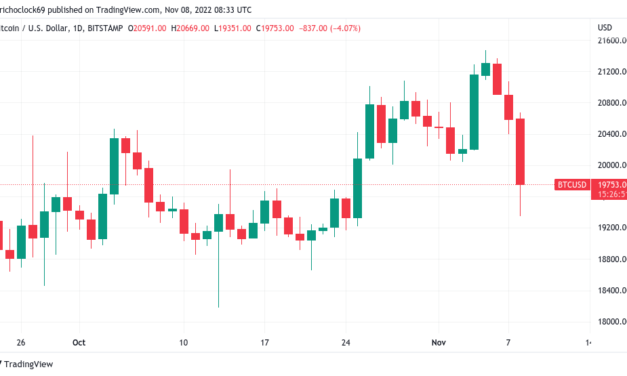
Bitcoin (BTC) and crypto markets fell heavily into Nov. 8 as contagion from the FTX debacle spilled over.BTC/USD 1-day candle chart (Bitstamp). Source: TradingViewAnalysts dismiss FTX insolvency fearsData from Cointelegraph Markets Pro and TradingView showed BTC/USD falling to $19,351 on Bitstamp — its lowest levels since Oct. 25.The pair, along with altcoins large and small, had already begun to show weakness as moves by Binance to cancel exposure to FTX’s in-house FXT Token (FTT) token were confirmed by CEO Changpeng Zhao.In a Twitter thread later on Nov. 7, Zhao defended the decision, while FTX CEO Sam Bankman-Fried attempted to reassure markets that his trading platform was solvent.“There were questions about a large ($580m) FTT deposit to Binance, and we were transparent about the fact that we are closing our FTT position,” part of one of Zhao’s tweets read.Bankman-Fried’s appeal, meanwhile, appeared to fall on deaf ears. Overnight, FTX saw a surge in withdrawals, with monitoring resources even showing negative BTC balances for the exchange’s wallets.Data from on-chain analytics platform CryptoQuant put FTX’s BTC balance reduction on Nov. 7 alone at -19,956 BTC.Its BTC reserves were reportedly just 7.1 BTC at the time of writing, further data showed, with this potentially due to changes in wallet management.“FTX, the #2 crypto exchange, is experiencing a bank run,” Jack Niewold, founder of newsletter Crypto Pragmatist, began an investigative Twitter thread by stating:“Pushed to the brink by a debt crisis & an announcement from its #1 competitor, ~$1b has bled out from the platform in the last few days.”In another of many reactions to the ongoing turmoil, Dylan LeClair, senior analyst at UTXO Management, argued that while it might not be over financially for FTX, the transparency of its operations was cause for concern.“I don’t think it’s probable that FTX is insolvent, but I think the Alameda worries are notable, if nothing else,” part of Twitter comments stated.“I don’t think FTX goes down. Might be, but I don’t think so,” Michaël van de Poppe, founder and CEO of trading platform Eight, continued:“Binance simply wants to sell the position due to the reasons discussed, through which a sell-off was initiated. Bit different from $LUNA and Celsius, but has similarities as well.”Bitcoin gives up $20,000 markFor Bitcoin, the outlook remained cloudy as cold feet took hold of market sentiment.Related: Funding rates hit 6-month high before CPI — 5 things to know in Bitcoin this weekBTC/USD recovered just $400 from its lows on the day, making $20,000 once more out of reach.Further volatility was on the horizon, meanwhile, as the United States midterm elections combined with Consumer Price Index (CPI) data due for release on Nov. 10.“$FTT tanking heavily, through which also Bitcoin and the rest of the markets show some weakness,” Van de Poppe summarized.For its part, FTT managed to stage a modest comeback on the day after falling to lows of just above $15.FTT/USD 1-day candle chart. Source: CryptoQuantThe views and opinions expressed here are solely those of the author and do not necessarily reflect the views of Cointelegraph.com. Every investment and trading move involves risk, you should conduct your own research when making a decision.

Čítaj viac
Bitcoin heads to US midterms as research says dollar ‘closing in’ on a market top

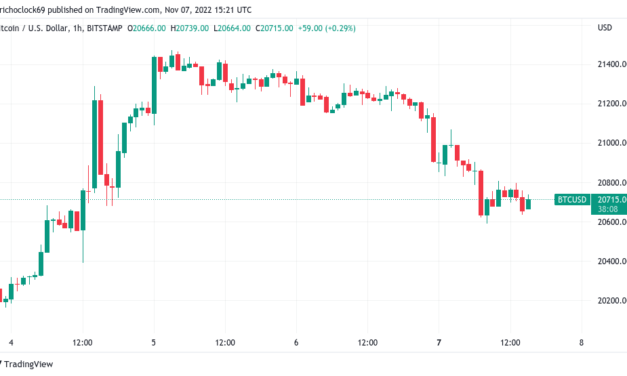
Bitcoin (BTC) stayed lower at the Nov. 7 Wall Street open as the day before the United States midterm elections opened to flat equities performance.BTC/USD 1-hour candle chart (Bitstamp). Source: TradingViewCrypto wobbles on FTX woesData from Cointelegraph Markets Pro and TradingView showed BTC/USD nearing $20,600 at the time of writing — a three-day low. Volatility was expected around the midterms and the Consumer Price Index (CPI) print for October later in the week. An additional hurdle in the form of controversy over trading platform FTX added to the market’s cold feet, with commentators wary of unnecessary damage to growth.“This whole thing is incredibly bad for the industry, and especially for retail,” popular trader and analyst Pentoshi summarized. “Retail is the one who pays for it when war is waged. But it can also end up with unintended consequences. Unfortunate to see.”Bitcoin had headed south overnight amid comments from Changpeng Zhao, CEO of the largest global exchange Binance, in which he confirmed that the exchange would be ridding itself of FTX’s in-house cryptocurrency, FTX Token (FTT).William Clemente, co-founder of crypto research firm Reflexivity, offered a silver lining in the form of increased value for decentralized exchanges (DEXs) going forward.“Similar to how the mismanagement of risk from centralized crypto lenders earlier this year laid out the bullish case for DeFi, this centralized exchange drama is also laying out the bullish case for DEXs,” he tweeted, referring to the Terra debacle and associated repercussions.A look at the top 10 cryptocurrencies by market capitalizati showed mixed performance on the day, with 24-hour losses heaviest for Solana (SOL), down 12.4%.Back on Bitcoin, trader Il Capo of Crypto stayed close to an existing theory of $21,500 marking a local top to come, which would be followed by more severe downside.“21500 and nuke. Do it,” he wrote on the day.That theory included a target macro low of $14,000, in stark contrast to other forecasts, which called for $30,000 within weeks.Analyst: DXY “key to everything”Both the S&P 500 and Nasdaq Composite Index were meanwhile unmoved ahead of the midterms.Related: Funding rates hit 6-month high before CPI — 5 things to know in Bitcoin this weekThe U.S. dollar index (DXY), busy attempting a reprieve from last week’s losses, circled 110.5 at the time of writing, unable to find bullish momentum.Precising research into macro markets, Raoul Pal, founder and CEO of Global Macro Investor, called dollar weakness “the key to everything right now.”“We’re not totally convinced that we can’t make a final push higher towards 117 but we’re closing in on a top,” the research piece added.U.S. dollar index (DXY) 1-hour candle chart. Source: TradingViewThe views and opinions expressed here are solely those of the author and do not necessarily reflect the views of Cointelegraph.com. Every investment and trading move involves risk, you should conduct your own research when making a decision.

Čítaj viac
Funding rates hit 6-month high before CPI — 5 things to know in Bitcoin this week

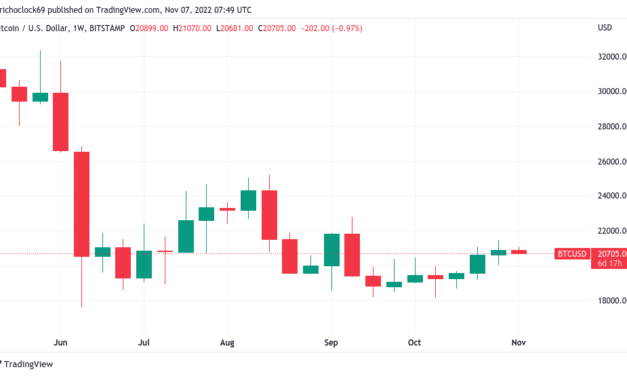
Bitcoin (BTC) starts the second week of November battling some familiar FUD — how will BTC price action react?The largest cryptocurrency managed a weekly close just below $21,000 on Nov. 6 — an impressive multi-week high — but remains fixed in a sticky trading range.Despite seeing highs of nearly $21,500 over the past week, there has yet to be a catalyst capable of breaking the market status quo, but the coming week has as good a chance as any of doing so. Nov. 10 will see key United States inflation data for October released, while jobless claims and multiple speeches from Federal Reserve officials may also impact risk asset volatility.An unexpected twist from within the crypto realm comes in the form of turmoil involving exchange FTX, Alameda Research and Binance.Concerns over liquidity have escalated as Binance CEO, Changpeng Zhao, reveals a plan to sell off his platform’s entire stash of FTX’s proprietary token, FTT.Bitcoin reacted in line with market sentiment overnight, but going forward, will the debacle prove any more than classic crypto FUD?Cointelegraph takes a look at some of the major factors set to influence BTC price action in the coming days.FTX worries disrupt weekly closeWhile falling into the weekly close, BTC/USD still managed to post its highest such weekly candle close since mid-September.Data from Cointelegraph Markets Pro and TradingView shows the week to Nov. 6 being capped at $20,900 on Bitstamp.BTC/USD 1-week candle chart (Bitstamp). Source: TradingViewWith that, Bitcoin defends its trading range and avoids any noticeable break of its current paradigm — lurching between $19,000 and $22,800 since August.While heading nearer the top of the range, the FTX news involving Binance appeared to dampen the mood significantly, ultimately costing Bitcoin the $21,000 mark.“As part of Binance’s exit from FTX equity last year, Binance received roughly $2.1 billion USD equivalent in cash (BUSD and FTT),” Binance CEO, Changpeng Zhao (also known as “CZ”) wrote in a Twitter thread. “Due to recent revelations that have came to light, we have decided to liquidate any remaining FTT on our books.”Zhao added that divesting itself of its FTX holdings would take Binance “a few months,” acknowledging that markets could be impacted throughout.In his own thread, Sam Bankman-Fried, CEO of FTX, meanwhile referenced what he called “unfounded rumors” regarding liquidity issues.“We’re grateful to those who stay; and when this blows over we’ll welcome everyone else back,” he wrote in one optimistic post to followers overnight.The market reaction has so far been less positive; a look at the top ten cryptocurrencies by market cap shows 24-hour losses on some tokens nearing 10% at the time of writing.For Bitcoin traders, it is time to take advantage of the retracement in a week they believe should result in further upside.“Lost lower time frame support. Nice little pullback. Will be looking to re-long when it finds it’s next support,” popular trading account IncomeSharks wrote in an update.A separate post focused on potential cross-crypto gains.“Total marketcap looking great on the daily. Bull or bear, I think there’s enough people still sitting on cash to push up to 1.5 trillion,” it read.Total crypto market cap 1-day candle chart. Source: TradingViewMichaël van de Poppe, founder and CEO of trading firm Eight, also said that he would be looking for “buy the dip opportunities” across crypto in the short term.A classic counter-perspective came from fellow trader Il Capo of Crypto, who argued that $21,500 will mark the high point in a downtrend set to continue.“Seeing whales wanting to fill asks at 21500. A very quick scam pump to this level would be the perfect end of the party. ETH to 1700s,” part of a tweet stated.CPI and U.S. midterms in focusThe Federal Reserve dominated the last week of October when it came to crypto-asset performance thanks to its decision to raise interest rates by another 0.75%.As this is implemented, markets will be watching another key figure this week — Consumer Price Index (CPI) data for October.Estimates put year-on-year inflation at 7.9%, as per economists surveyed by Bloomberg, down 0.3% versus September.Any lower-than-expected CPI readout could be a boon for crypto and riskassets, as it notionally increases the chances of the Fed pulling back on rate hikes sooner.Before CPI and jobless claims, however, there is the issue of the U.S. midterm elections to deal with — a potential source of volatility in and of itself.“Personally, I am in no rush just yet to start buying,” well-known social media personality @CryptoGodJohn told followers. “CZ vs SBF drama, Midterm elections Tuesday, CPI Thursday. This will be the biggest week of crypto that will set the tune for the end of the year.”The rate hike announcement was something of a fake tone-setter, having sparked volatility which canceled itself out within days.Fellow commentator Capital Hungry meanwhile warned of the impact of stronger CPI inflation:“If US CPI this week is still high we are going to see that upside on gold reversed, USD strength back and Equities bears back in play.”The U.S. dollar index (DXY) was making up for lost ground at the time of writing, having seen a dramatic 2% daily decline on Nov. 4.U.S. dollar index (DXY) 1-day candle chart. Source: TradingViewFunding rates run hotIn a warning signal to bulls — and particularly late longs — Bitcoin funding rates are surging on derivatives exchanges.As noted by Maartunn, a contributor to on-chain analytics platform CryptoQuant, funding rates are now at their highs in six months.Funding rates are a mechanism used in perpetual contracts to keep their price close to the Bitcoin spot price. Highly positive funding rates suggest that the market expects BTC/USD to go higher and traders are paying for the privilege to go increasingly long BTC.The effect can be detrimental, as a price decrease ends up liquidating large numbers of overly bullish positions.“And at this moment, Funding Rates are very high. Traders are betting on higher prices and are willing to pay a serious amount of interest,” Maartunn explained alongside CryptoQuant data. “That doesn’t have to be bearish perse, but when price start to move against them they might be forced to get out their position or it will be liquidated.”Bitcoin funding rates annotated chart. Source: Maartunn/ TwitterAs Cointelegraph reported, last month saw record liquidations for 2022 as Bitcoin made its way to $21,000.Maartunn added that funding was “something to keep an eye on in the coming days.”Miners miss out on difficulty readjustmentBitcoin’s network fundamentals remain in an interesting, if not wholly bullish state.The latest data from on-chain monitoring resource BTC.com confirms that network difficulty decreased by 0.2% on Nov. 7 — far less than previously estimated.Bitcoin network fundamentals overview (screenshot). Source: BTC.comThe result has implications for miners, who have seen profits squeezed even as hash rate hits new all-time highs.A major difficulty decrease would have helped level the playing field for some, and its absence keeps up pressure on certain players.Even Bitcoin’s largest public miners are “underperforming BTC heavily” in the current environment, Sam Rule, market analyst at UTXO Management, revealed last week. As Cointelegraph reported, the combination of high hash rate and low miner profitability is nonetheless a potential cause for classifying Bitcoin as undervalued.The Bitcoin Yardstick continues to edge further into its “cheap” zone this month, having seen rare lows.Bitcoin Yardstick chart. Source: GlassnodeSentiment gauge hits three-month highIt might not all be doom and gloom for crypto market sentiment.Related: Buying Bitcoin ‘will quickly vanish’ when CBDCs launch — Arthur HayesAccording to the Crypto Fear & Greed Index, cold feet are getting shaken off in Bitcoin’s run to its highest since September.Fear & Greed, which measures sentiment with a normalized score of 0-100 using a basket of factors and offers various labels — extreme greed, greed, neutral, fear and extreme fear — to categorize them, reached its highest since mid-August at the weekend.At 40/100, the optimism proved unsustainable thanks to the market retracement into the new week, and as of Nov. 7, 33/100 is in place — firmly within the “fear” bracket.Crypto Fear & Greed Index (screenshot). Source: Alternative.meThe views and opinions expressed here are solely those of the author and do not necessarily reflect the views of Cointelegraph.com. Every investment and trading move involves risk, you should conduct your own research when making a decision.

Čítaj viac
Buying Bitcoin 'will quickly vanish' when CBDCs launch — Arthur Hayes

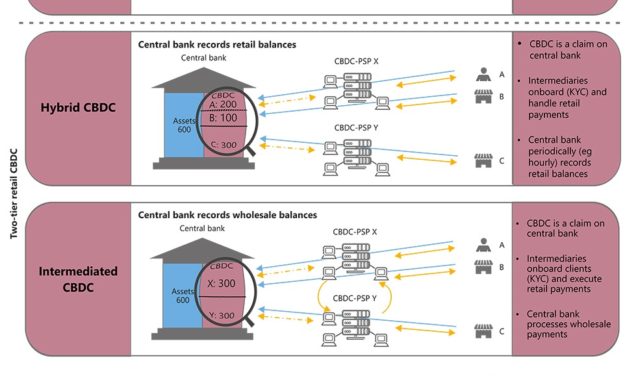
Bitcoin (BTC) holders looking to avoid Central Bank Digital Currencies (CBDCs) may have gained a surprise ally — banks.In his latest blog post, “Pure Evil,” Arthur Hayes, ex-CEO of crypto derivatives platform BitMEX, argued that banks may limit the impact of the CBDC “horror story.”Hayes: Bitcoiners and banks stand against CBDC “dystopia”CBDCs are currently in various stages of development worldwide. Fans of financial sovereignty naturally fear and even despise them, as they imply total government control over everyone’s money and purchasing power — “a full-frontal assault on our ability to have sovereignty over honest transactions between ourselves,” says Hayes.Among opponents of CBDCs are not only Bitcoiners, however. Sharing the cause will likely be the commercial banks they have sought to oust from power with BTC.“I believe that the apathy of the majority will allow governments to easily take away our physical cash and replace it with CBDCs, ushering in a utopia (or dystopia) of financial surveillance,” the blog post explains. “But, we have an unlikely ally that I believe will impede the government’s ability to implement the most effective CBDC architecture for controlling the general populace — and that ally is the domestic commercial banks.”In implementing a CBDC, a government could either make the central bank the only “node” in the digital network, or use commercial banks as nodes in a less radical overhaul of the financial system. These systems Hayes calls the Direct Model and Wholesale Model, respectively.“Given that every country that has at least reached the ‘choosing a CBDC model’ stage has opted for the Wholesale Model, it’s clear that no central bank wants to bankrupt their domestic commercial banks,” he reasons.CBDC summary chart. Source: Arthur Hayes/ MediumAs such, to “placate” banks to a certain extent but still achieve benefits such as eradicating cash, governments may ultimately be kept in check by the kind of entities known for limiting crypto exchange transactions and banning hodlers’ accounts.“For politicians who care more for power than profits, this is their chance to completely destroy the influence of Too Big to Fail banks — and yet, they seem to remain politically unable to do so,” Hayes adds.”Capital controls are coming”The topic of CBDCs receives extensive attention, even beyond the crypto industry, as they represent a major shift in both money and politics.Related: CBDCs are no threat to crypto — Binance CEOIn an interview with Cointelegraph last week, Richard Werner — development economist and professor at De Montfort University — described them as a “declaration of war.”“In other words, the bank regulator is suddenly saying we’re going to compete against the banks now because the banks have no chance. You can’t compete against the regulator,” he said.Hayes meanwhile flagged Bitcoin as a safe haven still available for those already opposed to any form of zero-cash economy — but not for long.Buying BTC will become increasingly difficult, or perhaps outright impossible, once CBDCs are implemented.“This window won’t last forever. Capital controls are coming, and when all money is digital and certain transactions are not allowed, the ability to purchase Bitcoin will quickly vanish,” he warned. “If any of this doom porn resonates with you and you don’t own at least a very small % of your liquid net worth in Bitcoin, the best day to have bought Bitcoin was yesterday.”The views and opinions expressed here are solely those of the author and do not necessarily reflect the views of Cointelegraph.com. Every investment and trading move involves risk, you should conduct your own research when making a decision.

Čítaj viac

Bitcoin is now less volatile than S&P 500 and Nasdaq

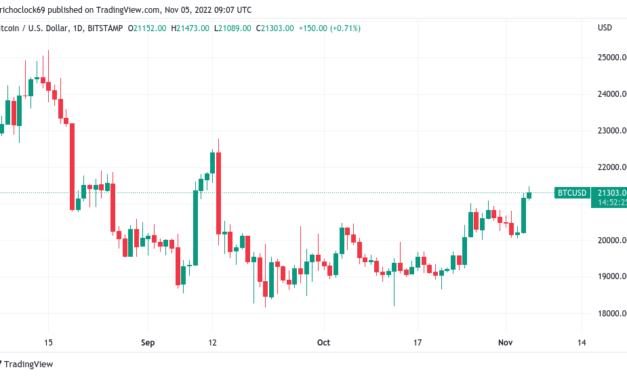
Bitcoin (BTC) held gains above $21,000 into Nov. 5 as the U.S. dollar posted a rare major daily decline.BTC/USD 1-day candle chart (Bitstamp). Source: TradingViewDollar dives 2% as risk assets recoverData from Cointelegraph Markets Pro and TradingView showed BTC/USD building on prior strength to hit highs of $21,473 on Bitstamp — a new seven-week high.The pair had benefited from the latest United States economic data, while the dollar conversely suffered. The U.S. dollar index (DXY) lost 2% in a day for the first time in years, helping fuel a risk asset rally.U.S. dollar index (DXY) 1-day candle chart. Source: TradingView“And, just like that, Bitcoin took out all the highs, volume is increasing and it’s back above $21K,” Michaël van de Poppe, CEO and founder of trading firm Eight, commented. “I’m assuming we’ll continue towards $22.5K from here, but have a slight correction before continuing (as we took out all the liquidity). Buy the dip season.”BTC/USD annotated chart. Source: Michaël van de Poppe/ TwitterBTC had previously become notorious for its lack of volatility and narrow trading range, helping it beat even stocks for the first time ever.“For the first time in history, bitcoin is less volatile than both the S&P 500 and Nasdaq,” Yassine Elmandjra, a crypto analyst at ARK Invest, noted, linking to the firm’s latest report, “The Bitcoin Monthly.” “The last time volatility was this low, bitcoin rose from $9,000 to $60,000 in less than a year.”Bitcoin vs. S&P500 vs. Nasdaq Composite Index volatility chart. Source: Yassine Elmandjra/ TwitterTyler Winklevoss, co-founder of trading platform Gemini, meanwhile revealed a belief that crypto markets would continue to act as a leading indicator of overall market trajectory, as in 2021.“Crypto was the first asset class to crash; it will be the first to rise again,” he summarized.Bitcoin more stable than major fiat currenciesContinuing on the theme of low volatility, ARK’s report, led by well-known analyst David Puell, showed that it was not just stocks being undercut by Bitcoin’s stability.Related: Why is the crypto market up today?“Bitcoin’s relative volatility has not only decreased relative to equities, but also to major currency pairs. As macro uncertainty and USD strength have increased, foreign currency pairs have been impacted negatively while bitcoin has been relatively stable,” The Bitcoin Monthly stated. “Bitcoin’s 30-day realized volatility is nearly equivalent to that of the GBP and EUR for the first time since October 2016. Although Fed hawkishness could continue its volatility, bitcoin’s strength relative to foreign currencies is an encouraging sign.”BTC/USD volatility vs. EUR, GBP chart (screenshot). Source: ARK InvestAs Cointelegraph reported, another popular analyst, LookIntoBitcoin creator Philip Swift, has forecast the end of the current bear market by the start of 2023.The views and opinions expressed here are solely those of the author and do not necessarily reflect the views of Cointelegraph.com. Every investment and trading move involves risk, you should conduct your own research when making a decision.

Čítaj viac

Získaj BONUS 8 € v Bitcoinoch

nakup bitcoin z karty

Registrácia Binance

Burza Binance

Aktuálne kurzy