Autor Cointelegraph By William Suberg

Bitcoin treasury trade ‘breaking’ and fund holdings drop 10%: Analysis

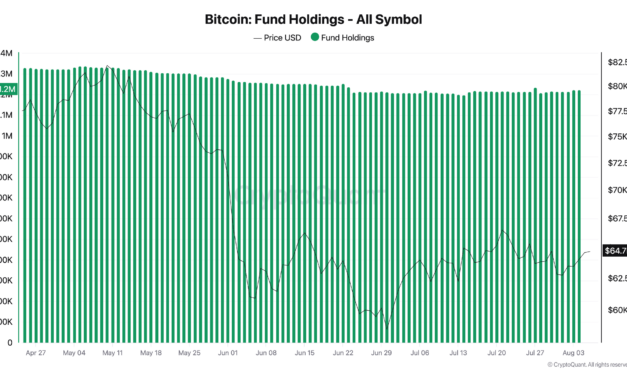
Bitcoin (BTC) institutional investment vehicles have shed 10% of their BTC holdings since May as analysis warns of a “breaking” sector.Key points:Bitcoin institutional funds see a blanket 10% reduction in holdings over three months.Analysis says that the Bitcoin treasury model is “breaking” as company valuations fall below net asset value.Coinbase premium has been negative for a record 93 days. Fund exposure drops as Bitcoin treasury companies face squeeze Data from onchain analytics platform CryptoQuant shows that combined institutional BTC exposure, which includes trusts, exchange-traded funds (ETFs) and closed-end funds, has fallen from 1.33 million to 1.20 million BTC over three months.Bitcoin fund holdings. Source: CryptoQuantThe drawdown comes as another major Bitcoin institutional investment vehicle, corporate treasuries, faces upheaval. Business intelligence software company Strategy, which holds the largest Bitcoin treasury of any public corporation, sold 1,638 BTC last week. “Bitcoin treasury companies once amplified demand through a reflexive financing loop. Their shares traded above the value of their Bitcoin holdings, allowing them to issue equity or debt, buy more Bitcoin and reinforce the premium. That mechanism weakens when market capitalisations fall below net asset value, and financing becomes dilutive,” contributing analyst Novaque Research commented.CryptoQuant highlights the plight of several Bitcoin treasury companies with stock trading below the net asset value (NAV) of their BTC holdings. In Strategy’s case, the discount disappears according to the valuation methodology used.Basic share count puts the discount at 0.7 as of Thursday, but once the company’s $8 billion debt and liquidation preference of its STRC preferred stock is factored in, the mNAV equals 1.03.Strategy Updated mNAV. Source: Bitcoin Treasuries“The on-chain evidence supports a loss of institutional demand, although it cannot directly isolate treasury companies,” CryptoQuant notes.Coinbase Premium sees record negative stintThe drawdown in both fund exposure and Bitcoin treasury holdings comes as the Coinbase Premium index sees a record 93 days of negative readings.Related: Bitcoin price-metric basket sees longest capitulation since FTX blow-up: GlassnodeAs Cointelegraph reported this week, the Index, which measures the difference in price between Coinbase’s and Binance’s BTC/USDT pairs, has been negative since the start of May — a record streak.Coinbase Premium Index. Source: CryptoQuantAnalysis sees the return of the Premium as a prerequisite for a BTC price recovery. This week, Web3 marketing platform FOUR argued that the genesis of the months-long negative reading did not lie in blanket US selling pressure.“Until the premium flips positive, institutional buying from U.S. investors appears muted—suggesting this is more of a demand shortage than aggressive selling,” it told X followers.In a note quoted by Reuters last month, Citi highlighted ETF flows in particular as an “important driver of prices” while cutting its BTC price forecast to $53,000 through 2027.

Čítaj viac
Gold hits six-week highs on China demand as Bitcoin ignores fresh S&P 500 record

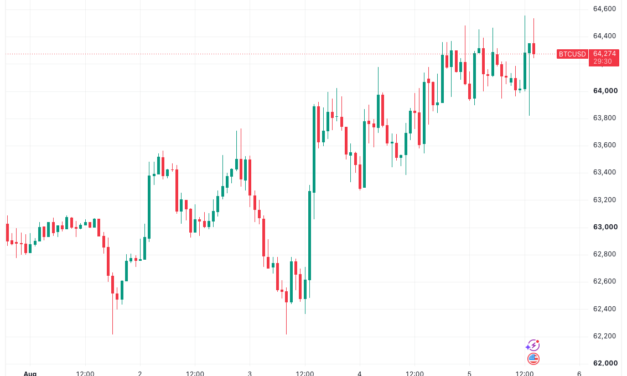
Bitcoin (BTC) stayed wedged at $64,000 on Wednesday’s Wall Street open as gold hit six-week highs.Key points:Gold analysis eyes Chinese demand as the precious metal hits its highest levels in six weeks.Bitcoin sees a second day of lackluster performance against US stocks as the S&P 500 builds on all-time highs.China in spotlight as gold rebounds past $4,200Data from TradingView showed continued BTC price inertia contrasting with upside for both precious metals and US equities.BTC/USD one-hour chart. Source: Cointelegraph/TradingViewGold gained 2.8% on the day to hit $4,213 per ounce, its highest levels since June 22. Chinese appetite spurred the upside, with Bloomberg reporting 14 consecutive days of inflows for domestic gold-backed exchange-traded funds (ETFs).China gold ETF inflows data. Source: BloombergThese products saw their worst month of outflows on record in June per data from the World Gold Council. The year-to-date inflows to Chinese ETFs fell to 40 billion yuan ($5.6 billion). However, this is still the second-best H1 performance on record.“Demand for gold ETFs stayed robust amid growing geopolitical and economic uncertainties, while the PBoC’s non-stop gold purchases continued to provide a supportive backdrop for sentiment. Institutional investor participation in Chinese gold ETFs has also risen, supporting demand for these products,” it commented, referencing China’s central bank gold purchases of 82 tonnes over the 20 months through June.Elsewhere, US stocks remained strong on the day, with the S&P 500 index (SPX) building on Tuesday’s all-time highs to reach 7,793.S&P 500 one-day chart. Source: Cointelegraph/TradingViewBloomberg ETF analyst Eric Balchunas noted that 66% of S&P 500 stocks were now above their 50-day moving average, with 57% beating the index’s standard benchmark tracker.Bitcoin lacks impetus for recovery, analysis showsAs on the previous day, Bitcoin failed to keep up with the broader risk-asset optimism seen in equities. Related: Bitcoin price-metric basket sees longest capitulation since FTX blow-up: Glassnode$64,000 remains a focus on low time frames, and market participants retained prior assumptions about the future of the current bear market.“As long as the orange support here produces weaker rallies, price will keep forming Lower Highs to produce an eventual breakdown deeper into the $58000-$66000 Range (blue-blue),” trader and analyst Rekt Capital told X followers in comments on the weekly BTC/USD chart.In research published on Tuesday, onchain analytics platform CryptoQuant highlighted three prerequisites for a durable BTC price rebound to emerge. In addition to sustained inflows to the US spot Bitcoin ETFs, the market needed US bond yields to cool, along with the absence of expected interest-rate hikes by the Federal Reserve.The Coinbase Premium — the difference in price between Coinbase’s and Binance’s BTC/USDT pairs — also needed to return to positive territory, CryptoQuant wrote, reiterating analysis from June. As Cointelegraph reported recently, the metric has been negative for nearly 80 days.

Čítaj viac

Bitcoin price-metric basket sees longest capitulation since FTX blow-up: Glassnode

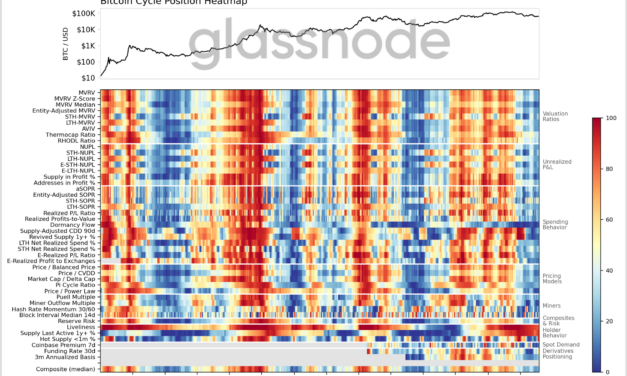
Bitcoin price-metric basket sees longest capitulation since FTX blow-up: GlassnodeBitcoin (BTC) is seeing its longest capitulation since the end of the 2022 bear market, onchain analytics platform Glassnode reported on Monday.Key points:45 Bitcoin price metrics tracked by Glassnode are in their longest “capitulation” phase since the collapse of FTX in late 2022.Aggregate readings still have to turn colder to match areas that marked previous bear-market bottoms, says creator Rafael Schultze-Kraft.45 Bitcoin price metrics spend 2026 in “capitulation” zoneGlassnode’s Bitcoin Cycle Position Heatmap, a composite BTC price metric overview tool, has signaled capitulation throughout 2026. The tool, created by the platform’s co-founder, Rafael Schultze-Kraft, combines data from 45 indicators to present an overall picture of market health as Bitcoin price cycles repeat. A majority blue heatmap indicates a period of “capitulation” within the cycle, with red pointing to the euphoria characteristic of momentum toward cycle peaks.After a euphoric phase in November 2021, the heatmap flipped to blue for the majority of 2022. In November that year, cryptocurrency exchange FTX collapsed, an event that coincided with Bitcoin’s last bear-market bottom of $15,600.“Today it sits in its coldest stretch since FTX: late in the bear, but not yet the unanimous deep blue that previously marked a floor,” Schultze-Kraft commented on the Heatmap’s latest readings.Bitcoin Cycle Position Heatmap. Source: Rafael Schultze-Kraft on X.comIn addition to basic price gauges such as market cap, the heatmap puts a considerable focus on the profitability of the Bitcoin investor base, dividing it into short-term (STH) and long-term (LTH) holders.Certain metrics, Schultze-Kraft notes, change their behavior over time, requiring a more nuanced reading when used for cycle signals. Among these is dormancy — the number of days a unit of BTC has spent idle when used in an onchain transaction. Here, the ageing investor base means that dormancy increases over time, differing between cycles.Coldcard hack spikes sub-1 BTC transactionsIn its latest Market Pulse report released on Monday, Glassnode was complimentary regarding the resilience of market participants.Related: US yen intervention puts Bitcoin, risk assets on notice for liquidity flux“On-chain activity strengthened materially. Daily active addresses and entity-adjusted transfer volumes moved above their upper statistical bands, indicating a notable increase in network engagement and economic throughput,” it reported.Stabilization of capital outflows remained despite a knee-jerk reaction by certain investors in the wake of the low-entropy bug exploit in Coldcard hardware wallets.Data from analytics platform CryptoQuant likened the uptick in onchain transactions of 1 BTC or less to the aftermath of the FTX implosion. On July 31, the daily tally reached 39,600 BTC, compared with 39,900 on Nov. 16, 2022.

Čítaj viac

Bitcoin coils at $64K as Hormuz reopening timeline sends S&P 500 to $70T record

Bitcoin saw new August highs into Tuesday’s Wall Street open as markets bet on US-Iran tensions again easing.Key points:Bitcoin (BTC) edges higher as optimism over the Strait of Hormuz reopening pushes stocks to new all-time highs.Oil prices drop to their lowest levels since July 13 with oil traffic potentially returning on Wednesday.BTC acts between two daily moving averages as analysis sees “strong accumulation.”S&P 500 tops $70 trillion market cap to new highData from TradingView showed BTC/USD climbing to $64,176 on Bitstamp, marking maximum daily gains of around 1%.BTC/USD one-hour chart. Source: Cointelegraph/TradingViewOil prices reacted immediately after US Treasury Secretary Scott Bessent suggested that traffic through the Strait of Hormuz could restart as soon as Wednesday.Bessent told CNBC that there was “a chance we may have a deal today or tomorrow to open the Strait and move towards a more normalized position” in the US-Iran war amid ongoing talks between the two sides.The comments came a day after US President Donald Trump confirmed the waterway reopening dialogue, saying that this could happen “as soon as tomorrow.”WTI and Brent crude traded 4.8% and 4.6% lower, respectively, at the time of writing, hitting their lowest levels since July 13.CFDs on US WTI crude oil four-hour chart. Source: Cointelegraph/TradingViewUS stocks futures gained prior to the open, which in turn saw the S&P 500 index hit a new record high of 7,713, with its market cap reaching $70 trillion for the first time.S&P 500 index one-hour chart. Source: Cointelegraph/TradingViewAnalysts noted resolution of the Hormuz closure as one factor apt to influence market sentiment when it came to future Federal Reserve policy decisions. Amid an emerging hawkish split between Fed officials on interest rates, markets see 56.7% odds of central bank policymakers approving a 0.25% rate hike at its September meeting, per data from CME Group’s FedWatch Tool.“Chairman Kevin Warsh’s limited guidance on the Fed’s reaction function means upcoming data, oil prices and the bond market will have a greater influence on the market’s expectations for the policy path,” Bloomberg macro strategist Michael Ball said.Fed target-rate probabilities for September FOMC meeting. Source: CME GroupBTC accumulation “strong” in stubborn local rangeBitcoin price action remained comparatively subdued compared to stocks as BTC/USD passed $64,000.Related: US yen intervention puts Bitcoin, risk assets on notice for liquidity fluxThe pair remained held in check by its 21-day simple moving average (SMA) at $64,388, while its 50-day SMA functioned as support on hourly time frames.BTC/USD one-hour chart with 21-day, 50-day SMA. Source: Cointelegraph/TradingViewWith price rangebound, analysis from onchain analytics platform CryptoQuant reported “strong accumulation” among investors. 0.7% of the BTC supply, equivalent to around 155,000 coins, now belongs to investors with a cost basis between $62,000 and $65,000.“This points to absorption rather than capitulation, as buyers accumulated into weakness,” it reported on Monday.Magazine: How Fake World Assets and onchain gacha became crypto’s latest craze

Čítaj viac

US yen intervention puts Bitcoin, risk assets on notice for liquidity flux

Joint currency interventions in the yen by Japan and the US could ultimately benefit Bitcoin (BTC) and risk assets. Key points:The first joint intervention in the yen between Japan and the US since the late 1990s could set a precedent for future moves.A liquidity crisis tied to the yen carry trade poses questions for Bitcoin and risk assets as the two countries attempt a juggling act to stabilize the currency without impairing US Treasury markets.Japanese two-year bond yields rose above 1.57% on Monday.Bessent signals new era of US yen involvementWashington’s growing coordination with the Bank of Japan (BoJ) points to a potential boost in global dollar liquidity — even as it runs up against a yen carry trade unwind that could squeeze liquidity if it deepens further.Last week, the US and Japan conducted a rare joint intervention to prop up the yen, which had slid to forty-year lows of 164 per dollar — the first of its kind since 1998. The New York Fed sold euros, rather than dollars, on behalf of the US Treasury. The sales involved the Exchange Stabilization Fund, or ESF, a stockpile of foreign exchange reserves.USD/JPY one-day chart. Source: Cointelegraph/TradingViewSubsequently, US Treasury Secretary Scott Bessent publicly placed emphasis on meeting with BoJ Governor, Kazuo Ueda, at the upcoming G20 gathering of finance ministers in North Carolina at the end of August.“Japan’s economy continues to perform well under Prime Minister Takaichi, Governor Ueda, and the Bank of Japan Board, which has demonstrated a strong commitment to monetary and financial stability. We continue to enjoy a strong relationship and close coordination,” he wrote.The BoJ is one of the few central banks with access to the Federal Reserve’s Foreign and International Monetary Authorities (FIMA) repo facility, which allows access to dollar liquidity without selling US Treasuries. Japan, as the largest holder of Treasuries, could push up yields should sales accelerate, which would in turn increase borrowing costs for the US government, corporations and consumers alike.In a further post, Bessent drew attention to FIMA, calling for the facility to be expanded.“The FIMA Repo Facility is an important backstop. We would encourage it to be upsized in the coming months. We strongly support Japan’s decisive market and monetary steps to correct the substantial undervaluation of the yen,” he continued.FIMA use sees the Fed provide dollars to foreign institutions, who use treasuries as collateral, with the result that the facility is positive for dollar liquidity, as it increases the supply of dollars outside the US.  Bitcoin to rise from the yen carry trade’s ashesReactions to the move were mixed, with economist Mohamed El-Erian noting that the government was now bound into coordination with the BoJ going forward.“Washington has now signed onto a strategy whose ultimate success doesn’t rest in its own hands. Instead, as discussed in previous posts, it hinges on a comprehensive policy alignment in Tokyo among the Bank of Japan, the Ministry of Finance, and the Prime Minister’s Office,” he argued.In Bitcoin circles, too, there were misgivings about the long-term implications of ongoing yen interventions — even if these inadvertently boosted the BTC bull case. Expectations have long anticipated the disintegration of the yen carry trade as the BoJ shifts away from past decades of low interest rates. This outcome is being spurred on by other aspects of Japan’s own domestic fiscal policy. High government spending has helped government bond yields hit multidecade highs, and this in turn makes yen funding mechanisms less attractive. Japanese two-year bond yields rose above 1.57% on Monday, a signal that low-interest-rate conditions were coming to an end in advance of markets’ expectations. Japanese investors repatriating capital to take advantage of this sea change in the domestic economy adds to the risk of the carry trade unwinding further.Japan two-year bonds one-day chart. Source: Cointelegraph/TradingView

Čítaj viac

Získaj BONUS 8 € v Bitcoinoch

nakup bitcoin z karty

Registrácia Binance

Burza Binance

Aktuálne kurzy