Autor Cointelegraph by Vince Quill

Bitcoin profit-taking may 'accelerate' as price hits 3-month high: Analyst

Bitcoin profit-taking could accelerate as BTC prices climb to three-month highs and investors begin locking in gains, according to Julio Moreno, head of research at onchain analytics platform CryptoQuant.Holders realized 14,600 BTC in profits on Monday, or $1.1 billion, following Bitcoin’s April rally, Moreno said, adding that this is the “highest” single day of profit-taking since Dec. 10, when BTC was trading above $90,000.Bitcoin holders’ realized profits spike after the April rally. Source: CryptoQuantThe Short-Term Holder Spent Output Profit Ratio (STH-SOPR), an onchain metric that gauges profit-taking by wallets that have held BTC for less than 155 days, also rose above 1, a level that indicates “clear profit-taking territory,” he added. He said:“Bitcoin holders are realizing more than 20,000 BTC in net profits on a 30-day rolling basis, the first positive reading since December 22, 2025, following a period of heavy net losses in February and March that reached as deep as 398,000 BTC.”Spikes in realized profit levels during crypto bear markets typically signal local price tops or sideways price action, Moreno said, adding that despite the rise in realized profits, demand has not caught up, and BTC remains in a bear market. The Bitcoin Short-Term Holder Spent Output Profit Ratio signals that short-term holders are realizing profits. Source: CryptoQuantRelated: Bitcoin ‘supercycle’ or bear-market rally? BTC breaking $81K has traders at oddsBitcoin ETF inflows remain strong, while analysts are divided on market healthInflows into Bitcoin exchange-traded funds (ETFs) remain strong, with four days of positive inflows this week, according to Farside data.ETF inflows for the week surged past $1 billion, before an outflow of $268.5 million on Friday, Farside’s data shows.Analysts remain divided about whether BTC has bottomed out or whether the ongoing bear market will deepen. Michael Terpin, an early Bitcoin investor, told Cointelegraph that BTC could bottom out at $57,000 in October 2026. The forecast is based on “historic” price patterns in which BTC hits its cycle low about one year after the cycle top, Terpin said.There is a “chance” that Bitcoin might reclaim the $100,000 price level in 2026, but the odds are “unlikely,” Terpin told Cointelegraph.Magazine: Bitcoin will not hit $1M by 2030, says veteran trader Peter Brandt

Čítaj viac
CLARITY Act markup could happen as early as next week: Coinbase exec

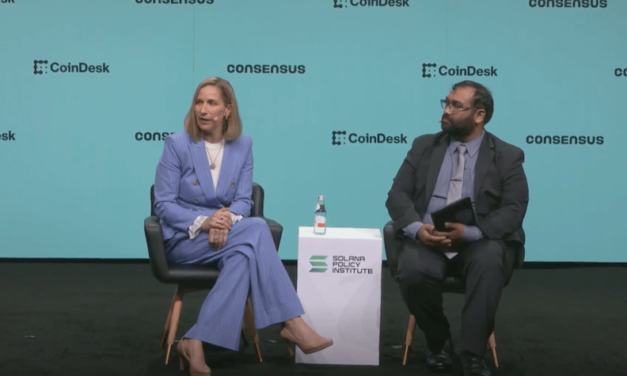
The CLARITY crypto market structure bill could see a markup in the US Senate Banking Committee as early as next week, according to Kara Calvert, the vice president of US policy at crypto exchange Coinbase.“My prediction is that we have a markup next week,” Calvert told the audience at the Consensus 2026 crypto industry conference in Miami, Florida.She said that the bill needs at least 60 votes to pass in the Senate and that the CLARITY bill needs bipartisan support to become law. She said:“That means you need Democrats. You need a bipartisan bill, and we have all been working really hard to make sure that bipartisanship holds. I think the big question is, how do these votes shape up over the next few days?”Kara Calvert, pictured on the left, provides an update on the CLARITY market structure bill. Source: Consensus 2026A HarrisX survey on Thursday revealed that there is strong, broad-based and consistent demand for clear federal rules. A 70% majority of voters say the US should already have passed clear cryptocurrency legislation, and 62% say it is important that the US set the global rules for digital finance.The CLARITY bill stalled in January after Coinbase withdrew its support for the legislation, citing several concerns, including a lack of legal protections for open source software developers, a prohibition on stablecoin yield, and decentralized finance (DeFi) regulations. Related: US senator says crypto market structure vote may happen by AugustCoherent tax policy remains a barrier to institutional adoption A lack of coherent tax policies is the main “barrier” to institutional crypto adoption, Calvert said, adding that tax reform is a bigger issue for institutions than market structure legislation.Many of these institutions just want to buy and hold cryptocurrencies or trade digital assets, but are burdened by tax compliance and reporting requirements, she said.A HarrisX poll shows there is broad bipartisan support for passage of the CLARITY Act. Source: HarrisXTax reporting requirements under the current regulations mean the Internal Revenue Service (IRS) forces crypto exchanges to document every crypto transaction using 1099-DA forms, she added.“We’re sending out millions of 1099-DA’s for things like $1 transactions — that makes zero sense,” Calvert said.She added that she “hopes” tax reform legislation can advance through Congress in 2026, citing several crypto tax proposals submitted by US lawmakers, including the Digital Asset PARITY Act, introduced by Representatives Max Miller and Steven Horsford in March.“I think that we will see action in the Senate. I think we will see legislation, probably in the next month or two, in the House,” she said.Magazine: Will the CLARITY Act be good — or bad — for DeFi?Cointelegraph is committed to independent, transparent journalism. This news article is produced in accordance with Cointelegraph’s Editorial Policy and aims to provide accurate and timely information. Readers are encouraged to verify information independently.

Čítaj viac

Samson Mow defends Strategy selling portions of its Bitcoin treasury

Bitcoin advocate Samson Mow defended Michael Saylor’s suggestion that Strategy could sell some of its Bitcoin (BTC), arguing that keeping the option open gives the company more flexibility in public markets.“Never selling limits optionality. Public markets are war. In war, you need all available tools at your disposal,” Mow wrote after Saylor said during Strategy’s first-quarter earnings call that the company could sell some Bitcoin in the future.Mow added:“The more tools Strategy holds, the fewer angles its adversaries have. A company with real optionality is hard to game: it might sell, hedge, issue, or buy. A company that has publicly vowed to only ever do one thing has handed a map to short sellers and arbitrageurs.” Strategy is the largest publicly traded Bitcoin treasury company, with 818,334 BTC, according to BitcoinTreasuries. Some analysts have warned that any sales by the company could weigh on spot Bitcoin prices.Strategy’s total BTC holdings over time. Source: StrategyRelated: Strategy takes Bitcoin buying breather ahead of Q1 earnings reportAs he signals potential BTC sales, Saylor says company can fund dividends “forever” on BTC alone “We’ll probably sell some Bitcoin to fund a dividend, just to inoculate the market, just to send the message that we did it,” Saylor said during the earnings call.He said that if the price of BTC appreciates by more than 2.3% annually, the company can fund its dividends “forever” and would also allow Strategy to pay dividends “without selling a single share of stock.”“We could stop selling MSTR common stock right now,” Saylor said, adding, “We can fund the dividends with Bitcoin sales.” Saylor discusses paying dividends using BTC appreciation. Source: StrategySaylor said Strategy could keep funding dividends if it continues issuing STRC preferred stock and Bitcoin rises above the breakeven level, while still increasing its total BTC holdings.The average cost of Strategy’s BTC holdings is $75,537 apiece, according to the company’s website. At last look on Thursday, Bitcoin was changing hands at about $79,976, according to CoinMarketCap.Strategy funds its BTC purchases through a mixture of corporate debt and equity instruments, a practice that has raised concerns with some investors over shareholder dilution and leverage-fueled buying. Magazine: Bitcoin’s ‘biggest bull catalyst’ would be Saylor’s liquidation: Santiment founderCointelegraph is committed to independent, transparent journalism. This news article is produced in accordance with Cointelegraph’s Editorial Policy and aims to provide accurate and timely information. Readers are encouraged to verify information independently.

Čítaj viac

Hut 8 investors shrug off Q1 loss, stoke 33% stock surge

Investors appeared to disregard Hut 8’s reported first quarter 2026 net loss of more than $253 million on Wednesday, lifting the shares of the Bitcoin mining company by more than 33%.Hut 8 attributed the loss to a reduction in the market value of its Bitcoin (BTC) holdings, which fell from a high of over $126,000 apiece in October to a low of $60,000 in February.Revenue for quarter totaled more than $71 million, down by about 22% from the previous period’s $88.4 million, according to Hut 8’s earnings statements. Analysts had forecast $78.5 million, according to FactSet. The company also announced a $9.8 billion deal that will see Hut 8 lease 352 megawatts to a third-party AI company over a 15-year period. Wednesday’s results showed the company generated $66.0 million in first quarter revenue from ASIC compute, AI cloud and traditional cloud solutions.Hut 8’s stock surged following news of a $9.8 billion deal. Source: Yahoo FinanceThe company’s diversification into AI and energy infrastructure comes amid an industry-wide pivot away from crypto mining, as public crypto mining companies struggle with high costs and declining revenues.Related: Bitcoin miner Core Scientific shifts to AI with 1.5GW data center pushAI and Bitcoin mining increasingly compete for power The shift to AI threatens the Bitcoin mining industry, according to crypto trader and market analyst Ran Neuner.“Both industries compete for the same thing: electricity,” Neuner said, adding, “right now, AI is willing to pay much more for it.”Mining companies can make anywhere between $57 and $129 per MW securing the blockchain, compared to between $200 and $500 per MW for AI infrastructure, he said.Revenue comparison for Bitcoin mining and AI hosting. Source: Ran NeunerAs miners shift their focus to more-profitable AI ventures, the total amount of computing power dedicated to securing the Bitcoin blockchain declines, making the network easier to attack, Neuner said.The need for massive amounts of energy to power high-performance computing applications, including Bitcoin mining and AI workloads, has driven demand for nuclear energy generation. Since 2024, several AI hyperscaling companies like Google, Microsoft, Amazon and Meta have announced nuclear energy deals to power their AI infrastructure.Magazine:  How AI just dramatically sped up the quantum risk for BitcoinCointelegraph is committed to independent, transparent journalism. This news article is produced in accordance with Cointelegraph’s Editorial Policy and aims to provide accurate and timely information. Readers are encouraged to verify information independently.

Čítaj viac

Trump-linked American Bitcoin energizes 11,298 new ASICs

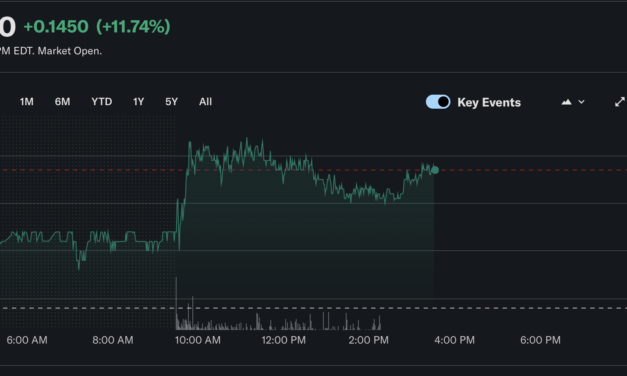
American Bitcoin (ABTC), a publicly traded mining company co-founded by United States President Donald Trump’s sons, has completed its energization of 11,298 application-specific integrated circuits (ASICs) at its Drumheller site in Alberta, Canada. Following the acquisition of machines, the company now owns about 89,242 ASICs, the computers used to mine Bitcoin (BTC) and other proof-of-work (PoW) cryptocurrencies, according to the company’s announcement on Wednesday.ABTC’s mining fleet now generates a total of about 28.1 exahashes per second (EH/s) of computing power, operating at an “average efficiency” of 16 joules per terahash, the company said.Shares of ABTC surged by about 11.7% on Wednesday, rising to about $1.38 per share, according to data from Yahoo Finance.ABTC’s share price surged following the announcement. Source: Yahoo FinanceThe announcement followed a tough business quarter for the company, which posted a loss of $59.5 million in the fourth quarter of 2025, as the mining industry grapples with multiple economic challenges that are chipping away at revenue.Related: Aluminum giant Alcoa to sell dormant smelter to Bitcoin miner NYDIG: ReportABTC struggles amid challenging business environment for minersMining companies are grappling with reduced block rewards since the April 2024 halving, rising energy costs, and declining crypto prices from the ongoing crypto bear market.The price of BTC declined by over 50%, reaching a low of about $60,000 in February, when ABTC filed its Q4 results with the United States Securities and Exchange Commission (SEC).ABTC attributed its Q4 losses to a $227.1 million decline in the fair value of its BTC holdings as a result of the crash, but said it was able to “mine BTC at a 53% discount” to prices on the spot market.American Bitcoin’s total reserve holdings of Bitcoin and Satoshis, the smallest unit of BTC, per share. Source: Company filingPublic BTC mining companies sold more BTC in the first three months of 2026 than all of 2025. Mining companies MARA, CleanSpark, Riot, Cango, Core Scientific and Bitdeer collectively sold about 32,000 BTC in Q1, according to TheEnergyMag.Sales in the period topped the previous record of 20,000 BTC sold by public mining companies during Q2 2022.Magazine: AI may already use more power than Bitcoin — and it threatens Bitcoin miningCointelegraph is committed to independent, transparent journalism. This news article is produced in accordance with Cointelegraph’s Editorial Policy and aims to provide accurate and timely information. Readers are encouraged to verify information independently. Read our Editorial Policy https://cointelegraph.com/editorial-policy

Čítaj viac

Získaj BONUS 8 € v Bitcoinoch

nakup bitcoin z karty

Registrácia Binance

Burza Binance

Aktuálne kurzy