
Autor Cointelegraph by Vince Quill

Canton Network creator targets $300M in capital raise: Report

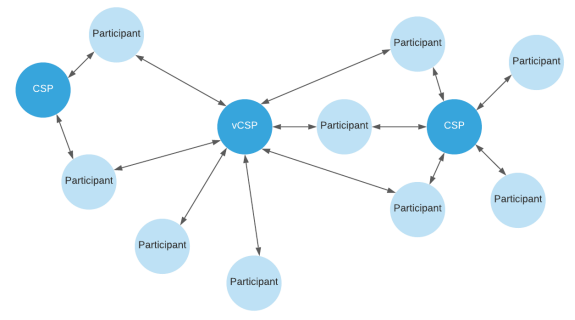
Digital Asset Holdings, the enterprise blockchain company behind the Canton Network, a permissioned blockchain network for financial institutions with privacy features, is reportedly raising fresh capital at a $2 billion valuation.The $300 million round is being led by venture capital firm a16z crypto, and is expected to close in several weeks, according to Bloomberg, which cited unidentified people with knowledge of the deal.The report comes less than a year after Digital Asset announced it had raised $135 million in a strategic funding round led by DRW Venture Capital and Tradeweb Markets. A company spokesman on Sunday declined to comment in response to an email query from Cointelegraph.In December, Digital Asset, the Canton Network and Depository Trust & Clearing Corporation (DTCC) announced a partnership to enable the tokenization of DTCC-custodied assets on the Canton Network.Canton Network topology. Source: Canton Network WhitepaperLast week, DTCC announced plans to pilot trading of tokenized versions of some of the $114 trillion in liquid assets that it custodies beginning in July with a goal of a full service launch in October. Related: Canton, ZKsync clash over how blockchains enforce rulesFinancial institutions are onboarding or experimenting with Canton NetworkWhile the Canton Network has drawn mixed reactions from the crypto community over its role in the blockchain ecosystem and its level of decentralization, it continues to onboard global financial institutions, banks and government entities.In March, financial rating agency Moody’s deployed its ratings data on the network, allowing financial institutions to use the data directly within blockchain workflows, making it the first credit ratings firm to publish its data onchain, according to an announcement from the firm.In April, Japan Securities Clearing Corporation (JSCC), a financial clearinghouse and settlement service for equities, commodities and derivatives, announced it was testing onchain government bonds on the Network.More specifically, JSCC is testing whether ownership of Japan’s government bonds can be transferred onchain and used as digital collateral. The Canton Coin’s price action since December 2025. Source: CoinMarketCapEarlier this month, Swiss crypto bank Amina, announced custody and trading support for Canton Coin, the utility token of the Canton Network.Amina is the first bank regulated by the Swiss Financial Market Supervisory Authority (FINMA) to announce support for the Canton token, according to an announcement from the crypto bank.Magazine: One metric shows crypto is now in a bear market: Carl Moon

Čítaj viac
7 major Bitcoin mining pools join Stratum V2, working group

Seven major Bitcoin mining pools have joined the Stratum V2 working group to develop an industry-wide open standard protocol used by mining pool operators to communicate with individual miners in their pools.AntPool, Block Inc, F2Pool, Foundry, MARA Foundation, SpiderPool, and DMND all joined the working group to collaborate on the mining pool communication standard, which could reduce the time it takes pools to successfully mine blocks, according to an announcement from Stratum V2.“Bitcoin mining is competitive and fragmented by design. It is a race for efficiency where a millisecond can determine whether a miner wins a block or loses to a competitor,” the announcement said.Foundry and AntPool are the two largest Bitcoin mining pools by hashrate, the total amount of computing power deployed by miners to secure the Bitcoin network.Foundry controls nearly 30% of the global mining pool hashrate, and AntPool controls about 17.7%, according to data from Hashrate Index.Mining pools broken down by the share of global Bitcoin mining hashrate they control. Source: Hashrate IndexDeveloping an open standard for Bitcoin mining pools that is not controlled by any one mining pool operator helps decentralize the mining industry, which has become increasingly centralized, while also giving miners greater flexibility in choosing block templates. Related: Tether launches open-source mining framework to unify Bitcoin infrastructureBitcoin mining difficulty is set to rise in the next difficulty adjustment, while energy costs soarThe Bitcoin mining difficulty, the relative challenge of adding new blocks to the ledger, is projected to rise again in the next difficulty adjustment in May.“The next Bitcoin difficulty adjustment is estimated to take place on May 15, 2026, 5:58 PM UTC, increasing the Bitcoin mining difficulty from 132.47 T to 135.64 T,” according to CoinWarz.Bitcoin mining difficulty continues to increase over the long term. Source: CoinWarzRising network difficulty and increasing energy costs are placing additional pressure on the already competitive Bitcoin mining industry.Up to 20% of Bitcoin miners are unprofitable under current crypto market and economic conditions, according to asset manager CoinShares.Hashprice, a critical metric for miner profitability, fell to levels between hit $36 and $38/Petahash-seconds per day, which is at near or at breakeven profit levels for some miners, CoinShares said.Magazine: Bitcoin may take 7 years to upgrade to post-quantum: BIP-360 co-author

Čítaj viac

Strategy CEO Phong Le says company will sell BTC only in specific cases

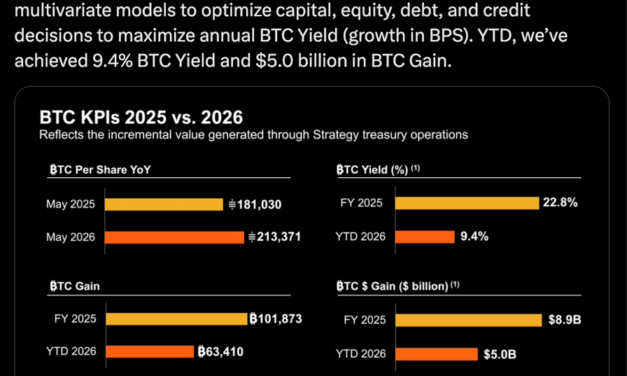
Phong Le, the CEO of Bitcoin treasury company Strategy, outlined conditions during an interview on Friday, under which the company would sell some of its Bitcoin holdings. The company will sell Bitcoin to pay the dividend on its Series A Perpetual Stretch Preferred Stock (STRC), a corporate credit instrument that pays an 11.5% dividend to holders, and to defer or offset taxes, Le told CNBC. He added:“I believe in math over ideology, and at the point where selling Bitcoin versus selling equity to pay a dividend is better for our Bitcoin per share, and for our common shareholders, we will do it.”Le added that the company would only sell BTC to pay for the yield owed to holders of its credit instruments if the sales are “accretive” to Strategy’s shareholders, meaning the company increases the BTC per share metric.Source: Phong LeThe comments came after Strategy co-founder Michael Saylor said that the company might sell portions of its BTC periodically, stoking fears among BTC investors about the potential impacts of Strategy’s sales on Bitcoin’s market price. Related: Samson Mow defends Strategy selling portions of its Bitcoin treasurySaylor says Strategy may sell BTC, but Le says it won’t impact asset prices significantly “We’ll probably sell some Bitcoin to fund a dividend, just to inoculate the market, just to send the message that we did it,” Saylor said in an earnings call on Tuesday.Saylor added that if BTC appreciates by more than 2.3% annually, Strategy could fund its dividend payments “forever” without selling Strategy’s stock and diluting shareholders.The annual yield on Strategy’s BTC treasury. Source: Strategy“We could stop selling MSTR common stock right now,” Saylor said, adding, “We can fund the dividends with Bitcoin sales.”The company holds 818,334 BTC, valued at more than $66 billion at the time of this writing, making it the largest publicly traded BTC treasury company, according to data from BitcoinTreasuries. Treasury companies offloading their BTC may create selling pressure that negatively impacts Bitcoin’s price; however, Le said that BTC’s daily trading volume of about $60 billion is enough to absorb the more than $1 billion in annual dividends that Strategy owes.Magazine: Big questions: Should you sell your Bitcoin for nickels for a 43% profit?Cointelegraph is committed to independent, transparent journalism. This news article is produced in accordance with Cointelegraph’s Editorial Policy and aims to provide accurate and timely information. Readers are encouraged to verify information independently.

Čítaj viac

The CLARITY Act will help reshore the crypto industry in the US — Attorney

Passing the Digital Asset Market Clarity Act of 2025, also known as CLARITY, will help to reshore the crypto industry in the United States, according to Bill Hughes, the senior counsel and director of global regulatory matters at Consensys, a crypto infrastructure company. “The US dollar is the world’s largest fiat on-ramp for cryptocurrency, accounting for over $2.4 trillion in volume between July 2024 and June 2025,” Hughes said. However, the vast majority of crypto trading volume takes place on exchanges based outside of the United States, Hughes said, adding that Binance alone accounted for over 38% of all centralized exchange trading volume in December 2025.Coinbase was the only US-based exchange out of the 10 listed on Coingecko’s top 10 centralized exchanges report for 2025, and it only had a 6.1% market share. Top 10 centralized crypto exchanges by trading volume in 2025. Source: CoingeckoPassing the CLARITY Act would cement clear rules for the crypto industry in the US, formally ending years of regulatory uncertainty for the sector and encouraging projects to build in the US; however, time is running out for passing the bill, according to Hughes and other crypto industry executives.Related: US senator says crypto market structure vote may happen by AugustThe window to pass the bill is closing due to midterms The window to pass crypto market legislation is “unforgiving” due to the upcoming US midterm elections in November and the midterm campaign season preceding the elections, Hughes said. “The Senate has only weeks to move the bill before the August recess, after which the midterm election calendar takes over,” he said. If no progress is made on the bill, the next opportunity to pass a comprehensive crypto market regulatory framework may not occur until 2030, he warned.The Senate Banking Committee has scheduled a markup for the bill on Thursday of the week following this publication. Speaking at the Consensus 2026 crypto industry conference in Miami, Florida, Brad Garlinghouse, the CEO of crypto software company Ripple Labs, warned that despite recent progress on the bill, its passage into law still isn’t guaranteed. A HarrisX poll found that a majority of those surveyed supported the CLARITY Act. Source: HarrisXA poll published by HarrisX in May found that 52% of the 2,028 registered US voters surveyed supported passing the CLARITY Act.“Support for the CLARITY Act crosses party lines,” according to HarrisX, which found that the bill had strong support in both the Democratic and Republican political parties.Magazine: Will the CLARITY Act be good — or bad — for DeFi?

Čítaj viac

Estonia's FSA issues investor warning about Zondacrypto

Estonia’s Financial Supervision and Resolution Authority (FSA), the country’s financial regulator, issued an investor warning for BB Trade Estonia OÜ, the company that operates the Zondacrypto digital asset exchange.The FSA said the company did not have a white paper listed on its website for the “TeamPL” crypto token listed on the crypto exchange, a violation of the European Union’s Markets in Crypto-Assets (MiCA) regulatory framework. According to the FSA: “This action violates Article 9, Section 1 of [MiCA], according to which crypto-asset white papers shall remain available on the website of the offerors or persons seeking admission trading for as long as the crypto-assets are held by the public.”The investor warning for Zondacrypto and its parent company. Source: Estonia FSACointelegraph reached out to Zondacrypto but did not receive a response by the time of publication. The investor warning follows news of withdrawal issues at the Zondacrypto exchange and an investigation into the company by Polish law enforcement officials.Related: Europe’s MiCA regime puts smaller crypto firms under pressureZondacrypto faces investigation following withdrawal and access issuesIn April, Zonda CEO Przemysław Kral said the exchange did not have access to a cold wallet containing about 4,500 Bitcoin (BTC), valued at about $360 million at the time of writing. Kral claimed that the wallet’s private keys were never handed over by Sylwester Suszek, the founder and former CEO of Zondacrypto, who has been missing since 2022. He also denied rumors that the exchange is insolvent, adding that it would meet all customer obligations. Kral’s last post on the X social media platform was published on April 16, 2026. Source: Przemysław KralPolish investigators initiated a probe into the company in April, following reports from users of withdrawal issues and the inability to access funds.Since that time, Kral has gone silent on social media, with no new posts since April 16. Local media outlets reported that he flew to Israel, where he is a citizen, amid the probe by Polish law enforcement.In February, he told Cointelegraph that the company is based outside of Poland because the country has not brought its crypto regulations in line with the EU’s MiCA framework.“Although we are a company with Polish roots and the largest player in the crypto industry on the Polish market, we have been operating outside Poland for years,” he said.Magazine: Guide to the top and emerging global crypto hubs: Mid-2026

Čítaj viac

Získaj BONUS 8 € v Bitcoinoch

nakup bitcoin z karty

Registrácia Binance

Burza Binance

Aktuálne kurzy

