Autor Cointelegraph by Vince Quill

UK politician Nigel Farage bought $1.8M house after a $6.7M crypto gift

United Kingdom politician Nigel Farage, the leader of the Reform Party, purchased a property valued at 1.4 British pounds ($1.8 million) after receiving a 5 million pound ($6.7 million) “personal gift” from crypto billionaire Christopher Harborne. The real estate deal closed in May 2024, several weeks before Farage announced that he was running for office in the general elections, according to Sky News.Farage is now facing a UK parliamentary probe over the 5 million pound gift, which critics of the politician say should have been declared and registered after he took office.The Reform Party and Farage maintain that no wrongdoing occurred. Farage said that because the gift was received before he entered office, it is not subject to the same reporting requirements.Nigel Farage says the Reform Party will fight back against bans or temporary moratoriums on crypto political donations. Source: Sky NewsThe probe follows months of UK lawmakers and government officials urging a ban on crypto political donations over ethics concerns and growing regulatory scrutiny of political figures accepting crypto for campaign funds or personal gifts.Related: UK Liberal Democrats call for Farage probe in $2.7M Stack BTC promotionUK officials and lawmakers target crypto political donationsIn February 2025, Matt Western, chair of the United Kingdom’s Joint Committee on the National Security Strategy, urged lawmakers to temporarily ban crypto donations sent to political parties and political figures.Western cited concerns over foreign governments influencing UK elections and politics, with their donations as the primary reason for the ban.“As the security environment worsens and the UK’s military role in Europe grows, the value of influencing the UK’s political positions, for example, on Ukraine, or US-EU relations, is likely to increase,” he saidThe letter from the Joint Committee on the National Security Strategy urges a temporary ban on crypto donations. Source: UK ParliamentThe UK government advanced a legislative proposal in March to temporarily ban political crypto donations, following the recommendations from Western and an independent inquiry into the threats posed by foreign political donations.However, the legislation must still pass through both chambers of the UK parliament and receive approval from King Charles III before it is codified into law. “We will act decisively to protect our democracy,” UK Prime Minister Keir Starmer said about the legislation to curb crypto political donations.Magazine: The critical reason you should never ask ChatGPT for legal advice

Čítaj viac
Crypto losses from North Korea hackers in 2025 rose 51% YoY: Report

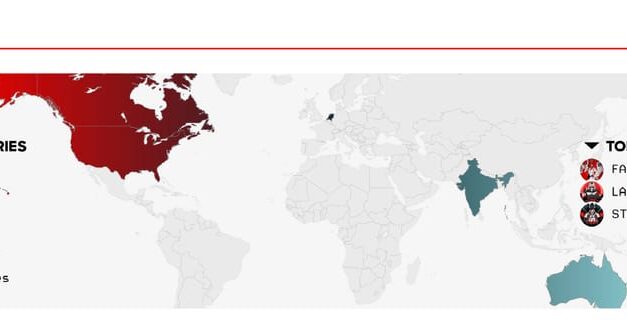
North Korea (DPRK) state-affiliated hackers and threat actors were responsible for more than $2 billion in crypto losses in 2025, a 51% year-over-year increase, despite fewer attacks carried out by the group, according to cybersecurity company CrowdStrike. DPRK hackers represent the “largest” threat group targeting cryptocurrency users, as measured by the dollar amount of assets stolen, according to the company’s 2026 Financial Services Threat Landscape report. Crowdstrike added:“Stolen proceeds are almost certainly laundered to fund the regime’s military programs. Compared to 2024, DPRK-nexus adversaries conducted fewer campaigns but achieved significantly higher returns by prioritizing high-value targets.” The DPRK hackers and scammers focused on targeting Web3 projects and cryptocurrency exchanges because the stolen funds could be “cashed out” and transferred with a greater degree of anonymity than in the traditional financial system, CrowdStrike said. The countries most targeted by DPRK hackers. Source: CrowdStrikeThe report highlights the growing threat of state-affiliated hacking groups targeting cryptocurrency users and industry companies through cybersecurity threats and social engineering scams designed to steal funds and sensitive information.Related: US sentences ‘laptop farmers’ tied to North Korean IT worker schemeNorth Korean hackers infiltrate crypto projects online and offline In April, the Ethereum Foundation, the organization that oversees development of the Ethereum ecosystem, identified 100 DPRK-backed hackers and threat actors who infiltrated crypto projects. Typically, these threat actors are remote hires; however, in April 2025, the Drift Protocol decentralized crypto exchange was infiltrated and compromised by DPRK-affiliated technology workers, who met with the Drift Protocol development team.The Drift Protocol team said that they met the threat actors during a “major” cryptocurrency industry conference and built a working relationship with them over six months. Source: Drift ProtocolDuring the collaboration, the hackers deployed malware, which compromised Drift Protocol developer machines and caused $280 million in losses. “It is important to note that the individuals who appeared in person were not North Korean nationals,” the Drift team said, adding, “DPRK threat actors operating at this level are known to deploy third-party intermediaries to conduct face-to-face relationship-building.”During that same month, Onchain sleuth ZachXBT also documented a group of North Korean information technology (IT) workers who were making $1 million per month working at technology companies.Magazine: North Korea denies crypto hacks, Upbit’s bank tests Ripple: Asia Express

Čítaj viac

Coinbase CEO Brian Armstrong gets behind CLARITY Act ahead of Thursday markup

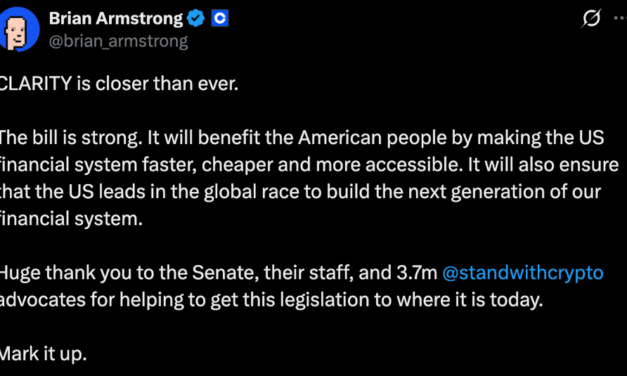
Coinbase CEO Brian Armstrong is supporting the latest version of the Digital Asset Market Clarity Act (CLARITY) ahead of the US Senate’s markup of the crypto market structure bill on Thursday. “I don’t think it’s ever been in a stronger or more bipartisan position,” he said about the latest iteration of the market structure bill.Armstrong said that the banking and crypto industry lobbies have reached a “healthy compromise” on stablecoin yield, which was one of the main issues that stalled the market structure bill in January. He added:“I think there was a healthy compromise there, brokered by Senators Tillis and Alsobrooks. And you know, it was a good compromise because both sides left a little bit unhappy, but at least we got to a place that we can all live with.”The latest version of the CLARITY bill also improved provisions surrounding decentralized finance (DeFi), tokenized stocks, and the authority of the Commodity Futures Trading Commission (CFTC) to regulate crypto markets, he said.Source: Brian ArmstrongThe comments and the bill’s pending markup follow months of back-and-forth negotiations between the banking sector and the crypto industry over the bill, which stalled in January 2025 after crypto industry players, led by Coinbase, rejected the initial draft.Related: Latest version of crypto market structure bill raises eyebrows ahead of Senate markupAbout 20% of the US population owns crypto, according to industry advocacy groups About one in five Americans, or 20%, owns cryptocurrency, according to the National Cryptocurrency Association’s 2025 State of Crypto Holders report, which surveyed 54,000 US residents.The survey found that about 67% of US crypto owners are below the age of 45, while about 15% are over 55 years old.A demographic breakdown of crypto users in the United States. Source: National Cryptocurrency AssociationThe top-ranked use case for cryptocurrency was as an investment, with 52% of holders indicating that they use digital assets to “invest in their financial future,” according to the survey.A HarrisX poll conducted earlier this month also found that 52% of the 2,008 registered US voters surveyed supported passing the CLARITY Act into law, while just 11% opposed the passage of the legislation.Magazine: Will the CLARITY Act be good — or bad — for DeFi?Cointelegraph is committed to independent, transparent journalism. This news article is produced in accordance with Cointelegraph’s Editorial Policy and aims to provide accurate and timely information. Readers are encouraged to verify information independently.

Čítaj viac

Polymarket's monthly volume declines for first time since August

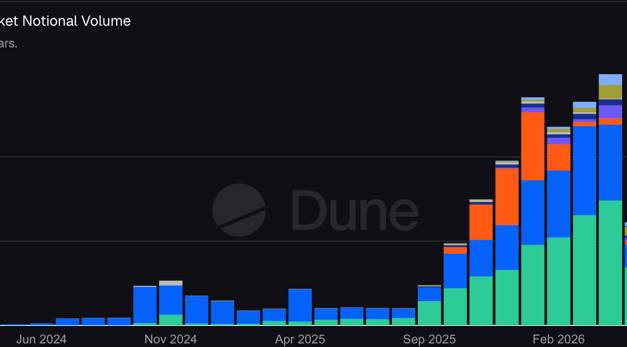
Monthly trading volume on the Polymarket prediction market fell by about 8.9% in April, the first decline in month-to-month activity since August as rivals like Kalshi increase their market share.Polymarket and its US-based trading application collectively generated more than $10.2 billion in volume in April, compared to more than $11.2 billion in March, according to data from Dune Analytics.However, rival Kalshi’s April trading volume surged by about 13%, climbing to about $14.8 billion, Dune data shows. The total monthly trading volume for prediction markets also increased to about $29.8 billion in April from about $26.5 billion in March, an increase of about 12.4%.Monthly volume figures for prediction markets. Source: DunePolymarket’s volume drop came as the company attempts to fully integrate US markets again, amid increased legal and regulatory scrutiny of prediction markets by US lawmakers after the sector experienced a meteoric growth during the 2024 elections.To be sure, prediction markets are proving to be attractive to a slew of new competitors. Prophet, an AI-native prediction market platform, last week launched its first live trading tranche, introducing a system where an AI model acts as the counterparty using real capital. Earlier this week, financial technology company MoonPay debuted an AI technology tool for trading strategies on prediction markets.Related: Dutch users still access prediction markets despite Polymarket banPolymarket eyes US expansion as prediction markets come under fire Polymarket is seeking to expand its presence in the US after exiting in 2022 as part of a settlement with the US Commodity Futures Trading Commission (CFTC), which barred the platform from allowing US residents on its main, global exchange.In a bid to regain a foothold, the company launched a dedicated app for US customers in December 2025, albeit a platform that is siloed off from the Polymarket’s global platform and its liquidity.Several US lawmakers and regulatory officials have raised concerns about insider trading on prediction markets, particularly in markets related to war, energy prices, and other geopolitically sensitive issues.A letter from Senator Elizabeth Warren and other US lawmakers asks the CFTC to crack down on insider trading. Source: Senator Elizabeth WarrenIn March, Senator Elizabeth Warren and more than 40 Congressional representatives wrote to the CFTC demanding a ban on government insiders using prediction market platforms to profit while in office or serving in an official capacity. “The CFTC maintains that event contracts are a type of swap subject to its jurisdiction, and, therefore, it should ensure that federal employees understand existing restrictions on prediction market insider trading,” the lawmakers said.Wisconsin Attorney General Josh Kaul also filed lawsuits against Kalshi, Polymarket, and other prediction markets in April, accusing the platforms of violating state sports betting laws.Magazine: Should users be allowed to bet on war and death in prediction markets?

Čítaj viac

Saylor signals another Bitcoin buy, after hinting at selling in Q1 earnings call

Michael Saylor, co-founder of Strategy, signaled that the Bitcoin treasury company will resume its BTC purchases this week, following an earnings call on Tuesday, during which he said the company may periodically sell portions of its treasury.“Back to work, BTC,” Saylor said in an X post on Sunday, messaging that has previously preceded a BTC purchase, which typically the day after his posts.The company last purchased BTC on April 27, buying 3,273 coins for about $255 million, which brought its total holdings to 818,334 BTC. Those holdings were worth about $61.8 billion, according to Strategy’s website at the time of publication.Strategy’s history of Bitcoin purchases since 2020. Source: SaylorTracker.comThe company paused its BTC buying streak for one week ahead of Tuesday’s first quarter 2026 earnings call, in which Saylor said that the company could sell portions of its Bitcoin holdings periodically to pay dividends to holders of its credit instruments.The announcement appeared to contradict the company’s previous stance of never selling BTC, and the sales could weigh on Bitcoin’s market price by introducing new selling pressure, critics of the move say.Related: Bitcoin’s recent rally is largely fueled by Strategy purchases: Bitwise’s HouganStrategy CEO says dividend-funding sale could “inoculate” the market“We’ll probably sell some Bitcoin to fund a dividend, just to inoculate the market, just to send the message that we did it,” Saylor said during Strategy’s Q1 earnings call.The announcement drew mixed reactions from the Bitcoin community, with some, like Strategy investor Adam Livingston, arguing that periodic sales will be accretive for the company’s treasury, allowing it to finance the purchase of more BTC in the future. Strategy’s Bitcoin per share since 2020, measured in sats, the base unit of Bitcoin. Source: SaylorTracker.comBitcoin advocate Samson Mow said Strategy’s ability to sell BTC gives it optionality and greater room to maneuver in the financial markets. Others social media sentiment positedthat Strategy’s Bitcoin sales and credit instruments will create a “doom loop” that suppresses the spot market price of BTC.Strategy CEO Phong Le clarified that the company would only sell BTC in specific instances, including paying dividend yields and deferring taxes, and that neither its sales nor purchases should affect Bitcoin’s market price.Bitcoin’s average daily trading volume of more than $60 billion could easily absorb Strategy’s $1.5 billion in annual dividend payments owed to holders of its corporate credit products, he said.“I don’t think we’re driving the price up or down,” Le told CNBC, adding that the company owns about 4% of the total BTC supply. Magazine: Big Questions: Can Bitcoin save you from the dreaded Cantillon Effect?

Čítaj viac

Získaj BONUS 8 € v Bitcoinoch

nakup bitcoin z karty

Registrácia Binance

Burza Binance

Aktuálne kurzy