Autor Cointelegraph By Turner Wright

Kickstarter plans to migrate to platform built on Celo blockchain

Crowdfunding platform Kickstarter will be launching a new company that will eventually see its website move to a blockchain-based system on Celo. In a Wednesday blog post, CEO Aziz Hasan and co-founder Perry Chen said Kickstarter would be developing an open-source protocol that will live on the Celo blockchain. The two execs cited the blockchain’s efforts in minimizing its environmental impact — being carbon negative — in addition to the fact it was open source.“We are entering a significant moment for alternative governance models, and we think there’s an important opportunity to advance these efforts using the blockchain,” said Chen and Hasan.Bloomberg reported that Kickstarter planned to transition its website to the blockchain platform in 2022, with the project announcing it would release a white paper “in the coming weeks.” Kickstarter reportedly said the migration will not affect any of the millions of users currently using the platform to crowdfund for projects including medical and fitness products, artwork, books, and movies. In addition, Kickstarter said it planned to establish a governance lab “overseeing the development of the protocol governance.” Purpose Foundation executive director and co-founder Camille Canon will be leading the effort.Related: A Community-Governed DeFi Platform Makes Crowdfunding DecentralizedWith the emerging crypto space, certain projects that might have received money through Kickstarter have shifted to distributed autonomous organizations. In November, a group called ConstitutionDAO attempted to purchase a first edition print copy of the U.S. Constitution, in which 17,437 backers were issued governance tokens called PEOPLE. Though the DAO failed to make the winning bid, its token price surged after the team behind the project allowed users to continue holding the tokens. First launched in 2009, Kickstarter reported 21 million people have pledged more than $6 billion to back 213,034 projects using the crowdfunding platform, including the Peloton bike and the 2014 movie Veronica Mars.

Čítaj viac
US is 'unquestionably' behind the curve on crypto ETFs, says Brian Brooks

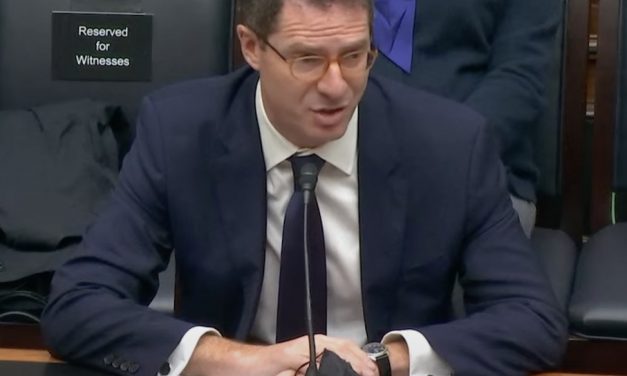
Bitfury CEO and former Acting Comptroller of the Currency Brian Brooks has hinted the regulatory environment in the United States could drive many crypto firms outside the country, and has already stymied companies attempting to offer a variety of financial products.Speaking at a Wednesday hearing on Digital Assets and the Future of Finance with the House Committee on Financial Services, congressperson Ted Budd said he feared the current policy of regulation by enforcement in the U.S. could “force the next generation of financial tech to be created outside of our country.” Speaking of behalf of Bitfury, Brooks said: “There are some products that are legal in other countries and are just not legal here,” said Brooks. “One of the things that makes crypto risky is that consumers may not understand the difference between one token and another token, so they may want to diversify […] we don’t allow that in the United States — we do allow it in Canada, we allow it in Germany, Singapore, Portugal, and a number of other places.” He added:“If you’re a developer of [exchange-traded funds], there’s no fuzzy line, it’s super clear: You cannot do that here, so you have to go abroad.” Bitfury CEO Brian Brooks addressing the House Committee on Financial Services on WednesdayBrooks placed the lack of exchange-traded funds, or ETFs, in the U.S. on the Securities and Exchange Commission. Though the regulator has recently approved ETFs with exposure to Bitcoin (BTC) futures from investment managers ProShares and Valkyrie, it has yet to give the green light for BTC or other crypto ETFs. In contrast, many U.S. companies with operations in Canada have successfully applied with local regulators for ETFs with direct exposure to crypto. Related: More than 40 digital currency ETFs await US regulatory approvalHowever, the former OCC head suggested the lack of approval of crypto investment products was more of a result of the United States’ “fragmented approach to regulation” given the number of bodies overseeing banks, finance, and now digital assets. Brooks proposed a solution in which traditional financial institutions would be treated in much the same way as crypto.“When I hear people talk about the idea that we need one regulator for crypto, I would say we should first have one regulator for banks, but we have three of them,” said Brooks. “The last thing we need to do is add another regulator to a system that’s already got dozens of regulators.“If I’m a crypto lending platform, I should probably be regulated by the FDIC. If I’m a crypto trading platform, I should probably be regulated by the CFTC and SEC, but somehow we treat crypto, because it’s new, as different than everything else. I’m gonna argue that crypto is just a step function improvement in the system.”CEOs from Circle, FTX, Bitfury, Paxos, Stellar Development Foundation and Coinbase Inc. are currently fielding questions from U.S. lawmakers on the state of digital assets in the country. Cointelegraph reported earlier today that House representatives have expressed concerns over token projects exerting centralized control over many users’ assets. 

Čítaj viac

Discussion on crypto and major tech firms combine in hearing over decentralization of digital ecosystem

Blaine Luetkemeyer, a House representative from Missouri, revisited the issue of major companies exerting control over vast swaths of the internet, something he expressed concerns about encroaching in the crypto space.Speaking at a Wednesday hearing on digital assets with The House Committee on Financial Services, Luetkemeyer addressed Bitfury CEO and former acting Comptroller of the Currency Brian Brooks in saying that major tech firms including Instagram, Facebook — now Meta — and Twitter “control people on their platforms.” Luetkemeyer asked whether this level of control could extend to undue influence for the rollout of a digital dollar.“The point of crypto is to have true decentralization,” said Brooks. “The projects that succeed will be the projects that achieve that. Bitcoin succeeded because there were literally millions of participants in the node network, and so there is no CEO of Twitter to deplatform you, there’s no CEO of JPMorgan to take away your credit card.”Bitfurty CEO Brian Brooks addressing the House Committee on Financial Services on Dec. 8The Bitfury CEO added that he believed companies unable to meet this standard would be relegated to the “ash heap of history” — that is, lose their relevance and largely be forgotten. In his written statement to the committee, Brooks implied that a decentralized internet would be better “than an Internet largely controlled by five big companies”:“Crypto policy should take into account not only any new risks introduced into the system, but also the risks in the present system that are being solved by decentralization.”Related: Bank of International Settlement calls the rise of decentralized finance ‘an illusion’ in latest quarterly reviewFor many of the lawmakers in attendance at the Digital Assets and the Future of Finance hearing, the goal seems to be gaining a greater understanding of the existing space rather than how they might be able to provide a clear regulatory framework for crypto and blockchain for the future. The six CEOs in attendance from Circle, Paxos, Coinbase Inc., Stellar Development Foundation, FTX and Bitfury have fielded questions including those on ransomware attacks, quantum computing and price volatility.This story is developing and may be updated, as the House committee hearing is still ongoing.

Čítaj viac

Crypto CEOs request Congress provide regulatory clarity at hearing on digital assets

The House Committee on Financial Services heard from several chief executive officers at major crypto firms in the United States, some of whom seemed to present a united front in urging lawmakers to provide a clear regulatory framework for crypto.Speaking at a Wednesday hearing on Digital Assets and the Future of Finance: Understanding the Challenges and Benefits of Financial Innovation in the United States, Circle CEO Jeremy Allaire, FTX CEO Sam Bankman-Fried, Bitfury CEO Brian Brooks, Paxos CEO Chad Cascarilla, Stellar Development Foundation CEO Denelle Dixon, and Alesia Haas, the CEO of Coinbase Inc. and the CFO of Coinbase Global, told U.S. lawmakers about the challenges their companies faced as both stablecoin issuers and digital asset exchanges.[embedded content]In a written statement released prior to the hearing, Allaire said Circle supported Congress’ efforts for “national licensing and Federal supervision” of stablecoin issuers given many were now “too big to ignore.” Cascarilla seemed to echo this sentiment, describing the U.S. financial system as “inadequate” for handling the emerging digital economy, but blockchain technology may offer a possible solution:“A blockchain-based financial architecture could settle trades on the same day, mitigate counterparty risk and eliminate the costly central clearinghouse,” said the Paxos CEO. “This would enable market participants and regulators to monitor and correct settlement and margin shortfalls in real time. We agree that shortening the trade settlement cycle should be a high priority for the SEC, and we are working aggressively to make that possible.”Circle CEO Jeremy Allaire addressing the House Committee on Financial Services on Dec. 8Brooks added that there were already examples of companies involved in the digital asset space finding a more regulatory-friendly environment in other countries, such as Fidelity launching a Bitcoin (BTC) exchange-traded fund in Canada in the absence of the U.S. Securities and Exchange Commission approving of one. “There is a reason why crypto talent is no longer concentrated in Silicon Valley, the birthplace of the original commercial Internet,” said Brooks. “Sure, some talent has merely moved from Silicon Valley to Miami — but a surprising number of talented founders have left for Portugal, Dubai, Abu Dhabi, Singapore, and other jurisdictions that are not at all unregulated but that have a more positive posture toward innovation and growth.”Related: US lawmaker urges congressional action on crypto as government avoids shutdownAddressing the panel of crypto CEOs, congressperson Patrick McHenry argued the technology in the crypto space was “already regulated” but acknowledged that any existing framework could be “clunky” and “not up to date.” According to the North Carolina representative, a lack of understanding among his fellow committee members could risk overregulating crypto and blockchain:“We need reasonable rules of the road, we know that. We don’t need knee-jerk reactions by lawmakers to regulate out of fear of the unknown rather than seeking to understand. And that fear of the unknown in the move to regulate before understanding will only stifle American ingenuity and put us at a competitive disadvantage.”Still ongoing at the time of publication, the House committee hearing seeks to discuss four key aspects of the crypto space: exchanges, stablecoin offerings, regulatory concerns in digital assets, and federal regulatory responses. Lawmakers will also likely discuss decentralized finance, given its potential to “replicate and replace conventional delivery of financial services such as loans, asset trading, insurance, and other services.”

Čítaj viac

CIA director says agency currently has 'a number of different projects' focused on crypto

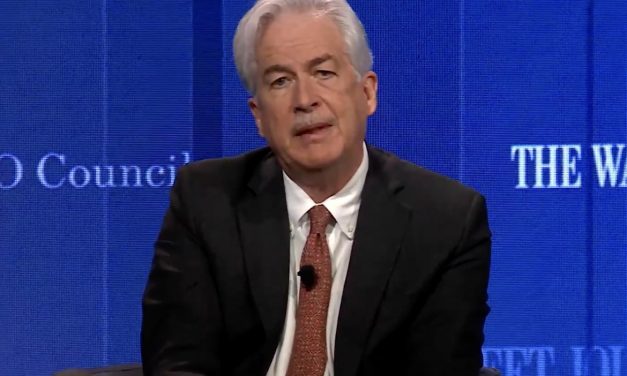
Current director of the Central Intelligence Agency William Burns said his predecessor at the government agency initiated projects focused on gathering intelligence on cryptocurrency.Fielding a question on crypto at the Wall Street Journal CEO Council Summit on Monday, Burns said the CIA was looking to add expertise in cryptocurrencies and blockchain to its team of intelligence analysts in addition to communicating with industry experts. He said the challenges from the crypto space “could have enormous impact” on the United States given what he has already seen in ransomware attacks.“My predecessor had started this,” said Burns, likely referring to the actions of former acting CIA director David Cohen. “[They] had set in motion a number of different projects focused on cryptocurrency and trying to look at second- and third-order consequences as well and helping with our colleagues in other parts of the U.S. government to provide solid intelligence on what we’re seeing as well.”Screenshot from Wall Street Journal’s CEO Council Summit on Dec. 6He added that building such knowledge on crypto was “an important priority” for the Agency, and he planned to devote “resources and attention” to it. The CIA director did not mention specifics on the direction the Agency planned to take in regard to fighting cyberattacks, but hinted it would aim to “get at the financial networks” for criminal groups using digital currencies for ransom. Burns, who assumed the director position in March, has seen hackers demand millions in crypto over an attack on Colonial Pipeline system in May, but also a task force from the U.S. government respond by recovering the majority of the lost funds. Michael Morrell, a former acting CIA director from 2012 to 2013, said “blockchain analysis is a highly effective crime fighting and intelligence gathering tool,” one underutilized by law enforcement agencies.Related: CIA Has Had Keys to Global Communication Encryption Since WWIIThere is no fixed term for a CIA director, meaning Burns will likely serve at the Agency at the pleasure of U.S. President Joe Biden. At the time of publication, Biden has yet to announce his picks to fill three empty seats on the board of governors of the Federal Reserve System.

Čítaj viac

Získaj BONUS 8 € v Bitcoinoch

nakup bitcoin z karty

Registrácia Binance

Burza Binance

Aktuálne kurzy