Autor Cointelegraph By Turner Wright

Block, formerly Square, will allow users to gift BTC for the holidays using Cash App

Digital payments company Block, formerly called Square, has announced that Cash App users will be able to gift friends and family both crypto and stock over the holiday season.According to a Tuesday tweet, Cash App said its users — roughly 40 million active monthly — could send as little as $1 in Bitcoin (BTC) or stock as a gift in the same way they had been sending cash. The payments firm joins others including PayPal and Coinbase in allowing users to send crypto as payments or gifts to third parties.With Cash App, you can now send as little as $1 in stock or bitcoin. It’s as easy as sending cash, and you don’t need to own stock or bitcoin to gift it. So this holiday season, forget the scented candles or novelty beach towel, and help your cousin start investing. pic.twitter.com/HS0CqusiLS— Cash App (@CashApp) December 14, 2021Cointelegraph reported on Dec. 7 that a study by lending firm BlockFi showed many Americans would be willing to accept cryptocurrencies including BTC, Ether (ETH), and Dogecoin (DOGE) as gifts this holiday season. However, the same survey revealed that the majority of respondents did not have the skills to transfer crypto. Many critics have attributed sending BTC to newbies as part of the reason so many coins have been lost since 2009.Related: Gifting crypto to loved ones this holiday? Educate them firstOther projects are accepting donations in crypto over the holidays to help those in need. Fintech provider Unbanked announced earlier this month it would be enabling crypto donations for Toys for Tots, a program run by the United States Marine Corps that collects toys to distribute to disadvantaged children. In addition, platforms like the Giving Block allow non-profit organizations and charities to accept donations in crypto.

Čítaj viac
Witnesses offer differing opinions on approach to stablecoins at congressional hearing

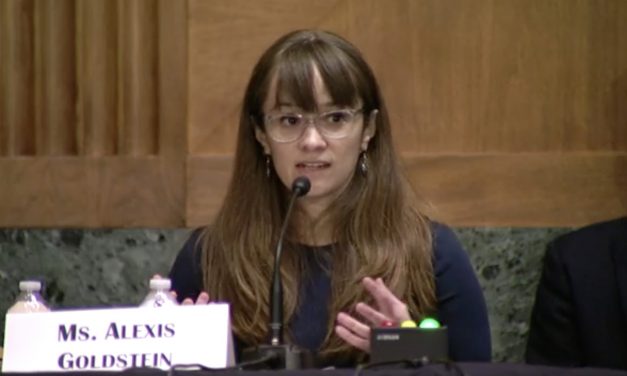
The Senate Committee on Banking, Housing and Urban Affairs heard from several expert witnesses with knowledge of stablecoins who urged lawmakers to establish a clear regulatory framework but could not seem to agree on where lines would be drawn.In a Tuesday hearing on “Stablecoins: How do They Work, How Are They Used, and What Are Their Risks?” Hilary Allen, a professor at the American University Washington College of Law, Alexis Goldstein, director of financial policy at Open Markets, Jai Massari, partner at Davis Polk & Wardwell, and Dante Disparte, chief strategy officer and head of global policy at Circle, addressed U.S. senators regarding some of the risks stablecoins may pose to the U.S. financial system and how lawmakers could handle regulating the space. Goldstein’s written testimony included her views that decentralized finance, or DeFi, projects were “largely out of compliance” with checks on Know Your Customer, Anti-Money Laundering, Countering the Financing of Terrorism, and current U.S. sanctions. She said that because there were “virtually no KYC/AML checks in DeFi applications,” stablecoins like the Pax Dollar (USDP) could be used to convert ransomware payments from one cryptocurrency to another.Alexis Goldstein addressing the Senate Banking Committee on TuesdayMassari added that U.S. lawmakers could consider having stablecoin issuers operate under a federal charter rather than potentially requiring them to be insured depository institutions, like banks. According to Massari, having a stablecoin issuer regulated similarly to an FDIC-insured bank is “unworkable” and “unnecessary.” She said the firms are already capable of limiting the risk of their stablecoin reserves to be “short-term, liquid assets, and requiring the market value of those reserves to be no less than the par value of stablecoins outstanding.” “A new and well-designed federal charter could accommodate a business model premised on the issuance of stablecoins fully backed by short-term, liquid assets and the provision of related payments services,” said Massari. “This charter could impose requirements for reserve asset composition while tailoring leverage ratios or risk-based capital requirements and other requirements to the nature of the business model. And it could restrict the stablecoin issuer from engaging in riskier activities, to minimize other claims on reserve assets.”In contrast, Disparte — the only witness directly appearing with a direct connection to a stablecoin issuer — used part of his written testimony to highlight use cases around digital assets, including empowering women and minority entrepreneurs and delivering aid. While he did hint that a change in approach to regulation might be necessary for stablecoins, the priority for lawmakers should be to “do no harm” and encourage innovation.“I argue that we are winning [the digital currency] race because of the sum of free-market activity taking place inside the U.S. regulatory perimeter with digital currencies and blockchain-based financial services,” said Disparte. “The sum of these activities are advancing broad U.S. economic competitiveness and national security interests.”Related: ‘DeFi is the most dangerous part of the crypto world,’ says Senator Elizabeth WarrenNot every witness who appeared in front of the committee seemed to be so optimistic. Allen said stablecoins could pose a “real threat to financial stability” in the United States. In her opinion, the asset class could eventually grow to the point at which it could displace enough U.S. dollars to limit the Federal Reserve’s ability to respond to inflation.“Private sector institutions — who have no mandate to serve the public interest — will have usurped control over the money supply, undermining central banks’ ability to rein in inflation or address deflation,” said Allen. “This is yet another reason to avoid policies that encourage the growth of stablecoins.”

Čítaj viac

'DeFi is the most dangerous part of the crypto world,' says Senator Elizabeth Warren

Massachusetts Senator Elizabeth Warren did not hold back in her criticism of decentralized finance, expressing concern about how a run on stablecoins would affect the average investor.In a Tuesday hearing with the Senate Banking Committee discussing stablecoins, Warren questioned Professor Hilary J. Allen of the American University Washington College of Law as to whether a run on stablecoins could potentially endanger the U.S. financial system. Though Allen said an “en masse” redemption of stablecoins from people who had lost faith in the tokens would be unlikely to have “systemic consequences” for traditional markets at present, the DeFi system would be more likely to feel the effects. Warren countered that because stablecoins provided “the lifeblood of the DeFi ecosystem” outside of regulated markets, she believed their value would “take a nosedive precisely when people most need stability” with the impact affecting traditional finance. “DeFi is the most dangerous part of the crypto world,” said Warren. “This is where the regulation is effectively absent, and — no surprise — it’s where the scammers and the cheats and the swindlers mix among part-time investors and first time crypto traders. In DeFi, someone can’t even tell if they’re dealing with a terrorist.”Allen added that the potential threat Warren posited may be in DeFi’s future without addressing her claim on illicit transactions:“I don’t think DeFi can grow without stablecoins. I think it would struggle. Right now, I think DeFi is contained to the point where it won’t impact financial stability, but if it grows, I think there’s a real threat there, particularly if it becomes intertwined with our traditional financial system.”The discussion among U.S. lawmakers present at the hearing, named Stablecoins: How Do They Work, How Are They Used, and What Are Their Risks?, follows committee chair Sherrod Brown requesting crypto firms release information related to consumer and investor protection on stablecoins. Professor Allen appeared at a witness alongside Alexis Goldstein, director of financial policy at Open Markets, Jai Massari, a partner at Davis Polk & Wardwell, and Dante Disparte, chief strategy officer and head of global policy at Circle.Related: Regulators are coming for stablecoins, but what should they start with?Warren has previously used hearings and public statements to claim cryptocurrencies are mainly tied to illegal activities. In a June hearing discussing central bank digital currencies, the Massachusetts senator said the “crypto world currently has no consumer protection” and referred to many tokens as “bogus” investments. She has also criticized the Ethereum network’s high transaction fees during periods of price volatility.

Čítaj viac

SEC chair's regulatory agenda fails to include clarity on crypto, says Hester Peirce

Hester Peirce, a commissioner for the United States Securities and Exchange Commission known by many in the space as Crypto Mom, is pushing back against the regulatory body’s agenda for not including clarification on digital assets.In a Monday joint statement, Peirce and SEC Commissioner Elad Roisman said they were “disappointed” in the failure of chairperson Gary Gensler’s regulatory agenda to include items aimed at helping companies raise capital, furthering investor protection, undoing recent rules passed by the commission and providing clarification on crypto. According to the two regulators, Gensler’s uncertain stance on digital assets may create problems for firms looking to operate in the space.“Rather than taking on the difficult task of formulating rules to allow investors and regulated entities to interact with digital assets, including digital asset securities, the Agenda — through its silence on crypto — signals that the market can expect continued questions around the application of our securities laws to this area of increasing investor interest,” said Peirce and Roisman. “Such silence emboldens fraudsters and hinders conscientious participants who want to comply with the law.”The latest regulatory agenda shows that the SEC will be busy in the upcoming months, but it won’t be working on the right things: https://t.co/QPQGKN91gL— Hester Peirce (@HesterPeirce) December 13, 2021The pair added that the proposed regulatory framework is deferring amendments related to audit trails of information around trades — presumably including crypto — and the people behind the transactions. According to Peirce and Roisman, deferring action on these protections “leaves investors’ data vulnerable.” Related: SEC Commissioner: DeFi must address transparency and pseudonymityGensler, who has served as SEC chair since April, has made numerous public statements advising crypto firms to “come in and talk” regarding any concerns over token projects that may qualify as securities. Cointelegraph reported in August that Gensler hoped to introduce crypto-related policy changes surrounding token offerings, decentralized finance, stablecoins, custody, exchange-traded funds and lending platforms.As a major regulator for financial products in the United States, the SEC has been blamed by many for impeding the launch of exchange-traded funds, or ETFs, linked to cryptocurrencies. Although the regulator has recently approved ETFs with exposure to Bitcoin (BTC) futures from investment managers ProShares and Valkyrie, it has yet to give the green light for another crypto ETF.

Čítaj viac

Robinhood partners with Chainalysis ahead of crypto wallet launch

Blockchain analytics firm Chainalysis will be partnering with Robinhood to provide data and tools for trading in advance of the app launching its crypto wallet.In a Monday announcement, Chainalysis said the integrated partnership with Robinhood Crypto will help the trading app meet compliance requirements ahead of the launch of its crypto wallet, expected to roll out for all users in early 2022. According to Robinhood, the platform will adopt Chainalysis’ Know-Your-Transaction, the firm’s monitoring compliance solution, in addition to Chainalysis Reactor, its investigations software. The trading app also said its teams would be using Chainalysis’ certification programs to achieve compliance.“Chainalysis works closely with regulators and law enforcement to develop industry best practices and that approach is aligned with Robinhood’s commitment to working with policymakers in a collaborative manner,” said Robinhood Crypto’s head of partnerships Ben Einstein.According to Robinhood, more than 1.6 million people are on the waitlist for a wallet which will support depositing and withdrawing Bitcoin (BTC), Ether (ETH), Dogecoin (DOGE), and other tokens. The trading app has been testing its digital wallet feature since it was first announced in September.First alpha transfer #WalletsAlpha https://t.co/nxOL23leGM— VLAD (@vladtenev) November 22, 2021Many government agencies and companies in the private sector employ Chainalysis as a solution to track both legitimate and illicit crypto transactions. When the U.S. Department of the Treasury announced it would impose sanctions on the Czech Republic and Russia-based business Suex OTC, it cited an investigation from the analytics firm.Related: BitMEX turns to Chainalysis to solve legal woes, or at least soften the CFTC’s blowAfter going public on the Nasdaq in July, the share price of Robinhood (HOOD) has steadily declined from an all-time high of $70.39 on Aug. 4 to $21.83 at the time of publication, a drop of roughly 70%.

Čítaj viac

Získaj BONUS 8 € v Bitcoinoch

nakup bitcoin z karty

Registrácia Binance

Burza Binance

Aktuálne kurzy