Autor Cointelegraph By Turner Wright

CIA director says agency currently has 'a number of different projects' focused on crypto

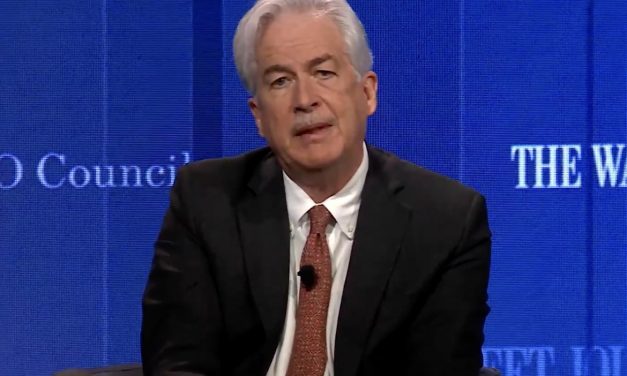
Current director of the Central Intelligence Agency William Burns said his predecessor at the government agency initiated projects focused on gathering intelligence on cryptocurrency.Fielding a question on crypto at the Wall Street Journal CEO Council Summit on Monday, Burns said the CIA was looking to add expertise in cryptocurrencies and blockchain to its team of intelligence analysts in addition to communicating with industry experts. He said the challenges from the crypto space “could have enormous impact” on the United States given what he has already seen in ransomware attacks.“My predecessor had started this,” said Burns, likely referring to the actions of former acting CIA director David Cohen. “[They] had set in motion a number of different projects focused on cryptocurrency and trying to look at second- and third-order consequences as well and helping with our colleagues in other parts of the U.S. government to provide solid intelligence on what we’re seeing as well.”Screenshot from Wall Street Journal’s CEO Council Summit on Dec. 6He added that building such knowledge on crypto was “an important priority” for the Agency, and he planned to devote “resources and attention” to it. The CIA director did not mention specifics on the direction the Agency planned to take in regard to fighting cyberattacks, but hinted it would aim to “get at the financial networks” for criminal groups using digital currencies for ransom. Burns, who assumed the director position in March, has seen hackers demand millions in crypto over an attack on Colonial Pipeline system in May, but also a task force from the U.S. government respond by recovering the majority of the lost funds. Michael Morrell, a former acting CIA director from 2012 to 2013, said “blockchain analysis is a highly effective crime fighting and intelligence gathering tool,” one underutilized by law enforcement agencies.Related: CIA Has Had Keys to Global Communication Encryption Since WWIIThere is no fixed term for a CIA director, meaning Burns will likely serve at the Agency at the pleasure of U.S. President Joe Biden. At the time of publication, Biden has yet to announce his picks to fill three empty seats on the board of governors of the Federal Reserve System.

Čítaj viac


Dan Tapiero’s 10T will launch $500M fund for late-stage crypto firms

Macro investor Dan Tapiero is launching another multimillion dollar fund intended to invest in mid- to late-stage companies in the digital asset ecosystem.According to a Notice of Exempt Offering of Securities filing with the U.S. Securities and Exchange Commission on Monday, Tapiero and his 10T Holdings partners Michael Dubilier and Stan Miroshnik have given the regulatory body notice of a $500 million growth equity fund for crypto and blockchain firms. The filing shows the fund has not yet sold any of the original investment.The 10T DAE Fund 3.0 is the third to come from the growth equity firm following a $200 million fund launched in February and a $750 million fund in September. The company lists 14 crypto and blockchain firms in its portfolio, including Kraken, eToro, Huobi, Mercado Bitcoin, Gemini, Bitfury, and Ledger. With the addition of the $500 million fund, 10T Holdings’ assets under management would likely exceed $1 billion — its website lists $770 million AUM at the time of publication.Tapiero is no stranger to investments, but prior to the crypto boom, some of his business was in gold. The 10T Holdings founder also helped co-found Gold Bullion International in 2009 and has been actively speaking about the potential of the crypto ecosystem, including Bitcoin (BTC), as adoption of digital assets accelerates. Related: Why Dan Tapiero expects a massive Bitcoin shortageAccording to data from Cointelegraph Markets Pro, the BTC price is $51,140 at the time of publication, having risen more than 20% since dipping to a monthly low to the $42,000s on Dec. 3. However, Cointelegraph reported there are indications that institutional investors are still looking to buy crypto.

Čítaj viac

Crypto City: Guide to Austin

This “Crypto City” guide looks at Austin’s crypto culture, the city’s most notable projects and people, its financial infrastructure, which retailers accept crypto and where you can find blockchain education courses — and there are even the juicy details of a famous controversy. Everything is bigger in Texas, including its enthusiasm for crypto.Fast factsCity: AustinCountry: United StatesPopulation: 974,000Founded: 1839Language: EnglishThe capital of the largest state in the contiguous United States, Austin is known as a live music mecca, with festivals drawing in thousands of people from around the world each year, including Austin City Limits and South by Southwest. The Texas city is a unique blend of liberal and conservative values, yet in many ways, it still operates under the old motto “keep Austin weird,” with the University of Texas at Austin home to a diverse student body and the popular Texas Longhorns football team.Long before becoming a hub of major tech companies — earning it the nickname “Silicon Hills” — Austin drew settlers from Mexico and the United States around the time Texas became an independent nation in 1836. Texas has stood under three flags with Austin as its capital: the Republic of Texas, the Confederacy and the United States of America. Though the city was largely centered around the capitol building completed in 1888, it later became known to many as a college town. For some years, the University of Texas at Austin was the largest university in the country by enrollment.Austin and the surrounding area have also been the shooting location for a number of famous films, including Death Proof from director Quentin Tarantino, Dazed and Confused — Matthew McConaughey’s first movie role — and many others. Though the city once drew, and still does draw, many starving artists pursuing their passions, interest from major corporations and their wealthy executives has begun to drive many natives and newbies alike out of the area due to rising rent and housing prices.As the population of Austin grows, gentrification and commuting times remain a large problem for many residents. The main highway, Interstate 35 — which separates the downtown area from the freshly redeveloped East Austin — seems inadequately designed to accommodate the rising number of Austinites, with some traveling up to 30 miles between their homes and offices. The city faces challenges including a lack of publicly provided infrastructure for its homeless population, the way Austin’s land can be used, and other issues endemic to the rest of the United States.Austin skyline. (Source: Pexels)Crypto cultureMany Texans have a “don’t tread on me” approach to local, state and federal governments telling them how to handle their business, their money and their personal life, despite the state showing only a lone star on its flag rather than a snake. In some ways, Austin residents’ response to digital assets since 2011 has been representative of this mindset, with many jumping into the crypto space more as an alternative to central banking rather than a fad from the tech industry.According to Paul Snow, a self-described “technologist” who runs the Bitcoin and Cryptocurrency Meetup group in Austin and organizes the Texas Bitcoin Conference, the Texans who attend gatherings most consistently seem to be concerned about “the state of the nation, and the state of banking and finance.” Snow says the group doesn’t focus on the latest project getting pumped and dumped, with many holding Bitcoin, Ether and SOL, although some are also advocates of Dogecoin and Shiba Inu.“[Our discussion] is basically a real broad analysis of every issue that is either in the crypto space or heavily within the context of the crypto space. Because the crypto space is largely a challenge to central banks, at least in a lot of people’s minds, then anything that happens in banking and finance is interesting to us.”Snow arrived in Austin in 2000 and started the Meetup groups in 2013, long before the U.S. government and Texas regulators turned their attention to crypto firms operating in the city. In mid-2021, the Texas State Securities Board filed for hearings against crypto lending firm BlockFi in addition to Celsius Network for allegedly offering unlicensed securities. However, lawmakers in the state also passed legislation the same year recognizing cryptocurrencies under commercial law.Crypto also has a supporter in the form of Texas Governor Greg Abbott, who has hinted on social media that he wants the state to follow Wyoming’s example in passing more crypto-friendly legislation. When Texas supermarket chain H-E-B announced in June 2021 that it would be installing crypto ATMs, Abbott tweeted his approval, saying, “Texas will be the crypto leader.” Senator Ted Cruz has also recently come out as a vocal crypto proponent.Count me in as a crypto law proposal supporter.It is increasingly being used for transactions and is beginning to go mainstream as an investment. (Fidelity, etc. trying to get Bitcoin ETF).Texas should lead on this like we did with a gold depository. https://t.co/1z25mtgnmu— Greg Abbott (@GregAbbott_TX) March 29, 2021Austin has previously hosted the SXSW Crypto Summit, Digital Assets and Securities Conference, Texas Blockchain Summit, Texas Bitcoin Conference and Bear Arms N’ Bitcoin trade show. The city is also expected to be the home of the major crypto-and blockchain-focused Consensus conference in June 2022.Texas State Capitol building in Austin. Source: PexelsProjects and companiesBefore cryptocurrencies and blockchain technology existed, Austin and the surrounding area had the conditions to make it ripe for opportunity for the right tech firms. Computer manufacturer Dell is located in nearby Round Rock, and in October, Elon Musk announced he would be moving car manufacturer Tesla’s headquarters close to the city’s international airport. Major tech companies including Facebook, Google, IBM, Oracle and Hewlett Packard also have regional offices in Austin.“There are just so many different levels where crypto ought to be adopted and I think that the municipalities that jump on early are going to do so much better than those that drag their feet,” says Snow.“I don’t know if I have a lot of hope for that at a governmental level, but at a personnel level and development team level, I think Austin is pretty exciting and they’ll do well.”Once officials in China began cracking down on Bitcoin miners, many firms relocated to Texas for its cheap electricity and seemingly crypto friendly regulations. Austin is home to crypto mining firm Blockcap, but other mining companies, including Riot Blockchain and Bitdeer Group — an offshoot of Bitmain — have set up shop in nearby Rockdale. Layer1 Technologies and Argo Blockchain also built mining facilities in West Texas.Though many crypto exchanges and companies offering financial products potentially falling under the regulatory umbrella of the Securities and Exchange Commission or the Commodity Futures Trading Commission have headquarters in the United States, the city of Austin itself seems to attract more startups dealing with security and blockchain technology that with buying and trading tokens. Companies such as Pinata, Titan and Talos have employees based in the city, while Inveniam, Factom, Multicoin Capital, Horizen Labs and others have local offices.Financial infrastructureIn February 2014, the first Robocoin Bitcoin ATM in Austin was installed at HandleBar, a bar located downtown. The launch of the machine was one of the first in the United States and preceded companies like Coinsource and Bitcoin Depot placing crypto ATMs in a variety of locations around the capital city in addition to the gradual acceptance of crypto payments for goods and services.Where can I spend crypto?Though credit cards, Apple Pay and cash payments are still largely king in the United States, there are many businesses around Austin that accept BTC, including restaurants, grocery stores and photography studios. The supermarket chain H-E-B’s locations in Austin do not host crypto ATMs or accept payments in Bitcoin or Ether yet, but according to Coinmap, there are roughly 90 retail outlets in the area that do accept digital assets.Opening of the second bitcoin ATM in austin Texas! @TexasBitcoin @Bitcoin @BitcoinNotBombs pic.twitter.com/P5mUeZOUFU— Paul Snow (@paulsnx2) March 3, 2014In Austin, Starbucks, Home Depot, Whole Foods and others accept crypto payments through third-party apps. Aside from the major retail chain stores, a few restaurants in the downtown area and Rainey Street Historic District, including Mai Thai, allow Austinites to pay for their food using crypto. However, many of these businesses have shuttered in the last year, likely due to the pandemic.Like Miami and New York City, Austin currently has its own CityCoin built on Stacks, an open-source network of decentralized applications and smart contracts that use the Bitcoin blockchain as a programmable base layer. The initiative from CityCoins has received public support from both the mayors of Miami and NYC for their respective tokens, but Austin Mayor Steve Adler has not yet endorsed a digital coin for the Texas capital city.Retweet this if you think @MayorAdler should welcome CityCoins to Austin, TX. ? https://t.co/tI5Ped83Ky— CityCoins (@mineCityCoins) November 12, 2021EducationThe University of Texas at Austin currently offers courses on blockchain through the McCombs School of Business and on the use of technology in a decentralized economy through its School of Information. Students at both UT Austin and St. Edward’s University had active cryptocurrency clubs prior to the pandemic, and Austin Community College partnered with IBM in 2019 as part of an apprenticeship program aimed at training students considering careers in blockchain and more. However, likely because so many crypto and blockchain firms have found a home in Texas, there are also additional classes hosted by private companies from time to time.The University of Texas at Austin football game. Source: PexelsControversies and collapsesAustin was once the home of Ross Ulbricht, creator of the infamous darknet marketplace Silk Road. Operating under the pseudonym “Dread Pirate Roberts” — an homage to the movie The Princess Bride —Ulbricht started developing the site in 2010 after returning to Austin following his graduation from Penn State. He avoided the authorities until his arrest in San Francisco in 2013.Silk Road allowed users to buy and sell illicit goods such as weapons and stolen credit card information, but many of the listings were for illegal drugs, all of which drew the attention of the FBI. Since his arrest and conviction, Ulbricht is currently serving two life sentences without the possibility of parole. He was found guilty of money laundering, computer hacking and conspiracy to traffic narcotics, but he still provides periodic analyses on the crypto market from prison.Notable figures in Austin and former residentsTesla CEO and Dogecoin proponent Elon Musk; Jimmy Song, a Bitcoin developer and crypto influencer known for wearing a cowboy hat; Nathan Nichols, a board member of the Texas Blockchain Council; Jim Breyer, the venture capitalist behind Breyer Capital; Bitcoin Frankie, a crypto influencer and owner of Brand Besties; and Ross Ulbricht, creator of the now-defunct Silk Road darknet marketplace. Cointelegraph team members based in Texas: Turner Wright, Rachel Wolfson and Ray SalmondIf you have any suggestions for additions to this guide, please contact turner@cointelegraph.com.

Čítaj viac

Alexandria Ocasio-Cortez says US lawmakers shouldn't hold crypto to 'remain impartial'

Democratic lawmaker Alexandria Ocasio-Cortez said Monday that she avoids any and all investments which could potentially represent a conflict of interest, including crypto — and believes her fellow lawmakers should do the same.She explained that as a member of the House of Representatives’ Financial Services Committee, she felt it was inappropriate for her to hold Bitcoin (BTC) or other digital assets, because lawmakers have access to “sensitive information and upcoming policy.””I do not believe members of Congress should hold/trade individual stock and I choose not to hold any so I can remain impartial about policy making,” said AOC. “I also extend that to digital assets/currencies […] I want to do my job as ethically and impartially as I can.”Screenshot from AOC’s Instagram storiesAOC, a progressive lawmaker who has served in the U.S. government since 2019, has advocated for wealthy individuals to pay more in federal taxes, spoken out on sexism in Congress, and called for the cancellation of student loan debt. She is also a member of a group of six House members known colloquially as ‘The Squad’. Though members of Congress are permitted to buy, sell, and trade stocks and other investments while in office, they are also bound by the Stop Trading on Congressional Knowledge Act, or STOCK Act, passed in 2012, which requires them to report any purchase, sale, or exchange over $1,000 within 30 to 45 days. However, many federal judges and lawmakers have reportedly flouted the law by not disclosing certain investments. Related: Hundreds of thousands watch as AOC takes on Robinhood on TwitchIn the case of crypto in the hands of congressional members, it would seem to be an option to track investments using a public blockchain database, so both House and Senate leadership could avoid placing lawmakers in a position where they would be determining policy on crypto and blockchain if viewed as a conflict of interest. Senator Cynthia Lummis has reported buying BTC worth between $50,001 and $100,000 in August, but despite being openly pro-crypto before being sworn into office, served on the Senate Banking Committee.

Čítaj viac

Former Google CEO is now a strategic advisor for Chainlink Labs

Eric Schmidt, the chief executive officer of Google until 2011 who later served as executive chair at the tech company and its parent firm Alphabet, has joined oracle solutions provider Chainlink Labs as a strategic advisor.According to a Tuesday announcement, Chainlink said Schmidt would guide the firm’s scaling strategy in its use of oracle networks to trigger smart contracts. Chainlink co-founder Sergey Nazarov cited Schmidt’s experience “building global software platforms for next-generation innovation” in the firm’s decision to bring the former Google exec on board.“The launch of blockchains and smart contracts has demonstrated tremendous potential for the building of new business models, but it has become clear that one of blockchain’s greatest advantages — a lack of connection to the world outside itself — is also its biggest challenge,” said Schmidt.In addition to his time at Google and Alphabet, Schmidt was chair of the Department of Defense’s Innovation board and chair of the National Security Commission on Artificial Intelligence, and served on the boards of Apple, Princeton University, Carnegie Mellon University, and the Mayo Clinic. With an estimated net worth of roughly $23.6 billion, Schmidt will likely be one of the wealthiest individuals acting as an advisor to a crypto firm. [embedded content]Related: Chainlink’s total value secured surpasses $75B as DeFi continues to surgeEarlier this year, Chainlink announced its Cross-Chain Interoperability Protocol, or CCIP, capable of using the platform’s oracles “to enable users to move digital assets and execute smart contracts across the various chains used throughout the metaverse.” According to the firm, it currently has more than $80 billion worth of value locked in smart contracts and applications built on blockchains.

Čítaj viac

Získaj BONUS 8 € v Bitcoinoch

nakup bitcoin z karty

Registrácia Binance

Burza Binance

Aktuálne kurzy