
Autor Cointelegraph By Tom Mitchelhill

Crypto use an aggravating factor for sentencing: Aussie court study

Criminals that used cryptocurrency as part of committing a crime are more likely to receive a tougher sentence in Australian courts, a new study has found. The study, titled “Crime and Cryptocurrency in Australian Courts” published on July 18 in the Monash University Law Review found that the use of cryptocurrency in criminal activity was seen as indicating an increased “degree of planning” and sophistication, leading the court to “consider general deterrence above other sentencing purposes.”“Obtaining and using cryptocurrency for payments does require a greater degree of technical skill compared to the general population which may be unfamiliar with these payments.”The study analyzed 103 cases presented to Australian courts between 2009 and 2020, with specific focus on 59 criminal cases and their sentencing procedures.Not so sophisticatedStudy authors, Dr Aaron Lane and Dr Lisanne Adam found that Aussie courts broadly perceive crypto use as being indicative of “technical sophistication” and “intentional obfuscation.”However, the pair argued that Aussie courts may be “too eager to adopt a relatively simplistic characterization” of crypto use in criminal activity, arguing that not all crypto use can signify the same level of sophistication. “Sophistication exists on a spectrum.”Courts must be able to differentiate between the different types of crypto transactions used by perpetrators, especially as the wider adoption of digital assets continues to grow. Perpetrators that used centralized digital currency exchanges — where KYC requirements mean that identification can be readily obtained — cannot be treated similarly to offenders that intentionally use anonymous non-custodial wallets or mixing services to obscure transaction data. Cryptocurrency and digital assets have a long standing reputation by some in the public realm as being linked to illegal activity, most likely stemming from Bitcoin’s initial association with the infamous darknet black market Silk Road. While this negative association still looms over the digital asset industry, the amount of crypto used for illicit activity has never been lower according to a recent report from CipherTrace. The report estimated that illicit activity was between 0.62% and 0.65% of overall cryptocurrency activity in 2020, and has since fallen to between 0.10% and 0.15% of overall activity throughout 2021.

Čítaj viac
Cred Protocol unveils its first decentralized credit scores

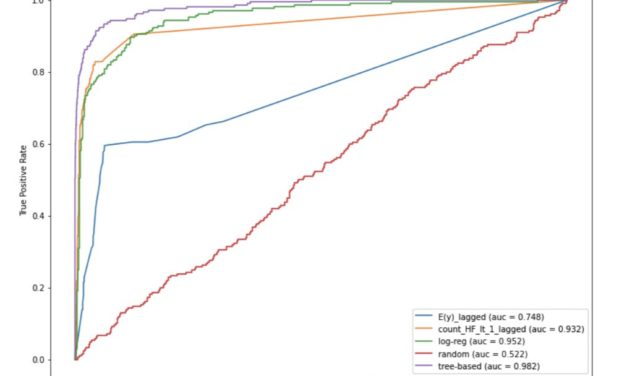
Cred Protocol, a decentralized credit scoring startup has unveiled the results of its first automated credit scoring system for users of decentralized finance (DeFi).Cred Protocol CEO Julian Gay, outlined the results in a Twitter thread which showed how Cred successfully utilized past transaction behaviour on the Aave protocol to assess the creditworthiness of future borrowers based on on-chain behavior in the DeFi space.1/ Over the last few months, we’ve been working to build one of the first credit scores for DeFi.Today, we’re excited to share the results of our first credit score with the world! Read more below — Julian Gay (@juliangay) July 14, 2022By using machine learning to assess time-based account attributes and analyze the user’s past transaction behavior Cred Protocol generates a health factor score that predicts the likelihood of future liquidation for a single address— which according to Gay, was one of the strongest baseline creditworthiness predictors. Julian Gay Twitter Post Cred Protocol claims to make decentralized finance more accessible to the world by implementing trustworthy credit scores that would see “anyone with an internet connection” and “a good financial reputation” gain access to loans. Where borrowers and lenders have their loan-worthiness assessed by a central authority such as a credit bureau, DeFi makes it possible to run financial services with a peer-to-peer (P2P) system, eliminating the idea of an intermediary or central authority.Prominent DeFi researcher Chris Blec raised concerns that a borrower could use multiple Ethereum addresses to skirt credit scoring — to which Gay responded that a potential solution was in Beta.So it’s just a credit score for that 1 Ethereum address? What if someone uses 10 different addresses?— Chris Blec (@ChrisBlec) July 15, 2022

Cred Protocol is a small nine-person team based out of San Francisco with additional “hubs” in New York and London, however Gay says that he aims to bring DeFi technology to more than one billion people. In a Medium post, Cred outlined its plans to grow from the Aave protocol and expand its data analysis to other lending protocols like Compound and MakerDAO.Two years ago, blockchain lending protocol Teller raised $1 million in a seed funding round to incorporate traditional credit scores into DeFi. Related: Decentralized credit scores: How can blockchain tech change ratingsIn November 2021, Credit DeFi Alliance (CreDA) officially launched a credit rating service that would ascertain a user’s creditworthiness with data from multiple blockchains. CreDA was developed to work using the CreDA Oracle by evaluating records of past transactions carried out by the user across several blockchains with the help of artificial intelligence (AI).Recently, P2P lending protocol RociFi labs concluded a seed funding of $2.7 million in partnership with asset management firm GoldenTree, which is aimed towards expanding on-chain credit ratings for decentralized finance.

Čítaj viac

CryptoPunk sells for $2.6M as big NFT brand floor prices increase

Despite a major decline in trading volume across the broader non-fungible token (NFT) market, a single CryptoPunk has sold for a whopping 2,500 ETH which equates to a price tag of just over $2.6 million.The $2.6 million transaction makes the sale of CryptoPunk 4464 — one of just 24 ape-themed CryptoPunks — the largest NFT sale of the last 30 days across the entire market. Punk 4464 bought for 2,500 ETH ($2,615,224.91 USD) by 0x561786 from 0x33eaae. https://t.co/xqtkT3BeER #cryptopunks #ethereum pic.twitter.com/iCAAG4LKHg— CryptoPunks Bot (@cryptopunksbot) July 12, 2022When looking through the lens of ether (ETH) denominated pricing, the sale makes this particular Punk the collection’s fourth most valuable sale of all time, although the recent downward pressure on the price of ETH means that the dollar value of NFTs has suffered substantially over time. In USD terms, it’s the 15th most valuable CryptoPunk sale to date. Contrary to the bearish sentiment around NFTs, the floor prices of the top collections have actually been on the rise in recent weeks — with the floor price of the CryptoPunk project growing more than 65% in the last 30 days. Bored Ape Yacht Club (BAYC), crypto’s most popular NFT project, has seen a 21% increase in its average floor price, while companion project Mutant Ape Yacht Club saw its floor price grow by 25%. The record sale additionally shows that despite broader trading volume and average floor prices throughout the NFT market slumping to new yearly lows, the most popular NFT projects are still attracting serious attention. Unfortunately for non-fungible enthusiasts, over the last three months, the NFT market capitalization suffered a drop of 32% while losing over 70% of its trading volume, according to data from NFTGo. Meanwhile, according to DappRadar the number of users on OpenSea — the largest NFT marketplace by volume — has fallen by nearly 9 % in the past month. By the end of last month, overall NFT trading volume on the platform had fallen roughly 65% to $500 million.Related: Crypto winter presents an opportunity amid chaos, says asset group execWhile lower Ether prices have also driven down overall volume, the number of first-time NFT buyers has remained relatively consistent at around 5,000 users since March this year — suggesting that the market appeal for NFTs on the Ethereum network has been sustained.

Čítaj viac

Nifty News: Total BAYC thefts crack $18.5 million, “Ape Now, Pay Later” loans come for NFTs and more

A Dune analytics platform user has found that more than $18.5 million worth of Bored Ape Yacht Club (BAYC) and Mutant Ape Yacht Club (MAYC) Nonfungible tokens (NFTs) have been marked as stolen or flagged for suspicious activity on Opensea to date. According to data from Dune, a user known as “Beetle” discovered that 130 BAYC and 268 MAYC NFTs were reported for suspicious activity, alongside 153 Azuki’s, 202 CloneX and 70 Moonbirds.The total market worth of stolen NFTs from these notable collections amounts to just over $25 million. This dashboard looks into locked PFP NFTs on OpenSea which have been flagged as stolen/suspicious Interesting work by Beetle https://t.co/gJsgaraoVL— Dune (@DuneAnalytics) July 6, 2022“Ape Now, Pay Later” Decentralized finance lending platform, Teller Finance has launched a new feature that will grant its users access to a “buy now, pay later” (BNPL) feature to purchase NFTs. The new feature, humorously titled “Ape Now, Pay Later” is built on the polygon network and allows users to own NFTs outright while paying off the total price tag over time, much like other BNPL services such as AfterPay.At the time of writing Teller Finance’s BNPL feature applies to notable NFT collections including: Bored Ape Yacht Club, Mutant Ape Yacht Club, Moonbirds, Doodles, Cool Cats, Azuki, Meebits and more. Australia Launches First NFT Ticketed Music Festival An all-ages, touring music festival named “The Grass is Greener” has become the first major Australian music festival to utilize NFT technology as part of its ticketing process. We are SO excited to make our mark in history as Australia’s FIRST EVER NFT ticketed music festival.With a limited supply of unique PFP NFTs…this is the FIRST EVER PFP NFT Ticketed Music Festival in the WORLD!1/6 pic.twitter.com/2NzTxlFmMh— The Grass is Greener Music Festival (@TGIGFestival_) May 17, 2022

According to the festival’s official Twitter, a collection of 1,111 limited edition NFTs will grant owners access to the event like a conventional ticket, but will also open up special features to the more Web3 savvy festival goers including life-time tickets, VIP experiences, backstage passes and more. NFT technology has entered the festival ticketing arena globally — earlier this year, major American music festival Coachella, integrated NFT technology with their “Coachella Keys” collection, which allowed committed fans to mint NFTs that granted a range of ultra-exclusive benefits, including VIP experiences and life-time passes. That’s not an NFT — This is an NFT. New analysis from CashNetUSA has found that Australians are big fans of NFTs, ranking number 8 in the world in terms of monthly search volume on Google and Twitter.When it came to sentiment, Australians were quick to express positive thoughts about NFT technology — for every 1,000 tweets, 539 were found to show “love” for NFTs compared to 79 that expressed “hate”. Axie Infinity, the Vietnamese play-to-earn sensation, was the overall Aussie favorite NFT project. Singapore and Hong Kong took the top spots however, with more searches for NFTs than any other country with 18,717 and 15,213 monthly searches, respectively. Additionally, the study found that people from Eastern European countries were the most passionate about NFTs on both sides of the spectrum. People from Montenegro were most likely to post pro-NFT tweets, while Twitter users from Poland were much more likely to express an anti-NFT sentiment. Another survey, released in March this year by NFT Club found that Aussies actually rank #2 in the world for interest when it comes to NFTs, beaten to the top spot by Taiwan.

Čítaj viac

WSJ editorial slams SEC's 'bewildering' Bitcoin ETF denials

The Wall Street Journal Editorial Board has come out swinging against Gary Gensler’s “legendary” resistance to approving a spot Bitcoin exchange-traded fund (ETF). The hard-hitting opinion piece, published on Wednesday, July 6 called out the Gensler-led Securities and Exchange Commission (SEC) for overt inconsistencies in how the commission handles applications for Bitcoin-related exchange-traded products (ETPs) compared to more traditional assets and other commodities.So far, Gensler’s SEC has rejected every proposal for a spot Bitcoin ETP, including two in the last week from Grayscale and Bitwise, which resulted in Grayscale launching legal action against the SEC.These consistent rejections led SEC Commissioner Hester Peirce to declare Gensler’s resistance to spot crypto ETPs as “becoming legendary”, as the commission has already approved several ETPs for Bitcoin futures, which come at much higher costs and include much greater risk for investors than the proposed spot ETPs.Peirce also questioned why ETPs haven’t been approved in the United States despite the products having done so elsewhere. “At what point, if any, does the increasing maturity of the Bitcoin spot markets and the success of similar products elsewhere tip the scale in favor of approval?”The editorial board has also drawn attention to a two-pronged approach employed by Gensler which makes it practically impossible to get a spot Bitcoin product approved. This includes requiring ETP sponsors to demonstrate that a significant amount of Bitcoin trading occurs on a regulated market, or that the underlying market must “possess a unique resistance to manipulation beyond the protections…of traditional markets.”According to the WSJ, Gensler is “fully aware” that the first criteria simply cannot be met because almost all Bitcoin trading currently occurs on unregulated crypto exchanges. The second criterion is also extremely difficult for sponsors to meet as the SEC has “arbitrarily established” a higher standard for spot Bitcoin ETPs without “explaining how to satisfy it.”Related: The US Dept. of Commerce has 17 questions to help develop a crypto frameworkEric Balchunas, a senior ETF analyst at Bloomberg told his 107,000 Twitter followers that it was “nice to see” the WSJ echo similar thoughts to his ETF analyst colleague James Seyffart — claiming that Gensler is “holding innovation hostage” to take control of the crypto market. Nice to see the @WSJ editorial board today echo @JSeyff’s note from April that Gensler is holding spot bitcoin ETFs (and innovation) hostage so he can get control of crypto market h/t @ToddRosenbluth pic.twitter.com/wUEr7AdnpU— Eric Balchunas (@EricBalchunas) July 7, 2022The piece comes one week after Grayscale launched legal action against the SEC for denying its application to launch a spot Bitcoin ETF — claiming that the SEC’s inconsistent rules concerning spot and futures Bitcoin ETPs contradict the law’s requirement that regulators apply “consistent treatment to similar investment vehicles.”

Čítaj viac

Získaj BONUS 8 € v Bitcoinoch

nakup bitcoin z karty

Registrácia Binance

Burza Binance

Aktuálne kurzy