
Autor Cointelegraph By Tom Farren

Finance Redefined: Vitalik bearish on cross-chain, dYdX decentralizing, Jan. 7–14

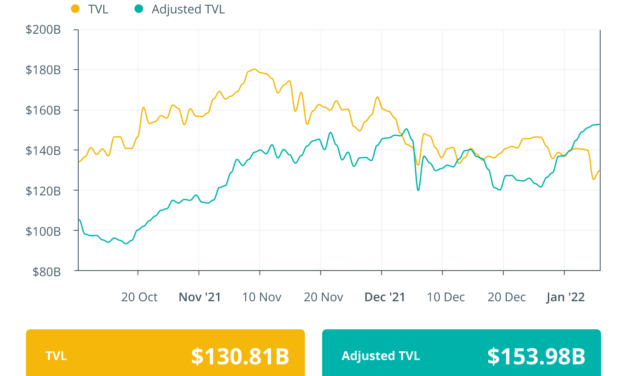
Welcome to the latest edition of Cointelegraph’s decentralized finance newsletter.Despite the market printing bearish numbers for a second consecutive week, the industry is not short of bullish fundamental news. Read on to hear about the most impactful DeFi stories of the last seven days.What you’re about to read is a shorter, more succinct version of the newsletter. For a comprehensive summary of DeFi’s developments over the last week, subscribe below.Vitalik is optimistic for multichain, not cross-chain, Web3 worldVitalik Buterin, a co-founder of Ethereum, shared a candid assessment of the security limitations in implementing fully functional cross-chain bridges within the blockchain industry.Buterin argued that storing assets on their native chain provides a higher level of security against 51% attacks than cross-chain activities, stating, “It’s always safer to hold Ethereum-native assets on Ethereum or Solana-native assets on Solana than it is to hold Ethereum-native assets on Solana or Solana-native assets on Ethereum.”My argument for why the future will be *multi-chain*, but it will not be *cross-chain*: there are fundamental limits to the security of bridges that hop across multiple “zones of sovereignty”. From https://t.co/3g1GUvuA3A: pic.twitter.com/tEYz8vb59b— vitalik.eth (@VitalikButerin) January 7, 2022Sharing a series of examples to prove his thesis, Buterin noted that if a malicious entity attempted to launch a 51% attack on Ethereum, a transaction undertaken by an innocent party could be censored and/or reverted, but not blocked and not lost.In the most extreme cases, users’ funds would remain safe even if 99% of the protocol was compromised because nodes would overwhelmingly support the remaining 1% rule-following blocks and, therefore, govern the decision-making.In contrast, an incident of this kind operating on a cross-chain bridge between Ethereum and Solana, for example, would result in irreversible losses, Buterin argues. The problem compounds with the addition of chains.Let’s suppose a 51% attack occurs on a single of 50 chains. In that case, all of them become vulnerable in what he describes as a “systemic contagion that threatens the economy of that entire ecosystem.”dYdX strives to full decentralization in late 2022dYdX, the layer-two derivatives protocol, published the fourth iteration of its roadmap this week, presenting plans to develop the platform into an open-source, community-centric and fully decentralized operation later this year.The architecture operates on a dual-model in which sections of the protocol, such as staking and governance, are decentralized, while core functions such as the off-chain order book and matching engine are controlled by an in-house subsidiary, dYdX Trading Inc and supported by centralized servers such as Amazon Web Services.“There will no longer be central points of control or failure of the protocol,” representatives from the company stated following the v4 upgrade, assuring that “all aspects of the protocol that can be controlled will be fully controlled by the community.”Last month’s Amazon Web Service (AWS) technical outage highlighted the true vulnerabilities of a number of crypto businesses, including dYdX, Binance.US and Coinbase, and their inherent reliance on centralized servers to maintain the network.At the time, dYdX shared a sincere update on its official Twitter account and pledged to seek an unequivocal solution to this matter, stating:“Unfortunately, there are still some parts of the exchange that rely on centralized services (AWS in this case). We are deeply committed to fully decentralizing, and this remains one of our top priorities as we continue to iterate on the protocol.”Alongside its aspirations for decentralization, dYdX is also pursuing improvements to its interface trading platform, introducing spot, margin and synthetic trading opportunities, as well as appointing an external auditor to appraise business operations.Near Protocol raises $150 million to accelerate Web3 adoptionProof-of-stake blockchain Near Protocol raised $150 million in seed investment this week to enhance the awareness and adoption of Web3 applications within its network, with an inherent focus on expanding its audience and community base to the regions of Latin America, Turkey and India.The capital raise was led by renowned hedge fund Three Arrows Capital and was further participated by Mechanism Capital, Dragonfly Capital and Andreessen Horowitz’s Silicon Valley-based fund a16z. Individual angel investors included British billionaire hedge fund manager Alan Howard and Aave founder Stani Kulechov.In a Medium blog post, Near Foundation CEO Marieke Flament shared her optimism on the latest funding, around which succeeds the previous total of $65.9 million raised by the company:“We are delighted to have such a fantastic list of backers supporting NEAR’s mission. We are looking forward to leveraging the funding to improve access to blockchain technology in an ever-growing list of countries across the world.”In October 2021, the smart contract platform allocated $800 million for new initiatives within the decentralized finance (DeFi) space, such as developer applications, startup grants and geographical fund pots.Token performances Analytical data reveals that DeFi’s total value locked slightly decreased by 2.77% across the week to a figure of $128.15 billion, continuing along with the wider market decline.Data from Cointelegraph Markets Pro and TradingView reveals that DeFi’s top 100 tokens by market capitalization have mainly been bullish over the last seven days.Secret (SCRT) took the lead for a second week with 15%. Terra (LUNA) rose by 6.32%, while 1inch Network (1INCH) posted gains of 2.9%.Interviews, features and other cool stuffThanks for reading our summary of this week’s most impactful DeFi developments. Join us again next Friday for more stories, insights and education in this dynamically advancing space.

Čítaj viac


UK Economic Affairs Committee unconvinced by prospect of retail CBDC

The House of Lords Economic Affairs Committee — an investigative governing body representing the economic interests of the United Kingdom — has released an official report assessing the pertinence of a government-issued central bank digital currency (CDBC).Titled “Central bank digital currencies: a solution in search of a problem?,” the 52-page publication covers a litany of areas in relation to domestic CBDC endeavours, and regularly cites the preliminary research taskforce established by Bank of England and HM Treasury in April 2020.Over 50 individuals, including financial experts, university professors from elite institutions, managing directors of large corporations, as well as entire organizations consulted on the feasibility and nuances of a digital asset in written and oral formats at panel discussions, hearings and online submissions in the months prior to its release.Andreessen Horowitz, the Blockchain Association and Crypto UK submitted written appraisals, while Charlotte Hogg, CEO at Visa Europe, Andrew Bailey, Governor at the Bank of England, Ripple and Standard Chartered provided verbal accounts.The overwhelming conclusion of the report determined that there is no immediate need for the U.K. to strive for first-mover advantage in the CBDC space, arguing that a number of questions and challenges are still prominent, including geopolitical influences, Meta’s vast user network, China’s innovation and cyber security in what could become a “vulnerable single point of failure”, among others.In addition, it was stated that improper planning and careless safety precautions could have “far-reaching consequences” and “pose significant risks” dependent the asset’s infrastructural design and intention of usage in the public domain.The 13-member committee, chaired by Lord Forsyth of Drumlean, concluded:“While a CBDC may provide some advantages on speed of settlement and cheaper and faster cross-border payments, it would present significant challenges for financial stability and the protection of privacy.”Speaking on China, the committee noted that progressions to compete with the traditional economic infrastructure could “erode the US dollar’s sanctions leverage, helping countries seeking to evade economic sanctions to bypass US dollar-dominated systems such as SWIFT”.Related: UK Treasury and central bank will consult on CBDC, potentially launching by 2030It also raised concerns that this could have wider consequences in the European markets, specifically in terms of the strength and adoption of the British sterling and euro.The UK would derive most long-term benefit by ensuring global standards and rules on governance, privacy, security and interoperability are compatible with the national interests and values of the UK and its allies.The Joint Taskforce overseen by the Bank of England and HM Treasury is expected to publish their findings later this year, having previously stated that a digital pound could be minted into virtual circulation in the second half of this decade.The House of Lords committee has stated that “Parliament should have the opportunity to vote on any final decision” following the results of the Joint Taskforce, and has issued a 10-point public questionnaire to further investigate the matter.

Čítaj viac

dYdX outline plans for full decentralization in late 2022

dYdX, the layer-two derivates protocol, has published the fourth iteration of its roadmap detailing its intentions to evolve into an open-source, community-governed and fully decentralized exchange by the end of this calendar year.The platform currently runs on a hybrid model whereby a portion of operations are decentralized, most notably staking and governance, while other components, such as the off-chain order book and matching engine, are managed by dYdX Trading Inc, alongside external support from a number of partnered centralized servers such as Amazon Web Services.”There will no longer be central points of control or failure of the protocol,” they stated, before continuing on to say that “all aspects of the protocol that can be controlled will be fully controlled by the community.”dYdX’s mission is to build the world’s leading crypto trading platform Decentralization is core to dYdX’s mission. We believe decentralization will drive radical improvements in transparency, safety, fairness, and equality of opportunity — dYdX (@dydxprotocol) January 11, 2022Related: AWS outage hits dYdX, raising concerns over its decentralizationIn addition to decentralized endeavours, the platform also seeks to understand capabilities of implementing spot, margin and sythentic trading capabilities, enhance the trading experience and interface, as well as appointing an external auditor to assess the platform on an consistent basis. dYdX experienced a record-breaking year in 2021, emerging as one of the most prominent outfits built upon Ethereum, for which it utilizes its smart contract and Starkware zero-knowledge rollups.In September last year, the derivative exchange distributed the dYdX governance token to an overwhelming fanfare from its 64,306 eligible users, as well as the wider crypto community. Average customers who had traded between the values of $1,000 and $10,000 prior to the retroactive close-off date could claim 1,163 DYDX, equivalent to $16,561 at the time.Following the airdrop, momentum surged for the project and was quantitatively epitomized when the exchange surpassed the daily trading volume of global exchange Coinbase ($4.3 billion to $3.7 billion) for the first time in its history. As a consequence, the asset rose to an all-time high of $27.78 on Sept 30; however, it has now fallen almost 75% to a price of $7.20 amid a wider market correction.

Čítaj viac

Finance Redefined: Terra expanding UST and LUNA, and Aave Arc seeks institutional adoption, Dec. 31–Jan. 7

Welcome to the latest edition of Cointelegraph’s decentralized finance newsletter.The new year is upon us, and the expectations for DeFi innovation, utility and mainstream adoption are greater than ever. Read on to hear about the inaugural stories of 2022.Reading this article, you’re only receiving a portion of the content from our DeFi newsletter. Drop your email below for the full copy.Terra Research proposes new utility for TerraUSD and LUNADecentralized algorithmic stablecoin issuer Terra published an ambitious proposal via its research team this week to expand the interchain deployment of its TerraUSD (UST) stablecoin across five projects on Ethereum, Polygon and Solana.Titled “UST Goes Interchain: Degen Strats Part Three,” the lengthy governance post extensively detailed the methods and procedures in which Terra’s native token, LUNA, and $139 million of TerraUSD (UST) could be deployed to “bring awesome UST use-cases to Ethereum DeFi.”In the proposed strategy, which has gained 3,500 views and six replies from community members who self-titled themselves Lunatics, Terra would deposit between $250,000 and $50 million in UST in a bid to boost the stability of each of the new partner projects. It is expected that a community-led governance vote will occur in the near future to determine confirmation. DeFi liquidity provider and market maker Tokemak would receive $50 million in UST for a maximum of six months, and lending and borrowing platform Rari Fuse would receive $20 million in UST across the same period. Yield aggregator Convex Finance would receive $18 million, while OlympusDAO would get $1 million in UST bonds and $425,000 in LUNA incentives for three months.The distribution of UST across a plethora of projects will support Terra in accelerating quantitative ambitions such as that of its market capitalization within the stablecoin market. At the time of writing, Tether’s USDT leads the way with approximately $78 billion, with Circle’s USDC in second place with $43 billion, followed by Binance’s BUSD at $14 billion, and finally UST, with a market cap of $10 billion.“Bond $1m UST with Olympus and 3,3 the OHM forever”https://t.co/eCDH9fG0Wt— OlympusDAO (@OlympusDAO) January 6, 2022In a recent tweet, Terra founder Do Kwon divulged his ambitions to propel the network native asset UST to the forefront of the stablecoin market, ahead of stalwarts USD Coin, Tether and Binance USD (BUSD), among others. Related: Terra (LUNA) hits record $20B TVL, surpassing Binance Smart ChainNew service Aave Arc aims to enhance institutional adoption in DeFiDecentralized lending platform Aave (AAVE) announced the launch of its permissionless lending and liquidity pool, Aave Arc, this week with the ambition of fostering greater institutional participation in fully regulated and compliant decentralized finance services. Thirty organizations were granted primary whitelist entry to the service, including digital asset custodian Fireblocks, alongside Anubi Digital, Canvas Digital, SEBA Bank, GSR and crypto yield aggregator Celsius.Following the successful completion of prerequisites such as Know Your Customer and Anti-Money Laundering protocols, these firms will gain exclusive access to “securely participate in DeFi as liquidity suppliers and borrowers” in a market that has soared 10 times in total value locked over exactly 12 months — from $30 billion to $300 billion.Aave CEO and founder Stani Kulechov shared remarks on the potential for the expansion of the DeFi market with the implementation of this new service, stating:”DeFi represents a powerful wave of financial innovation including transparency, liquidity, and programmability–and it’s been inaccessible to traditional financial institutions for far too long. The launch of Aave Arc allows these institutions to participate in DeFi in a compliant way for the very first time.”Related: Without staking, institutional crypto investors cannot escape inflationWonderFi acquires parent company of Bitbuy for $162MDeFi platform WonderFi Technologies agreed to purchase First Ledger Corp, the parent firm of the first regulated crypto exchange in Canada, Bitbuy, this week for an impressive $162 million in a bid to expand the presence of cryptocurrency and DeFi across the country. Backed by renowned billionaire investor Kevin O’Leary, WonderFi detailed its method of funding the takeover through the issuance of 70 million new shares, paying $15.7 million in upfront cash in addition to $23 million in deferred cash via a vendor-take back note due in 12 months. Alongside this, the team stated that it was going to “retain substantially all current Bitbuy employees and enter into employment agreements with key members of the management team.”Established in 2016, Bitbuy became licensed by the Ontario Securities Commission as a fully regulated crypto exchange in Canada after last November. The platform has over 375,000 users who have transacted more than $3.4 billion. In May 2020, the Toronto-based exchange launched the world’s first 1:1 Bitcoin deposit insurance scheme for its customers. Commenting on the importance of licensed marketplaces within the digital asset ecosystem, WonderFi CEO Ben Samaroo stated:“The integration of Bitbuy’s product suite will accelerate and expand the reach and scope that WonderFi can offer to the market, and will drive long-term growth and value for the company.”Related: Kevin O’Leary says his crypto holdings could reach 20% of his portfolioToken performances Analytical data reveals that DeFi’s total value locked slightly decreased by 6.5% across the week to a figure of $131.8 billion, largely in line with the overall market downturn.Data from Cointelegraph Markets Pro and TradingView reveals that DeFi’s top 100 tokens by market capitalization have mainly been bullish over the last seven days.Secret (SCRT) took the lead this week with 26.6%. Chainlink (LINK) grew by 24.2%, while Fantom (FTM) almost exactly replicated last week’s gains with a further rise of 23.4%. Yearn.finance (YFI) and Dai — yes, the stablecoin — claimed fourth and fifth places this week with 8.2% and 0.03%, respectively. Interviews, features and other cool stuffThanks for reading our summary of this week’s most impactful DeFi developments. Join us again next Friday for more stories, insights and education in this dynamically advancing space.

Čítaj viac
ImmuneFi report $10B in DeFi hacks and losses across 2021

Decentralized finance, or DeFi, security platform and bug bounty service ImmuneFi published an official report on Thursday, which calculated the total volume of losses in the cryptocurrency markets in 2021. According to its report, the company found that losses resulting from hacks, scams and other malicious activities exceeded $10.2 billion dollars over the past year.Responsible for protecting over $100 billion worth of assets for a number of well-established DeFi protocols, including Synthetix, Chainlink, SushiSwap and PancakeSwap, among others, ImmuneFi has regularly facilitated seven-figure pay-outs to whitehat hackers and other good-willed entities for preventing protocol compromises.According to the report, across 2021, there were 120 instances of crypto exploits or fraudulent rug-pulls, the highest-valued hack being Poly Network at $613 million, followed by Venus and BitMart with $200 million and $150 million, respectively.Other notable entries to the list were Alpha Finance and Cream Finance, who were both hacked for $37.5 million, Yearn.finance’s $11 million, Furucombo’s $14 million evil contract exploit, as well as the infamous Alchemix reverse rug in which the platform’s users claimed a welcome fortune due of $6.5 million after a withdrawal issue arose with one of the platform’s smart contracts synthetic assets, alETH.The year 2021 saw a stark rise in both the frequency and volume of security breaches in comparison to the previous year, which recorded 123 incidences totaling $4.38 billion, a 137% increase.We’ve just released our report for 2021 on crypto losses stemming from hacks and scams. In total, the DeFi ecosystem saw a loss of $10,210,188,549 Read more facts and figures here:https://t.co/gCWiOqjhhZ pic.twitter.com/zEX28yg0vD— Immunefi (@immunefi) January 7, 2022In conversation with Cointelegraph, CEO and founder of Immunefi, Mitchell Amador, spoke of his optimism for the future of on-chain security, despite what he described as a “year of dramatic losses” for the industry.“Despite the appearance of entirely new vulnerabilities in the onchain economy, the community is adapting rapidly. At Immunefi alone, we saved double the amount lost to exploitation this year, and security best practices are circulating throughout the community.”Amador cited ImmuneFi’s role in facilitating Polygon’s (MATIC) recent $3.47 million pay-out to two whitehat hackers for their instrumental role in averting what was described as a “critical” vulnerability in the network’s proof-of-stake Genesis contract, placing almost all of the MATIC token supply of $10 billion at risk.Related: Recounting 2021’s biggest DeFi hacking incidentsIn September last year, ImmuneFi organized what was reported at the time as being the largest bounty in the history of DeFi to renowned white hat programmer Alexander Schlindwein for averting a potential $10-million bug crisis in automated market maker, or AMM, protocol Belt Finance.Schlindwein received a compensation of $1.05 million in total, $1 million of which was granted by Belt Finance with ImmuneFi acting as the middleman, and the remaining $50,000 offered by Binance Smart Chain’s Priority One program.In October, ImmuneFi announced a $5.5 million capital raise from a number of institutional investors, including Blueprint Forest, Electric Capital, with the intention of expanding its security services across the DeFi industry in a concerted effort to lower the prevalence and financial impact of benevolent security exploits in the space.

Čítaj viac

Získaj BONUS 8 € v Bitcoinoch

nakup bitcoin z karty

Registrácia Binance

Burza Binance

Aktuálne kurzy