Autor Cointelegraph By Tom Farren

Web3 gaming in the third world; Axie facilitating billions

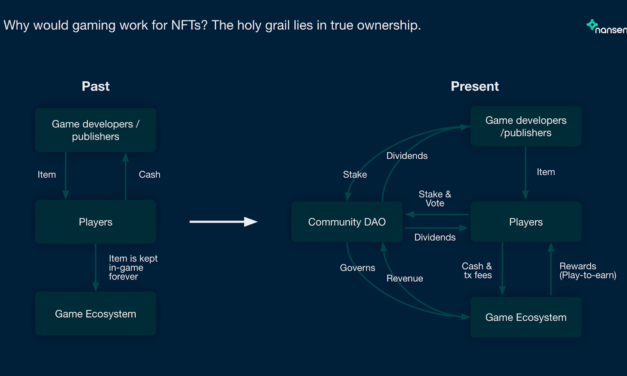
The research department of blockchain analytics platform Nansen have published a comprehensive guide to popular play-to-earn game Axie Infinity, calculating quantitative insights such as that 2.8 million unique addresses are currently holding 11.1 million Axies, alongside that 97% of those users hold a minimum of three Axie nonfungible tokens, or NFT’s.Axie Infinity is a play-to-earn game constructed around the collection of, and interaction with, digital pet avatars called Axies. Built by Vietnamese gaming studio Sky Mavis in March 2018, the game rose to cultural prominence during 2019 following the emergence of stories in which players from third-world countries such as Venezuela and Philippines were making a full-time living off of Axie’s native crypto assets: Smooth Love Potion (SLP) and Axie Infinity (AXS).In May 2021, 22-year-old John Aaron Ramos, recognized as Magnus TV within the gaming community, announced that Axie Infinity had empowered him to make two lucrative property purchases in the Philippines.Nansen’s report follows the trend of other public assessments of Axie, principally focusing on the perks of authenticated ownership of in-game assets, secondary marketplace trading opportunities, decentralized governance, as well as the impending potential for cross-game interoperability, among others.On the subject of decentralization, Ethereum’s co-founder Vitalik Buterin was infamously inspired to pursue the technology following a distressing experience on World of Warcraft, a game previously owned by Activision Blizzard before their acquisition by Microsoft for $69 billion in January.Buterin stated that “Blizzard removed the damage component from my beloved Warlock’s Siphon Life spell.” In other words, Blizzard implemented an upgrade which recalibrated the power dynamics of certain characters and weapons, and therefore Buterin became what’s known in the gaming scene as a ‘nerfed’.The prevalence of such incidents across the wider gaming community has exposed the reliance of centralized servers, and in turn, become a point of which to drive new innovation from.An infographic from the Nansen report visualizes the proposed impact of integrating NFT’s within gaming ecosystems, signalling a transition from the traditional linear top-down model, to a circular one which promotes a user-governed DAO mechanism to grant players self-sovereignty in their quest for entertainment.Source: Nansen – What is Axie Infinity and how do you play it? In a recent endeavour to refute criticisms levelled at gaming studios adopting and integrating NFT’s, the co-founder of popular streaming platform Twitch, Justin Kan, argued that gamers should embrace the emergence of blockchain, dispelling fears that gaming uniqueness and environmental impact, among others, are insurmountable obstacles for the industry to overcome, or perhaps more likely, find consensus on.NFT games are better for players and for game developers.Like the free-to-play revolution changed gaming, so will blockchain. The games of the future will be fully robust, with open and programmable economies.— Justin Kan ❄️ (@justinkan) February 9, 2022Related: The ethics of hiring cheap Filipino staff: Crypto in the Philippines Part 2Considering data revelations that Axie Infinity has generated $1.3 billion dollar of revenue, and $4 billion in transactional volume over course of the last year — a portion of which equates to company profit — we spoke to a number of experts and enthusiasts from the space to attain a balanced verdict on the genuine potential of blockchain play-to-earn games.John Chen, the President of decentralized layer-2 protocol Umbrella Network provided contextualization to the thesis that blockchain gaming can be seen to glorify the fortunes of a minority of users, typically located in under-developed nations, as justification for what could potentially be deemed a modern forms of resource exploitation.Chen noted that “We are in the early stages of blockchain gaming — too early to suggest there is a narrative for blockchain gaming. Additionally, we don’t see it as resource exploitation”, before stating:”Certainly, those who are participating as gamers in developing nations don’t seem to see it that way, as P2E games are providing a previously unavailable source of income, oftentimes in amounts that are making a significant impact on people’s livelihoods.”As a resident of Manila in the Philippines, Head of Marketing at Laguna Games, Brian Akaka, revealed that societal incidents such as “COVID, vaccine availability, country development” have made a significant impact on adoption rates of P2E games in South East Asia, before continuing:“To call them resource exploitation is a First World view. Here it is much more about an opportunity that didn’t exist before, although one with a high barrier of entry. Certainly, US based media are going to cover it from a certain perspective, but it’s important to note that it is a different perspective here.”Experts and enthusiasts across the space have often touted that attaching financial incentives such as NFT’s and tokens to gaming platforms serves as an innovative business model which could propel them into a new landscape, while others foresee the potential pitfalls with the implementation aspect. Very few traditional game designers have experience controlling gameplay and gamer psychology when the NFTs and tokens create their own out-of-game economy. The first step is acknowledging this reality and purposefully designing the game with these different forces in mind.— eva (@wvaeu) November 22, 2021

The decision of Axie Infinity to remodel their reward system came under scrutiny by some over the last few weeks, a move which saw an removal of daily quest and adventure modes, as well as a reduction in the daily supply of Smooth Love Potions (SLP) by approximately 56%. According to the platform, the inference measure was imperative to avoid the risk of “total and permanent economic collapse.”

Čítaj viac

FTX integrate Bonfida's flagship service to enable domain withdrawal function

Bonfida, a multifunctional infrastructure built around Solana blockchain, has announced that their Solana Name Service, or SNS, will be integrated into cryptocurrency exchange FTX in a bid to expand the former’s digital footprint and adoption rate.Alongside the SNS, Bonfida is recognized within the industry for its deployment of the inaugural decentralized exchange, or DEX, on Serum in September 2020 as well as presently serving as an API on-chain data analytics service to the Solana ecosystem in addition to orchestrating governance mechanisms through their native FIDA token, among other functions.The Solana-centric SNS platform has enabled in excess of 150,000 users to register and interact with .sol domain names, receive and send digital asset payments, transact IPFS CID data as well as images, among more.The service could be deemed comparable to the highly popular Ethereum Name Service (ENS), which increased its notoriety within the space in November 2021 following the launch of a token airdrop exclusive to early adopters of the protocol.Cointelegraph spoke to Bonfida’s business developer for greater clarity on their expectations for how the partnership will impact, and subsequently, evolve the project’s ecosystem.“It truly shines [a] light on the utility of .sol domain names we have wanted to prove for a while. CEXs are still dominating and although we have been popular on the Solana ecosystem — we are aiming for much larger adoption,” they stated.“This is […] far from what we have in store — hosting websites, for example, [… is] in reach. This exposure helps us gain even more traction to make this a reality […] support from a well-renowned project such as FTX supports us and thus the utility and quality of our products.”Related: Altcoins rack up 30% gains as Bitcoin price chases after $39,000Recent quantitative statistics published by Bonfida’s official Twitter account indicate that the Solana Name Service facilitated 147,912 new domain names in January, and a further 158,598 in February. These figures, alongside other corresponding metrics within the space, demonstrate the burgeoning demand for personable domain addresses across a range of utilities. Registering domains on Solana https://t.co/PrW2ZjwEtL— Tom Farren ☮️ (@tomfarrencrypto) November 10, 2021Later in our conversation, the business developer stated that future partnership opportunities with FTX would be predicated upon a reciprocal agreement that any proposed implementation would be inherently positive for both parties, continuing to note that “At first glance, we are hoping to get .sol domains fully functional on all their platforms, like their mobile app, for example,” before revealing:“Overall, this add on from FTX will bridge CEXs with Solana, especially considering how fast our ecosystem is growing. This signals that CEXs are truly embracing the notion of Web3 — as FTX is one of the leading CEXs and hopefully will encourage […] more centralized exchanges to start adopting us and other DEX projects.”

Čítaj viac

Finance Redefined: 1Password partners with Phantom, and Stark deploys nine DApps, Feb. 18–25

Welcome to the latest edition of Cointelegraph’s decentralized finance newsletter.In the aftermath of concerning political situations this week, the markets reacted strongly to the downside, but some assets attempted a recovery to end the week positively. 1Password collaborates with Phantom Wallet on API serviceDigital security platform 1Password announced a joint partnership with Phantom Wallet this week to grant asset holders the ability to consolidate their lists of public key addresses, seed phrases and other corresponding security details into a single “Save in 1Password” system.Operating primarily in the traditional financial sector at this time, 1Password has over 100,000 corporate clients from a panoply of industries, including well-recognized brands such as IBM, Slack, Shopify and Under Armour.1Password’s flagship service, an application programming interface, aims to simplify the user experience by enabling asset sovereignty and independent portfolio responsibility to help investors sufficiently manage cryptocurrencies and nonfungible tokens held on the Solana blockchain.Cointelegraph spoke to Matt O’Leary, VP of partnerships at 1Password, for a detailed assessment on the subject of security, as well as whether the prevalence of hacks and exploits in the decentralized finance space has catalyzed demand necessity and subsequent innovation for security solutions such as 1Password.“1Password’s partnership with Phantom is a great example of innovation that is conquering this challenge… This human-centric approach to crypto wallet security was designed with the end-user in mind, making it easier than ever to invest in crypto safely and securely.”StarkNet deploys inaugural nine DApps to advance mainstream adoptionLayer-2 scaling solution StarkNet, well-known for its Ethereum protocol service StarkWare, announced the deployment of its first series of decentralized applications (DApp) this week. The DApps are focused across a range of sectors, including an ERC-721 nonfungible token project called Mallows, a real-time price chart also from the Mallows team, as well as a Cairo-multisig contract, among others. StarkNet is a permissionless validity rollup, or zero-knowledge Rollup, that uses basic compression technology to boost the production and security benefits of Ethereum’s layer 1. The company prides itself in its products’ ability to provide “rock-bottom” gas fees and “limitless” scaling potential.Here are the latest projects we have listed – all building on StarkNet ✨ from @StarkWareLtd https://t.co/y55wb8p8nb ️1/— zkRollups.xyz (@zkRollupsXYZ) February 22, 2022The StarkWare team revealed its pursuit for full decentralization within the next year, a strategy that proceeds a Sequoia Capital-led $50-million Series C fundraise on Nov. 16, taking the project’s valuation to $2 billion.Celsius deploys crypto lending service on Maple FinanceDigital asset lending platform Celsius became the inaugural pool delegate from the centralized finance industry this week to roll out a cryptocurrency lending service on Maple Finance, utilizing the latter’s smart contract and blockchain infrastructure to offer a $30-million pool to institutional-grade investors.Celsius follows in the footsteps of existing pool delegates BlockTower, Orthogonal Trading, Maven 11 and Alameda Research, which are partnering with Maple for this type of project. The introduction of Wrapped Ether (wETH) is set to complement the existing accessibility to trade Circle’s native stablecoin, USD Coin (USDC), enabling investors to utilize the asset across an array of trading components, including staking, lending and borrowing.Cointelegraph spoke to Sidney Powell, co-founder and CEO of Maple Finance, to uncover the prerequisites and financial nuances that interested institutional investors must be aware of before engaging with the pool.Powell shared that “institutions work directly with the Celsius team to borrow from this pool. Borrowers have to pass through Celsius’ established KYC and credit assessments,” adding: “In this instance, digital asset institutions Wintermute and Amber have already been doing business on Maple, so have an on-chain credit reputation, and signed a Master Loan Agreement, too. This, plus Celsius’ established processes, means onboarding has been streamlined for all parties.”This is such an exciting day for @maplefinance – @CelsiusNetwork is the first CeFi firm to launch a lending business using Maple’s smart contract infrastructure. And on top of that, its our first WETH-demoninated pool!https://t.co/foCHZSIsS7— Lucas Manuel (@lucasmanuel_eth) February 24, 2022

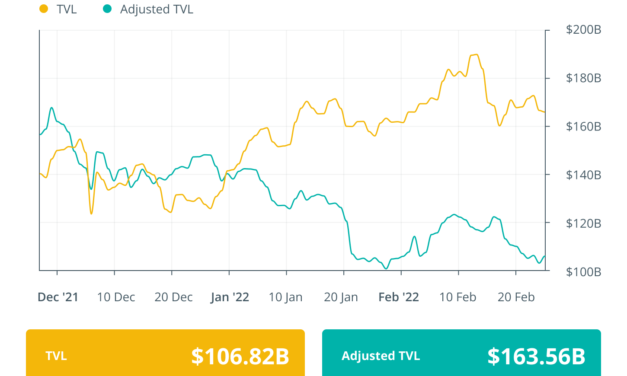
Token performances Analytical data reveals that DeFi’s total value slightly decreased by 8.53% across the week to a figure of $106.82 billion.Terra (LUNA) was the solitary riser in the DeFi space this week with a 27.7% gain following a positive performance on Friday. Interviews, features and other cool stuffThanks for reading our summary of this week’s most impactful DeFi developments. Join us again next Friday for more stories, insights and education in this dynamically advancing space.

Čítaj viac

Maple Finance partners with Celsius to launch wETH lending pool

Digital asset lending platform Celsius has become the first pool delegate from the centralized finance market to deploy a crypto-centric lending service on Maple Finance, utilizing the latter’s smart contract and blockchain infrastructure to facilitate a $30 million pool to institutional investors.Celsius succeeds existing pool delegates BlockTower, Orthogonal Trading, Maven 11 and Alameda Research in partnering with Maple on such an endeavor.The introduction of wrapped Ether (wETH) is set to complement the existing accessibility to trade Circle’s native stablecoin, USD Coin (USDC), enabling investors to utilize the asset across an array of trading components, including staking, lending and borrowing.Cointelegraph spoke to Sidney Powell, Maple Finance’s co-founder and CEO, to uncover the prerequisites and financial nuances that interested institutional investors must be aware of before engaging with the pool.Powell shared that “Institutions work directly with the Celsius team to borrow from this pool. Borrowers have to pass through Celsius’ established KYC and credit assessments,” adding:“In this instance, digital asset institutions Wintermute and Amber have already been doing business on Maple, so have an on-chain credit reputation, and signed a Master Loan Agreement (MLN) too. This, plus Celsius’ established processes, means onboarding has been streamlined for all parties.”Maple Finance revealed to Cointelegraph that the initial syndicated loan of $47.25 million issued to Alameda Research in mid-November 2021 has today exceeded $100 million, with the FTX-associated trading firm being the sole borrower in the transaction.Abracadabra deposited $25 million alongside other projects including the popular play-to-earn horse racing game Zed Run and CoinShares.Build, ship, , repeat! https://t.co/BN9zwCKeBa— Maple Finance (@maplefinance) February 18, 2022“Syndicated loan” is a term that denotes the process by which financial institutions, typically from the banking industry, extend finance to private corporations, either on an individual basis or as part of a consortium. The capital afforded to these corporations is viewed in the form of a loan and, as such, is subject to inflationary payback schemes dependent on the case complexity and evaluated risk.Over the past few years, a number of prominent banking institutions have participated in blockchain-centric syndicated loans — more recently also traversing over to decentralized finance (DeFi) — including BNP Paribas and ING, which were two of seven major banks to partner with R3 and Finastra in October 2017, and BBVA, which implemented a distributed ledger technology model with British news agency Finextra the following year.Related: German Company Secures 750 Million Euro ‘Eco-Friendly’ Loan Via BlockchainFollowing its inception just nine months ago, Maple has grown exponentially to register $645 million in total value locked at the time of writing, and it now expects to achieve $5 billion in TVL by year-end, alongside $1 billion of loans within the Alameda pool across the same time period.Powell commented on the necessary due diligence that traditional firms should consider and complete before engaging with the DeFi space:“Maple was built to disrupt the banking infrastructure that I had to work with within traditional finance. But when it comes to due diligence, the same rules apply!”He added that asset managers at traditional firms have all the equipment necessary in the DeFi space, “just faster and more efficiently because the information is on-chain information and immutable.”

Čítaj viac

Mintable pledges to return NFTs stolen in OpenSea exploit

Major nonfungible token (NFT) marketplace OpenSea announced a service upgrade on Saturday, which requested that users migrate their listed assets from the Ethereum (ETH) blockchain to a newly created smart contract.However, in the hours that followed, 32 users of the platform became victims of a targeted email phishing attack which resulted in an anonymous entity stealing $1.7 million worth of ETH.OpenSea CEO, Devin Finzer published a tweet thread explaining that the breach was orchestrated via fake email scams which assured users of their OpenSea identity, convinced them to sign a digital message with their wallet, and therefore unknowingly granted a transferable license to the asset from the hacker.CTO Nadav Hollander also published a tweet account stating that “none of the malicious orders were executed against the new (Wyvern 2.3) contract, indicating that they were signed before the migration and are unlikely to be related to OpenSea’s migration flow.”Following on from this, Hollander called for greater security education in the Web3 space, specifically around the signing of off-chain messages. Here’s a technical deep dive on recent events, from our CTO: https://t.co/2x2CBBCNtY— Devin Finzer (dfinzer.eth) (@dfinzer) February 20, 2022Three of the lost NFTs belonged to the popular NFT collection Azuki. The project, which had 10,000 avatars, is centered around cultivating an inclusive metaverse community made up of Web3 artists and advocates.The projects acquired inspiration from the Azuki bean — also named an Adzuki bean — an Eastern Asian culinary staple, as well as a message of good omen in Japanese culture. References to taking the red bean and the upcoming BEAN token establish this intention. Azuki currently has a floor price of 11.79 ETH, equivalent to $32,155.Related Mintable app to support minting NFTs on the layer two Immutable X protocolIn a philanthropic turn-of-events, NFT marketplace Mintable purchased three of the Azuki’s on rapidly emerging OpenSea competitor, LooksRare for 0.2 ETH below the floor price, and now intends to reunite them with their original owners.  Mintable founder and CEO, Zach Burks, openly criticized OpenSea’s lack of response to the exploit, stating: “Sadly it looks like even though they have over a billion in cash on hand, they can’t afford a 1.7m refund to their users.”Burks revealed that Mintable is working alongside the Azuki team, and the product manager Demna, to find a proper solution for the holders, with the NFTs expected to be returned to their rightful owners within the coming days.This weekend when buying azukis for our fire sale (selling below floor for free profit to users) we discovered some of the stolen @AzukiZen from the opensea hackb…We decided to buy them and give them back to who they were stolen from. Here’s what happened1/ https://t.co/cNhIvCMhso— Zach Burks (@ZachSpaded) February 23, 2022

Čítaj viac

Získaj BONUS 8 € v Bitcoinoch

nakup bitcoin z karty

Registrácia Binance

Burza Binance

Aktuálne kurzy