Autor Cointelegraph By Tom Farren

Web3 platform integrates social commerce app into Circle's payment infrastructure

Web3 infrastructure platform Our Happy Company has announced their inaugural product, OurSong — a social commerce mobile application designed to enable digital creators to monetize their content and cultivate their communities via NFTs — will utilize Circle’s established payment infrastructure to drive demand in the creator economy.Our Happy Company was incorporated in July 2018 by globally renowned musical artist John Legend — the company’s Chief Impact Officer — alongside several pioneering tech entrepreneurs, including co-founder and CEO of KKCompany,  Chris Lin, co-founder of Twitch, Kevin Lin, among others. The platform launched OurSong, its first product offering, in February to moderate fanfare.In the official press release, Chris Lin, CEO of Our Happy Company, revealed their intentions to “democratize NFTs for the masses.” According to Lin, this mission “starts with one of the biggest challenges for first-time users: overcoming a complicated process to buy your first digital collectible.”“By bringing Circle’s infrastructure into OurSong, we’re making creating or buying your first NFT as simple and straightforward as purchasing a digital album or placing your next delivery order.”Built upon the Ethereum-based multi-token standard ERC-1155, the marketplace facilitates the buying, trading and exchange activities of NFT cards known as Vibes via its native digital asset OurSong Dollar (OSD). Users can then purchase an array of NFTs listed on the marketplace, bypassing traditional fiat methods of debit or credit cards.Related: Grammy-winner John Legend launches new music and art NFT platformPortraying a user interface akin to that of TikTok and other bottomless-scroll social platforms, OurSong provides a curated list of topics specialized for the user’s engagement preference, while also offering a beta augmented reality function for the asset owner. 

Čítaj viac
Magic Eden teams up with Overtime to elevate sports NFT utility

Solana nonfungible token, or NFT, marketplace, Magic Eden has announced a partnership collaboration with popular sporting entertainment platform Overtime to launch an NFT collection proposing to enhance fan engagement and exclusive experiences.The partnership is orientated around the 2022 NCAA men’s basketball tournament, a national college championship conference often referred to as March Madness, and considered one of the largest sporting events in the United States.The tournament will commence on March 15 and conclude with a championship match at the near-75,000 seat Caesars Superdome stadium in New Orleans on April 4.Having amassed over 1 million and 6.5 million followers on Twitter and Instagram, respectively, cross-medium entertainment brand Overtime has obtained ≈ $135 million from esteemed venture capitalists Spark Capital and Bezos Expeditions, as well as leading contributions in both Series A and Series B rounds by Andreessen Horowitz, also known as a16z. Similarly, Magic Eden has risen to prominence over the past few years following their Sept 2017 inception, registering almost $400 million in trading volume over the past 30 days as the leading DApp on Solana, and surpassing the daily transaction value of OpenSea during December last year.More recently, the platform also announced plans to establish a decentralized autonomous organization, or DAO, deploying a three-tiered NFT airdrop to dedicated users to instigate the process.Read about our #MagicTicket airdrop + @TheMagicDAO@TheMagicDAO’s purpose is to work together w/ the community to create a stronger Solana NFT ecosystemDAO will be funded with 1K SOL from ME + 2% of Magic Ticket tx fees + 5% of Magic Ticket royalties.https://t.co/RjajMLtg3M pic.twitter.com/1uX6YsbrtV— Magic Eden Solana’s Leading NFT Marketplace (@MagicEden) February 22, 2022Cointelegraph spoke to the co-founder and CEO of Overtime, Dan Porter, and the co-founder of Magic Eden, Jack Lu, to attain the specific reasoning for the joint endeavor, expert judgments on the future of fan engagement in the sports industry as well as the numerical details surrounding the assets launch.CT: What was the attraction to working with Solana-based NFT marketplace Magic Eden, as opposed to the arguably more established and consumer-recognised OpenSea? Porter stated that Magic Eden “brought energy, ideas and resources to the table to help make this vision a reality,” before noting that “we felt Solana would be a seamless experience for those who have bought NFTs in the past, but also for first-timers who don’t have to deal with gas fees.”CT: What’s your five-year vision for the convergence of NFT’s and the sporting industry? And do you believe that these emerging opportunities are typically created for, and tailored towards, the dedicated supporter, or merely crypto-native speculators?Porter spoke of the nascency of the NFT space, and in turn, the difficulty in accurately predicting prospective events and trends across a multi-year timeline. However, he did reveal Overtime’s intentions to transition towards a Web3 community ethos following major successes in the social media era, alongside explaining that:“Usually, a fan sits back and watches a game, follows on social media and maybe buys a jersey. NFTs give an opportunity for true engagement, ownership and in some cases, decision-making power […] Just like we’ve seen with sports betting, NFTs are another lever for leagues to create additional engagement with fans and therefore another way to monetize IP.”Popular basketball NFT collection NBA Top Shot, built upon Dapper Lab’s Flow blockchain, capitalized on the soaring demand for historic sporting collectibles with the launch of their moment’s campaign this time last year. Since then, the project has facilitated $881 million in volume, the most expensive sale being the legendary Lebron James NBA 2020 Finals dunk shot in mid-August last year for $230,023. CHATTANOOGA BUZZER BEATER TO GET A TICKET TO THE NCAA TOURNAMENT (via @CBBonFOX)pic.twitter.com/UymwBWYWMw— Overtime (@overtime) March 8, 2022

Currently, Magic Eden’s most highly-ranked collections consist of profile-picture projects, or PFPs, and access passes. Projects such as Solana Monkey Business, Degenerate Ape Academy, Shadowy Super Coder DAO and Boryoku Dragonz all paved the path for the market’s growth throughout 2021, while newer projects such as Portal and Lux Real Estate seek to provide an array of metaverse utility offerings to their holders.Speaking on his expectations for how sporting NFT’s could impact the cultural landscape on both Magic Eden, and for the wider market, Lu noted that:“We believe that the next generation of sports fans will be able to experience sports in a totally different way than the previous generation of millennials, who grew up passively watching sports on TV or IRL.” When questioned on the method by which these NFTs will be redeemed or minted, the approximate date of launch, as well as the estimated dollar value of each asset, Porter made a comparison to the typical pricing structure of the pinnacle basketball match, stating that “the value of accessing a finals NBA, for example, can be near $1000,” noting that “these NFTs become valuable assets put in the hands of sports fans, changing the way they interact with games.”Lu revealed that the assets will be minted on March 11, and that “extended bracket utility (whether that be access to games, meet and greets, special events and competitions, exclusive content, AMAs and special launches) will be available after the completion of the tournament.” Magic Eden were unable to confirm the value of the assets at this time.

Čítaj viac

Manchester footballing rivalries commence in field of Web3

Leading English football club Manchester City have announced an inaugural cryptocurrency exchange partnership with OKX across both its men’s and women’s teams, as well as the clubs emerging e-sports ventures.According to the club’s press release, the collaboration will focus on “exclusive experiences for OKX’s global customer base, in addition to an in-stadium presence across the Etihad Stadium and Academy Stadium.”Rebranded from OKEx in mid-January this year, OKX — a Seychelles-based corporation with reportedly over 20 million customers — is the second largest spot exchange in the industry, facilitating over $4.3 billion in normalized trading volume over the past twenty-four hours. This total places them ahead Coinbase in third at approximately $3.3 billion, but someway behind Binance’s dominance at the top of the table with over $16.2 billion.CEO of OKX, Jay Hao, noted that “Manchester City is a Club that represents the effect football has to make a positive difference in people’s lives, to bring people together around a shared love of the beautiful game.”Welcome to @okx, Official Cryptocurrency Partner of Manchester City.Game On! — Manchester City (@ManCity) March 4, 2022Related: Penalties and extra time: The scoreboard for soccer club crypto dealsAmid an ever-present rivalry, and fierce jostle for bragging rights in the city of Manchester — especially in light of the upcoming derby match this Sunday — both club’s commercial sides are taking considerable strides in the digital asset space, respectively scoring lucrative deals with industry firms, and racing to expand their influence in the Web3 sphere.Manchester United preceded their counterparts after teaming up with blockchain firm Tezos in early February to become their new official training kit and technology partner, including plans to enter the metaverse, tokenomic, and nonfungible token, or NFT, collectible space.In April 2021, Forbes published the latest statistics ranking the world’s most valuable football clubs. While Spanish-giants Barcelona and Real Madrid took the top spots, Manchester United came in fourth with a value of $4.2 billion and a revenue across 2020 of $643 million. Meanwhile, Manchester City came in sixth place at $4 billion and $609 million, respectively. Similarly, fellow Premier League North-London based club, Arsenal attempted to enter the fan-token market, only to be halted in their endeavours by Advertising Standards Authority, or ASA, for breaching rules, and according to the regulatory body: “irresponsibly taking advantage of consumers’ inexperience and for failing to illustrate the risk of the investment.”

Čítaj viac

Sygnum Bank set to release soccer-themed sculptures as AST’s

Digital asset institution Sygnum Bank has announced a collaborative partnership with highly-accredited Swiss-born artistic sculptor, David Pflugi to issue 6,000 Art Security Tokens, or ASTs, via his new project, Victory Works.Orientated around the final of three international competitions — the 2010 FIFA World Cup hosted by South Africa; the2014 FIFA World Cup hosted by Brazil; and the 2018 FIFA World Cup hosted by Russia — the artwork immortalizes the achievements of legendary players such as Oliver Kahn, Lionel Messi, Ronaldinho and Zinédine Zidane, among others, with the display of their written signatures.With an estimated collective valuation of CHF 6 million, equivalent to $6.525 million, the three assets will be offered exclusively to the professional and institutional clientele of Sygnum Bank via an auction sale commencing in April this year. Holders of the ASTs will receive a proportional share of the sale in relation to their holding amount.According to the official announcement, Victory Works intends to reserve around half of the ASTs for future endeavors, in addition to pledging 20% of the overall proceeds to charitable foundations supporting the livelihoods of children in developing nations.Cointelegraph reached out to Victory Works to learn more about the company’s vision for utilizing the retained 50% of ASTs, and whether they have identified any specific children’s charities or causes to which to donate the 20% net proceeds t.They stated: “Once the final sale by auction of the tokenized works of art has been concluded, each token holder will receive a share of the proceeds of this sale in accordance with the number of tokens that they own. The tokens, having thus completed their lifecycle, will then be canceled (“burned”), including the ones held by Victory Works AG.”“A charitable foundation specifically dedicated to this project, based in Switzerland, will be established to ensure that the use of funds for charitable purposes can be traced and verified from the first to the last step… the specific individual humanitarian projects which will be supported… is currently on-going.”Sygnum Bank has an accomplished track-record with the cryptocurrency space, gaining prominence within the European markets for their progressive stance on digital asset adoption, and positive engagements with regulatory bodies.In September 2020, the company attained approval from Switzerland’s Financial Market Supervisory Authority (FMSA) to offer a range of digital asset trading activities, a move that opened up new investment avenues for their native stablecoin Digital Swiss franc (DCHF).More recently in July 2021, Sygnum became the first banking institution globally to enable staking in Ethereum, offering up to 7% annual percentage yields (APY), and aiming to drive consumer adoption of decentralized finance (DeFi) applications.As a result of their positive relations with regulators, the Victory Works ASTs will be “fully recognized under the new Swiss DLT legislation via Sygnum’s tokenization platform Desygnate,” according to Sygnum. They also provided greater clarification around the “two to three-year investment horizon” statement in the press release, stating that:“The life cycle of this investment opportunity is finite. The investment horizon describes the first phase, 2–3 years after the initial token offering. After which an exit will be initiated, and the underlying artworks will be auctioned off. This will result in all tokens being “burned” and the profit distributed to all token holders in proportion to their holdings.”

Čítaj viac

How behavioral tokenomics could facilitate the creation of a circular economy

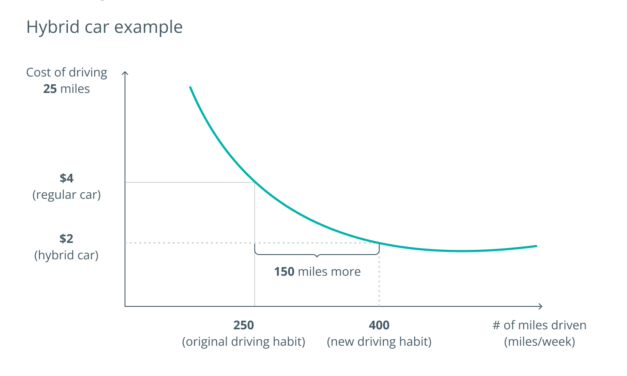
The Iota Foundation and Imperial College London recently announced the launch of a four-year distributed ledger technology, or DLT, initiative designed to research and develop solutions to foster socially conscious, circular economic models and businesses around servitization.The Imperial-Iota-Infrastructures Lab, known as the I3-Lab, will operate within the Dyson School of Design Engineering and has adopted the tagline “infrastructure powered by Iota; analytics powered by Imperial; use-cases powered by the community; and impact powered by partnerships.”Expected to commence this summer, the I3-Lab has been initially funded by a $1 million philanthropic grant from the Iota Foundation and will soon become a co-funded project following an undisclosed contribution from ICL described as “substantial.”Two post-doctoral researchers and five Ph.D. students, overseen by project leaders, will focus their efforts on five projects spanning an array of proposed subjects including tire emissions in the mobility space, ethical batteries in the energy industry, and an infrastructure project to develop the underlying technologies around digital twin and DLT, in addition to two open calls with the aspiration to engage the broader ICL community and attain internal funding.The lab, which is currently under construction, is approximately the size, if not a fraction larger, than a soccer field goal area — also known as the “six-yard box.” Architectural plans reveal intentions to construct a second-story mezzanine overlooking the ground floor, so as to provide ample space for the seven students and their necessary equipment.Cointelegraph’s Tom Farren visited Imperial College London and spoke to Robert Shorten, deputy director of the Dyson School Engineering Design; Peter Cheung, head of the Dyson School of Design Engineering; and Navin Ramachandran, a member of the board of directors at Iota, about a wide range of topics, from tire emissions and the Jevons paradox to tokenomic incentivize models, Iota’s proposed governance ambitions and the behavioral impact of coins in shopping carts.This interview has been condensed and edited for greater clarity.GM from @imperialcollege @ImperialDyson @iota Interview time! ✍ pic.twitter.com/Fk8FxXWF02— Tom Farren ☮️ (@tomfarrencrypto) February 16, 2022Cointelegraph: What were the specific reasons for partnering with Iota on this project?Peter Cheung: The reason why we’re so interested in Iota with the I3-Lab is because they are aligned with our values. It is a technology-driven area, but our department has the mission to make a difference in society and humanity. And this is a technology that we believe will have a significant impact in the future, and therefore, we want to invest in it.Robert Shorten: “Traditionally, blockchain-type technologies have been used in fintech as a means of payment, or for tracking goods and services. We’re really interested in exploring the behavioral intervention side.A big issue in the sharing economy is the idea of being able to manage risk. The risk of someone not doing what they said they were going to do. For example, if you’re in a shared vehicle, it should be returned at a certain time, and if someone doesn’t do that, then it undermines the whole sharing concept.“The idea of managing the risk of misusing of an asset, rather than managing the access to the asset, is very subtle thing but actually a really important part of the sharing economy in these new models of ownership.”CT: How do you envision the way Iota’s feeless structure could support these new models of ownership?Navin Ramachandran: When you’re working in a feeless environment, how do you do it with fair distribution? The issue we’ve had, and a lot of projects have had, is that things make sense from a research perspective, but when implemented, the algorithms are so complex that they break very easily or the processing takes too long and it becomes very heavy.PC: Or it may not be scalable, so when you double or 10x the users, it breaks. Scalability is one of the most important factors, and one of the weaknesses of blockchain technology.RS: The feeless aspect is something that attracted me to Iota because I’ve spent years working in congestion control. And actually, I thought I’d left it behind me before I met these guys! One of the things that I’m interested in, and that attracted me to Iota, is designing cyber-physical systems.It’s kind of a goofy example, but one of the great successes in humans interacting with technology is the coin in a shopping trolley. I remember when I was growing up in Ireland, there used to be shopping trolleys in every river. [To the room: I don’t know whether you remember that?]NR: Now it’s electric scooters!RS: Then, someone had this great idea of putting a one-pound coin in the shopping trolley that you get back when you return it. You can create digital forms of that idea with Iota because of the feeless structure. But you can’t do that easily with other blockchains because every time you put down a deposit, a piece of your coin gets taken away as a transaction fee.We’ve been using that sort of idea to do lots of work with electric vehicles, and in other areas to repurpose and reuse in the pursuit of circularity.Ramachandran raised the point that phrases denoting the encouragement of artificial behavior change, such as nudging or incentivizing, can often be deemed to have negative, somewhat authoritarian connotations. But it was noted that it is important to distinguish what’s best for the collective and follow that with good intentions.Shorten then continued on:“The DLT part of that story is really interesting because it talks about digital identity, ownership and new ways of nudging people using tokens. It talks about new ways of assigning responsibility for individuals’ actions and personalized types of interventions. That’s all part of DLT’s story. And it’s all potentially very good, as well as being potentially bad.”CT: In our initial conversation, you [Shorten] stated that the higher torque and weight of electric vehicles leads to greater road friction and often results in particles entering the waterways or human respiratory system to cause potentially wide-ranging health concerns. How will the I3-Lab explore this area within the mobility project?RS: Tires are probably going to be a big theme at the college, ranging all the way from understanding the tire abrasion process, particle size distribution, and the potential impact on humans and the environment, to the behavioral side and how we can develop new types of systems and ways to interact with mobility to minimize the impact of tire waste.A group of esteemed students known as The Tyre Collective from the Dyson School of Design Engineering side of ICL were awarded second prize for the international James Dyson Award and first prize in the United Kingdom for their acclaimed invention of a mechanism designed to attach onto the frame of tires and capture microplastics at the point of wear. This YouTube video illustrates the process in greater detail.Shorten, who is well educated on the evolutionary timeline of electric vehicles over the past half a century — and specifically, their reciprocal impact on environmental progress — cited the Jevons paradox, a 19th-century observation on the impact of coal consumption following the invention and widespread adoption of the Watt steam engine.A visual portrayal of the paradox reveals that when the elastic demand of an environmentally centric product contributes to the increase of total supply, the aggregate value of energy consumption can increase. Quite simply, if the demand for electric vehicles rises considerably, there will be more cars on the road and, thus, higher emissions.In our initial discussion, Shorten quaintly illustrated a disheartening societal truth that due to geographical and circumstantial challenges — on occasion enhanced by societal imbalances — “People often make poor choices for really good reasons.” Relaying that statement in person, he elaborated, stating:RS: That’s right. They can’t afford to make the choices that society wants them to make. And you can’t blame them, right? How could they possibly do that? So, trying to remove the up-front cost, I think, is a really important part of giving people access to good choices.CT: Do you feel that our society is progressing toward a more servitized, renting economy in light of the emergence of companies such as Airbnb and Uber?RS: I think we are, and I think we have to. There’s great opportunity to be much more efficient and responsible in the way we consume, but there’s also an opportunity for people to misuse that.NR: I think the younger generations are probably more used to these subscription models, whereas I think the older generations are much more used to owning stuff. But who knows what’s right?RS: In theory, it’s a good idea, but there’s a layer that we need to wrap around it to make sure it’s done in a responsible way. That would be the caveat, or the qualifier.CT: Will the I3-Lab’s findings be published in an open-source, transparent manner?PC: All our work is going to be open source.NR: Everything has to be open source. And even in research, if you want it to be reproducible, you have to have open datasets. We don’t want to make anything proprietary.PC: That’s partly why Iota’s grant can be seen as a grant, not a research contract, because they will open everything.NR: After Chrysalis and StarDust, we’re going to be moving to an open governance model. There are going to be Ethereum Improvement Proposals, Bitcoin Improvement Proposals and Iota tips.Every idea will get proposed in the open where people can comment and revise it before it gets implemented. That’s the way it should be going forward.Everything we do will be freely accessible and open source. We also invite our dear #community to participate in the Lab (more to follow on that). This will be the first of many philanthropic activities from the #IOTA Foundation. Lets accelerate our impact, together.— Dominik Schiener (@DomSchiener) February 3, 2022

CT: What’s your stance on technological patents in general business practice, and specifically for the I3-Lab? Do you believe that a walled-garden, protection-first approach is sometimes required in these hypercompetitive industries?PC: For this project, I believe that we might patent, not because we want to profit but because we might want to prevent other people from profiting and violating our principles.NR: I separate two things: one is the core layer of the technology, which I think has to be open source; and then second, companies building proprietary things on top of that. If it impacts everyone and it’s core technology, then it should be open because anyone controlling that controls the direction of the network.PC: We are not objecting to patenting because companies need to survive, be economically viable and make a profit.Shorten showcased a physical example of a previously patented product from Imperial College — a Lego-brick device that extends the range of electric vehicle charge points and, in turn, encourages a daisy-chain model in which drivers can be incentivized to uphold the network via tokenomic rewards. This is the shopping trolley idea in digital form, they state.Following on from this, Cheung noted:“If you have an idea, you’ve got to patent it or publish it. If you don’t do either of those things, somebody else will, and you might not be able to develop your own idea. And we wouldn’t want to be developing ideas for the benefit of an individual company with everyone else excluded. That would defeat the purpose of it.”CT: How are you planning to measure success within the project?RS: We’re going to form an external board that will evaluate the progress of the lab against milestones. They’ll be externally independent from Iota and Imperial and will be people who will give a really honest opinion. That’s the only way you can measure success.CT: What are your precedents for these milestones? Have quantitative targets been established as markers of success?RS: It could be new sustainable businesses that we stimulate, it could be engagement with policymakers. There are also all the usual things, like the number of patents and number of papers. A big metric would be how successful we are in leveraging the center to generate more income to build use cases in partnership with companies, as well as getting some of the ideas that we foster at the lab into industrial products.

Čítaj viac

Získaj BONUS 8 € v Bitcoinoch

nakup bitcoin z karty

Registrácia Binance

Burza Binance

Aktuálne kurzy