Autor Cointelegraph By Stephen Katte

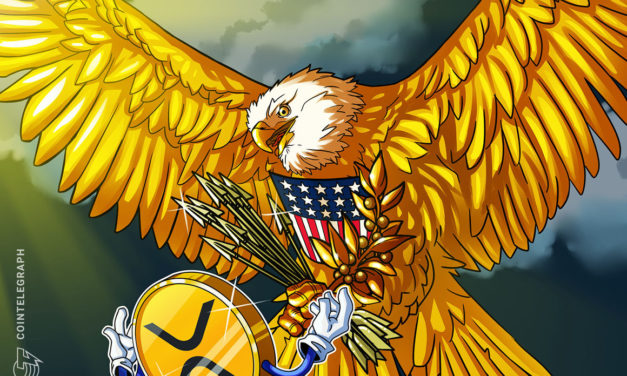
Blockchain Association throws support behind Ripple in SEC duel

United States-based crypto advocacy group Blockchain Association has come out in support of Ripple Labs amid its ongoing legal battle with the Securities and Exchange Commission (SEC), claiming the case could be very important for the future of the crypto industry. In an Oct. 28 post, the advocacy group announced it will “stand” with the American crypto economy by filing an amicus brief, also known as “friend of the court” in the SEC enforcement action against Ripple.Nearly two years ago, the SEC announced they were suing Ripple (XRP), former CEO Christian Larsen, and current CEO Brad Garlinghouse in Dec. 2020 for allegedly raising $1.3 billion through unregistered securities sales through XRP.”This case, which is just one in a long line of SEC efforts to regulate by enforcement, highlights the SEC’s efforts to cement and legitimize its overly broad interpretation of the Howey test,” wrote the association.The Howey Test determines what qualifies as an investment contract and is therefore what is subject to U.S. securities laws.In their brief, the Blockchain Association outlined why in their view, the SEC and Chairman Gary Gensler’s views of securities laws could have “devastating effects” on the crypto industry.They argue blockchain technologies have many uses across the crypto industry; tokens can be used to pay for goods and services, conveyance of intellectual property rights, inventory tracking, and for a specific purpose in a given blockchain project.”Applying the securities laws to those tokens – whether or not through the prism of the Howey test – would significantly restrict those networks from functioning.”The association also claimsSEC is disregarding clear Supreme Court and Second Circuit precedents stating transactions aboard are beyond the jurisdictional reach of the SEC.”Though the blockchain industry is global in nature, the federal securities laws are not. The Second Circuit has repeatedly re-emphasized the Supreme Court’s lesson on this subject.” “Accordingly, both for liability and (if necessary) damages purposes, this Court should be mindful of the limits of the securities laws,” it added. Related: Ripple boss tips when SEC case will end as Hoskinson hits back at XRP armyKristin Smith, executive director of the Blockchain Association, believes this case could have wide-reaching ramifications for the future of crypto, calling the SEC’s interpretations of the securities laws, “the single greatest threat to the future of this rapidly growing industry.””By erratically applying these outdated standards to a modern and innovative technology, the SEC continues its “regulation by enforcement” pattern, punishing crypto companies with little justification or warning,” she said. The Blockchain Association said the case gives the industry the chance to push back against what they see as the “SEC’s regulation by enforcement agenda” and potentially open the door to modernized standards for the industry.”

Čítaj viac


Facebook became Meta one year ago: Here's what it’s achieved

It’s been just over a year since social media giant Facebook rebranded as Meta at the Facebook Connect conference on Oct. 28, 2021.The name change reflected the company’s growing ambitions to transcend past social media and into the world of Web3, crypto, NFTs, and the Metaverse — virtual worlds where consumers are likely to spend more of their time for both work and play.The company has been busy. In December 2021, Meta debuted its Horizon Worlds virtual reality social networking project, while it also opened up advertising for more crypto ads on Facebook.In April 2022, reports emerged that the company has been considering a digital currency designed for use in the Metaverse internally dubbed as “Zuck Bucks,” though no further updates on the project have been seen since. In May, the company filed five trademark applications for a payments processing platform with support for cryptocurrencies and digital assets called Meta Pay.In September 2022, the company announced that 2.9 billion users would have the ability to post digital collectibles and NFTs they own across Facebook and Instagram across 100 countries by linking their wallets.Meanwhile, on Oct. 11, Meta announced a partnership with tech giant Microsoft to bring a range of Microsoft Office 365 products into Meta’s virtual reality (VR) platform to try and coax other companies to work in virtual environments.However, the year has not come without its challenges, particularly when it comes to the company’s Metaverse ambitions. Last week, Altimeter Capital’s CEO and founder called Meta’s $10 billion to $15 billion a year investment into the Metaverse as “super-sized and terrifying.” Meta’s Q3 report appeared to only solidify these concerns, with the stock price falling 23.6% following its release, while Meta’s virtual reality research and development arm Reality Labs posted an accumulated loss of $9.44 billion so far this year. Many may also remember Meta’s Eiffel Tower fiasco when an image of Meta CEO Mark Zuckerberg’s avatar standing in front of a virtual Eiffel Tower was mocked over lackluster visuals. Mark Zuckerberg’s Metaverse avatar which became an internet memeMeanwhile, an Oct. 15 report from The Wall Street Journal suggested that the company has slashed its monthly active user goal for Horizon Worlds by more than half, suggesting the company’s flagship Metaverse was “falling short.”This backlash was touched on by Zuckerberg during the Q3 earnings call on Oct. 26, noting that “we’re iterating out in the open” and that the social Metaverse platform was still an “early version.”“It’s a kind of a live early product platform, and that’s evolving quickly, but obviously has a long way to go before it’s going to be what we aspire for it to be,” said the CEO. Related: FTX CEO dissects Mark Zuckerberg’s intent to pump $10B/year into MetaNevertheless, the technology giant is continuing to push forward with its foray into Web3 and other projects including artificial intelligence, with Zuckerberg noting on the call that “we’re on the right track with these investments” and the company “should keep investing heavily in these areas.”The company recently unveiled its latest virtual reality headset, the Meta Quest Pro during an Oct. 11 virtual event; along with the partnership with Microsoft, and a new computer platform from Reality Labs. “Work in the metaverse is a big theme for Quest Pro. There are 200 million people who get new PCs every year, mostly for work.”“Our goal for the Quest Pro line over the next several years is to enable more and more of these people to get their work done in virtual and mixed reality, eventually even better than they could on PCs,” said Zuckerberg. “Between the AI discovery engine, our ads and business messaging platforms, and our future vision for the metaverse, those are three of the areas that we’re very focused on,” he added.

Čítaj viac

Hong Kong could be key for China’s crypto comeback: Arthur Hayes

Arthur Hayes, the former CEO of crypto derivatives giant BitMEX, believes the next crypto bull run will start when China moves back into the market, and Hong Kong has a vital part to play in this process. In his Oct. 26 blog post titled “Comeback”, Hayes outlined why he thinks the Hong Kong government’s announcement about introducing a bill to regulate crypto is a sign China is trying to ease its way back into the market. This could be because Hong Kong acts as “the proxy through which China interacts with the world.”“When China loves crypto, the bull market will come back. It will be a slow process, but the red shoots are budding.” Hayes argued that Hong Kong may become the testing ground for Beijing to experiment with crypto markets and act as a hub for Chinese capital to find its way into the global crypto markets. “If these flows actually materialize in the way I imagine, they will be a strong supporting pillar of the next bull market.” According to Hayes, Hong Kong’s “reorientation as a pro-crypto location” is a prong in Beijing’s strategy to reduce its position in a way that won’t destabilize its internal financial system.Hong Kong was ranked the best-prepared country for widespread crypto adoption in a study by Forex Suggest published in July 2022. It considered several factors like crypto ATM installations, pro-crypto regulations, and startup culture.China has one of the largest economies in the world but has been mostly hostile toward the crypto industry. The country’s first ban came way back in 2013 when it prohibited banks from handling Bitcoin (BTC) transactions. Beijing ramped up its crypto crackdown efforts in 2021 when it carried out multiple regulatory operations to eradicate Bitcoin mining from the country and deemed all crypto transactions illegal.However, Hayes says “China has not left crypto — it has just been dormant.” Related: Possession of Bitcoin still legal in China despite the ban, lawyer saysChina did resume BTC mining operations in September 2022 and Chainalysis noted in its 2022 Global Crypto Adoption Index that China re-entered the top ten this year after placing 13th in 2021.The authors of the Global Crypto Adoption Index said they found the development “especially interesting” given the Chinese government’s crackdown on crypto, but according to their data, “the ban has either been ineffective or loosely enforced.”

Čítaj viac

ASIC fires industry warning shot as it sues BPS Financial over crypto promo

Australia’s financial regulator has issued a stark warning to Australian crypto asset providers amid launching civil proceedings against Australian firm BPS Financial Pty Ltd (BPS) over “misleading” representations concerning its Qoin crypto token. In an Oct. 25 announcement, the Australian Securities and Investments Commission (ASIC) said it has commenced civil penalty proceedings against BPS Financial for making “false, misleading or deceptive representations” to its 79,000 users about its crypto token Qoin. It alleges the company engaged in “unlicensed conduct” relating to Qoin, a digital currency launched in Oct. 2019 which allows participating merchants to accept as payment for goods and services. ASIC Deputy Chair Sarah Court said this case should serve as a warning to all crypto issuers that ASIC is monitoring the crypto market for misconduct. “Where it falls within our remit, ASIC will take targeted action against unlicensed conduct and misleading promotion of crypto-asset financial products that could harm consumers – this is a key priority for ASIC.”She further explained its crucially important that consumers and investors are “provided with honest and accurate information,” because “Crypto-assets are highly volatile, inherently risky, and complex. Every crypto-asset is different, often making it difficult to compare with each other – or anything else.”Court said they were particularly concerned over BPS Financial’s alleged misrepresentation that the Qoin Facility is regulated in Australia, and the token can be used to purchase goods and services from an increasing number of merchants registered with BPS. “We believe the more than 79,000 individuals and entities who have been issued with the Qoin Facility may have believed that it was compliant with financial services laws, when ASIC considers it was not.” BPS has denied all wrongdoing in an Oct. 25 statement on the Qoin website, saying they disagree with “ASIC’s position” and “will be defending the matter.” “Before it started, BPS consulted with ASIC in late 2019 regarding the structure of the Qoi project and did so again in early 2021. BPS will keep the community updated as it is able to.” ASIC is seeking declarations, pecuniary penalties, injunctions and adverse publicity orders from the Court, but the date for the first case management hearing has not been scheduled. Related: 1M Aussies will enter crypto over the next 12 months — Swyftx surveyThe Australian regulator has ramped up scrutiny over the crypto sector over the last few months. In August, ASIC chief Joe Longo raised the alarm over the number of people that invested in “unregulated, volatile” crypto assets during the COVID-19 crisis. At the time, he said considering there are “limited protections” for investors, the lack of understanding among retail investors makes “a strong case for regulating crypto-assets to better protect investors.”The corporate regulator isn’t the first to pursue legal action against BPS. In late 2021, Queensland-based law firm Salerno Law accused BPS of engaging in misleading and deceptive conduct and sought $100 million in damages on behalf of merchants, investors and holders who suffered losses after acquiring the Qoin utility token. Cointelegraph reached out to BPS for further comment about the case, but did not receive a reply before publication. 

Čítaj viac

HK and Singapore’s mega-rich are eyeing crypto investments: KPMG

Hong Kong and Singapore’s wealthy elite appear to be looking at digital assets with fervor, after a new report from KPMG suggesting over 90% of family offices and high-net-worth individuals (HNWI) are interested in investing in the digital assets space or have already done so. According to an Oct. 24 report from KPMG China and Aspen Digital titled “Investing in Digital Assets,” as much as 58% of family offices and HNWI of respondents in a recent survey are already investing in digital assets, and 34% “plan to do so.” The survey took the pulse from 30 family offices and HNWIs in Hong Kong and Singapore with most respondents managing assets between $10 million to $500 million.KPMG said the large crypto uptake among the ultra-wealthy has increased confidence in the sector, spurred by the increase in “mainstream institutional attention.”It also noted institutions also have more accessibility to digital asset financial products, including regulated products.Singapore’s largest bank, DBS, announced in Sept they were expanding crypto services on its digital exchange (DDEx) to approximately 100,000 wealth clients who meet the criteria around their income to be classed as accredited investors, ensuring adherence to the financial authorities’ view that crypto assets are not suitable for retail investors. While Crypto exchange Coinhako announced in Oct they were among a small number of firms to receive a license from the Monetary Authority of Singapore (MAS) to offer Digital Payment Token services.However, the allocations remain relatively small, with most allocating less than 5% of their portfolio to digital assets — mainly in Bitcoin (BTC), Ether (ETH) and stablecoins.Respondents cited market volatility and difficulties in accurate valuation and lack of regulatory clarity on digital assets continue to be a hurdle to investment in the sector. “As digital assets are fairly new, there is still some uncertainty among FOs and HNWIs about investing in the sector, particularly regarding regulation and valuation,” wrote the report’s authors. However, KMPG noted that regulatory clarity in the two countries could be changing for the better.“For example, all virtual asset service providers (VASPs) in Hong Kong will have to apply for a license by March 2024. Singapore is also planning to broaden its cryptocurrency regulations.”Hong Kong securities regulator recently announced it wants to allow retail investors to invest directly in virtual assets and to reconsider current crypto trading requirements.Related: Coinbase gains in-principle approval for Singapore crypto licenseThe Monetary Authority of Singapore (MAS) has been expanding crypto trading for accredited investors and several exchanges receiving preliminary approval to provide Digital Payment Token services in the city-state.Earlier this month, Anchorage Digital co-founder and president Diogo Mónica said his company has chosen Singapore as a “jump point” into the wider Asia market because the country has a strong regulatory environment.“It’s about being in a regime that’s friendly towards crypto and that businesses want to do business in. We’re institutional only, institutions are going to Singapore, so we’re following suit.”

Čítaj viac

Získaj BONUS 8 € v Bitcoinoch

nakup bitcoin z karty

Registrácia Binance

Burza Binance

Aktuálne kurzy