Autor Cointelegraph By Shiraz Jagati

A double-edged sword? Once-famous brands are getting into crypto

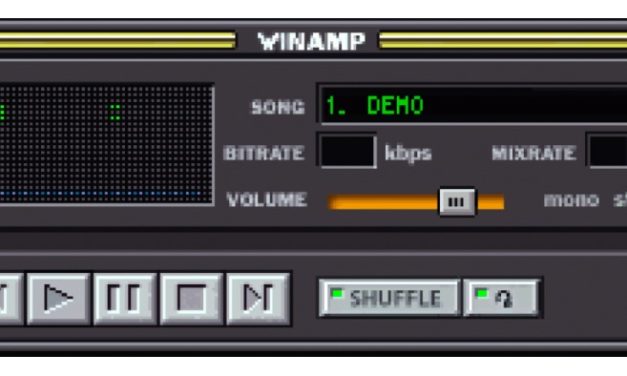
There is no denying the fact that the crypto adoption wave sweeping the globe right now has resulted in a growing list of defunct brands making their way into the digital asset market in recent months. Just two weeks ago, once popular music platform LimeWire announced that it is going to be making a comeback, albeit as a marketplace for nonfungible tokens (NFTs) rather than a file-sharing service. LimeWire’s return seems to largely be hinging on its once-held brand power backed by the company’s belief that its early 2000’s fame will allow it to make its way into the competitive Web3 ecosystem. In its new iteration, the platform will be posturing as an alternative to popular NFT marketplace OpenSea, focusing on music-related collectibles. In this regard, it is worth mentioning that LimeWire recently announced a partnership with the parent firm behind Algorand, while also revealing its plans to release its very own token LMWR for mainstream commercial adoption in the near term.In fact, the last few months have seen a whole host of other old and beloved brands make comebacks of a similar nature. That said, while LimeWire’s revival definitely has a feel-good undertone to it, many in the industry believe that the move may simply be an attempt to piggyback on the file-sharing site’s reputation in the hopes of a quick payday. Revivals galoreIn line with what LimeWire is doing, there have been at least half a dozen other old-school names that have tried to forge a resurgence of a similar nature. For example, WinAmp, a popular media player for Microsoft Windows that was sold to AOL in 1999 for $80 million, is now entering the NFT fray, albeit with much public ridicule.It is incredible how you took decades of good will nostalgia and removed it with a single tweet.— Eric Bailey (@ericwbailey) March 16, 2022Winamp will auction off its original and iconic skin as a one-of-one NFT on OpenSea, with bidding all set to commence mid-May, as part of the move. The project also plans on selling more than 20+ of its popular artwork, with each of them being replicated a total of 100 times so as to create a total of 1997 NFTs — a nod to the year the music service entered mainstream circulation. Each of these NFTs comes with a price tag of 0.08 Ether (ETH), bringing the cumulative total of the 1997 NFTs to approximately $527,000 at the time of writing.Similarly, RadioShack, a major electronics store that went bankrupt a few years ago, announced that it will be re-entering the market once again as a decentralized cryptocurrency exchange. In its present form, the RadioShack website runs a basic derivative of Uniswap with a radio-based graphic interface, allowing users to swap various Ethereum-based tokens including ETH, USD Coin (USDC), Tether (USDT) and Polygon (MATIC), among others.MoviePass was a venture that gained widespread notoriety back in 2018 thanks to its offering, in which subscribers could gain access to unlimited movie screenings for a paltry sum of just $10. As a result of its business model, the company had to close shop just a year later. However, and it is now looking to mount a comeback by incorporating blockchain and crypto-enabled technologies into its setup.What’s in a brand name?To gain a better idea of whether the entry of these once prestigious brands into the crypto sector is a serious proposition or just a quick cash grab scheme, Cointelegraph spoke to Pavel Bains, CEO of game-fi blockchain ecosystem Bluzelle. He pointed out that most of the companies in question don’t even have their original owners onboard anymore, adding:“It’s just people who want to make some money riding this wave and thinking that using a recognized name is the way to do it. Where they fail is that the youth has no connection to these brands. I don’t think unrelated brands will have any impact as people will just shrug them off and go on. Crypto and NFTs are past the point of having some bandwagon jumpers deter its image.”A similar point of view is shared by Chase Layman, CEO and co-founder of blockchain gaming studio Attack Wagon, who told Cointelegraph that while some of these companies may have long term intentions of jumping into the blockchain space, a majority of them are simply in it for the quick media coverage and are most likely to drop their projects after making some money.Elliot Hill, director of communications for Verasity, a protocol for esports, video entertainment and digital content management, is a little less skeptical. He told Cointelegraph that most brands are organically waking up to the huge opportunities put forth by NFTs and other blockchain-based assets. He added:“In the case of traditional peer-to-peer companies like LimeWire entering the space, there are certainly benefits of exploring a blockchain or NFT based solution, and this has already been proven to an extent through BitTorrent’s hugely successful relaunch and token issuance on the Tron network back in 2019.”He further opined that blockchain, at its core, is a decentralized database technology. Therefore, any company, business or organization which uses centralized databases could conceivably use them for enhanced security, reporting, traceability and transparency.Lastly, Piotr Zalewski, CEO of Euronin, a cryptocurrency trading and payments platform, told Cointelegraph that no forward-looking company wants to be left behind, especially those firms that are associated with the music sector. “Most firms see that music has just passed its evolution in sales as vinyl, cassettes, CDs, MP3s and now NFTs. I think this is a will to be part of the future and not a temporary hype job.”The original Winamp skin. Source: Winamp.Is all publicity good publicity?As the saying goes: “all press is good press.” However, Lyman believes that when big brands make a mockery of what real developers associated with this industry are trying to build, it deters and distracts from projects that actually have the potential to someday change the world for the better, adding:“While we need more eyes on blockchain tech, we also need more people to also take it seriously. If these big brands would back strong crypto projects instead of introducing what looks like a gimmick, then the belief and fervor for blockchain could increase globally.”In his view, most of these old-school brands have yet to fully grasp the possibilities presented by crypto tech and are, therefore, in it for the short term. “I don’t see their efforts helping the legitimacy of the blockchain,” he said.Hill, too, is of the view that there are certain types of endorsement that reduce the credibility of the crypto industry in the eyes of the public. In this regard, he pointed to projects that have paid heavily for glitzy celebrity endorsements solely to increase token sales. That said, he noted that enterprise adoption is fundamentally different from such hype-driven cycles, adding:“We’re seeing real businesses, with real customers and clients, adopt blockchain or cryptocurrency technologies to advance their business needs and improve their processes. There will be a time in the future when companies using a blockchain-based solution will be as commonplace as companies using the internet. It won’t require endorsement because it will be an obvious business need to have some blockchain-based component.”In Zalewski’s opinion, there is no such thing as “bad publicity or adoption,” at least in the grander scheme of things. He believes that the errors of unrelated previously famous companies that do not know the nitty gritty of this space will help shape the direction of the market in the long run. “The fact remains that the mistakes made by these companies will allow others to learn and therefore enable faster, more efficient adoption.”While there seems to be a healthy amount of debate regarding the entry of defunct brands entering the crypto fray, there is no reason to believe that consumers will instinctively trust a project like LimeWire 2.0 just because it has some historical prominence attached to its name. Therefore, it will be interesting to see if this trend continues for much longer and if so, how it impacts the digital asset industry at large.

Čítaj viac

Is China’s apprehension to ban NFTs a hopeful sign for investors?

It’s no secret that China has a clear disdain for all things crypto, as was highlighted last year when the country decided to ban its digital asset industry in its entirety. That said, one niche related to the crypto industry that has continued to thrive in the region despite the ban is its nonfungible token (NFT) market. However, with certain negative developments coming to the forefront recently, this may not be the case much longer.In this regard, many local social media platforms and internet firms have continued to update their policies so as to restrict and, in some cases, remove NFT platforms altogether from their networks, claiming a lack of regulatory clarity but, more importantly, fearing a government clampdown on their day-to-day operations.For example, WeChat, a Chinese instant messaging and social media service that boasts of an active customer base of over 1 billion users, recently took down one of China’s most prominent NFT ecosystems Xihu No.1 from its platform, stating that it was violating its active rules of service. Similar actions were also taken against other projects, including Dongyiyuandian.In a similar vein, Ant Group-backed WhaleTalk, a digital collectible platform, has increased the penalty for individuals making use of its over-the-counter desk for the purpose of NFT trading in a recent policy update. Vagueness regarding NFTs reigns supreme in ChinaWhile the use of cryptocurrencies is completely banned across mainland China, the Xi Jinping regime had not shown any intentions of banning NFTs up until now. This is best showcased by the fact that Chinese business juggernauts, such as Tencent and Alibaba, have filed for several new NFT patents over the past year.However, as with any evolving market, the rising popularity of digital collectibles in China has resulted in many of these offerings being subject to intense price speculations and consumer fraud cases. To this point, the growth of illegal transactions and bot purchases associated with NFT platforms has resulted in many tech giants taking precautionary measures that are probably in their best interests. In fact, following the announcement of China’s blanket crypto ban last September, many local firms were found to be still aiding crypto transactions. Thus, the actions of WeChat and WhaleTalk seem to be quite reasonable, especially since they are most likely looking to avoid any type of regulatory scrutiny from the Chinese government. Lastly, it is important to point out that even though NFTs are not necessarily banned in the country, China has prohibited its citizens from indulging in any form of speculative trading associated with digital collectible-derived tokens, thus putting NFTs issuers and owners in a tight spot.Experts weigh inPhilip Gunwhy, partner and brand strategist for prominent NFT platform Blockasset.co, told Cointelegraph that Tencent and Ant Group’s change in policy on how their users interact with NFTs is not unexpected because in order to gain a competitive advantage within the confines of China’s existing legislative framework, tech giants must reposition their platforms, adding:“The government has not yet outlawed NFT trading, with the rules still being worked out. Even if Chinese authorities do eventually ban NFTs, creators and investors will still have an advantage since it took nearly a decade for the government to finally rid its shores of Bitcoin mining and crypto transactions. The NFT space keeps evolving, and major internet companies’ patent applications in China are to be taken seriously.”Gunwhy further stated that the fact the government has not banned engagement with NFTs, despite their current popularity, indicates that the approach may be very different from that taken with cryptocurrencies. “In any case, officials in China want to keep a close eye on the development of NFTs,” he saidHaris Sevinç, chief technology officer of The Unfettered — a blockchain game utilizing NFT- and metaverse-centric concepts — believes that while the Chinese government is hostile toward digital currencies, the country’s obsession with blockchain technology has allowed investors to continue harnessing the power of technologies — such as NFTs — that don’t depend entirely on crypto.He believes that the moves of major internet companies to alter their rulebooks are solely motivated by a desire to avoid regulatory action because if they defy the government, they will most likely either face a fine or be banned. Sevinç added:“Because the NFT ecosystem is still in its early stages, most regulators are only warming up to this idea and trying to assess its prospects. If authorities implement a positive form of regulation in the NFT space, these tech giants [Tencent and Alibaba] will be among the pioneers of the future of Web3 in China. In that case, the patent bets will keep coming in.”The future of NFTs in China may be fracturedBen Caselin, head of research and strategy at crypto exchange AAX, told Cointelegraph that as things stand, “NFTs are somewhat tolerated in China” and are being labeled and marketed as digital collectibles. “These are issued on more restrictive hybrid or permissioned blockchains that prevent holders from speculating on secondary markets,” he added. In Caselin’s opinion, while these domestic markets may flourish for a while, permissioned NFTs do not offer many core features or advantages, such as ownership, and, therefore, don’t really benefit from the same dynamics as mainstream NFTs.Jake Fraser, head of business development at Mogul Productions — a decentralized film financing and movie-based NFT platform — believes that there is still a lot of opportunities when it comes to the Chinese market, especially with NFTs:“There is always going to be constant legislative updates and companies updating their policies, but innovation is still taking place. One area in their NFT market that is gaining momentum is gamification. It will be interesting to see the different use cases that unfold from this.”Lastly, Fraser highlighted that trading NFTs is still a novel idea globally, and to date, he hasn’t seen any governments put in real regulations. Although, like what happened with initial coin offerings, he does believe legislation is inevitable, but as long as innovation isn’t stifled, the developments will be “very good for the industry.”Not everyone agreesContrary to Caselin’s assertions that NFTs are on an extremely short leash in China, Vijay Pravin Maharajan, founder and CEO of bitsCrunch — an NFT-focused analytics firm — told Cointelegraph that the list of NFTs being transacted in yuan continues to grow and that the Chinese government will soon accept the asset class, adding:“Strict rules and agreements established around NFTs and digital collectibles make the industry viable. The Chinese government is trying to ensure NFTs are safe and regulated. There’s no denying that [China] is a leading country when it comes to blockchain technology. So, we might get a glimpse of Web 3.0 from them soon.”Maharajan said that contrary to popular perception, China is indeed embracing NFTs by making their infrastructures “independent of cryptocurrencies.” He believes that it’s okay to disrupt the traditional NFT framework and follow a new business model since these offerings are unique and have multiple ways through which they can be minted, distributed and transacted. “Even though it may seem like a slow start, so far, we see a positive trend with the acceptance of NFTs irrespective of crypto bans and their effects,” he noted.Therefore, as we head into a future being driven increasingly by decentralized technologies, such as NFTs, it will be interesting to see how a major financial mover and shaker such as China continues to evolve its digital outlook and regulate these assets. 

Čítaj viac

Luna token price is soaring, but is the network's growth sustainable?

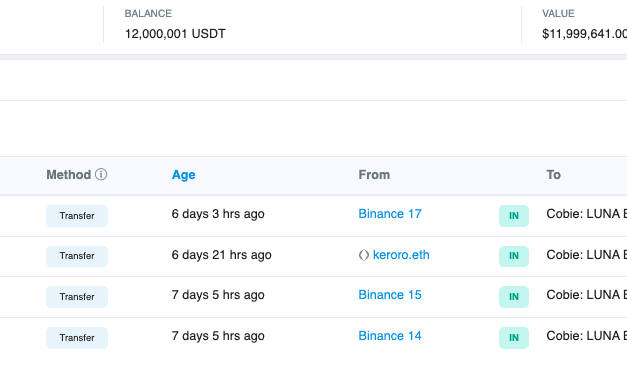
Terra, an open-source blockchain platform for algorithmic stablecoins, has been on fire over the last half-year or so. The value of its native crypto asset Terra (LUNA) has risen from $24 to over $100 during the last six months, placing it in the top 10 cryptocurrencies by market capitalization. And, even though LUNA has showcased minor corrections here and there, the currency and the Terra project, in general, have continued to grow from strength to strength. To this point, on March 4, LUNA flipped Ether (ETH) in terms of total staked value, with $29.5 billion worth of LUNA being locked up within the platform compared to ETH’s $25.9 billion.Furthermore, Terra’s native data show that the ecosystem currently has over 230,000 stakers, making it the second-most staked crypto asset with more than four times the number of those staking ETH at 54,768. Lastly, in terms of its annual staking rewards, LUNA touts an average annual yield of around 6.62%, while ETH fetches 4.81%.With LUNA up over 350% in the last 12 months, a number of pundits have continued to claim that Terra’s aforementioned growth may not be sustainable. In fact, individuals associated with the ecosystem — both for and against — have placed massive bets in regard to where LUNA will be trading around this time next year.The $1 million bet that has the Terra community buzzingWith LUNA up over 350% in the last 12 months, a number of pundits have continued to claim that Terra’s aforementioned growth may not be sustainable. In fact, individuals associated with the ecosystem — both for and against — have placed massive bets in regard to where LUNA will be trading around this time next year.Pseudonymous crypto trader “Sensei Algod” is so bearish on Terra’s token that he recently wagered $1,000,000 that by March 14, 2023, LUNA will be trading at a price point lower than what it was on the above said date at $88. Algod’s proposition was swiftly taken up by Do Kwon, CEO and founder of Terraform Labs, the firm behind Terra, who also put up the same amount claiming that the cryptocurrency will most definitely be trading at a price point higher than $88 by then.As conversations between the two escalated via Twitter, the duo eventually decided to seek out the services of Cobie, co-host of the crypto podcast UpOnly, who will serve as an escrow agent facilitating the entire agreement. To elaborate, both Kwon and Algod have locked up a total of $1 million each in Tether (USDT) within an Ethereum address labeled “Cobie: LUNA Bet Escrow.”Cobie: LUNA Bet Escrow. Source: Etherescan.Kiril Nikolov, head of DeFi strategy at Nexo, a blockchain-based lending platform, told Cointelegraph that while bets like these can gather a lot of attention, they don’t “really matter” in the grand scheme of things. He added that developers will keep on building on Terra regardless of LUNA’s price or if Do Kwon loses the bet. A similar opinion is shared by Derek Lim, head of crypto insights for cryptocurrency exchange Bybit, who told Cointelegraph: “I don’t think that we can or should read too much into this. It will be a stretch to think that this wager between private parties can mean anything insidious or bullish. Instead, we should focus on other factors like the sustainability of the project’s yield reserve.”Daniel Santos, CEO of Woonkly, a decentralized finance- (DeFi)-based social media network, believes that wagers showcase LUNA’s growing popularity. “The more popular a project is, the more fans and haters it has. One of the haters placed a bet against LUNA and Terra’s founder accepted the bet and why not — it’s that simple,” he told Cointelegraph.Is Terra’s growth really sustainable?While on paper, Terra’s rise seems extremely impressive, especially with LUNA flipping ETH in terms of staked value and their number of respective token stakers, Nikolov pointed out that there’s a major difference in the staking model of the two projects, given the inability of investors to withdraw their staked ETH and its rewards until Ethereum 2.0 is released. “Thus, it’s normal that only a small percentage of all ETH is staked, compared to LUNA,”’ he added. Furthermore, Nikolov noted that Terra has done a great job in recognizing that liquid staking solutions are needed in order to generate stable and composable demand that can further be used for collateral, adding:“Once the Eth2 merge is complete, we can expect the percentage of staked ETH to become similar to that of LUNA, with liquid staking solutions such as Lido playing the main role of generating utility of the staked ETH, for example, as collateral).”Lim believes that Terra’s existing staking yields are quite sustainable, adding that at a very baseline-type level, the staking rewards generated via the system’s Tobin tax and the spread fees from the LUNA/TerraUSD (UST) mintburn swaps are very practical.Terra’s Anchor conundrumThe Anchor Protocol (ANC), a decentralized lending application built atop the Terra ecosystem currently allows investors in TerraUSD — the platform’s native United States dollar-pegged stablecoin — to accrue an annual percentage yield (APY) of nearly 20%. Theoretically, such high interest rates are made possible by the fact that the deposited stablecoins are pooled and lent out to borrowers to accrue interest.Also, in order for an individual to borrow UST, they need to post staked tokens including staked LUNA and staked ETH as collateral. When the earned interest and staking rewards are not able to stay in line with the outlined interest rate of 20% — which is the case right now — Anchor is forced to take money from its “yield reserve” to compensate for the gap existing between its total earnings and payouts. In its current state, Anchor is being manipulated by some savvy users who, over the past few months, have been taking UST loans at an annual percentage rate (APR) of close to 2.5% and then depositing that same sum back into the Anchor protocol to accumulate 20% profits. Thus, there is a major imbalance within this setup because there is more demand for the 20% yields than for UST borrowers.To help meet these unsustainably high payouts, Anchor has been going through its native reserve pools at a furious pace, as is highlighted by the fact that the protocol’s crypto coffers, between late December and mid-February, shrunk from $70 million to just a little over $6.50 million.Jack Tao, CEO of cryptocurrency exchange Phemex, told Cointelegraph that even though Anchor’s extremely high yield ratio has helped push the demand for UST and LUNA — with the latter’s value increasing by 60% over the past month alone — the protocol’s current APR may be extremely hard to maintain, adding:“We have to note that the crypto market is highly volatile and these high yield payouts are definitely hard to sustain in the long run, as much of it may be inflated due to speculation. Now that there’s more UST in existence than ever, there are already critics that believe LUNA won’t be able to sustain its price unless Terra changes its current model.”Lim, too, believes that Achor’s current APR is pretty unsustainable. He pointed out that the protocol functions just like any other money market. If the yield reserve depletes, the APR is adjusted to a sustainable amount — around 12–15% per annum — which is pretty good for stablecoins. Terra (LUNA) six-month price chart. Source: CoinGecko.On a more technical note, he stated that there are four key issues facing Anchor that need to be solved immediately in order for the project to move forward in a sustainable manner. These include deposit growth outpacing borrowing, difference in borrowing and spending ratios to maintain an APR of 20%, the slow rate at which the protocol allows for the addition of new collateral assets and existing friction between Anchor and other blockchain ecosystems.Nikolov noted that while UST’s fluctuating rate of yield reserves on Anchor is unsustainable, it has allowed the stablecoin to become widely adopted. This is something he believes could play a big role in the asset’s long-term success.The ecosystem needs to continue maturingSantos is of the opinion that most projects entering the crypto market — especially the decentralized finance sector — tend to make use of a high APY model to attract investors, even though they know quite well that these inflated return rates are not very sustainable in the long run. He pointed to Wonderland, a project offering returns in excess of 80,000%, which eventually resulted in the project’s demise. That said, he does not believe the same will be the case with Terra because the platform offers users a number of use cases as well as a high degree of operational functionality, adding:“Cardano is a good example, with tons of investors jumping on the ADA train over the last year. A big part of the crypto community was saying that Cardano had ‘nothing’ to offer, something that LUNA is now facing with its detractors.”As we move into a future being driven increasingly by decentralized technologies, it stands to reason that the best way for the sector to grow is through continued maturity. This is to prevent those projects entering the fray from being forced to offer extremely high returns — often bordering on being ridiculous — in order to attract new clients.

Čítaj viac

Dedicated crypto teams booming within traditional financial firms

Despite the financial volatility that has engulfed the global economic landscape over the last month or so, there seems to be no stopping the growth of the cryptocurrency market, especially the nonfungible token (NFT) sector. This growth is highlighted by the fact that crypto’s total market capitalization has increased from around $800 billion to $1.8 trillion since the start of 2021.Furthermore, a report from NonFungible.com released late last month reveals that sales associated with the NFT market ballooned to hit an all-time high of $17.6 billion during 2021, representing an increase of 21,000% from 2020.The report further suggests that individuals invested in the NFT market raked in monumental profits worth a collective $5.4 billion last year. Thus, it comes as no surprise that a growing list of mainstream entities have continued to make their way into the crypto space.Mainstream firms explore crypto tech On March 2, Nomura Holdings — one of Japan’s largest financial firms, with about 70 trillion yen ($593 billion) in assets under management — announced it would be launching a new digital assets wing to look into opportunities presented by the crypto market, particularly NFTs, and to help its clients increase their exposure to and use of digital currencies as well as other related services. The company — which deals in retail, wholesale and investment businesses — announced it would restructure its Future Innovation Company and begin updated operations in April.Several major firms have made similar moves in recent months, including e-commerce giant Rakuten, which announced the launch of its very own NFT trading platform, dubbed Rakuten NFT. Japan’s largest financial conglomerate, Mitsubishi UFJ Financial Group, also revealed it would scrap its blockchain payment project to focus on the burgeoning stablecoin market.Bank of Tokyo–Mitsubishi UFJ Head Office in Chiyoda-ku, Tokyo. Source: KakidaiSpecialized crypto wings are fast becoming the norm Christopher Temme, chief financial officer of cryptocurrency exchange bitFlyer USA, spoke to Cointelegraph about whether the trend of mainstream firms creating dedicated crypto departments will carry forward into the future.In his view, companies like Nomura creating digital asset-focused business units comes as no surprise, as the clients of most multinational corporations are pushing for this kind of exposure, adding:“What’s more interesting is that Nomura is exploring NFTs specifically. Their rapid growth and adoption in the creative/collectibles space have been the perfect testing ground to harden the technology in preparation for digital ownership of ‘real’ property, and the communities that’ll be formed around it as a result.”Temme also noted that while Japanese financial institutions have traditionally been quite conservative in their financial outlook, the fact that Nomura is exploring the crypto sector via a dedicated wing serves as a strong indicator of what’s to come in the near future. Similarly, Takaaki Kato, head of global sales and trading at bitFlyer, told Cointelegraph that, as a general rule of thumb, mainstream companies tend to follow a herd mentality — meaning that when one major player creates a department to explore crypto, it’s only a matter of time before others follow suit. Temme’s and Kato’s opinions were also echoed by Jimmy Yin, founder of iZUMi Finance — a platform providing liquidity as a service — who told Cointelegraph that the creation of dedicated crypto wings will likely become a norm as we move into an increasingly decentralized future. However, he made note that there are certain things companies need to take into consideration before taking major steps in this direction:“We can see massive growth in NFTs and crypto-asset users in general over the past year. That said, multiple factors, including legalization, have to be taken into consideration, especially when it comes to advertising to mass citizens. With the current geopolitical mayhem going on, crypto is seen as a challenge to what’s been considered stable.”In Yin’s view, the trend will gain momentum if crypto’s social acceptance continues to grow, especially as a holistic technology that allows for a multitude of benefits — not just as a payment tool. “Whether crypto is adopted as a social norm is not up to these business giants but the common interest of citizens,” he said.The numbers don’t lieIn mid-2021, Bank of America established a specialized team focused on crypto and digital asset strategy, citing growing customer demand and other associated factors for the move. In a study released by the firm later that year, analysts noted that the digital asset market had become too large for any forward-looking company to ignore, with crypto having reached a $2 trillion market capitalization in 2021 — and boasting over 200 million users.The researchers further noted that crypto-based digital assets could form an entirely new asset class over the coming months and years. Not only that, they acknowledged that the digital asset ecosystem had expanded into unimaginable realms over the past couple of years — including decentralized finance, stablecoins, central bank digital currencies (CBDCs) and NFTs — meaning that more and more traditional players are bound to enter the fray soon.From a purely numbers standpoint, venture capital-related digital asset and blockchain investments reached over $17 billion during Q1 and Q2 of 2021 alone, dwarfing the previous year’s combined total of $5.5 billion.Lastly, as more companies begin to realize the potential that crypto has across various industries — including finance, supply chains, gaming and social media — the advent of dedicated crypto research teams no longer seems like a far-fetched notion. Samiar Tehrani, co-founder of Ratio Finance — a Solana-based collateralized debt position platform — told Cointelegraph that digital assets present tangible, ready use cases meeting many of the challenges presented by the world of traditional finance, adding:“Even after experiencing several major corrections recently, the current market capitalization of the crypto sector still stands at $1.8 trillion, which is more than the GDP of many major nations. That tells you all that you need to know about how big this space has become and whether or not companies are really taking this market seriously. I believe most firms already have dedicated teams working overtime to explore this space so as to not get left behind.”Most traditional firms see a lot of value in cryptoMuch like Bank of America, many other financial juggernauts have also recently jumped into the deep end of the crypto market. For example, late last year, Morgan Stanley launched a cryptocurrency research team led by Sheena Shah, the company’s head digital asset analyst, alongside Adam Wood and James Faucette, who head the bank’s fintech and payments research team in Europe and the United States, respectively.It is also worth noting that Morgan Stanley was among the first major investment banks to fully embrace digital currencies, with the firm rolling out a total of 15 crypto-related mutual funds offerings to its clients over the last 18 months.Additionally, State Street, the second-oldest continuously operating bank in the United States, launched a dedicated digital finance division in June 2021, noting its need to focus on future-centric technologies such as cryptocurrency, blockchain, CBDCs and tokenization to keep up with the ever-evolving global financial landscape.So, as the world continues to move toward using digital assets, it stands to reason that more and more companies will look closely at various offerings connected with the space. In this regard, it seems many companies see creating teams specializing in this financial niche to be the best means of doing so.

Čítaj viac

Opensea phishing scandal reveals a security need across the NFT landscape

Despite the ongoing volatility plaguing the digital asset sector, one niche that has undoubtedly continued to flourish is the nonfungible token (NFT) market. This is made evident by the fact that a growing number of mainstream mover and shakers including the likes of Coca-Cola, Adidas, the New York Stock Exchange (NYSE) and McDonalds, among many others, have made their way into the burgeoning Metaverse ecosystem in recent months.Also, owing to the fact that over the course of 2021 alone, global NFT sales topped out at $40 billion, many analysts expect this trend to continue into the future. For example, American investment bank Jefferies recently raised its market-cap forecast for the NFT sector to over $35 billion for 2022 and to over $80 billion for 2025 — a projection that was also echoed by JP Morgan.However, as with any market growing at such an exponential rate, issues related to security have to be expected as well. In this regard, prominent nonfungible token (NFT) marketplace OpenSea recently fell victim to a phishing attack that took place just hours after the platform announced its week-long planned upgrade to delist all inactive NFTs.Diving into the matterOn Feb 18, OpenSea revealed that it was going to initiate a smart contract upgrade, requiring all of its users to transfer their listed NFTs from the Ethereum blockchain to a new smart contract. Owing to the upgrade, users who failed to facilitate the above said migration stood at a risk of losing their old and inactive listings.That said, due to the small migration deadline provided by OpenSea, hackers were presented with a potent window of opportunity. Within hours of the announcement, it was revealed that nefarious third party individuals have initiated a sophisticated phishing campaign, stealing NFTs from many users that were stored on the platform before they could be migrated over to the new smart contract.We are actively investigating rumors of an exploit associated with OpenSea related smart contracts. This appears to be a phishing attack originating outside of OpenSea’s website. Do not click links outside of https://t.co/3qvMZjxmDB.— OpenSea (@opensea) February 20, 2022Providing a technical breakdown of the matter, Neeraj Murarka, chief technical officer and cofounder of Bluezelle, a blockchain for GameFi ecosystem, told Cointelegraph that at the time of the incident, OpenSea was making use of a protocol called Wyvern, a standard tech module that most NFT web apps make use of since it allows for the management, storage, and transfer of these tokens within users’ wallets. Because the smart contract with Wyvern allowed users to work with the NFTs stored in their “wallets,” the hacker was able to send out emails to Opensea clients masquerading as a representative for the platform, encouraging them to sign “blind” transactions. Murarka further added:“Metaphorically, this was like signing a blank check. Normally, this is okay if the payee is the intended recipient. Keep in mind that an email can be sent by anyone, but be made to appear to be sent by someone else. In this case, the payee appears to be a single hacker who was able to use these signed transactions to transfer out and effectively steal the NFTs from these users.”Also, in an interesting twist of events, following the incident the hacker apparently returned some of the stolen NFTs to their rightful owners, with further efforts being made to return other lost assets. Providing his take on the entire matter, Alexander Klus, founder of Creaton, a Web3 content creation platform, told Cointelegraph that the phishing email campaign used a malicious signing transaction to approve all holdings to be able to be drained at any time. “We need better signing standards (EIP-712) so people can actually see what they are doing when approving a transaction.”Lastly, Lior Yaffe, cofounder and director of Jelurida, a blockchain software company, pointed out that the episode was a direct result of the confusion surrounding OpenSea’s poorly planned smart contract upgrade, as well as the platform’s transaction approval architecture.NFT marketplaces need to step up their security gameIn Murarka’s view, web apps making use of the Wyvern smart contract system should be augmented with usability improvements to ensure that users don’t fall for such phishing attacks time and time again, adding:“Very clear warnings should be made to educate the user about phishing attacks and driving home the fact that emails will never be sent, soliciting the user to take any steps. Web apps like OpenSea should adopt a strict protocol to never communicate with users via email apart from maybe just registration data.”That said, he did concede that even if OpenSea were to adopt the safest security/privacy protocols and standards, it is still up to its users to educate themselves about these risks. “Unfortunately, the web app itself is often held responsible, even though it was the user that was phished. Who is responsible? The answer is unclear,” he noted.A similar sentiment is shared by Jessie Chan, chief of staff at ParallelChain Lab, a decentralized blockchain ecosystem, who told Cointelegraph that regardless of how the entire attack was orchestrated, the issue not entirely dependant on OpenSea’s existing security protocols but also on user awareness against phishing. The question remains whether the marketplace operator should have been able to provide sufficient information to its users to keep them informed of how to deal with such scenarios.Another possibility to mitigate any potential phishing events is by having all interactions between users and their web apps being driven solely via the use of a dedicated mobile/desktop interface. “If all interactions required the use of a desktop app, such attacks could be bypassed completely.”Providing his take on the subject, Yaffe noted that the main problem — which lies at the heart of this whole issue — is the basic architecture of most NFT marketplaces, enabling users to simply sign a carte blanche approval for a third-party contract to use their private wallet without setting a spending limit:“Since the OpenSea team did not really figure out the source of the phishing operation, it might as well happen again next time they attempt to make a change to their architecture.”What can be done?Murarka noted that the best way to eliminate the possibility of these attacks is if people start making use of hardware wallets. This is because most software wallets as well as other custodial storage solutions are too vulnerable in their general design and operational outlook. He further elaborated: “Much like Bitcoin, Ethereum, etc, NFTs themselves should be moved to hardware wallet accounts instead of leaving them on a centralized platform,” adding:“Users need to be super aware of the risks of responding to and acting upon emails they receive. Emails can be faked very easily, and users need to be proactive about the safety of their crypto assets.”Another thing NFT owners need to remember is that they should only be visiting web apps that employ high-quality security protocols, checking that the accessed marketplaces utilize the HTTPS mechanism (at the very least) while being able to clearly see a lock symbol on the top left of their browser window — which correctly points to the intended company — while visiting any webpage.Yaffe believes that users should be careful with contract approvals and keep an accurate track of the contracts they have greenlighted in the past. “Users should revoke unnecessary or unsafe approvals. If possible users should specify a reasonable spending limit for every contract approval,” he concludes.Related: Cointelegraph partners with Nitro Network to bring digital mining and decentralized internet to the massesLastly, Chan believes that in an ideal scenario, users should keep their wallets on a dedicated platform that they don’t use to read email or browse the web, adding that any such avenues are subject to all manners of third party attacks. He further stated:“This is inconvenient, but when dealing with assets of great value and where there is no recourse in the event of theft, extreme care is justified. And, as with all financial transactions, they should be very careful in deciding who to deal with, since the counterparties can also steal your assets and disappear.”Therefore, while moving into a future driven by NFTs and other similar novel digital offerings, it remains to be seen how platforms operating within this space continue to evolve and mature, especially as a growing amount of capital keeps making its way into the NFT market.

Čítaj viac

Získaj BONUS 8 € v Bitcoinoch

nakup bitcoin z karty

Registrácia Binance

Burza Binance

Aktuálne kurzy