Autor Cointelegraph By Shiraz Jagati

Is education the key to curbing the rise of scammy, high APY projects?

Most people who have dealt with cryptocurrencies in any capacity over the last couple of years are well aware that there are many projects out there offering eye-popping annual percentage yields (APY) these days. In fact, many decentralized finance (DeFi) protocols that have been built using the proof-of-stake (PoS) consensus protocol offer ridiculous returns to their investors in return for them staking their native tokens. However, like most deals that sound too good to be true, many of these offerings are out-and-out cash grab schemes — at least that’s what the vast majority of experts claim. For example, YieldZard, a project positioning itself as a DeFi innovation-focused company with an auto-staking protocol, claims to offer a fixed APY of 918,757% to its clients. In simple terms, if one were to invest $1,000 in the project, the returns accrued would be $9,187,570, a figure that, even to the average eye, would look shady, to say the least. YieldZard is not the first such project, with the offering being a mere imitation of Titano, an early auto-staking token offering fast and high payouts.Are such returns actually feasible?To get a better idea of whether these seemingly ludicrous returns are actually feasible in the long run, Cointelegraph reached out to Kia Mosayeri, product manager at Balancer Labs — a DeFi automated market-making protocol using novel self-balancing weighted pools. In his view:“Sophisticated investors will want to look for the source of the yield, its sustainability and capacity. A yield that is driven from sound economical value, such as interest paid for borrowing capital or percentage fees paid for trading, would be rather more sustainable and scalable than yield that comes from arbitrary token emissions.”Providing a more holistic overview of the matter, Ran Hammer, vice president of business development for public blockchain infrastructure at Orbs, told Cointelegraph that aside from the ability to facilitate decentralized financial services, DeFi protocols have introduced another major innovation to the crypto ecosystem: the ability to earn yield on what is more or less passive holding. He further explained that not all yields are equal by design because some yields are rooted in “real” revenue, while others are the result of high emissions based on Ponzi-like tokenomics. In this regard, when users act as lenders, stakers or liquidity providers, it is very important to understand where the yield is emanating from. For example, transaction fees in exchange for computing power, trading fees on liquidity, a premium for options or insurance and interest on loans are all “real yields.” However, Hammer explained that most incentivized protocol rewards are funded through token inflation and may not be sustainable, as there is no real economic value funding these rewards. This is similar in concept to Ponzi schemes where an increasing amount of new purchasers are required in order to keep tokenomics valid. He added:“Different protocols calculate emissions using different methods. It is much more important to understand where the yield originates from while taking inflation into account. Many projects are using rewards emissions in order to generate healthy holder distribution and to bootstrap what is otherwise healthy tokenomics, but with higher rates, more scrutiny should be applied.”Echoing a similar sentiment, Lior Yaffe, co-founder and director of blockchain software firm Jelurida, told Cointelegraph that the idea behind most high yield projects is that they promise stakers high rewards by extracting very high commissions from traders on a decentralized exchange and/or constantly mint more tokens as needed to pay yields to their stakers. This trick, Yaffe pointed out, can work as long as there are enough fresh buyers, which really depends on the team’s marketing abilities. However, at some point, there is not enough demand for the token, so just minting more coins depletes their value quickly. “At this time, the founders usually abandon the project just to reappear with a similar token sometime in the future,” he said.High APYs are fine, but can only go so farNarek Gevorgyan, CEO of cryptocurrency portfolio management and DeFi wallet app CoinStats, told Cointelegraph that billions of dollars are being pilfered from investors every year, primarily because they fall prey to these kinds of high-APY traps, adding:“I mean, it is fairly obvious that there is no way projects can offer such high APYs for extended durations. I’ve seen a lot of projects offering unrealistic interest rates — some well beyond 100% APY and some with 1,000% APY. Investors see big numbers but often overlook the loopholes and accompanying risks.”He elaborated that, first and foremost, investors need to realize that most returns are paid in cryptocurrencies, and since most cryptocurrencies are volatile, the assets lent to earn such unrealistic APYs can decrease in value over time, leading to major impermanent losses. Related: What is impermanent loss and how to avoid it?Gevorgyan further noted that in some cases, when a person stakes their crypto and the blockchain is making use of an inflation model, it’s fine to receive APYs, but when it comes to really high yields, investors have to exercise extreme caution, adding:“There’s a limit to what a project can offer to its investors. Those high numbers are a dangerous combination of madness and hubris, given that even if you offer high APY, it must go down over time — that’s basic economics — because it becomes a matter of the project’s survival.”And while he conceded that there are some projects that can deliver comparatively higher returns in a stable fashion, any offering advertising fixed and high APYs for extended durations should be viewed with a high degree of suspicion. “Again, not all are scams, but projects that claim to offer high APYs without any transparent proof of how they work should be avoided,” he said.Not everyone agrees, well almost0xUsagi, the pseudonymous protocol lead for Thetanuts — a crypto derivatives trading platform that boasts high organic yields — told Cointelegraph that a number of approaches can be employed to achieve high APYs. He stated that token yields are generally calculated by distributing tokens pro-rata to users based on the amount of liquidity provided in the project tracked against an epoch, adding:“It would be unfair to call this mechanism a scam, as it should be seen more as a customer acquisition tool. It tends to be used at the start of the project for fast liquidity acquisition and is not sustainable in the long term.”Providing a technical breakdown of the matter, 0xUsagi noted that whenever a project’s developer team prints high token yields, liquidity floods into the project; however, when it dries up, the challenge becomes that of liquidity retention. When this happens, two types of users emerge: the first, who leave in search of other farms to earn high yields, and the second, who continue to support the project. “Users can refer to Geist Finance as an example of a project that printed high APYs but still retains a high amount of liquidity,” he added. That said, as the market matures, there is a possibility that even when it comes to legitimate projects, high volatility in crypto markets can cause yields to compress over time much in the same way as with the traditional finance system. Recent: Terra 2.0: A crypto project built on the ruins of $40 billion in investors’ money“Users should always assess the degree of risks they are taking when participating in any farm. Look for code audits, backers and team responsiveness on community communication channels to evaluate the safety and pedigree of the project. There is no free lunch in the world,” 0xUsagi concluded.Market maturity and investor education are key Zack Gall, vice president of communications for the EOS Network Foundation, believes that anytime an investor comes across eye-popping APRs, they should merely be viewed as a marketing gimmick to attract new users. Therefore, investors need to educate themselves so as to either stay away, be realistic, or prepare for an early exit strategy when such a project finally implodes. He added:“Inflation-driven yields cannot be sustained indefinitely due to the significant dilution that must occur to the underlying incentive token. Projects must strike a balance between attracting end-users who typically want low fees and incentivizing token stakers who are interested in earning maximum yield. The only way to sustain both is by having a substantial user base that can generate significant revenue.”Ajay Dhingra, head of research at Unizen — a smart exchange ecosystem — is of the view that when investing in any high-yield project, investors should learn about how APYs are actually calculated. He pointed out that the arithmetic of APYs is closely tied into the token model of most projects. For example, the vast majority of protocols reserve a considerable chunk of the total supply — e.g., 20% — only for emission rewards. Dhingra further noted:“The key differentiators between scams and legit yield platforms are clearly stated sources of utility, either through arbitrage or lending; payouts in tokens that aren’t just governance tokens (Things like Ether, USD Coin, etc.); long term demonstration of consistent and dependable functioning (1 year+).”Thus, as we move into a future driven by DeFi-centric platforms — especially those that offer extremely lucrative returns — it is of utmost importance that users conduct their due diligence and learn about the ins and outs of the project they may be looking to invest in or face the risk of being burned.

Čítaj viac

El Salvador’s Bitcoin play: What does the current slump mean for adoption?

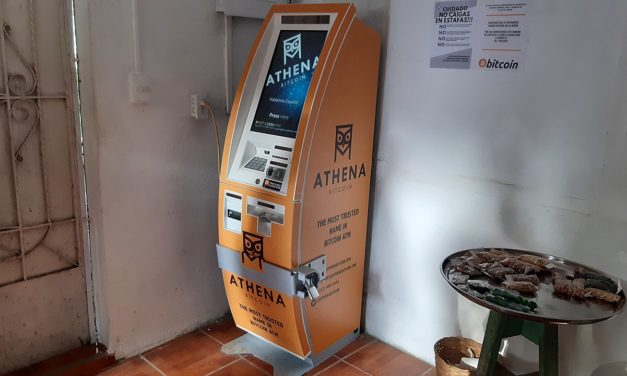
It was September 6, 2021, when the Central American nation of El Salvador decided to go ahead and purchase 200 Bitcoin (BTC), worth about $10.3 million at the time. The day was hailed as momentous in the history of the crypto market and was met with much fanfare. In fact, many proponents claimed that the purchase was just an inkling of what really lay ahead in terms of a global crypto-driven economy.However, a lot has changed since then, especially with BTC losing 55% off its value after scaling up to its November all-time high of $69,000. And, with Bitcoin’s value seemingly in a downward spiral at the moment, many critics have ramped up their criticism of El Salvadoran President Nayib Bukele and his decision to keep lapping up more BTC.To this point, the country’s coffers now contain a total of 2,301 BTC, which are estimated to be worth a little over $67 million at current prices. In fact, reports suggest that Bukele’s gamble on Bitcoin seems to have already resulted in heavy losses equal to the country’s upcoming interest payments.A rundown of El Salvador’s financesEstimates suggest that the ongoing crypto downtrend which has caused Bitcoin to lose approximately 40% of its value since late March has deepened El Salvador’s cumulative losses and it’s crypto holdings to about $40 million, nearly equal to the country’s next coupon payment of $38.25 million which is due mid-June.It is worth noting that since September 2021, Bukele and his team have poured in a whopping $105 million toward buying Bitcoin. However, the flagship crypto has dropped 45% since the country’s first purchase, cutting down the value of the nation’s BTC haul to just $66 million.At press time, El Salvador owes bondholders a cumulative total of $382 million in interest, which is to be paid out by the end of this year. To this point, in the month of July alone, the country has a payment worth $183 million due. El Salvador was reportedly in possession of $3.4 billion in its reserves back in April, with Bukele and his team planning on raising another $1 billion using a highly publicized Bitcoin-backed bond. However, the sale of the offering has been postponed multiple times over the past year due to an apparent lack of interest.Lastly, it is worth noting that since early 2021, El Salvador has been trying to lock in a $1.3 billion loan from the International Monetary Fund, an effort that seems to have lost steam following the country’s fierce BTC adoption drive. Regardless, the country needs to bolster its finances since the IMF believes that under its current policies, El Salvador’s public debt will rise to 96% of its GDP within the next 48 months, putting the country on a path of “no return.”Recent: Genomics company explores NFTs in hopes of advancing precision medicineExperts weigh in on El Salvador’s crypto “experiment”Cointelegraph reached out to Ben Caselin, head of research and strategy at cryptocurrency exchange AAX, for his take on whether El Salvador’s move to invest more money into crypto has been successful. He pointed out that the matter should not be looked into too deeply since Bitcoin’s volatility today is not too different from where it stood last year, adding:“Irrespective of market conditions, El Salvador is still able to benefit from remittances processed on the Lightning Network, which are cheaper than conventional money operators like Western Union and MoneyGram. The legal tender play also continues to make it easier for El Salvador to attract foreign investment and it continues to provide useful infrastructure for unbanked communities.”From a purely price-based standpoint, Caselin believes it’s important to provide ample context to investors right now since every country is currently facing some sort of economic pressure. Not only that, but most capital markets including the NYSE, Nasdaq and Dow have also been on the receiving end of a lot of volatility recently. “At this early stage, it’s too early to tell if it was too soon for El Salvador to hold Bitcoin on its national reserves,” he said.A somewhat similar sentiment was echoed by Antoni Trenchev, co-founder and managing partner for crypto lending platform Nexo. He told Cointelegraph that short-term volatility is nothing new to the crypto market and was likely factored in by the El Salvador government when they decided to go ahead with their purchase, adding:“Yes, El Salvador is in uncharted waters, but it’s far too early for severe skepticism, there is a lot more potential to uncover in this system and it seems Bukele’s administration has the right idea, namely sailing on ahead so that others can learn and benefit from this experience.”Lior Yaffe, co-founder of blockchain software development firm Jelurida, explained to Cointelegraph that in 2001, the government of El Salvador gave up control of its monetary policy by making the United States dollar legal tender, thus effectively putting the country’s monetary policy in the hands of the U.S. Federal Reserve Bank. Yaffe added:“The transition to Bitcoin has been a strategic move to position El Salvador as a local tech hub and lift it out of poverty. As such, it should be viewed as a long term play and should not be judged based on short term price fluctuations.”More apprehensionWith talk of Bitcoin’s volatility taking center stage in recent weeks, it is worth delving into the question of whether El Salvador’s aforementioned losses may dissuade other countries from adopting crypto as legal tender in the future. Trenchev believes that with the right mindset, every country can benefit from one of Bitcoin’s main features: to be a store of value in the face of severe inflation.He added that while the current bear market is bad, its effects can be seen across numerous sectors including stocks, exchange-traded funds, commodities and indexes — not just crypto. Not only that, in his view, the adoption of BTC is not just a profit-taking measure but rather an acceptance of the digital currency’s core underlying qualities.A bitcoin ATM in El Zonte. Source: Karlalhdz“El Salvador’s example is an indication that the market tumult is, for the time being, not putting off BTC’s adoption as legal tender. Rather, it’s a stress test and if El Salvador pulls through it, crypto adoption as legal tender could be in for its heyday,” Trenchev said. Adam Boalt, CEO of EarthFundDAO — a decentralizing crowdfunding platform — told Cointelegraph that despite the recent dip and bad press, we’re on course for mass adoption. In his view, once crypto establishes its use beyond just an improved version of fiat, we will continue to see widespread adoption and look back on El Salvador as being “ahead of the curve.”Jessie Chan, chief of staff at ParallelChain Lab — the firm behind public/private blockchain ecosystem ParallelChain — believes that at this point in time, Bitcoin has become an unstoppable force that no country can afford to ignore, adding:“El Salvador has shown us what life could be like with the mass adoption of crypto. Buying a cup of coffee, paying your phone bill, it is from the most trivial events that we discover a real transformation.”Providing a holistic overview of the matter, Chris Trew, CEO of blockchain-as-a-service platform Stratis, told Cointelegraph that, in the long run, El Salvador’s move to acquire more BTC will greatly benefit countries looking to legalize the asset since its adoption has really grown over the last 10 years. “Bitcoin has experienced a bear market before but not a global recession which may be on the horizon. Bear markets are where products are built.”Bitcoin seems primed to growYaffe believes that any entity that supports Bitcoin adoption — be it a national government or an institutional player — has already factored price volatility into the decision process. And, while seeing the price of Bitcoin plummet is not encouraging in the short term, he is confident that in the grander scheme of things, a decentralized currency offers great benefits for small and poor countries that may be struggling to support their local fiat.Recent: Crypto inheritance: Are HODLers doomed to rely on centralized options?Similarly, in Chan’s opinion, the willingness to accept Bitcoin as legal tender is bound to accelerate regardless of the bear market. He noted that the increasingly centralized and politicalized global financial status quo has left people, especially those living in smaller economies, with no choice in the face of losing their autonomy. Just last week, El Salvador hosted a slew of central bankers and financial authorities from 44 countries in an effort to educate them about Bitcoin and crypto/blockchain-tech in general. To highlight the power of digital currencies, each participating member was given a wallet containing BTC and shown how to use them to facilitate a wide array of everyday purchases.It will be interesting to see how things shape out for Bitcoin from here on out, especially with inflation levels soaring all over the globe and most experts predicting a bleak future for the global economy. In that regard, if Bitcoin is truly able to transform into an inflation hedge, as many have envisioned it to be, more and more countries may look to adopt the asset in the near-to-mid term.

Čítaj viac

What happened? Terra debacle exposes flaws plaguing the crypto industry

The past week has been a dark period in the history of crypto, with the total market capitalization of this industry dipping as low as $1.2 trillion for the first time since July 2021. The turmoil, in large part, has been due to the real-time disintegration of Terra, a Cosmos-based protocol that powers a suite of algorithmic stablecoins.Approximately a week ago, Terra (LUNA) ranked among the 10 most valuable cryptocurrencies in the market, with a single token trading at a price point of $85. By May 11, however, the price of the asset had dropped to $15. And, 48-hours on, the token has lost 99.98% of its value currently trading at a price point of $0.00003465.Due to ongoing collapse, Terra’s other associated offering, TerraUSD (UST) — an algorithmic stablecoin pegged to the United States dollar in a 1:1 ratio — has lost its peg to the dollar and is presently trading at $0.079527.The Terra ecosystem explainedAs highlighted above, the Terra protocol is driven via the use of two core tokens, namely UST and LUNA. Network participants are afforded the ability to mint UST by burning LUNA at the Terra Station portal. Simply put, one can envision the Terra economy as being one that consists primarily of two pools: i.e. one for TerraUSD and one for LUNA.In order to maintain UST’s value, the LUNA supply pool either adds to or subtracts from its coffers such that clients are required to burn LUNA in order to mint UST and vice versa. All of these actions are incentivized by the platform’s algorithmic market module making UST’s functional framework substantially different from that of its closest stablecoin rivals Tether (UDST) and USD Coin (USDC), both of whom are backed by fiat assets directly.To better illustrate the working of UST (or algorithmic stablecoins in general), it would be best to make use of a simple illustration. Say, for example, the value of UST lies at $1.01, then users are incentivized to make use of Terra’s swap module to trade $1.00 worth of LUNA for 1 UST, thereby allowing them to pocket a net profit of $0.01. Now, when the tables are turned and UST dips to $0.99, network users can do the exact opposite, causing the protocol to disallow some users from being able to redeem $1.00 worth of UST for $1.00 worth of LUNA. This once hypothetical scenario is now a living reality, resulting not only in the disintegration of the Terra protocol but also in maligning the reputation of the crypto industry in the eyes of investors all across the globe.Damage control but to no availAs soon as LUNA and UST went into freefall earlier this week, the protocol’s co-founder Do Kwon released a series of tweets announcing remedial measures to contain any further bleeding. As a preliminary step to counter UST’s decoupling with the dollar, Kwon reinforced the burning of UST, something which we now know in hindsight failed to work.2/ I understand the last 72 hours have been extremely tough on all of you – know that I am resolved to work with every one of you to weather this crisis, and we will build our way out of this. Together.— Do Kwon (@stablekwon) May 11, 2022Kwon claimed that by increasing the base pool from 50 million to 100 million special drawing rights (SDR) and decreasing PoolRecoveryBlock from 36 to 18, the protocol’s minting capacity could potentially be bumped up from $293 million to a whopping $1.2 trillion.Simply put, by deploying the aforementioned changes, the Terra team was afforded the ability to mint four times more UST out of thin air, a process that is now being jokingly being referred to as Kwontative easing. Providing an expert take on the matter, Jack Tao, CEO of cryptocurrency exchange Phemex, told Cointelegraph that looking back now, the disaster signals surrounding UST and LUNA had been there for quite some time.For starters, he believes that the general idea surrounding algorithmic stablecoins in itself is quite flimsy since these offerings lack any sort of actual backing asset. Secondly, the Luna Foundation had recently been making a lot of noise, as Do Kwon announced he was going to be purchasing a total of $10 billion in Bitcoin (BTC) to serve as UST’s reserves. In this regard, Tao added:“These purchases resulted in an oversupply of UST, which started falling rapidly once sell pressure began to mount on LUNA and then subsequently on UST. Once this selling happened, the Luna Foundation Guard had to offload its Bitcoin to maintain the peg. But, the reflexive sell pressure continued and all of the involved assets began to drop hard.”Recent: Go green or die? Bitcoin miners aim for carbon neutrality by mining near data centersTao went on to add that the Anchor Protocol — a savings, lending and borrowing platform built on the Terra Blockchain — which was promising an unrealistic 20% annual percentage yield (APY) on UST staking, also had a major role to play in the development. When sell pressure on UST rose, it lost its $1.00 peg and started to drop uncontrollably:“Once the Binance liquidity dried up, Curve’s two UST pools started selling UST, and Anchor’s borrowing levels declined by over $1 billion. As a result of this, the broader ecosystem has now been plagued with confidence issues, especially when it comes to stablecoins.”Terra officially goes offline post-collapse, albeit brieflyOn May 12, validators serving the Terra network collectively decided to put a halt to any digital activity related to the ecosystem in an attempt to mitigate potential governance attacks, especially as the network’s LUNA token dipped to under a penny recently. To this point, Terraform Labs’ official Twitter account revealed that all network activity had been stalled at block height 7,603,700. With LUNA’s value dropping by nearly 100%, the firm’s spokesperson suggested that developers are no longer confident in their abilities to prevent third-party governance hacks. However, the downtime was short-lived, with Terra’s core team revealing that it would restart operations as soon as validators were able to apply a patch that disabled all further delegations.As a consequence of the LUNA/USDT trading pair dipping below the 0.005 USDT mark, it was delisted from Binance. The move followed the removal of LUNA tokens by cryptocurrency exchange Huobi just a day earlier. Before the unfolding of the above-stated events, UST was the third-largest stablecoin by total market capitalization, trailing only Tether and USD Coin.A bad look for the industry as a wholeIn Tao’s view, this entire episode is going to have a negative impact on the image of the crypto industry, especially in the eyes of investors. In particular, he believes that the crash could result in lawmakers becoming more strict around decentralized stablecoins and could even lead to many governments aggressively exploring the creation of their very own centralized stablecoins and central bank digital currencies (CBDCs), adding:“The LUNA situation will, unfortunately, leave a bad taste in everyone’s mouth as this has caused a lot of great altcoins to lose tremendous value. But, a bigger more important aspect of this development is its timing. All this has happened at a time when there is a war raging in Eastern Europe, supply chains are being constrained globally, inflation and interest rates are rising.”Recent: Blockchains are forever: DLT makes diamond industry more transparentThat said, he did concede that there might be a small silver lining in all this: The event may result in the survival of only the best projects, with most sketchy platforms losing investor interest in a big way. “There will be much more scrutiny from now on and investors will feel comfortable choosing to invest in only the largest cryptos such as Bitcoin, Ether and Solana,” he said.Thus, it will be interesting to see how this story continues to unfold and what sort of repercussions this incident has on the development/evolution of the cryptocurrency market at large, especially as the traditional finance system also continues to be ravaged by a growing amount of adverse financial pressure.

Čítaj viac

Rising global adoption positions crypto perfectly for use in retail

Even though the cryptocurrency market seems to be going through a bit of a lull at the moment, there’s no denying the fact that the industry has grown from strength to strength over the last few years, especially from an adoption perspective. To this point, a recent study revealed that the number of adults in the United States using digital assets for everyday purchases will increase by 70% by the end of the year when compared to 2021, with the metric rising from 1.08 million to 3.6 million users.The study’s chief author suggests that as the crypto market’s volatility continues to reduce — thanks to the growing use of stablecoins and central bank digital currencies (CBDCs) — more and more people will look at these offerings as a legitimate means of payment. In fact, by the end of 2022, the research suggests that the total population of U.S adults making use of crypto will scale up to a staggering 33.7 million. By the end of 2023, this number could potentially climb to 37.2 million, a figure that is quite realistic, especially when considering the fact that investors entering the global crypto fray have nearly doubled across different countries like India, Brazil and Hong Kong within the last 12 months. On the subject, Narek Gevorgian, CEO and founder of CoinStats — a crypto portfolio manager and decentralized finance (DeFi) wallet — told Cointelegraph:“Crypto is taking a front row seat within the financial mainstream in many cases, not in a zero-sum way versus the existing established market. Millions of unbanked people have access to cryptocurrency transactions from their mobile phones, and due to this being an untapped market, it is hard to observe and measure its growth from the economic lenses we have in place today.”Crypto adoption in retail primed to growMax Krupyshev, CEO of crypto payments processor CoinsPaid, believes that while the aforementioned figure of 3.6 million is quite impressive, it still represents just around 1% of the American population. In his opinion, there is going to be exponential growth in cryptocurrency payments within the next 3-5 years, adding:“I think we will be able to talk about tens of millions of users in the United States alone by 2025. The American market is a fertile ground for any innovative solutions. Another factor driving crypto’s adoption as a day-to-day transactional currency is that it is becoming increasingly easier to buy, spend these assets with global brands.”He further stated that when it comes to crypto payments, Asia has the potential to overtake America in the long run since the region as a whole is quite flexible when it comes to accepting novel and upcoming technologies. “We should also pay attention to the growing popularity of cryptocurrencies in African countries. There is a great demand for crypto apps and alternative investment tools offering a low entry threshold,” Krupyshev added.Brandon Dallman, chief marketing officer for DeFi ecosystem Unizen, told Cointelegraph that for the longest time the retail payments/cross border remittance ecosystem was ruled by a select few players like Western Union, PayPal and Stripe. However, with the rising popularity of crypto in recent years, digital assets have helped people circumvent issues related to middlemen and high fees, as well as the inherent inhibitive red tapism associated with the traditional finance economy. He highlighted:“Fast blockchain networks are suitable rails for CBDCs like the digital dollar, euro etc. The blockchain that is able to cater to the demand put forward by financial institutions like stock exchanges and clearing houses will win the battle. We are seeing banks of all sizes dip their toes in the water to see how they can start to interact with the new digital world in front of them, driven by a growing fear of being left behind.”Recent: Go green or die? Bitcoin miners aim for carbon neutrality by mining near data centersMaybe not?Not everyone is convinced about crypto’s growing clout within the retail segment. For example, Ben Caselin, head of research and strategy for cryptocurrency exchange AAX, told Cointelegraph that while we may see the adoption of custodied stablecoins in the near future, it’s highly doubtful that we are headed toward some kind of crypto payments utopia, adding:“With increased integration, we can expect more vetting and regulation which will not bode well at all for crypto. There might be some venues where particular tokens may be the currency of choice, for example, a Bored Ape-themed restaurant is likely to accept payments in ApeCoin. But, other than that, I’m of the view that ultimately, real world payments and store of value utility will converge on Bitcoin, although this does not discount the continued growth of online and offline micro economies.”Nonetheless, Caselin said it’s encouraging to see the mainstream move toward a better and more open understanding of what money really is. “If we can see merchants or corporations actually holding the crypto assets they’re paid with, then this could get very interesting,” he noted.Which digital assets are suited for retail? As things stand, Dallman sees Solana (SOL) as a frontrunner when it comes to facilitating everyday transactions because the network offers fast speeds and extremely cheap gas fee rates, making the network more accessible. Furthermore, with major cryptos like Bitcoin (BTC) beginning to find mainstream adoption as legal tender, he sees the flagship asset gaining more popularity as a digital payment medium.Crypto point-of-sale terminal. Source: Intellogate Fintech SolutionsA similar opinion is shared by Krupyshev, who believes that Bitcoin, rather than any stablecoin, will become a more popular means of payment even though most products or services have their values denominated in U.S. dollars, adding:“I consider Bitcoin the most likely candidate for the role of a global payment medium. It has already proven its vitality, having overcome more than one crisis and survived more than one crypto winter.”That said, he conceded that it is highly unlikely that we will see the mass implementation of BTC-centric payments over the next couple of years. This is thanks, in large part, to the fact that production costs are still paid in fiat currencies and are usually tied to either the U.S. dollar, euro, British pound, yen or yuan.For Gevorgian, Bitcoin and Ether (ETH) seem to be two of the most likely candidates for global retail adoption, thanks to their market dominance and popularity with investors. “Bitcoin seems to be working for larger transactions, and slowly but surely it will become a more viable option for smaller transactions with the advance of solutions built on top of the Lightning Network,” he added.He further suggested that the most promising cryptocurrencies to gain ground in the payments arena will be those that are the most held and used. This will likely see the top-20 largest coins by market cap prevail as transactional currencies.Contrary to the opinions listed above, Yair Testa, head of business development for blockchain-based payments ecosystem COTI, has no doubt in his mind that stablecoins will be the number one choice for retail remittances in the near future. He told Cointelegraph:“Enterprises and merchants need to use a great portion of their revenue in order to cover their operational costs and can’t afford the risk. They need stability and assurance that their revenue will have the same value tomorrow as it does today. We see regulated stablecoins and CBDCs as the leading payment method in the long term.”Mainstream entities accepting cryptoWith crypto assets accruing a lot of mainstream support in recent years, the list of famous brands accepting digital currencies has been growing at a furious pace. For example, Microsoft currently allows its users to pay for its various in-house services — including Xbox Live, Microsoft apps, games, etc. — via Bitcoin.Overstock, an American internet furniture retailer, seems to be leading the roost when it comes to crypto shopping. This is because the company currently accepts a number of digital tokens alongside Bitcoin such as Litecoin (LTC), ETH and Monero (XMR). Similarly, Home Depot, the largest hardware store chain in the United States, allows Bitcoin payments via Flexa’s checkout system — a crypto payments ecosystem backed by Gemini — thus making it possible for individuals to build an entire home using just crypto.Recent: Can Solana become the dominant PoS chain despite persistent outages?Starbucks has also partnered with futures exchange Bakkt, allowing users to pay for their morning cup of coffee (and much more) using digital assets. The same is also true for American multinational supermarket chain Whole Foods, which recently partnered with spending app SPEDN, allowing users to buy all of their groceries using BTC, LTC, or the Gemini dollar (GUSD). SPEDN is not just relegated to Whole Foods since it also allows users to spend their digital holdings at Regal Cinemas, GameStop, Jamba Juice and Baskin Robbins.On the telecoms front, AT&T is the first American mobile phone provider to offer its clients crypto payments, albeit indirectly. Using BitPay, a third-party payment gateway, users who want to avail of the company’s various offerings/services can do so using Bitcoin as well as a few other assets.Apart from the names listed above, some other prominent brands that currently take crypto payments include entertainment firm AMC, travel booking operator Travala, American department store franchisee JCPenney, the Dallas Mavericks NBA team and GameStop, among many others.As we head into a future where digital currencies continue to increase in popularity at a rapid rate, it will be interesting to see how crypto fits into the global retail landscape, especially in terms of either competing or complementing the existing fiat payment system that is in place globally.

Čítaj viac

Four years on, Telegram’s blockchain project gains ground in Africa

It was 2018 when privacy-focused messaging platform Telegram announced that it was in the process of building a blockchain-based decentralized computer network technology called The Open Network (TON). However, following a lengthy litigation battle that lasted until May 2020 with the United States Securities and Exchange Commission over its $1.7 billion initial coin offering (ICO), Telegram had to sever its ties with the project, leading many to believe that TON was done for.That said, far from everyone’s expectations, the TON project seems to have found a new lease on life and is thriving. For starters, the TON Foundation recently revealed that it was choosing TONcoin as its official ecosystem fund, securing an initial collective commitment of approximately $250 million from major firms within the industry including Huobi Incubator, KuCoin Ventures, MEXC Pioneer Fund, 3Commas Capital, blockchain startup Orbs and TON Miners.As part of the development, reports suggest that TONcoin will be working closely with the TON Foundation to deploy the aforementioned sum of money to explore a wide array of opportunities within the nonfungible token (NFT), Web3 and decentralized finance (DeFi) spaces, as well as for the incubation and development of various novel programs, grants, hackathons and more. On the subject, TONcoin Fund managing partner Benjamin Rameau said:“TON may become the first blockchain network accessible to millions of users thanks to the Telegram integration efforts by the community via in-app bots […] TON will not just be the blockchain that people use on Telegram — it will define people’s online identity and will act as a bridge between all their Web3 and Web2 activities.”Developments surrounding TONEven after shutting down its involvement with TON a couple of years back, Telegram founder Pavel Durov has publicly expressed his support for the project, especially during Q4 2021 when Telegram revealed that it was integrating TON’s payment solution into its existing user interface.It also bears mentioning that the TONcoin fundraiser comes on the same day that a number of African nations — namely Cameroon, the Democratic Republic of the Congo (DRC) and the Republic of the Congo — disclosed their plans to adopt TON’s proof-of-stake (PoS) blockchain for driving their future economic progress. To this point, reports suggest that the DRC is even considering releasing a multipurpose national stablecoin using the TON blockchain. To get a better idea of the situation, Cointelegraph reached out to the TON Foundation, with a representative for the organization pointing out that the company is currently in “advanced level talks” with several governments across Africa, plus the three countries listed above. He added:“The goal of these collaborations is to facilitate their adoption of cryptocurrency and blockchain based solutions on the TON blockchain. This is a central component of their plans to drive future economic progress.”Pavel Durov, founder of Telegram and one of the the TON authors. Source: TechCrunchThe representative further stated that the minister for digital economy of the Democratic Republic of Congo, Désiré Cashmir Eberande Kolongele, is looking to commence the launch of a national stablecoin on the TON blockchain, democratizing access to the nation’s financial system where millions of citizens still remain under and unbanked. In this regard, Kolongele was quoted saying:“The ability to integrate applications with the Telegram platform and reach mobile users makes TON the obvious choice as we step boldly into the world of cryptocurrency and blockchain.”TON’s long-term intention with these moves is to potentially integrate with Telegram, thereby allowing users across Africa to facilitate payments with the touch of a button, all while providing people living across these regions to tap into the burgeoning DeFi system.Recent: Is asymmetric information driving crypto’s wild price swings?The last couple of months have continued to see the TON network achieve new all-time highs as well as meet many of its envisioned milestones that had been laid out in its roadmap. For example, a spokesperson for TON told Cointelegraph that the total number of wallet addresses on the TON blockchain have more than doubled since the start of the year, recently surpassing the 400,000 mark.Last month, the project finalized its nonfungible token standard known as “Jetton,” resulting in more and more investors — both retail as well as institutional — gravitating toward the project. To this point, Bit.com, a crypto exchange helmed by fintech firm Matrixport that has $10 billion in assets under management, announced a strategic partnership with TON to develop, enhance and expand the project’s existing infrastructure.The future looks bright In recent years, a growing list of prominent cryptocurrency projects has continued to make inroads into Africa. For example, Cardano has been quite active within the region over the last couple of years, with company founder Charles Hoskinson stating in a recent interview that he sees more than 100 million users from the continent entering the DeFi sector within the next three years.Similarly, projects like Ethereum, Stellar and Celo are also vying to mold Africa’s rapidly evolving Web3 economy. For example, the Ethereum Foundation recently committed significant financial resources toward an insurance program relating to 6 million Kenyan farmers.The Stellar Development Foundation has announced multiple initiatives including a partnership with African unicorn Flutterwave to launch new Europe-Africa remittance corridors, an investment in a Nigerian remittance platform, as well as a $30 million matching fund, which has invested in Afriex, a remittance app that allows users to send/receive funds from Nigeria, Ghana, Kenya, Canada and the United States.Recent: How Web3 is redefining storytelling for creators and fans through NFTsWithin this context, TON’s continued forging of long-term, strategic partnerships with prominent African nations stand to transform into a widely used blockchain project. In fact, Minette Libom Li Likeng, minister of posts and telecommunications for Cameroon — one of the best-endowed primary commodity economies in sub-Saharan Africa — believes that TON can revolutionize his country’s payment landscape radically while promoting financial inclusivity at levels that have yet to be witnessed in the region before.Similarly, Congolese Minister for posts, telecommunications and the digital economy Léon Juste Ibombo is of the view that TON can serve as an “invaluable, practical instrument for the growth and creation of wealth” within his country, both at the government as well as grass-root level. Moving forward, it will be interesting to see how TONs use cases continue to evolve and whether or not the project is able to position itself as a market leader within the global blockchain ecosystem. 

Čítaj viac

Získaj BONUS 8 € v Bitcoinoch

nakup bitcoin z karty

Registrácia Binance

Burza Binance

Aktuálne kurzy