Autor Cointelegraph By Shiraz Jagati

What new EU sanctions mean for crypto exchanges and their Russian client

Nine months into the conflict between Ukraine and Russia, sanctions against the latter have continued to grow at an aggressive pace. This time around, legislators for the European Union announced that they are introducing a complete ban on all cross-border crypto payments between Russia and its citizens. To elaborate, a prohibition of all “crypto-asset wallets, accounts, or custody services, irrespective of the amount of the wallet” has now been initiated by the EU in response to Russia’s continued annexation of Ukrainian land, repeated mobilization of troops within the country and threats of nuclear escalation.It is worth noting that previous sanctions had limited cryptocurrency payments between Russian to EU wallets to around approximately $9,700, or 10,000 euros. The new ban seeks to deprive the Kremlin’s military power while curtailing critical components of its industrial complex.Russian crypto users under fire from all cornersIn light of the EU’s aforementioned sanctions, a whole host of cryptocurrency exchanges popular in the region, including LocalBitcoins, Crypto.com and Blockchain.com, issued emails to their customers telling them to withdraw their funds as soon as possible since they would be unable to make use of their services henceforth.It is worth considering that as of September 2022, LocalBitcoins accounted for a whopping 8% of Russia’s crypto trade volume, the exchange’s largest client base by far. Moreover, before the ban, Russian users were responsible for facilitating just under 20% of all total BTC trading volumes on the exchange.One of the world’s largest crypto exchanges, Binance, is also working toward implementing the new restrictions. However, a representative for the firm told Cointelegraph that these changes may take some time to go live, with there being no set date for the same. Similarly, Bitfinex, an exchange that had previously spoken out against the growing sanctions being levied against Russian nationals, recently changed its tune, claiming that it may have to amend its policies if “directed by the regulatory authorities” by which they are governed.Recent: Blockchain gaming adoption means more options for gamersLastly, earlier this month, popular blockchain developer Dapper Labs suspended Russian citizens from accessing its wide array of digital asset services. As a result, users from that side of the world will no longer be able to access the firms’ popular nonfungible token (NFT) marketplace alongside several other crypto products.Impacts of the ban To better understand the situation, Cointelegraph reached out to Ajay Dhingra, head of research and analytics for cryptocurrency exchange Unizen. Taking a more holistic approach toward the matter, he highlighted that one primary use case of digital assets is to assist citizens of a country at war to protect their savings, adding:“The ban will bring pain to Russian retail and some financial institutions. Given the fact that BTC experienced sharp appreciation in price when the war broke out, European Authorities took note of this loophole in their strategy to curtail and suffocate Russia.”Similarly, Przemysław Kral, CEO of Zonda — one of Eastern Europe’s largest exchanges by volume — told Cointelegraph that the sanctions, along with the EU’s yet-to-be-finalized Markets in Crypto-Assets regulation, which will be enforced by the EU’s Financial Action Task Force, can potentially redefine the region’s crypto landscape for the foreseeable future, adding:“As the situation escalates, irrespective of their personal views on crypto regulation, the decision by exchanges to comply with the new EU sanctions is a moral and ethical responsibility that all companies should carefully consider.”What happens to the ruble pairs held by these exchanges?In the past, regulators have taken a heavy hand with exchanges that continue to allow citizens of blacklisted countries to trade on their platforms, which leads to the question: What will exchanges with massive volumes of rubles trading pairs do with these assets? Dhingra said: “This time, they will be cautious, given the brevity of the situation. The exchanges are now left with no option but to realize major losses on their balance sheets. However, the ban will bring decentralized finance back into the spotlight, as it provides a censorship-resistant and easily accessible infrastructure for people living in a geopolitical turmoil.”Kral noted that as of now, it is unclear whether exchanges will be forced to return funds to Russian users, block access to them or freeze their accounts until sanctions are lifted. Lastly, he highlighted that Zonda closed all Russian-held accounts during the first round of sanctions back in May, returning all ruble-paired assets to their rightful owners.Many exchanges still operational amid banAs highlighted previously, even though Binance is still considering limiting its services for Russian users, it is currently operating as per usual. Similarly, United States-based exchange Kraken has not laid any impositions on its Russian clients, with there being no indication as to whether or not it decides to voluntarily adopt EU requirements.Another popular exchange that has yet to initiate any sort of ban is Antigua and Barbuda-based FTX. The same has been the case for the popular Russian cryptocurrency platform Garantex, which still provides traders in the region with a wide range of advanced services such as futures and derivatives.Other popular platforms operating in the region include Seychelles-registered Huobi Global, OKX, Kucoin and Mexc Globa. In fact, Singapore-registered Bybit told a crypto outlet that it will continue to stand by its ethos of freedom, transparency and decentralization and not impose any sanctions against Russian clients, many of whom may or may not even agree with the war or the stance taken by their leaders.Recent: The state of crypto in Western Europe: Swiss powerhouse and French unicornsLastly, it should be noted that United Kingdom-based crypto exchange Exmo, which is extremely popular across Eastern Europe, recently sold its Russian business to a local vendor earlier this year. The platform continues to remain operational in Russia and its neighboring nations of Belarus and Kazakhstan via its Exmo.me domain name.Thus, as the war between Ukraine and Russia continues, it will be interesting to see how crypto companies operating in the region adapt to new and shifting geopolitical realities. 

Čítaj viac


What Cardano’s Vasil hard fork means for the blockchain

After several delays and some setbacks, Cardano’s long-awaited Vasil upgrade finally went live on Sept. 22. From the outside looking in, the hard fork is designed to help improve the ecosystem’s scalability and general transaction throughput capacity as well as advance Cardano’s decentralized applications (DApps) development capacity. To commemorate the event, an announcement was made by blockchain firm Input Output Hong Kong (IOHK) — which currently oversees the design, building and maintenance of the Cardano platform — just minutes after the development.To obtain a more holistic overview of what the upgrade represents and its potential impact on Cardano (as well as the crypto ecosystem at large), Cointelegraph reached out to Shahaf Bar-Geffen, CEO of COTI, a protocol for creating decentralized payment networks and stablecoins. In his view:“The Vasil Upgrade heralds the dawn of a new era for the Cardano ecosystem and the decentralized finance space at large. The upgrade aims to improve the network’s scalability and enhance Cardano’s smart contract capabilities.”Bar-Geffen further noted that the hard fork will significantly improve the efficiency of Djed, an algorithmic stablecoin developed jointly by IOHK and the COTI Group, increasing the number of transactions carried out on the Djed platform and thus helping position Cardano as a prime contender for stablecoin transactions.A closer look at what Vasil has to offerBefore looking at the functional and operational benefits afforded by the Vasil hard fork, it would be best to understand what exactly a hard fork is. In its most basic sense, a hard fork is a network upgrade set in motion when those governing a blockchain platform decide to add or fix certain features to the ecosystem. In other words, when a hard fork takes place, the network splits into two versions that run separately, where one version follows existing features and rules while the other continues as an upgraded version of the network. Expounding her view on the technical aspects of the upgrade, Charmyn Ho, head of crypto insights for cryptocurrency exchange Bybit, told Cointelegraph that at the application layer, Cardano’s Vasil hard fork aims to bolster the network’s current smart contracts to curate a better experience for both users and developers alike, adding:“This will simultaneously lead to a more efficient building process with regard to applications on the chain. At the infrastructure level, the many upgrades that come with the Vasil hard fork will allow Cardano to increase its block size and TPS whilst maintaining its POS mechanism.”Ho further highlighted that the Vasil hard fork is aimed not just at improving the scalability of the chain and optimizing its existing features but also at bolstering the network’s stability and connectivity. “This is a huge and prominent step forward for Cardano as the upgrade is expected to reduce the network’s transaction costs while increasing transaction speeds,” she added. Recent: Ethereum post-Merge hard forks are here — Now what?Lastly, it is worth noting that Vasil is not Cardano’s first major network upgrade because a year or so ago, the project witnessed the launch of another hard fork called Alonzo, which was designed to allow users to devise DApps using smart contracts. The Alonzo upgrade, alongside many other developments, was Cardano’s way of providing users with an attractive alternative to Ethereum, another platform that allows for the seamless development of novel applications using smart contracts.Why is Vasil so important?Named after a prominent member of the Cardano community who passed away in 2021, Vasil St. Dabov, the upgrade will enhance the ecosystem’s transaction throughput, efficiency and block latency speeds. Furthermore, the hard fork will see the implementation of a technique called diffusion pipelining, which seeks to improve block propagation times while increasing the network’s transaction processing capabilities.The Vasil hard fork will introduce three key Cardano Improvement Proposals (CIPs), namely CIP-31, CIP-32 and CIP-33. In this regard, CIP-31 will spur the introduction of a new reference input mechanism that will allow DApps to access transactional output data without having to recreate it as before, making the entire process extremely streamlined and time-saving. At the same time, CIP-32 is designed to enhance Cardano’s native decentralization levels by introducing an on-chain data storage feature for network participants.CIP-33 will make transactions lighter by making changes to the system’s native programming script, allowing for faster processing as well as reduced fees. Lastly, another improvement called CIP-40 will be introduced as part of Vasil. It will introduce a new output transaction mechanism to help improve block transmission without full validation. Other updates include an enhancement of Cardano’s native smart contract programming language Plutus, which will now be more functionally advanced than its previous iteration. Not only that, Vasil will also improve the platform’s security by making it easier to interface with Cardano’s UTXO model (which has been built to resemble that of Bitcoin) while keeping its transaction load off-chain.Potential effects on ADAWhile the first round of the hard fork started on Sept. 22, the remaining upgrades are set to take effect on Sept 27. To this point, the second phase of the hard fork will look to redefine Plutus’ cost model, which has a direct effect on the processing power and memory fees required to govern Cardano’s native smart contracts.In addition to the Vasil upgrade, the Cardano team revealed that it has been working tirelessly on the development of its layer-2 scaling solution — the Hydra head protocol — which is capable of processing transactions from the Cardano blockchain while still making use of it as its core security and settlement layer. To this point, a recent update by the Cardano team revealed it had successfully addressed a known issue with Hydra’s node framework. As things stand, the protocol does not have a fixed release date. However, the IOHK team has hinted that the offering could make its way into the market sometime in late 2022 or the first quarter of 2023.Recent: El Salvador’s Bitcoin decision: Tracking adoption a year laterVasil was originally slated to go live earlier this year but faced numerous setbacks. Even though the upgrade is live now, the ecosystem continues to reel in from the impact of these delays. For example, since the start of 2020, Cardano’s native cryptocurrency, ADA, has continued to witness a dip in its transaction volume. Not only that, but from a purely price-performance standpoint, the upgrade has not been able to do much in terms of spurring ADA’s value, with the currency trading down less than 1% on the week.Despite ADA’s price action continuing to remain quite lackluster, the fact that the Cardano ecosystem has made such tremendous strides over the past year shows that the project seems to be primed for big things in the near to mid-term.

Čítaj viac

Blurring the line between crypto and TradFi could redefine global finance

Despite the current struggle in the global economy, the gap between traditional finance (TradFi) and crypto seems to be closing with each passing day. For example, earlier this month, Vienna-based fintech unicorn Bitpanda announced that it was adding commodities to its list of investment options, thus allowing investors to rake in profits from short-term price fluctuations related to traditional instruments such as oil, natural gas and wheat.In a recent interview with Cointelegraph, the company’s CEO, Eric Demuth, noted that the bear market had had no major impact on investor demand. He claims that more people are now looking for solutions that can bring the world of TradFi and decentralized finance (DeFi) together. Not only that, there are lessons to be learned about what works out best for consumers operating within both realms. For example, while TradFi platforms can improve their accessibility and transparency mechanisms, DeFi ecosystems can learn a lot about risk mitigation from traditional finance entities.Furthermore, with statistical data showing that more than 300 million individuals now own some cryptocurrency, more and more players from the two worlds are beginning to arrive at a middle ground. For example, many major institutions worldwide have been adopting crypto at breakneck speeds, with a recent research study showing that 76% of all major financial institutions will most likely be making use of digital assets within the next 36 months.Is the confluence of TradFi and crypto imminent?According to Victor Tran, co-founder and CEO of Kyber Network — a liquidity hub powering the Ethereum-based decentralized exchange (DEX) KyberSwap — it is only logical that traditional finance players are turning toward crypto since they want to increase their market share within an exponentially growing industry — one that has been witnessing more and more peer-to-peer (P2P) and commercial transactions by the day. By the same token, he highlighted that DeFi, too, is experimenting with more use cases, those that can maximize market participation as well as help boost transaction volumes, adding:“It’s all about giving users benefits. We believe that TradFi and DeFi can co-exist synergistically and provide users unparalleled access, control and choice. Greater institutional participation, security measures and use cases will create choice, excitement and confidence for users. Sustainable overall liquidity in the market with institutional participation will also help with the challenges of volatile liquidity during downturns.”Furthermore, Tran believes that privacy-focused noncustodial solutions will become mainstream soon, with multichain, secure DEXs such as KyberSwap laying the bedrock for such a transparency-oriented economy. “Addressing users’ security wants, and pain points are always first priority,” he concluded.Jazear Brooks, CEO and founder of omni-chain DEX SifChain, shared a somewhat similar opinion, telling Cointelegraph that crypto and TradFi markets have been circling each other for the past few years, with many individuals from the latter having already joined the digital currency bandwagon after realizing that the best crypto projects can massively out-earn almost all of their conventional finance counterparts. He added:“The chaos of crypto markets due to the collective inexperience of the industry reflects a world of pitfalls that have already been mastered by TradFi. TradFi is the elder statesman in the room representing timeless virtues of profitable investing in an unpredictable world.”Brooks closed out by saying that the protective mechanisms of corporate governance can be combined with the populist, fast-paced, communal benefits of decentralized autonomous organizations (DAOs) to create a holistic finance system, one that is fair, transparent and inclusive in nature. “We’ll see market efficiencies increased as trad-fi systems are reimagined to import crypto values, and those market efficiencies can then generate additional societal value,” he opined. Crypto and TradFi stand to benefit each otherNicola Onassis, co-founder and CEO of regulated investment platform Rebuschain, told Cointelegraph that the integration of crypto into TradFi — and vice versa — can be seen as the natural evolution for both environments, especially as the two domains stand to help each other. In his view, DeFi has created new investment opportunities that don’t exist within traditional markets, allowing more people to accrue wealth for themselves, adding:“The crypto sector can sometimes be hard to make inroads into, especially for those sitting on the fence. That’s why it is vital for platforms to be created that allow users to participate in these novel investment forms with ease. The goal on both sides is to generate more revenue and investments by working together, they have a chance to increase that outcome exponentially since there is no conflict.” He further highlighted that, as things stand, investors unfamiliar with the crypto market have to deal with platforms that can often be difficult to use. However, everyone can benefit immensely by bringing players from the traditional realm and fostering new ecosystems that provide a more user-friendly experience. “Having a platform that takes out all of the operational complexities and minimizes risks will increase confidence and adoption,” Onassis stated.Lastly, he thinks that it is important that regulators allow crypto and TradFi to come together and create viable solutions for their customers instead of complicating things by introducing unnecessary regulations. “Regulators giving fair, specific and clear rules can push the crypto sector forward. The crypto industry should work with regulators to achieve these results,” he said.Could this reduce market volatility?Maximiliano Stochyk, head of marketing for ChainPort.io — a permissionless blockchain bridge for crypto tokens — told Cointelegraph that the confluence of crypto and traditional finance will not only allow non-tech savvy investors to make their way into the crypto sector but also introduce a level of stability previously unwitnessed in the digital asset space.He noted the already growing list of mainstream financial institutions that are offering their clients the option of buying crypto using their fiat assets, among other similar options. “The fintech’s that offer debit cards are also acting as major gateways to mass adoption,” Stochyk stated.Stochyk said that for mass crypto adoption to happen in the near-to-mid-term, the two spaces need to co-exist with one another. And much like Onassis, he also believes that regulation is right around the corner, with companies now needing to act accordingly to help introduce more confidence within this space:“Building products that are ready to comply with regulations is the way to go. The merging of crypto and TradFi will bring a lot of new institutional investors and also a lot of retail investors who don’t want to invest in crypto. When it comes to centralized and decentralized, you can’t live without the other, you will always need a centralized exchange to withdraw money to your bank for example. So, they all need to coexist.”Therefore, as the world continues to gravitate toward an economic landscape that favors the ethos of decentralization/transparency, it will be interesting to see how players from the crypto and conventional finance ecosystems continue to synthesize their goals and create a new paradigm that allows users to enjoy the best of both worlds.

Čítaj viac

Crypto’s correlation with mainstream finance could bring more bleeding soon

There’s no denying the fact that the crypto market has been faced with an obscene amount of bearish pressure over the last eight odd months. Despite this, September has been especially turbulent for the industry, with the price of Bitcoin (BTC) dropping below the all-important $20,000 psychological threshold before forging a comeback. While these dips have called into question the asset’s status as digital gold and a hedge against inflation, a key question worth examining is how deeply intertwined the crypto market with the global economy is.To this point, historic inflation numbers have driven the price of everything under the sun — from fuel to food — to record highs. And, despite the S&P 500, a stock market index tracking the performance of 500 large companies listed on exchanges in the United States, being down year-to-date (YTD), its performance has been better than that of the crypto market by a decent margin.Charmyn Ho, head of crypto insights for cryptocurrency exchange Bybit, pointed out to Cointelegraph that just like any other market, the crypto industry is currently being subject to volatilities brought about by macroeconomic factors, adding:“It is definitely fair to say that the global financial landscape has placed a strain on Bitcoin’s prices. With continued liquidity pressure due to quantitative tightening and uncertainty, investors are tending to shy away from risk assets, which in turn is limiting any upside momentum for the crypto market.”On the recent recovery above $20,000, Ho noted that whether this is a trend reversal — after a recent confluence of on-chain metrics hinted at a bottom formation — or just a temporary attempt to flush out excessive leverage is still too early to tell. Reflecting on historical data, she believes that the prolonged duration of BTC’s current dormancy may indicate the formation of a reliable floor price, which can help pave the way for the next bull trend.Is crypto’s link with the global economy now inextricable?Ajay Dhingra, head of research and analytics at crypto exchange Unizen, told Cointelegraph that rising inflation has dramatically decreased the risk appetite of investors for crypto and weakened the global economy to a point where Bitcoin has not been able to keep its promise of a safe haven against inflation. This is largely due to its high correlation with the stock market and unpalatable volatility. He added that while the future remains as promising as ever for blockchain technology, due to the crypto market’s deepening link with the broader economy, there may be even more pain for investors in the near term. Dhingra noted that it is always consumer sentiment that dictates any market, adding:“Right now, the world is going through a massive crisis because of the Ukraine war, rising prices and weak economic activity, which has irked the retail sector. But in the long run, the innovation brought forward by blockchain technology will inevitably break the correlation.”In Ho’s opinion, the existing correlation is likely to persist. However, it is hard to predict its extent since the economy’s recent downturn has had implications of unimaginable proportions on investors and traders worldwide.Similarly, she pointed out that prevailing macroeconomic conditions have taken an unprecedented toll on the market sentiment of risk-on and risk-off investments as well, adding that if the economy sees a further decline, investors across the board will continue to lay off assets like crypto and move toward fiat-centric offerings like government bonds. She added:Recent: How adoption of a decentralized internet can improve digital ownership“I think with cryptocurrencies becoming more widely accepted, links between traditional finance and the crypto economy can definitely be drawn. However, these two still maintain some form of independence from one another since they have vastly different features and uses.”Frederic Fernandez, the co-founder of DEXTools — a blockchain data aggregation platform — believes that even though economic conditions across different markets are affecting Bitcoin quite heavily, when the dust finally settles, not only will people understand the advantages of crypto as a refuge from the traditional finance sector but the market at large could see a solid uptrend. He added:“Big players are now into crypto too and are building their future portfolios, they are taking advantage of this market to create good strategies for their funds and customers, but it will take time to see the consequences when the market will be more mature.”What happens now for the crypto market?Despite Bitcoin rallying over the last few days, many analysts believe that it is highly unlikely that the currency — as well as the crypto market at large — will be able to muster the kind of momentum that it needs to move past this dull phase any time in the foreseeable future. For example, Akeel Qureshi, chief marketing officer for decentralized finance (DeFi) protocol Hubble Protocol, told Cointelegraph, “According to the Bitcoin maxis, this is the environment in which the asset was meant to thrive. While that theory was formulated long before players like JPMorgan bought in, currently, there just does not seem to be much good news on the horizon,” adding: “Bitcoin is tied to the policies of the Federal Reserve.”He noted that while Bitcoin has long been touted as an inflation-proof asset — a narrative which still holds true depending on when one bought the token — at the moment, it is witnessing falling prices, especially as the job market continues to weaken.Qureshi, however, stated that not all cryptocurrency prices are as inextricably linked to the global economy as Bitcoin. He believes that Ether (ETH) has already started to pull away from BTC ahead of its long-awaited merge to a proof-of-stake consensus model, which is set to take place next week, adding:“This is potentially heralding the so-called ‘flipping,’ where growth in ETH begins to outpace that of Bitcoin. Meanwhile, active traders are finding good opportunities among altcoins and smaller cryptocurrencies on the vast array of blockchains and decentralized networks that now exist.” Lastly, he noted that the stablecoin market remains incredibly strong regardless of rising interest rates because it is still impossible to find a bank capable of giving an interest rate on cash that is higher than the prevailing inflation. “In decentralized finance this is possible on U.S. dollar-backed stablecoins. As such, for those willing to explore, crypto has boundless opportunities.”Could a trend reversal be possible for BTC?According to some analysts, the recent decline in crypto prices hasn’t been spurred by rising inflation but by soaring interest rates that have been hiked to help wipe out excess liquidity in the market, clamp down on inflation and strengthen the U.S. dollar. Furthermore, higher interest rates also equate to better treasury yields and increased investment from foreign bond buyers. Therefore, a trend reversal in the near term may be difficult, albeit not impossible.That said, over the past decade, Bitcoin has largely outperformed most stocks while gaining mainstream acceptance by many entities in traditional finance. Investment giant BlackRock recently started pumping its client’s money into the digital asset, suggesting a potential uptick in crypto’s future. Also, it is worth noting that the last time BTC dipped below $10,000, it swiftly proceeded to scale to an all-time high of $69,000.Lastly, some experts believe that Bitcoin could soon continue to lose its strong correlation with the stock market, highlighting that over the last 14-day stretch, people have been selling on the S&P 500 while BTC has gained nearly 10% value. Another thing that seems to be favoring Bitcoin is that major fiat assets such as the euro, the Great British pound and the Japanese yen are sitting at record lows in comparison with the U.S. dollar. Recent: How GameFi contributes to the growth of crypto and NFTsRegarding this point, Ben Caselin, vice president of global marketing and communication for cryptocurrency exchange AAX, told Forbes that there is currently a very strong relationship between the U.S. dollar’s price action and that of Bitcoin, adding that while the dollar has shown decent strength over Q2 2022, any drawdowns could spur a rally for Bitcoin in the near term. Thus, as we head into a future fueled by financial uncertainty, it will be interesting to see how things play out for the crypto market, especially since there seems to be little respite coming from the traditional finance front anytime soon.

Čítaj viac

Mt. Gox creditors fail to set repayment date, but markets to remain unaffected

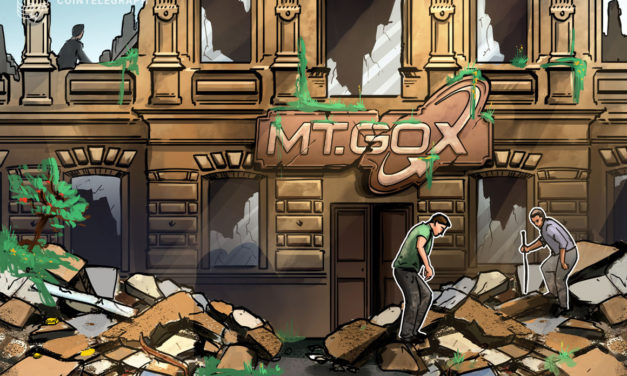
Eight years ago, in 2014, the crypto world was rocked by the crippling hack of Mt. Gox, a popular Bitcoin (BTC) exchange, which was forced to shut down after miscreants were able to make away with approximately 850,000 BTC, worth more than $16 billion at today’s exchange rates. At the time of the incident, the Tokyo-based exchange was the world’s largest cryptocurrency trading ecosystem, processing over 70% of the crypto market’s daily Bitcoin trading volume. However, due to its lack of quality security protocols, hackers were able to make their way with the crypto assets of over 24,000 customers, which is still one of the largest such incidents in the history of the digital asset industry.Now nearly a decade removed, Mt. Gox customers affected by the hack have been issued a notice that they have until Sept. 15 to make or transfer a claim. However, the payouts have been engulfed in a long-standing legal battle, with the rehabilitation plan being delayed numerous times. Recently, there have been rumors that the payout could happen soon, potentially in a major Bitcoin dump.The rumors gained so much traction that Mt. Gox creditors recently had to take to social media to say that they were completely false, with one highlighting that the defunct exchange’s repayment system is still quite far from going live.Creditors set the record straight As part of a recent Twitter thread, Eric Wall, a creditor for Mt. Gox, noted that contrary to the news floating on the internet that 137,000 BTC would be dumped into the market soon, the exchange had not yet devised the infrastructure needed to facilitate such a move and, therefore, there would be no repayments anytime soon.Furthermore, as things stand, Wall highlighted that customers affected by the Mt. Gox hack have not even been able to register the address where their due Bitcoin and Bitcoin Cash (BCH) payments need to be transferred, signaling that there is no immediate reason to worry about an impending market crash.The creditor also believes that the payments will most likely take place in many installments, thereby calming fears that thousands of BTC will be sold all at once and subsequently dump the price of the flagship crypto. Lastly, Wall noted that the crypto exchange has yet to issue an exact timeline regarding the repayment process, further arguing that even if the BTC were released, it would make sense to “buy rather than sell” the asset due to the prevailing market conditions. At press time, BTC is trading at $18,893.Similarly, Marshall Hayner, another Mt. Gox creditor, took to Twitter to confirm that Mt. Gox was nowhere close to issuing its due payments. He assured market participants that a vast majority of the individuals due to receive Bitcoin had “vowed” not to sell their holdings in the near term.The proposed redistribution plan and its possible implicationsEarlier this year, in July, Nobuaki Kobayashi, the appointed rehabilitation trustee for the Mt. Gox rehabilitation plan, announced to the public that the exchange is preparing a repayment plan. In an official document, he and his team noted that eligible individuals have the option of receiving their payments in the form of either BTC or BCH. Recent: Ripples of Bitcoin adoption at Biarritz’s Surfin Bitcoin Conference in FranceThe rehabilitation plan first came into existence two years ago and was approved last year. However, out of the 850,000 BTC owed, the exchange only has approximately 150,000 BTC to pay its creditors. Providing his insights on the matter, Konstantin Shirokov, a representative for decentralized money market Fringe Finance, told Cointelegraph:“The distribution of the said coins is just a matter of time, and this accounts for what has fueled the rumors about the exchange finalizing plans to release this money. The agitation of the potential beneficiaries is very valid, and so are the concerns of the investors in the broader digital currency ecosystem about what the release and probable sell-off of that massive amount of coins can have on the price of Bitcoin.”He added that while the proposed coins are worth just about $2.9 billion at today’s prices, which should not weigh the market down so much, the general sentiment in the market is rather negative. “As such, the release of the coins and the likely offload can depress the price of Bitcoin in the days following the release,” Shirokov stated.Lastly, creditors are due to receive an initial base payment, after which they can choose to take the remainder of their funds via a lump sum payment or smaller reimbursements at a later stage. The repayments are being made via cash reserves acquired via the liquidation of Mt. Gox’s BTC coffers.Mt. Gox’s stolen BTC stash moves after nine yearsLate last week, it came to light that two old Bitcoin addresses created back in 2013 sent approximately 10,000 BTC to several different crypto accounts. Using heuristics and clustering techniques, it became apparent that the BTC was associated with Mt. Gox. In this regard, a data engineer working for OXT Research, a platform providing analysis of ongoing events in the Bitcoin ecosystem, noted: “Despite a Kraken deposit, these coins are not sourced from Kraken. They are however sourced from Mt. Gox and possibly controlled by Jeb McCaleb. […] The user annotation to this [BTC] cluster links to a blog post by @wizsecurity blog. Wizsec is the Mt Gox saga expert.”Following this, another 5,000 BTC related to the defunct exchange was transferred to various third-party accounts. The movement was caught by BTCparser and occurred exactly 120 hours after the above-stated development. According to a researcher for OXT Research, this latest Bitcoin, too, is connected with Mt. Gox and could possibly even belong to Jed McCaleb.What lies ahead for those affected by the Mt. Gox saga?For this massive BTC stash — that had been lying idle for nearly a decade — to suddenly start moving around when the digital currency is trading for approximately $20,000 is striking, to say the least, since these tokens have absolutely nothing to do with Mt. Gox’s repayments other than the fact that the timing of this move is serendipitously aligned with the trustee’s latest update.As per a rehabilitation plan released by Kobayashi recently, after Sept. 15, there will be a phase of “assignment, transfer or succession, provision as collateral or disposition by other means of rehabilitation claims are prohibited.” That said, the document is still quite gray in its wording when it comes to setting a deadline for the “restriction period” but does acknowledge that it will be followed by the first entire repayment to creditors, as outlined in the rehabilitation plan that was approved by 99% of all eligible users affected by the case.Lastly, the document notes that claimants who file a notice of transfer after Sept. 15 may potentially see the trust being unable to determine who to send the due amount to, adding:Recent: DeFi Regulations: Where US regulators should draw the line“This may result in rehabilitation creditors being unable to receive their preferred Repayments, the Repayment date being delayed significantly compared to other rehabilitation creditors, or at worst, the Repayment amount may be deposited with the Tokyo Legal Affairs Bureau in accordance with laws and regulations.”Therefore, while the Mt. Gox saga continues to pique the interest of people all over the globe, it will be interesting to see how it all plays out eventually, especially with so many new developments — such as the resurfacing of the above said dormant Bitcoin — coming to the forefront recently.

Čítaj viac

Získaj BONUS 8 € v Bitcoinoch

nakup bitcoin z karty

Registrácia Binance

Burza Binance

Aktuálne kurzy