
Autor Cointelegraph By Shinnosuke Shin Murata

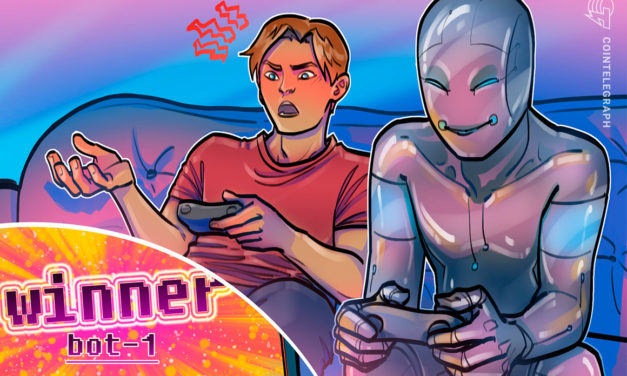
The reason bots dominate crypto gaming? Cash-grubbing developers incentivize them

Think back to the communities you’ve been genuinely excited to be a part of throughout your life. It’s likely these were groups formed on the basis of shared interests, right? That’s because we feel a sense of belonging when we bond with others over any particular thing we feel a particular way about. For example, I love games, and I never get tired of exploring or fostering communities where I can meet other gamers. That’s how I know that the current GameFi space is no breeding ground for gamers like myself and my enthusiastic peers: It’s a breeding ground for bots. And the main issue at play is a structural one.A strong community signals potential to venture capital (VC) funds, so GameFi projects find themselves trying to raise funds at the community level before they can meet with investors. Therefore, they sell nonfungible tokens (NFTs) and other cryptocurrencies to get through the initial-stage-level hoops and try to earn enough cash to continue building. The more they sell, the better their chances. It’s easy to see how this makes builders inherently vulnerable to what a little bit of hype can do: It can, quite literally, make or break a project.Related: 90% of GameFi projects are ruining the industry’s reputationSo, they take their incentive, accept the challenge posed to them by the very industry they love, and through no real fault of their own, they fall victim to the appeal of empty hype. They appoint influencers to spread the good word about their teaser trailer and how it’s going to result in a $200 million movie — when in reality, it might only have cost $10,000 to make. They build fan communities and exploit them for their own gain. They give away gaming assets through giveaways in a system that resembles a multilevel marketing scheme and often promises unreasonably profitable returns it cannot possibly deliver.This further fuels an influencer-based and incentive-driven economy that only drives projects to boast numbers and fail to actually build groundbreaking products. Take Star Atlas, for example: It’s been three years of promises and nothing has been released to the public. Plus, when people come together because of incentives instead of genuine interest, they fail to form real, solid communities. Look at 90% of GameFi Discord servers, and you’ll only find empty conversations alongside a distinct lack of what could pass as sincere excitement. With more than 100,000 members but only four people who talk, it’s obvious that operators keen on projecting a positive image of their brand are hiring shills to make their communities seem more populated than they are. This makes both builders and ecosystems fragile, as they are standing on very shaky ground: In the absence of reliable fans, everyone’s participation is for sale. Offer an influencer a better deal than the one they’re currently promoting, and they’ll have no problem jumping ship. Often, so will builders, who are ready to run as soon as the token price is pumped high enough for their liking. This exact scenario happened when the Squid cryptocurrency, unaffiliated with the Netflix series, but hoping to bank on the association, rose to $2,800 in value and then crashed to almost zero after it was discovered that it was only a scam.Related: The rise of mobile gaming shared a lot in common with crypto gamingIn this case, scammers made away with $3.38 million — so you could argue that empty hype and incentive-based MLM-type schemes do work. But don’t gamers deserve better? True gamers — the ones who are loyal to their community and come together in the name of something they truly believe in — will stay as far as they can from these dynamics. People who love what they do, not the incentives it may bring, will have no reason to join the GameFi economy as long as this is the reality they’re presented with when they approach it. Those who have spent a long time building real communities have no reason to dupe their fans in the name of bloated numbers, and they know it’s a losing game (pun absolutely intended).Just as interesting as the economic incentives is the psychological aspect of the dynamics at play. As humans, we are governed (as in, motivated and activated) by emotions: our “value system is made up of a hierarchy of emotionally created sensations that rank what is important to us,” which is to say, our brains are physiologically primed to look for emotional rewards, even more so than financial ones. Think entertainment, dependability and a sense of belonging. If there is no emotional attachment to a specific game beyond cashing in and getting out, gamers will do just that. They’ll earn what they can through gameplay, then withdraw their native tokens and move on to the next incentive. Who do you think will find this most attractive? Who stands to profit the most from this insanely bleak treatment? That’s right, bots. Bots are specifically “programmed to take advantage of incentive structures to extract value, harming the game’s ecosystem,” and for blockchain games, they are a major roadblock on the road to widespread adoption. It’s not terribly hard to estimate how many bots a specific game might attract, as data companies can simply link any wallets belonging to the same person and cross-check the list. Using this method, anti-botting company Jigger analyzed more than 60 games and services and found 200,000 bots. Jigger also estimates that bots make up 40% of total GameFi users, while for some games (MetaGear, AnRkey X, and ARIVA), the percentage rises to a staggering 80%, and for Karmaverse Zombie, 96%. That’s almost the total user base. And that’s unacceptable. As long as this sorry state of affairs doesn’t improve, the GameFi industry will remain vulnerable to bots, scams, and hyped-up incentives that are unable to drive projects forward. And it will keep real, enthusiastic players like me away.Shinnosuke “Shin” Murata is the founder of blockchain games developer Murasaki. He joined Japanese conglomerate Mitsui & Co. in 2014, doing automotive finance and trading in Malaysia, Venezuela and Bolivia. He left Mitsui to join a second-year startup called Jiraffe as the company’s first sales representative and later joined STVV, a Belgian football club, as its chief operating officer and assisted the club with creating a community token. He founded Murasaki in the Netherlands in 2019.This article is for general information purposes and is not intended to be and should not be taken as legal or investment advice. The views, thoughts, and opinions expressed here are the author’s alone and do not necessarily reflect or represent the views and opinions of Cointelegraph.

Čítaj viac
90% of GameFi projects are ruining the industry’s reputation

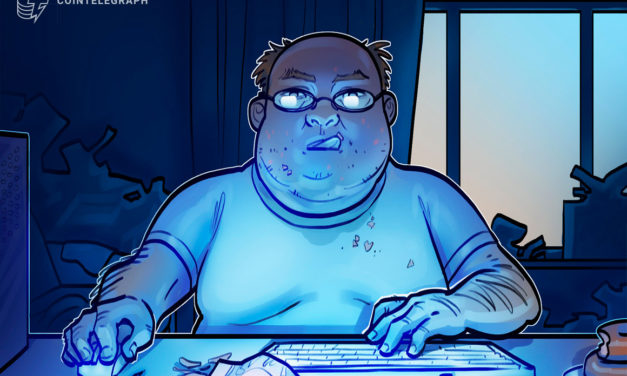
The GameFi industry is set to unleash its massive potential within the next six years. According to Absolute Reports data, its estimated value will grow to $2.8 billion by 2028, with a compound annual growth rate of 20.4% in the same period.It’s a quieter and perhaps less scandalous branch compared to the more newsworthy centralized finance (CeFi) and decentralized finance (DeFi) spaces, but this hasn’t impacted its force nor its promise. Even in the depth of a bear market, crypto gaming has proven to be the most resilient compared to other market sectors. However, there is a problem with the GameFi industry: The difference in quality between teaser trailers and delivered products is often stark enough to get under the skin of the eager gamers who put their faith in them. As that becomes the case with more and more titles, the entire industry suffers. The more that customers’ expectations are unmet and disappointed, the further mass adoption slips further from our reach. Developers must work on what they can actually build, not overpromise and underdeliver. And, we just don’t see that as often as we should. This pain point is not insignificant. Gaming doesn’t exist in a bubble, but rather it’s increasingly a convergence point where Web2 and Web3 meet and develop innovative ways to integrate one reality with the other. The likes of Animoca Brands went as far as saying that “the gaming industry is closer to a metaverse than any other” and “GameFi could become an onboarding point for metaverse and introduce people to digital ownership.”Related: Japan is losing its place as the world’s gaming capital because of crypto hostilityWell, since GameFi plays such an important role in the advent of Web3, is it too much to ask that it starts protecting its reputation?The play-to-earn nonfungible token (NFT) game industry is still a relatively nascent one, with no doubt that the future of blockchain-based games holds many exciting AAA titles, but from today’s standpoint, all we see is visually stunning, overdone and inflated teasers that developers just seem to not be able to build. In theory, it should not be such an uphill battle. At Murasaki of BCG studio, developers have been working on more than 30 mobile game titles, but they always know roughly how long and how much it takes to build each one. It’s not rocket science: if something like Genshin Impact costs $200m to produce and took over two years to build, how can you say you’re working on an AAA title with only $4 million or even $50 million and it’s going to be ready within a few months? It’s just unrealistic.The standard development and release schedule is the same for everyone: publish a white paper with a clear blueprint of the work developers are setting out to do, release a teaser trailer to ramp up the excitement, raise funds by selling NFTs and tokens for development and, finally, start developing. Somehow, for 90% of GameFi projects, something happens between the trailer release and the development phase that causes games to look amateur-ish and disappointing.I’m not the only one criticizing Pixelmon and its somewhat depressing NFT drop — one user even tweeted, “Thanks @Pixelmon, worst mint of my life!! I’m quitting NFTs.” When comparing the project roadmap, which had promised “the largest and highest quality game the NFT space has ever seen,” to the actual product Pixelmon released, which looked nothing like the slick demo they’d created anticipation with only a few months prior, it’s easy to see why people would be disappointed.Think of it like this: it’s like selling the ownership of a building by showing a 1/100 scale mock of the building but omitting how long it’s going to take to build and refusing to say how much money you’re willing to spend along the way. Then, when you finally reveal what you’ve been working on, instead of a skyscraper, it’s a shed. Related: GameFi developers could be facing big fines and hard timeBut, how long can that continue before users get too disillusioned with the space as a whole and end up quitting it before it’s had a chance to reach its full potential?It may sound harsh, but the simple truth is that if you can’t deliver what you promised, you should let others do it. 99% of developers have been overpromising and under-delivering consistently — they’re making the rest of us honest and eager GameFi enthusiasts look bad and risking our industry’s reputation, and for what? Such projects should get out of the space entirely and give GameFi a chance to redeem itself before users get tired of the charade. The stakes are too high to let them play with the future of GameFi any longer, or the dream of mass adoption will slip further and further from us and never turn into our reality. Shinnosuke “Shin” Murata is the founder of blockchain games developer Murasaki. He joined Japanese conglomerate Mitsui & Co.in 2014, doing automotive finance and trading in Malaysia, Venezuela and Bolivia. He left Mitsui to join a second-year startup called Jiraffe as the company’s first sales representative and later joined STVV, a Belgian football club, as its chief operating officer and assisted the club with creating a community token. He founded Murasaki in the Netherlands in 2019.This article is for general information purposes and is not intended to be and should not be taken as legal or investment advice. The views, thoughts, and opinions expressed here are the author’s alone and do not necessarily reflect or represent the views and opinions of Cointelegraph.

Čítaj viac

Japan is losing its place as the world's gaming capital because of crypto hostility

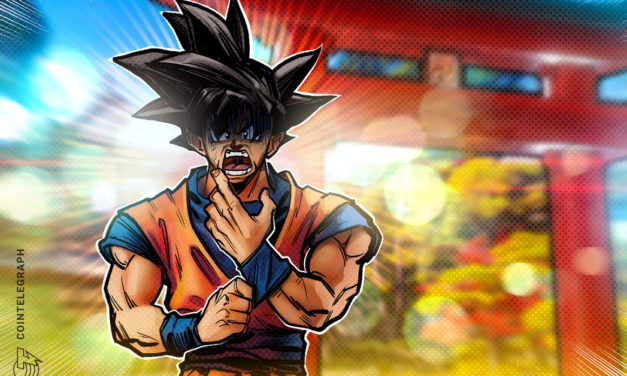
A marked hostility toward new and emerging Web3 technologies like cryptocurrencies runs the risk of costing Japan its place as the world’s gaming capital. We’re getting dangerously close to the point of no return, and here’s why. Nobody can be sure where the country’s antagonism to crypto originated or why it still persists even after the nonfungible token (NFT) and crypto “boom” of 2021, which took off in a major global way and prompted officials in the United States and Europe to backtrack on their initial antipathy for the space, finally opening up to regulations. The White House just released its first crypto regulatory framework in September 2022, and the European Parliament Committee followed up in October 2022 by approving the Markets in Crypto-Assets framework, also known as MiCA, with a landslide vote. As the first European crypto policy, the much-discussed MiCA text represents revolutionary progress in the direction of what many consider the future of the financial world. Japan, however, has a very different stance. We all know Japan is home to gaming giants like Nintendo and Sega and has been for decades, with triumphs such as Super Mario, Sonic the Hedgehog, the Sega Mega Drive and the Game Boy. But, in order to remain at the top of its game (pun absolutely intended), the sector needs to be able to consistently and rapidly change with the times, not stay stuck where it was when it first gained recognition. Gaming is a highly creative space and has always had the technology to back its extraordinary potential. But, in order to do so, it does need to be able to stay up to speed with new and evolving innovations, or it will become stagnant and lethargic. Related: GameFi developers could be facing big fines and hard timeGameFi is an emerging area of interest in the industry with immense potential. But, when you look more closely, there are very few Japanese companies developing the GameFi sector into what it is sure to become within a few years to a decade. And if that doesn’t change soon, the entire industry will be at risk.The crypto and tech worlds are two of the main stages of exciting and rapidly evolving progress happening in the modern age, and in Japan, they’re being held hostage by crucial elements like taxation and a complicated screening process. In Japan, there is no ground to account for crypto assets properly, and none of the auditors want to audit crypto assets. Due to strict listing rules drawn up by the Financial Agency, the process of listing a coin in Japan can be confusing and frustrating to a fault. But, when time is money to any entrepreneur with a brilliant idea, waiting six months for a token to be screened is unnecessarily discouraging. Then, there’s taxation. In Japan, token issuers are taxed on unrealized assets at the end of the fiscal year, regardless of whether they have enough fiat currency to cover high taxes or not. And, while non-crypto stock profits are taxed according to a flat 20% rate, crypto earnings are subject to an exorbitant 55% tax rate, a 35-point difference.Related: The feds are coming for the metaverse, from Axie Infinity to Bored ApesAs Japan’s reputation falters, other countries will be waiting with open arms to accept its bright minds and fearless entrepreneurs who just can’t understand why their country turned its back on them. Europe is full of investor-friendly nations with rational regulatory systems, like the Netherlands. With the new MiCA legislations as close as they are to being widely implemented, it’s not extreme to wonder if other countries would be better suited to home Japan’s brain drain. We might indeed be seeing small improvements in the right direction. The government might be inclined to soon ease the current onerous listing rules and allow the country’s $1 trillion crypto trading market to flourish a little more easily, with exchanges able to “list over a dozen coins in one go and without a lengthy screening process.” And since assuming office in 2021, Japan’s Prime Minister Fumio Kishida has prioritized Web3 development as a means to “economic revitalization,” meaning we might witness a marked change in how the country both regulates crypto and supports the Web3 sector’s growth as a whole. But the clock is ticking, and if only time will tell how Japan’s role in the gaming sector will impact the economy of its future, it’s hard to be overwhelmingly optimistic.Shinnosuke “Shin” Murata is the founder of blockchain games developer Murasaki. He joined Japanese conglomerate Mitsui & Co.in 2014 doing automotive finance and trading in Malaysia, Venezuela, and Bolivia. He left Mitsui to join a second-year start-up called Jiraffe as the company’s first sales representative, and later joined STVV, a Belgian football club, as its chief operating officer, and assisted the club with creating a community token. He founded Murasaki in The Netherlands in 2019.This article is for general information purposes and is not intended to be and should not be taken as legal or investment advice. The views, thoughts, and opinions expressed here are the author’s alone and do not necessarily reflect or represent the views and opinions of Cointelegraph.

Čítaj viac

Získaj BONUS 8 € v Bitcoinoch

nakup bitcoin z karty

Registrácia Binance

Burza Binance

Aktuálne kurzy