
Autor Cointelegraph By Selva Ozelli

Crypto and NFTs meet regulation as Turkey takes on the digital future

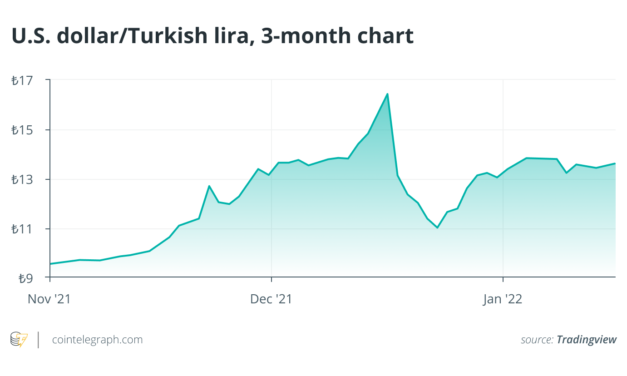
In her monthly Expert Take column, Selva Ozelli, an international tax attorney and CPA, covers the intersection between emerging technologies and sustainability, and provides the latest developments around taxes, AML/CFT regulations and legal issues affecting crypto and blockchain.Turkey — the cradle of civilization — is quietly digitizing despite its high-inflation economy, and the lira’s volatility might be correlated with the prices of Bitcoin (BTC) and Ether (ETH). During the fourth quarter of 2021, the TRY/USD exchange rate crashed from 9 to 18.5 liras per dollar in the six weeks leading up to mid-December before strengthening to as high as 10 liras and then falling back to 13.87 liras at the time of writing, rendering the currency a highly volatile asset. The lira’s volatility stemmed from a contrarian interest rate cut made by Turkish President Recep Tayyip Erdoğan amid high inflation and against the advice of central bankers. High inflation tends to devalue cash and drive investors — including major professional and institutional investors alongside top hedge fund managers like George Soros — to invest their money in cryptocurrencies. With inflation soaring above 20%, Erhan Kahraman, news editor at Cointelegraph, told me that during 2021:“Bitcoin and other cryptocurrency usage in Turkey increased elevenfold.”Unexpectedly, the cryptocurrency market crashed during the first trading week of 2022, and as a result, Bitcoin and Ether — which rose 100% and 300% during 2021, respectively — entered bear market territory. The crash was blamed on a combination of three events. The first event was the release of the minutes from the United States Federal Reserve’s December meeting. They hinted that the U.S. central bank would reduce its pandemic-era stimulus and begin raising interest rates sooner than expected. This news triggered a sell-off in the global stock markets that spilled over into the cryptocurrency markets, with Bitcoin’s price ultimately crashing over 40% from its all-time high set in November 2021. Similarly, Ether dropped over 13% after the news to as low as $3,300.The second event was the anti-government riots in Kazakhstan, the world’s second-largest Bitcoin mining hub, which led to the country’s government being sacked and internet services shut down, leaving an estimated 13% of the world’s Bitcoin mining operations offline.Related: Bitcoin miners’ resilience to geopolitics — A healthy sign for the networkThe third event was the rapid worldwide spread of the Omicron variant of COVID-19, which wreaked havoc on long-term social and economic development by leaving millions sick and inundating healthcare systems that were already buckling under the cumulative toll of every previous surge. Reinforcing the idea that people shouldn’t live in constant fear of the virus, Ugur Sahin, the German-Turkish co-founder of COVID-19 vaccine maker BioNTech, highlighted that despite the virus being here to stay for a couple more years, the COVID-19 variants are becoming controllable, and that BioNTech is keeping its eye on new variants and new strains.Nevertheless, the unexpected market crash was not enough to shake Turkish investors’ faith in cryptocurrencies being a hedge against a weakening lira and double-digit inflation.The first-ever eco-friendly, secure cryptocurrenciesWhile Satoshi Nakamoto is credited with designing the first cryptocurrency, it was actually Turkish-American Emin Gün Sirer — CEO of Ava Labs, professor at Cornell University and co-director of the Initiative for Cryptocurrencies and Smart Contracts — who designed the first in 2003, six years before the launch of Bitcoin. Named “Karma,” it was based on a proof-of-work protocol.Since 2019, Sirer has been focused on building Avalanche, an eco-friendly blockchain that uses a novel consensus mechanism for high-transaction throughput. As Sirer explained to me: “Avalanche is a high-performance, eco-friendly blockchain that scales hard math and science, rather than expensive, energy-intensive hardware. At its core, the innovation of the Avalanche consensus reduces the amount of communication required between validating nodes, which also decreases the hardware and power required to secure the many billions of dollars in value on the network. Taken a step further, Avalanche is a ‘quiescent’ protocol, meaning that if network activity slows, nodes will not perpetually expend energy as we see on almost every other platform. Nodes will simply wait until they hear another transaction to broadcast and move swiftly toward the next decision.” He added:“Sustainability is critical to the blockchain industry’s ability to overtake traditional infrastructures, as well as a core ethic of this entire ecosystem of using innovation to better the lives of people.”Sirer continued: “Much of the inertia that climate activists have faced is from incumbents who wield far too much power. Decentralizing their power and putting more economic control in the hands of individuals, rather than institutions, is an incredible step forward. Momentum toward mass adoption of decentralized services continues to accelerate, and users are also witnessing that high performance and eco-friendliness of a blockchain platform are not enemies. In fact, they are necessary companions to achieve mass adoption, doing right by both people and the planet.”Sierra Nevada Corporation (SNC), a cybersecurity and aerospace company co-founded by Turkish-American couple Eren and Fatih Ozmen, partnered with Ultra to modernize the cryptographic infrastructure of SNC’s legacy AN/PYQ-10 Simple Key Loader devices to protect against mounting cyber and electronic warfare threats and to protect, store and distribute sensitive information. SNC has joint ventures with Aselsan and Havelsan, which are state-owned defense, software and electronics companies that are part of the “Digital Turkish Lira Collaboration Platform.”President Erdoğan has said that Turkey’s main objective is to produce all its equipment used in high-tech and aerospace systems, including cyberdefense systems.Central bank digital currencyAccording to the Atlantic Council, there are 87 countries — including Turkey — exploring a central bank digital currency (CBDC).As part of the Central Bank Digital Turkish Lira Research and Development Project, the Central Bank of the Republic of Turkey established the Digital Turkish Lira Collaboration Platform in close collaboration with Aselsan, Havelsan and Tübitak Bilgem. The project is researching the potential benefits of introducing a digital lira to complement the nation’s existing payments infrastructure. The results of the first phase of this research are expected to be announced in 2022 after the tests are completed.Cointelegraph Turkey’s Kahraman explained to me that “Turkey’s digital banking, or ‘fintech,’ industry is already miles ahead of many regions across the world in terms of adoption and technologies used. Local banks are offering a myriad of digital services to their customers. Cashless payments are already above 50% of all transactions, per PwC’s 2020 payments research.” He added:“So, while there are clear benefits for the Turkish government and financial institutions in issuing a central bank digital currency, I don’t see a significant advantage for the citizens.”Nonfungible tokens“Machine Hallucinations: Coral Dreams,” a work by Refik Anadol — an award-winning Turkish-American new media artist — was the talk around town during 2021 Art Basel Miami Beach.Anadol is the first artist to use artificial intelligence in a public immersive artwork, partnering with teams at Microsoft, Google, Nvidia, Intel, IBM, Panasonic, the United States National Aeronautics and Space Administration’s Jet Propulsion Laboratory, Siemens, Epson, Massachusetts Institute of Technology, Harvard, University of California-Los Angeles, Stanford University and the University of California-San Francisco. He applies the latest, cutting-edge science, research and technologies to his body of work, which consists of data-driven machine learning algorithms that create abstract, dreamlike environments.Related: 2021 ends with a question: Are NFTs here to stay?Kahraman explained to me that “There are several platforms that Turkish artists are actively using to create and sell their NFTs. The first one is OpenSea — it’s probably the most popular NFT marketplace globally. Turkish artists like Refik Anadol, Cem Yılmaz and others have already created and sold their NFTs on the Ethereum-based platform. However, the Ethereum network’s high gas fees (multiplied by the exchange rates in Turkey) place a barrier for many lesser-known artists and their communities. Coupled with the popularity of Avalanche in Turkey, I am seeing several artists publish their NFTs on eco-friendly Avalanche-based platforms, then sell their collections on Kalao. But to be honest, the majority of Turkish users are also using global apps like Binance, Huobi, etc. BtcTurk and Paribu are the top two heavyweights of the local NFT ecosystem. Icrypex and Bitci are also rising in popularity with new partnerships and global projects.”Avenue 10 Gallery, founded by Luc Navarro and with branches in Paris and Bangkok, digitizes physical artworks to offer high-end NFTs sold on Ethereum-based OpenSea. Navarro, a Turkish-American artist, invited me to make NFTs out of my “Art in the Time of Corona” series of oil paintings, which includes, among others, a portrait of Erdal Arikan — the inventor of the world’s first channel coding scheme (polar codes) for 5G technology.Regulation of cryptocurrenciesAs Kahraman explained to me:“There is currently no clear regulator governing all the crypto-related developments in Turkey. President Erdoğan said the legislation regarding crypto assets is ready for the parliament (TBMM), but there’s no definitive date yet.” He added: “Cryptocurrencies are referred to as ‘crypto assets’ in published government documents. Different bodies working on different aspects of crypto assets are: The Financial Crimes Investigation Board (MASAK) is actively overseeing crypto service providers (crypto exchanges) on AML and compliance issues. The central bank is regulating the payment aspect of crypto assets. In April 2021, it banned the use of crypto assets from being used as a payment method. The Capital Markets Board (SPK) governs the crypto market, including ICOs and token offerings in a case-by-case manner.”During the spring of 2021, two Turkish cryptocurrency exchanges, Thodex followed by Vebitcoin, shut down, with thousands of investors falling victim to a $2 billion fraud.On May 1, 2021, President Erdoğan issued a presidential decree that added cryptocurrency exchanges to a list of institutions that must operate under Anti-Money Laundering and Counter-Terrorist Financing regulations. The same month, MASAK published a guide for crypto asset service providers that aims to prevent money laundering and the financing of terrorism through crypto asset transactions by obligating cryptocurrency exchanges to: 1) identify customers; 2) report suspicious transactions; 3) provide information and documents; 4) consistently provide information; and 5) retain documents. MASAK also ramped up its investigations of cryptocurrency-related operations in Turkey.So far, MASAK has found deficiencies in the Anti-Money Laundering controls of BN Teknoloji, the Turkish branch of Binance — the world’s leading cryptocurrency exchange — and ordered it to pay a fine of 8 million lira (approximately $750,000 at time of the announcement).Separately, Turkey’s Ihlas News Agency reported that Turkish police carried out simultaneous raids in 11 places, arresting 40 of 44 suspects who used Twitch’s Bits virtual currency to launder around $10 million.Taxation of cryptocurrenciesTurkey’s citizens are increasingly using cryptocurrencies. Nevertheless, there is currently no regulation on the taxation of cryptocurrencies or NFT transactions. Eren Can Ersoy and Ezgi Kartın of Kılınç Law & Consulting explained that if cryptocurrencies are characterized as “securities” or “commodities,” the tax treatment would be as follows:Securities: For cryptocurrencies to qualify as securities, such as initial coin offerings, they must be treated as “financial assets.” In this case, gains made from the purchase and sale of cryptocurrencies and the commissions earned by cryptocurrency exchanges in 2021 that exceed 19,000 liras will generally be subject to income tax, but not subject to value added tax (VAT).Commodities: If cryptocurrencies are considered as commodities, such as Bitcoin, and the taxpayer is not engaged in a trade or business, then any gains for 2021 above 43,000 liras will generally be subject to income tax. If the taxpayer is engaged in a trade or business, the profit will be commercial gain and cryptocurrencies will be subject to income tax as well as VAT.The views, thoughts and opinions expressed here are the author’s alone and do not necessarily reflect or represent the views and opinions of Cointelegraph.Selva Ozelli, Esq., CPA, is an international tax attorney and certified public accountant who frequently writes about tax, legal and accounting issues for Tax Notes, Bloomberg BNA, other publications and the OECD.

Čítaj viac

2021 ends with a question: Are NFTs here to stay?

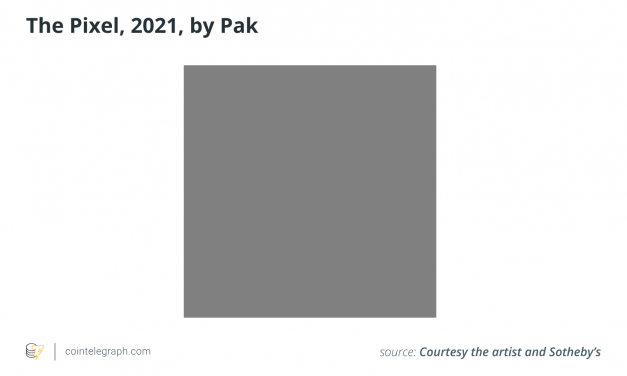
In her monthly Expert Take column, Selva Ozelli, an international tax attorney and CPA, covers the intersection between emerging technologies and sustainability, and provides the latest developments around taxes, AML/CFT regulations and legal issues affecting crypto and blockchain.On Nov. 14, Tezos-based nonfungible token (NFT) marketplace Hic Et Nunc — which in Latin means “here and now” — abruptly shut down. Artists became worried about their NFTs on exhibit at the Hermitage Museum’s first-ever NFT exhibition, “Ethereal Aether” (Nov. 10 to Dec. 10), as well as Art Basel Miami’s first-ever NFT exhibition, “Humans + Machines: NFTs and the Ever-Evolving World of Art” (Dec. 2 to 4).Diane Drubay, founder of We Are Museums and a minter of NFTs on Hic Et Nunc — who curated a panel discussion at Art Basel Miami — explained to me: “Of course, it was a shock to see Hic et Nunc shut down, but people took it right away as a new step over in their journey. Because when the website shut down, our NFTs were preserved on-chain, nothing was lost and artists were safe to keep making a living from their NFTs. We saw mirrors or new versions of HicEtNunc.art being opened only a few hours later, which provided the necessary backup for artists to keep selling and buying, exhibiting NFTs.” She also added: “The community is now organizing itself to create a decentralized autonomous organization (DAO) to keep experimenting with decentralization on Web 3.0.”This incident made me wonder: Will the “International Year of Creative Economy for Sustainable Development,” as declared by the United Nations General Assembly, go down in history as the year NFTs entered the mainstream? Or will it go down as a passing global fad of invention lurking in the shadows of the COVID-19 pandemic? I conducted research and interviews to find the answer.Related: What are NFTs, and why are they revolutionizing the art world?NFTs’ environmental impact, valuation and regulationNFTs are digital assets that are built on a blockchain platform and are tradeable like digital trading cards in exchange for cryptocurrencies or even fiat currency. They generally act as evidence of ownership of digital assets, but the specific rights that attach to NFTs vary. Some NFTs incorporate “smart contracts” as part of the token that self-execute when defined events occur.Computer scientist “Antsstyle” has critiqued NFTs: “In a nutshell, NFTs are bad for two reasons: 1. They are bad for the environment, as they rely on cryptocurrencies that cause huge amounts of carbon emissions. […] 2. They are only valuable as tools for money laundering, tax evasion, and greater fool investment fraud.”The long version of Antsstyle’s analysis gives a comprehensive overview of proof-of-stake (energy-efficient) and proof-of-work (energy-intensive) NFT platforms.A. J. Woloszynski, manager at Eisner Advisory Group LLC of EisnerAmper, pointed out, furthermore, that NFTs have subjective valuations determined by however much somebody is willing to pay for them: “For example, take a look at the image below. You are not encountering an issue with the image loading on your computer; what you are seeing is a plain gray box. This is an NFT known as The Pixel, produced by an artist who goes by the name [Pak] and sold for roughly $1.3 million dollars at a Sotheby’s auction in April 2021.” Other major art auction houses such as Christie’s, Phillips and Portion also began auctioning NFTs minted on various nonfungible token platforms this year. Related: Art reimagined: NFTs are changing the collectibles marketAccording to CryptoArt, Pak is the second-highest-selling crypto artist of all time, with around a $65 million market capitalization for his art pieces. NonFungible ranks Bored Ape Yacht Club at number one, with the “Bored Ape #9449” NFT last selling for above $1 million.While not ranked by NonFungible, the low-pixel 24×24 images of computer-generated CryptoPunks by Larva Labs were the first major NFTs. In March, CryptoPunk #3100 sold for 4,200 Ether (ETH), or $7.6 million at the time. This sale was surpassed by the sale of “Everydays: The First 5000 Days,” an NFT by graphic designer Mike Winkelmann, aka “Beeple,” that raised $69.3 million that same day, amounting to $13,800 per each work of digital art included in the collage. According to DappRadar, CryptoKitties by Dapper Labs — the first big Ethereum-based NFT project to use the ERC-721 standard — also registered a 22,106% day-over-day increase in trading volume amid the recent NFT market resurgence.NFTs are not widely regulated. For example, earlier this year at leading NFT marketplace OpenSea, an executive was flipping nonfungible tokens he purchased after featuring them on the site’s homepage — a move that presumably allowed him to sell them for a quick profit, since insider trading of NFTs on markets is not explicitly illegal. In another instance, 265 ETH ($1.1 million) worth of fraudulent NFTs claiming to be issued by Hong Kong-based gaming and venture capital company Animoca Brands and subsidiary Blowfish Studios were minted and sold via Discord. In the NFT heist of the century, a hacker uploaded 20 terabytes of NFTs originally minted on the Ethereum and Solana blockchains.Related: Nonfungible tokens from a legal perspectiveBlockchain forensics firm Chainalysis estimated that about 0.34% of transaction volume in the $2.5-trillion cryptocurrency market, or about $8.5 billion worth, relates to illicit activity. According to NonFungible, 265,927 active wallets traded NFTs on the Ethereum blockchain during Q3. To investigate cross-border tax crimes with the rapid rise of cryptocurrency and NFTs and their use in money laundering, hacking, cyberattacks and other illicit transactions, governments around the world — especially the Joint Chiefs of Global Tax Enforcement — have been sharing information and resources.Related: Cybercrime task force monitoring the global digital financial systemEarlier this year, the Internal Revenue Service rolled out “Operation Hidden Treasure” in collaboration with personnel from its civil office of fraud enforcement and its criminal investigation unit to examine tax evasion among users of cryptocurrency and NFTs. The latest report by IRS Criminal Investigation states that 93% of all seizures during fiscal year 2021, valued at $3.5 billion, involved cryptocurrencies. The United States Treasury Department also put 57 cryptocurrency addresses on its sanction list, along with one exchange — Latvia-based Chatex, which the Treasury Department said facilitated transactions related to “illicit or high-risk activities such as darknet markets, high-risk exchanges, and ransomware.”Continuing U.S. President Joe Biden’s whole-of-government effort to counter ransomware and the illicit use of cryptocurrency and NFTs, more tax regulations have been implemented. H.R. 3684, the Infrastructure Investment and Jobs Act, requires cryptocurrency “brokers” — which includes “any person who for consideration is responsible for regularly providing any service effectuating transfers of digital assets on behalf of another person” — to report cryptocurrency and NFT purchases of over $10,000 to the IRS on Form 8300, including names and Social Security numbers, or potentially face felony charges.In October, the Financial Action Task Force (FATF) issued new guidance concerning NFTs, stating that they are excluded in its definition of virtual assets. But FATF standards could still apply to NFTs on a case-by-case basis.Sustainable NFTsThis year, NFTs have been the biggest disruptors of the art world, with artists minting, exhibiting and auctioning, and investors buying, selling, trading and investing. Nash Islam, an early investor in NFTs, said: “For NFTs, the community action is primarily on Twitter & Discord.” He also added: “Investing in Pak across multiple projects has yielded massive multiples and also helped us understand and establish some principles for NFT investments.”Even Damien Hirst, the United Kingdom’s richest living artist, launched an NFT series titled “The Currency” this year, exploring the nature of value, art and currency. It was minted on Palm, an NFT platform operating as an Ethereum sidechain, and offered for sale through Heni at $2,000 apiece.[embedded content]Artist Ilya Shkipin told me he decided to mint his MonarxNFT series on the energy-efficient, open-source Tezos NFT platform: “Choosing Tezos wasn’t a choice but an obvious decision once we spoke with our supporters. Both the Monarx team and the community valued low gas fees and a convenient minting experience. We ended up doing what our community told us to do because the art is for them, not us. My MonarxNFT series — merge of a neural network carefully guided by artistic vision — was inspired at a time of loss in my life.”A tribute to @VitalikButerin as a king. Not sure where I am going to mint it. Eth gas is killing me. pic.twitter.com/QUPqmwYnAh— Ilya SHK (@i_shkipin) November 16, 2021Monarx will be ascending this December. pic.twitter.com/IWL6Ylb8md— Monarx.art (@MonarxNFT) November 13, 2021

Reid Yager, global director of communications and public relations for Tezos, explained to me that Tezos is presenting the first-ever NFT art exhibition occurring as an official partner of international art fair Art Basel, in collaboration with the host city’s local institutions: “The Tezos Ecosystem Exhibition at Art Basel Miami Beach will feature more than 25 artists from 18 countries spanning 5 continents showcasing their work. Additionally, over 30 artists, gallerists, museum directors, celebrities, and thought leaders will participate in the Tezos Ecosystem Exhibition Speaker Series in the exhibit space.” As part of the show, visitors will be able to create AI-generated portraits of themselves and mint them as NFTs on Tezos.Yager added: “The leading Tezos NFT platform HicEtNunc, which recently completed the first-ever NFT marketplace Web3 transition from platform-owned to community-owned (DAO), has seen over half a million NFTs minted by users from every corner of the globe. The Tezos blockchain is booming with over 6 million contract calls in September, and November is on pace to top that. The Tezos blockchain is the choice for minting and collecting NFTs globally. In fact, one of the first ever NFTs from a Museum was minted on the Tezos blockchain by the Whitworth Museum — William Blake’s The Ancient of Days.”According to DappRadar, Hic Et Nunc was the 14th-largest nonfungible token marketplace in terms of all-time sales ($50.37 million) when it shut down, with the average sale at $25.19 per NFT. The leading marketplace for NFT trading is New York-based OpenSea, which operates on the proof-of-work Ethereum blockchain. Ethereum is in the process of transitioning to Ethereum 2.0, a proof-of-stake blockchain, which will be 99% less energy-intensive and more scalable, secure and sustainable. But whether OpenSea or any of the other top-ranked marketplaces will be able to hold their place in this fast-changing market is yet to be seen, as some of the largest companies have been entering the NFT space to transform the Metaverse, including:Technology companies: TikTok, Twitter, Facebook, Alibaba, Tencent, Xiaohongshu, NetEase, Baidu, Microsoft and eBay.Fintech companies: China’s Blockchain-based Service Network, which will support future central bank digital currencies from various countries, launched infrastructure to support the deployment of NFTs in China and other countries.Cryptocurrency marketplaces: Coinbase and Binance NFT, which sold the Hermitage Museum’s first nonfungible token.NFTs and museumsA study carried out by the International Council of Museums (ICOM) found that as a result of the COVID-19 pandemic, more than 30% of museums were forced to reduce their staff and nearly 6% may never be able to reopen to the public. But the digitization of museums is taking place at high speed, with some museums turning to NFTs for a variety of reasons.Related: Charitable sustainable NFTs for the United Nations’ 17 SDGsNFT exhibitionsThe Hermitage Museum’s “Ethereal Aether” consisted of 36 NFTs from around the world, including Larva Labs’ “ryptopunk #5652,” “Schrödinger’s Cat” from Dapper Labs’ CryptoKitties and Mihai Grecu’s “NeoPyongyang I,” minted on Hic Et Nunc.The curators, Dimitri Ozekov and Anastasia Garnova, explained to me: “Interest in digital art intensified during the COVID-19 pandemic, when millions of people sat at home for months on end with the museums closed. The first NFT exhibition will launch the creation of the ‘Celestial Hermitage’ — a new museum in the virtual noosphere, which in the future will be transformed into a digital branch of the actual museum.” They also added: “We are confident that the area of digital art, NFTs in particular, will develop in incredible ways, and that it can look forward to a great future — safe, smart and fascinating.”Guggenheim Partners co-founder Todd Morley announced plans to create the world’s biggest museum dedicated to NFTs, within a massive skyscraper located in New York City, just four blocks from the Museum of Modern Art.NFT fundraising by museumsThree out of the 20 largest museums in the world — the State Hermitage Museum in St Petersburg (No. 2), the Metropolitan Museum of Art in New York City (No. 4) and the British Museum in London (No. 12) — turned to NFTs for fundraising this year. Other examples include the Uffizi in Florence, the Whitworth in Manchester, the Museum and Church of São Roque in Lisbon, the Kansong Art Museum in Seoul, the Museum of Broadcast Communications in Chicago and the Academy Museum of Motion Pictures in Los Angeles. There’s even an NFT of an entire museum based in the Metaverse called the Museum of Digital Life.The Miami Institute of Contemporary Art accepted a donation of “CryptoPunk #5293” from one of its trustees.Jean-Sébastien Beaucamps, co-founder of French eco-friendly startup LaCollection — an Ethereum-based NFT platform — explained to me: “To coincide with its Hokusai: The Great Picture of Everything exhibition (30 September to 30 January 2022), the British Museum partnered with LaCollection.io, to sell NFTs of 200 Hokusai works. For each NFT minted by our company, we will plant a tree to compensate for the wildfires of last summer and for our NFTs to be carbon neutral: we call it our NFTree program. The NFTs will consist of works in the exhibition, including the famed The Great Wave, while another 100 will be from the BM’s own collection, including drawings from the recently re-discovered book which is the subject of the exhibition.” NFTs and environmental educationThis year, during its 48th annual conference — where I held an art show titled “Museums & Environmental Concerns, New Insights” — the ICOM’s International Committee for Museums and Collections of Science and Technology addressed our planet’s environmental concerns and the way science and technology museums can approach and present this important issue via education and exhibitions. I interviewed several museum directors to learn about the role of NFTs in their museums. Here is what they told me.George Ma, head of the climate action section, social responsibility and the sustainable development office at the Jockey Club Museum of Climate Change at The Chinese University of Hong Kong:“NFTs are currently not on our radar, but something we could keep an eye on. We digitized our exhibitions. We have a 360 Virtual Tour which is the digital version of our permanent exhibition. Since 2018, for every themed exhibition we developed, we also produced a digital version of it, either in a more website-like format or in 360 VR.”Patrick Hamilton, director of climate change, energy and the environment at the Science Museum of Minnesota: “The Science Museum of Minnesota is digitizing its collections but I’m not aware of any current plans to digitize its exhibits or sell NFTs.”Julie Decker, director and CEO of the Anchorage Museum: “NFTs are a really interesting topic to think and read about. Currently, we do not have plans.”Viviane Gosselin, director of collections and exhibitions and curator of contemporary culture at the Museum of Vancouver:“At the moment we are not selling NFTs for fundraising or collecting purposes — not yet. My understanding is that it is not by and large a ‘green industry’ so that is a bit of a red flag and turn off for me!”Soren Brothers, Shiff curator of climate change at the Royal Ontario Museum:“ROM is digitizing its collections, which can be accessed here (https://collections.rom.on.ca/). I don’t know anything about whether ROM has plans to sell NFTs.”It should be noted that the Los Angeles County Museum of Art has an Art + Technology Lab where it runs a series to explore what NFTs mean for institutions collecting digital art. It also examines the “artistic, curatorial, conservation, registration, and legal issues of this new digital format.” We Are Museums’ Drubay also recently announced “Unlocking Web3 for the Arts and Culture,” a new program organized by We Are Museums in collaboration with TZ Connect and the Blockchain Art Directory 2.0 to guide arts and culture professionals to navigate Web3 innovations.ConclusionI remember reading in the early 1990s that Bill Gates, the founder of Microsoft, said art would digitize and people would not hang artwork on their walls anymore, instead projecting any masterpiece onto a digital screen on their walls. At the time, this novel idea had me very excited.Fast-forward to 2021, the second year of the COVID-19 pandemic, and NFT sale volumes surged 1,000%, with people interested in using them in a multitude of areas: visual arts, videos, music, collectibles, to raise brand awareness, gaming, publishing, carbon trading and fundraising. Did you know that a rug given as a gift to Pope Francis by Sheikh Mohamed bin Zayed Al-Nahyan, crown prince of Abu Dhabi, was minted as an NFT and put up for sale to raise funds for Afghan rug weavers, who will receive 80% of the sale’s proceeds?I think NFTs — named word of the year by Collins Dictionary — are here to stay.The views, thoughts and opinions expressed here are the author’s alone and do not necessarily reflect or represent the views and opinions of Cointelegraph.Selva Ozelli, Esq., CPA, is an international tax attorney and certified public accountant who frequently writes about tax, legal and accounting issues for Tax Notes, Bloomberg BNA, other publications and the OECD.

Čítaj viac

Získaj BONUS 8 € v Bitcoinoch

nakup bitcoin z karty

Registrácia Binance

Burza Binance

Aktuálne kurzy