
Autor Cointelegraph By Selva Ozelli

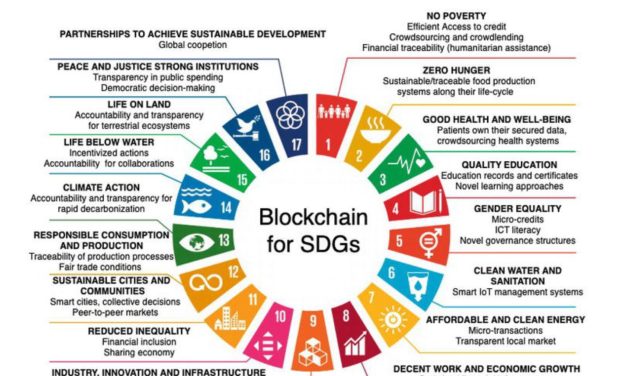
How blockchain technology is used to save the environment

In her monthly Expert Take column, Selva Ozelli, an international tax attorney and CPA, covers the intersection between emerging technologies and sustainability, and provides the latest developments around taxes, AML/CFT regulations and legal issues affecting crypto and blockchain.In June, the United Nations held its “Stockholm+50: a healthy planet for the prosperity of all — our responsibility, our opportunity” event, focused on implementing its Decade of Action to deliver the Sustainable Development Goals, 2030 Agenda, Paris Agreement, and Post-2020 Biodiversity Framework, as well as to encourage a green recovery from COVID-19. The event took place 50 years after the first-ever United Nations Conference on the Human Environment in 1972, giving world leaders the chance to reflect on five decades of environmental action focused on tackling the Earth’s climate, nature and carbon dioxide pollution crises.My art show “Reef Dwellers” was an associated event at Stockholm+50. It celebrated the role oceans play in everyday life and sought to inspire action to protect reefs, which occupy just 0.1% of global sea surfaces despite supporting more than 25% of marine biodiversity.[embedded content]Oceans act as large natural carbon reservoirs, absorbing 25% of current annual CO2 emissions and hosting 80% of all life while providing half of the planet’s oxygen. According to the United States National Oceanic and Atmospheric Administration:“More than 90 percent of the warming that has happened on Earth over the past 50 years has occurred in the ocean.” The rate at which oceans are warming is equivalent to five Hiroshima atomic bombs being dropped into them every second.Related: How blockchain technology is transforming climate actionHow does blockchain factor into preserving reefs and saving the ocean? Future Thinkers has outlined several major solutions for how blockchain can help protect the environment. 1. Supply chainsBlockchain technology is being used to improve fish traceability to help stop illegal and unsustainable fishing practices. Fishcoin is a blockchain-based seafood traceability project that “incentivizes supply chain stakeholders to share data from the point of harvest to the point of consumption” to help create a more open, transparent, accountable seafood industry.Related: Enterprise blockchain to play a pivotal role in creating a sustainable future2. Recycling | 3. Environmental treatiesPlastic pollution is a global ecological crisis. In a landmark move on March 2, the United Nations Environment Assembly agreed to create a historic international treaty to end plastic pollution. According to the UN, the effort could result in an 80% reduction in the volume of plastics entering oceans by 2040, a 55% reduction in virgin plastic production and a 25% reduction in greenhouse gas emissions. It could also save governments $70 billion by 2040 and create 700,000 additional jobs, primarily in the Global South.One project addressing the plastic pollution problem is Diatom DAO, which has proposed a tokenized Plastic Removal Credits framework. Its goal is to leverage the capabilities of decentralized finance (DeFi) to build a reliable, verifiable, efficient plastic-removal supply chain that increases recycling, reduces use, funds high-leverage removal projects, establishes new channels of circularity, and drives innovation in new materials.4. EnergySince the start of the Industrial Revolution, the ocean has seen a 30% increase in its acidity thanks to the absorption of carbon dioxide. Captura seeks to use solar-powered, floating plants to extract CO2 from the ocean, while Toucan Protocol is building the infrastructure for a carbon market to finance world-class climate solutions in an effort to accelerate the transition to net-zero carbon in accordance with the Paris Agreement.5. NonprofitsOceanDrop is a charitable nonfungible token project from the Open Earth Foundation, a nonprofit organization dedicated to developing open-source technology for climate action. The proceeds of the NFT sales, which are pegged to carbon offsets, support a pilot project aimed at expanding the protected marine areas of Cocos Island and Costa Rica.The Crypto Coral Tribe is an NFT project directing 50% of its revenues to marine and wildlife conservation initiatives. Its goal is to form a creative hub that leverages art and technology to help restore the natural world. It hopes to plant 3,000 corals worldwide via its network of marine conservation partners, including Coral Guardian, Coral Triangle Center and the Turks and Caicos Reef Fund.6. Carbon tax | 7. Changing incentivesU.S. President Joe Biden came into office with a plan to transition Americans away from fossil fuels, and he demonstrated that intent with a regulatory agenda that included carbon taxes. However, the Supreme Court and Russia’s war in Ukraine upended his climate plans.Related: UN’s COP26 climate change goals include emerging tech and carbon taxesThe views, thoughts and opinions expressed here are the author’s alone and do not necessarily reflect or represent the views and opinions of Cointelegraph.Selva Ozelli, Esq., CPA, is an international tax attorney and certified public accountant who frequently writes about tax, legal and accounting issues for Tax Notes, Bloomberg BNA, other publications and the OECD.

Čítaj viac
Global Web3 metaverse and tax initiatives continue in the face of a market meltdown

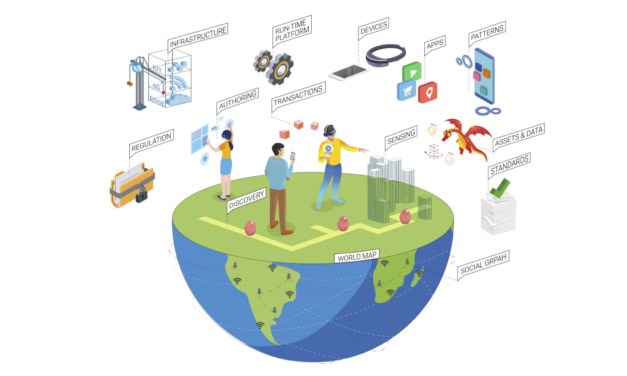
In her monthly Expert Take column, Selva Ozelli, an international tax attorney and CPA, covers the intersection between emerging technologies and sustainability, and provides the latest developments around taxes, AML/CFT regulations and legal issues affecting crypto and blockchain.In 2021, nonfungible tokens became the biggest disrupter in art, with artists minting, exhibiting and auctioning them and investors buying, selling and trading them. But by May 2022, NFT sales had dropped 92% from the market peak. According to data aggregator Layoffs.fyi, more than 17,000 technology laborers lost their jobs in May. The recent downturn is similar to 2018, when leading cryptocurrencies like Bitcoin (BTC) and Ether (ETH) fell by 80% or more.Related: 2021 ends with a question: Are NFTs here to stay?Immune to the digital asset market’s manic depressive volatility, Web3 developers, institutional investors, and regulators preparing to tax metaverse profits are calmly continuing with business as usual across the world.The NFT bear market might have cautioned high-level financiers at the World Economic Forum in Davos, Switzerland, as central banks start to tighten monetary policy against a backdrop of slowing economic activity. And gone are the days when central bankers fretted hedge fund managers — they are more concerned about the new crowd at the door, the “Metaversians,” who are digitizing various aspects of life in 3D with artificial intelligence.CanadaThe digital asset market meltdown was foreseen by Brian Shuster, founder and CEO of Canada-based Utherverse, who has developed more than 100 patents and pending patents for core internet technologies and the Metaverse. He told me: “There’s a ton of companies out there building out the Metaverse, and frankly, most companies claiming to offer properties and tokens have dangerously underestimated the complexity of the task at hand.” He continued:“The digital asset market meltdown is healthy for those companies which offer viable and sustainable Web3 products and technologies such as Ethereum and Avalanche to continue on. I will be launching my Utherverse utility token during 3Q of 2022.”Meanwhile, Calgary-based Accelerate Financial Technologies announced it would establish the Accelerate Non-Fungible Token (NFT) Fund, targeting high-net-worth investors willing to take a risk on Web3 investment products and digital collectibles available on the blockchain.Related: Crypto in Canada: Where are we today, and where are we heading?ChinaWith the floor price of some major NFT collections crashing over 50% over the past month amid broad sell-offs, the digital asset market meltdown has not slowed down infrastructural investment into the Metaverse in China, with NFT investment funds and fund of funds popping up every day.Yifan He, CEO of Red Date (Hong Kong) Technology — a Chinese state-backed blockchain company — told me: “Blockchain-based Service Network (BSN) will launch the national NFT infrastructure in China. The NFT is a digital certificate or a unit of data being stored on the blockchain. Owing to their uniqueness and indivisibility, NFTs are widely used in digital art and copyrighted content. However, their potential use cases go well beyond what we see today in the art world. Technically, an NFT can be applied to any scenario where proof of interest is required, from collectible ownership and IP of creative works to documentation such as ID cards, academic certificates, real estate licenses, etc. The technology can be used to verify the authenticity of documents while also preventing them from being tampered with or stolen, as well as facilitating verification, confirmation and tracking.”He added: “However, most NFTs today are minted on public chain technologies that are not allowed in the Chinese market. To support NFT technology development in China, the BSN has modified the public chain technologies to ‘open permissioned blockchains’ (OPBs) to overcome the regulatory hurdles in China by replacing cryptocurrency with fiat currency to pay gas fees and requiring permission for node deployment. To decouple the natural association with public chains and cryptocurrency, NFT is renamed Decentralized Digital Certificate, or DDC for short.”According to He, “BSN-DDC is a digital certificate infrastructure network on BSN China that includes 10 OPBs. BSN-DDC offers network access, core APIs, and SDKs — a one-stop shop for businesses to develop user portals or apps for all types of NFT applications. All payments and transaction fees are paid in fiat currency via BSN-DDC portals. BSN-DDC encourages digital certificate usage beyond the field of art and entertainment collectibles with support for all types of digital certifications, documents, tickets, identification, intellectual property and more.”“The BSN-DDC network currently is the most diverse, transparent, affordable, user-friendly blockchain infrastructure that supports the legal deployment of NFTs within China. It will officially launch by the end of January 2022 to support the mass adoption of NFTs in China,” concluded He.Related: Chinese Blockchain-Based Mobile Payment Revolution: How the Biggest CO2 Polluter Is Becoming the World’s Leading Producer of Solar PanelsFranceThe film industry is tapping NFTs for funding movies, with nonfungible tokens making a big splash at the Cannes Film Festival.In France, the movie Plush, which is set to be released in 2023, will be co-produced by the investing community through the sale of NFTs. NFT holders will receive a share of the film’s profits and be granted attendance at special screenings, and they may even see their beloved NFTs come to life in the movie.IndiaHarshavardhana Kikkeri, founder and CEO of HoloWorld — a metaworld that hosts “phygital” (physical and digital) metaverses in education, sports, robotics and security — has designed HoloSuit, which contains 40 embedded sensors to track the movements of a wearer’s arms, legs and fingers, presenting them digitally to enhance interactions in the phygital world.JapanJapanese multinational company Sony intends to be a leader in the metaverse and AI spaces by leveraging “the unique strengths provided by its diverse businesses and expertise in game technology, which will form the basis of entertainment experiences going forward.”The company has partnered with Manchester City FC and plans to create “new entertainment experiences” around live sporting events, and it’s also looking into the music industry and the potential of offering live virtual performances from Sony Music artists. As Sony’s CEO, Kenichiro Yoshida, explained:“The metaverse is at the same time a social space and live network space where games, music, movies and anime intersect.”SingaporeRiaz Mehta, founder and CEO of Singapore-based Ritestream, explained to me: “We are the team behind the leading watch-to-earn platform, Ritestream — a film and TV launchpad to fund, monetize and distribute content through leveraging blockchain technology. On the interactive app, you can watch your favorite shows and get rewarded in $RITE coin; enjoy metaverse cinemas and virtual date nights; and support content, actors and celebrities by purchasing limited edition NFTs. Not only can these NFTs help fund the shows, but they also allow users to buy and own part of them, giving them producer credits and future earning potential should the shows become popular. We have an exclusive deal to issue NFTs for the upcoming film Stealing McCloud, inspired by John McAfee, the controversial software mogul who was found dead in a Spanish prison cell in 2021 [where he was being held] for U.S. tax evasion. We’re excited to be revolutionizing how we all consume and fund content with an app where it quite simply pays to watch.”Metacurio VS Singapore, a new joint venture between Metacurio and VS Media, will be the exclusive home for VS Media and its intellectual property, spanning segments like creating, marketing and distributing NFTs. Metacurio will offer its experience in Web3-focused creative and NFT collectability strategies and more. It will also bring its client base, having relationships with over 70 top talents and brands.Persistence is building an ecosystem of multichain Web3 products for retail and institutional users, allowing for the creation and exchange of NFTs across chains and building products to generate opportunities and address challenges around the proof-of-stake consensus mechanism in a multichain environment.Related: Why Singapore is one of the most crypto-friendly countriesSouth AfricaNelson Mandela, a revolutionary and anti-apartheid leader who served as the first democratically elected president of South Africa from 1994 to 1999, entered the Metaverse with the first Mandelaverse NFT — a collaboration between the Mandela family, TinyWins, Phoenix James Art Haus and Range Media Partners. The charitable Web3 project includes four NFT collections whose proceeds benefit the Mandela Education Program, an initiative to expand access to books to children in Africa and beyond and revolutionize how philanthropy can work.Related: South African President Steps Down as Banks Embrace Blockchain TechnologySpainFollowing Avalanche’s first-ever summit in Barcelona, the first Spanish Ethereum conference will be held in the same city from July 6 to 8. This comes as Ethereum co-founder Vitalik Buterin is calling for Federal Deposit Insurance Corporation-like protection for small crypto investors in the face of the recent market meltdown.Roberto de Arquer, co-founder and chief metaverse officer of Spain-based Gamium, explained:“We are building the first decentralized social metaverse and the digital identity of humans.” Gamium World is a 3D, fully immersive environment that allows users to access Gamium’s decentralized social metaverse. Player avatars create the world and can build experiences through the Gamium software development kit, including buying and selling land.Elsewhere in the Metaverse, holders of NFTs related to video game real estate have lost thousands to millions of dollars from transaction fees, phishing attacks, rug pulls and more. In a Reddit comment, u/MDKAOD recently explained the virtual real estate business: “Entropia Universe (formerly Project Entropia) has had land deeds since the early 2000’s. John ‘Neverdie’ Jacobs is the big name DJ who owns an entire space station in that game and now there are whole ‘partner planets’ owned (at least in history) by Lemmy from Motorhead, Michael Jackson’s estate (at least was in talks at one point, I don’t know if it ever materialized) and at least one other big profile name that escapes me.” He continued:“Virtual real estate has always been unobtainable and as far as I’m concerned has always been a way to launder money.”Related: Spain tackles corruption with blockchain AI and amendments to its anti-corruption lawsTurkeyMehmet Eryilmaz, founder of Turkey-based Faro, explained to me: “Faro is a tokenized entertainment company that produces films and TV content, owns music catalogs and IP, and manages live entertainment and Web3 representation rights. The company leverages peak interest in local content, soaring production budgets, Turkey’s content export success and post-COVID live entertainment demand with forward-looking Web3 themes of collective ownership and fan-based utility-focused new businesses. Faro’s operations are backed by physical world recurring revenue media assets. Faro tokenholders can invest and profit from revenue rights from all Faro productions and assets. Furthermore, they get access, utility and generate revenues from all fan-centric NFT offerings.” He added, “Faro wants to scale its business across emerging markets with the same model.”Refik Anadol, the first artist to use artificial intelligence in an immersive public artwork — and whose work was featured at the Museum of Modern Art in New York — has been unphased by the NFT market downturn. During April and May, he continued to sell his NFTs. The sales for his “An Important Memory for Humanity” collection totaled $6.2 million, and a one-of-one NFT titled “Living Architecture: Casa Batlló” fetched $1.38 million via his first auction at Christie’s.Related: Crypto and NFTs meet regulation as Turkey takes on the digital futureUnited Arab EmiratesLokesh Rao, CEO and co-founder of Trace Network Labs — which has offices in the United Arab Emirates — explained to me that his platform “enables brands, especially fashion, to create new categories of unique digital products which can be used to exchange product details with various Web2 and Web3 platforms.” Recently, Gucci, Dolce & Gabbana, Louis Vuitton, Tribute Brand, The Fabricant, Institute of Digital Fashion and Red DAO showcased fashion NFTs at the Decentral Art Pavilion in Venice and discussed the future of the industry.By 2030, metaverse technology is expected to contribute $4 billion to the economy of Dubai and support the creation of 42,000 virtual jobs.Related: The United Arab Emirates’ green digitization visionUnited StatesPopular NFT collection Bored Ape Yacht Club, created by United States-based Yuga Labs, saw its floor price plunge to 88 Ether (ETH) (about $153,000) on May 27, down from 138 ETH (over $390,000 at the time) a month prior.In a Reddit comment, u/Dr_Eastman shared their market analysis for the severe drop in prices:“Seriously why the fuck would I want to buy a receipt of a monkey pic for higher than what the first buyer bought it for?”This is particularly salient given that U.S. courts say computer- or AI-generated art and music has no copyright protection.Nevertheless, Bill Starkov, founder of the Apocalyptic Apes NFT project, thinks “a correction is super healthy for the crypto/NFT space,” as he told me. The project’s female-led Queen Ape collection and second NFT drop raised over $1.5 million and sold out in under three hours, just before the downturn. Investors in the space are now using this downturn to go NFT shopping like it’s Black Friday. 15 Queen Ape NFTs were recently revealed to be one-of-one music NFTs, paired with songs by emerging music artists. “This is a huge opportunity for emerging artists to push forward their careers through Web3 by attaching themselves and promoting their music to an already established, loyal and passionate NFT community,” said Starkov. “In addition, we’re giving a generous revenue share of 45% streaming to the holders of these Queen Ape music NFTs. This is an opportunity for emerging artists to be introduced to thousands of people who will be incentivized to promote them.” Other female-led NFT projects include DeadFellaz and Gutter Cat Gang.PolyientX, a Web3 innovator providing tools to gain more value and utility from NFTs, launched a product allowing NFT holders of selected projects to claim weekly rewards. “In the years we have been innovating in the NFT space, two things have become painstakingly clear,” said PolyientX’s head of product, Nick Casares.“NFTs have tremendous growth potential and NFT communities want additional value. PX Drops serves to merge these opportunities.”Thirty years after releasing her infamous book Sex, pop icon Madonna collaborated with digital artist Beeple to create three charitable NFTs portraying her nude avatar with environmental themes. Hip-hop legend Jim Jones teamed up with Mogul for an NFT, while musical legend Katy Perry offered her De Soi NFTs via FlickPlay — “a social metaverse platform that is interoperable with Tik Tok-like engagement, Pokemon Go-esque gameplay, and AR camera features built to offer real-world utility to digital NFT accessories,” Pierina Merino, FlickPlay’s founder and CEO, explained to me.In the world of sports, baseball living legend Miguel Cabrera partnered with FlickPlay, basketball stars Andre Drummond and Ty Jerome partnered with Chibi Dinos, former basketball champion and fashion icon Dennis Rodman partnered with Jeff Hood of MetaCurio, while the McLaren Formula 1 Team and McLaren Shadow esports team partnered with OKX to launch their NFTs.In the world of games, “NiftyChess, a Web3 startup, established Treasure.Chess.com in partnership with Chess.com to create the first NFT marketplace enabling the purchase, sale, creation and collection of NFTs of chess games, including by chess masters, without needing to buy cryptocurrency first,” explained co-founders Patrick Gallagher and Joseph Schiarizzi.But you need not be a legend, icon, star or master to get noticed in the metaverse, believe Akbar Hamid and Simone Berry, founders of People of Crypto Lab (POC) — a creative and innovation lab dedicated to increasing diversity, participation and representation in Web3. Its mission is to build the metaverse blueprint for inclusion across Web3 by developing, investing and promoting brands with diverse stories, teams and projects. Berry explained: “I firmly believe that Web3 can only scale if diversity and inclusion are rooted in the foundation of what is being built. Black and brown women, people of color and LGBTQIA+ people have combined spending power and unprecedented cultural influence that dwarfs the influence of any other community. Culture drives commerce, which is why we need to actively educate and onboard these communities in order to ensure an equitable, profitable future for Web3.”Microsoft, Apple and Meta lead in developing metaverse technology. Web3 game developer Epic, which hosted pop star Ariana Grande’s metaverse concert, has shown unprecedented global scale and revenue during the pandemic. It is also embroiled in a patent infringement lawsuit with Utherverse and has said it will fight Apple and Google to keep the Metaverse open.Fidelity launched two exchange-traded funds to invest in metaverse Web3 technologies, while a16z rolled out its fourth fund, worth $4.5 billion.VietnamRegarding Vietnam, Tri Pham — co-founder of KardiaChain and founder of Whydah — told me: “KardiaChain is the first decentralized interoperable and self-optimized blockchain infrastructure. We aim to create a unified platform that combines all participants’ collective strengths to lay the foundation for global blockchain mass adoption.”OECD’s digital asset public consultation documentDigital assets and businesses established in the Metaverse are among several issues presenting challenges for countries relating to cross-border tax, money laundering, consumer protection and personal data legislation. For this reason, the Organization for Economic Cooperation and Development (OECD) published a public consultation document on March 22 on a new global framework for fiscal transparency that would allow the presentation of reports and the exchange of information regarding crypto assets. It also covers proposed amendments to the Common Reporting Standard (CRS) for countries’ automatic exchange of information regarding financial accounts.The new framework would increase the ability of participating countries’ tax authorities to monitor the transactions residents make on foreign cryptocurrency exchanges. Most, if not all, of the 100-plus countries participating in the CRS are expected to adopt it.The U.S. has already adopted measures requiring taxpayers to report digital asset tax information.Related: Tips to claim tax losses with the US Internal Revenue ServiceAt a public consultation meeting on May 23, the crypto industry urged the OECD to implement the framework in phases.The views, thoughts and opinions expressed here are the author’s alone and do not necessarily reflect or represent the views and opinions of Cointelegraph.Selva Ozelli, Esq., CPA, is an international tax attorney and certified public accountant who frequently writes about tax, legal and accounting issues for Tax Notes, Bloomberg BNA, other publications and the OECD.

Čítaj viac
Here is why Germany is ranked the most crypto-friendly country

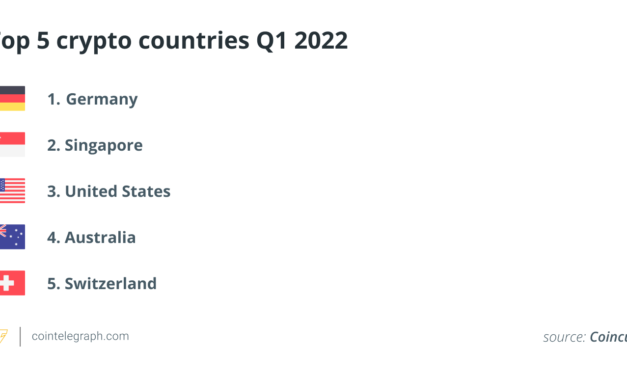
In her monthly Expert Take column, Selva Ozelli, an international tax attorney and CPA, covers the intersection between emerging technologies and sustainability, and provides the latest developments around taxes, AML/CFT regulations and legal issues affecting crypto and blockchain.Germany has risen to the top spot of Coincub’s guide to the most crypto-friendly countries in Q1 2022. The European country allows its long-term domestic savings industry to utilize crypto investments, supported by its zero-tax policy on long-term capital gains from crypto, and its number of Bitcoin and Ethereum nodes is second only to the United States.Blockchain adoptionIn 2019, Germany was the first country to adopt a blockchain strategy to harness the technology’s potential for advancing digital transformation and to help make it an attractive hub for the development of blockchain, Web3 and metaverse applications in fintech, climate tech, business and govtech, including Germany’s digital identities project.The German Savings Banks Association — a network of 400 savings banks in German-speaking countries — started developing fintech blockchain applications to enable customers to buy and sell cryptocurrencies. Various companies such as Volkswagen, About You, SAP, BrainBot and BigchainDB have been developing NFT, metaverse, Web3, govtech and crypto payment applications that are widely used in e-commerce to purchase goods. Jacopo Visetti, an adviser to C3 — a team of operators and investors who back companies working to reduce emissions — explained to me:“C3 is a climate tech company developing advanced technological infrastructure allowing to bridge carbon credits from international standards to the blockchain by means of tokenization.”To fund the development of these technologies, Roundhill Investments, an ETF sponsor focused on innovative thematic funds, launched the Roundhill Ball Metaverse UCITS ETF on the Deutsche Börse Xetra, describing it as Germany’s first metaverse exchange-traded fund. Furthermore, Germany’s Fund Location Act allows pension funds, insurance companies, family offices and corporate investment funds to allocate up to 20% of their assets in digital assets.Crypto adoptionAs of the end of 2021, approximately 2.6% of Germans have used cryptocurrency. And according to a recent report from KuCoin, 44% percent of Germans are motivated to invest in crypto.German investors can get involved with crypto and blockchain via companies and platforms such as 1inch Exchange, Nuri, FinLab, Minespider, the NAGA Group, Tangany, Coindex, CryptoTax, Upvest, Fiona, Blocksize Capital, USDX Wallet, Bitbond and the Iota Foundation, or they can shop on Sugartrends using Dash. As Mark Mason, communications and business relations manager at Dash, explained to me:“Dash is an alternative cryptocurrency that provides financial freedom without borders. It accelerates financial inclusion by allowing people to use their phones as bank accounts. It is decentralized, permissionless and censorship-resistant.”Related: What the SEC can learn from the German regulatorGermany is among the top 10 countries for crypto mining and is home to the European Union’s largest mining company, Northern Data — which is powered almost entirely by renewable energy. Crypto mining is taxable as a business.StartupsNumerous blockchain startups have settled in Germany’s crypto capital of Berlin, with fintech angel investor Christian Angermayer’s Apeiron Investment Group backing Berlin-based Denario and Penta, as well as Cologne-based Nextmarket and Frankfurt-based Northern Data.Paycer, a Hamburg-based fintech startup company specializing in cryptocurrencies and decentralized finance, is developing a bridge protocol that will aggregate DeFi and cross-chain crypto services and combine them with traditional banking services.Berlin-based fintech startup Forget Finance, on the other hand, focuses on motivating young people to save and invest in crypto using online coaching via a mix of AI bots and real financial experts.Central bank digital currencyAccording to a survey from Deutsche Bundesbank, Germany’s central bank, the share of cash payments in point-of-sale transactions made by German consumers dropped from 74% in 2017 to 60% in 2020. Accordingly, Bundesbank has been working on distributed ledger technology asset settlements. Meanwhile, the European Central Bank is exploring creating a CBDC, dubbed the digital euro. Recent research commissioned by the ECB, based on discussions with panels of EU citizens, emphasizes security and universal acceptance as primary concerns.Nonfungible tokens and the metaverseThe metaverse is the next wave of Web3, changing how we interact, socialize, work, play video games, fund charities, purchase and sell nonfungible tokens, and attend concerts, sports events and conferences. In 2017, the ZKM Center for Art and Media in Karlsruhe acquired a number of NFTs, well ahead of the craze of 2021, and it is now exhibiting works from its own collection and private lenders on the “ZKM Cube” — an outdoor, publicly viewable cube-shaped screen. Margit Rosen, head of the collection, archives and research department at the ZKM, shared the details with me in an interview.Since the onset of the NFT craze, German sportswear company Adidas has teamed up with Bored Ape Yacht Club and with Prada for a charitable climate-focused NFT art project on the Polygon blockchain to raise awareness. Additionally, the German auto company Volkswagen has launched a successful interactive NFT ad campaign.[embedded content]Brian Shuster, founder and CEO of Utherverse, explained to me: “Utherverse has been building and operating an online virtual world community where one can socialize in real time, attend events and start a business, since 2005. Utherverse has combined the best of the internet, gaming and virtual reality for the ultimate metaverse experience. For example, Secret City is a game developed by Utherverse Digital Inc., with 81% of its users in Germany. Having developed more than 100 patents and pending patents for core internet technologies and the metaverse, we are the undisputed leaders of metaverse architecture and VR economics. There’s a ton of noise out there relating to the metaverse, and frankly, most companies claiming to offer properties and token coins have dangerously underestimated the complexity of the task at hand. Almost every company that’s tried to make a metaverse work has failed. The third generation of Utherverse and its utility token is expected to be unveiled in Q2 of 2022.”Related: While men wanted, women did: Empowering female creators with NFTs and cryptoIllicit use of cryptoGermany is a member of Europol’s Joint Cybercrime Action Taskforce, which works to fight transnational cybercrime. According to a 2022 report from Europol:“The use of this virtual currency for criminal activities and laundering of profits has grown over the past years in terms of volume and sophistication. […] The criminal use of cryptocurrency is no longer confined to cybercrime activities, but now relates to all types of crime that require the transmission of monetary value.”After being tipped off, Germany’s Federal Criminal Police Office, or the Bundeskriminalamt, took down the servers of Hydra, the world’s largest illegal dark web marketplace. Hydra has facilitated over $5 billion in Bitcoin (BTC) transactions since launching. Germany’s move was followed by the U.S. Treasury Department issuing sanctions against Hydra in a coordinated international effort intended to “disrupt the proliferation of malicious cybercrime services, dangerous drugs, and other illegal offerings” available through the Russia-based site.Related: The world has synchronized on Russian crypto sanctionsGurvais Grigg, public sector chief technology officer at Chainalysis, told me: “The takedown of Hydra is notable not just because it was the largest darknet market in operation, but also because it offered money laundering services that enabled the conversion of cryptocurrency into Russian rubles.” He continued: “Taken together with the sanctions against Garantex as well as Suex and Chatex last year, government agencies are clearly targeting cashout points that cybercriminals use for ransomware, darknet market sales, scamming and, potentially, sanctions evasion.” Regulation of digital assetsGermany is one of the few countries in Europe that has started to regulate cryptocurrencies ahead of the European Union’s Markets in Crypto Assets, or MiCA, regulation. According to Robin Matzke, a lawyer and blockchain expert who advised the German Bundestag, Germany’s crypto custody regulation requires those who control private keys on behalf of others and serve the German market to receive a license from the Federal Financial Supervisory Authority, regardless of whether they hold other similar licenses within the EU.Related: European ‘MiCA’ regulation on digital assets: Where do we stand?The EU’s new Transfer of Funds Regulation also provides disclosure rules for “unhosted” wallets, or crypto wallets not managed by a custodian or centralized exchange. Lone Fønss Schrøder, CEO of the blockchain company Concordium, explained: “The new draft regulations require significant changes in the way current cryptocurrency transfers are made. It may be a huge challenge for the decentralized crypto solutions that hold anonymity as a core value and are committed to peer-to-peer (P2P) and self-custody. Moreover, many projects could be held back by their community from changing their solutions.”The views, thoughts and opinions expressed here are the author’s alone and do not necessarily reflect or represent the views and opinions of Cointelegraph.Selva Ozelli, Esq., CPA, is an international tax attorney and certified public accountant who frequently writes about tax, legal and accounting issues for Tax Notes, Bloomberg BNA, other publications and the OECD.

Čítaj viac
The world has synchronized on Russian crypto sanctions

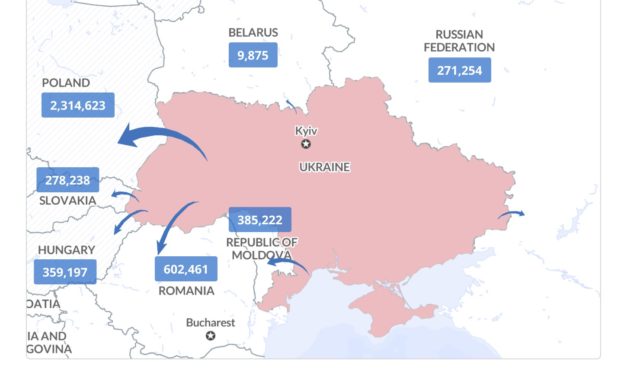
In her monthly Expert Take column, Selva Ozelli, an international tax attorney and CPA, covers the intersection between emerging technologies and sustainability, and provides the latest developments around taxes, AML/CFT regulations and legal issues affecting crypto and blockchain.According to the United Nations High Commissioner for Refugees, also known as the UN Refugee Agency, nearly 4 million Ukrainians have fled their homes since bombs began falling and bullets started flying on Feb. 24, with most heading to neighboring Central European countries. At the same time, people around the world have sent over $100 million in crypto donations to support Ukraine, according to Alex Bornyakov, deputy minister of digital transformation. This necessitated Ukrainian President Volodymyr Zelenskyy to sign a bill legalizing crypto on March 16.Robby Houben, a professor at the University of Antwerp who co-authored a study for the European Parliament about the illicit use of cryptocurrencies and blockchain, published an article on March 1 titled “Crypto-assets as a blind spot in sanctions against Russia?” in which he urges crypto sanctions be implemented to further dry up funding for Russia’s invasion of Ukraine. After all, Russia has been leading a multinational stablecoin initiative with BRICS (Brazil, Russia, India, China and South Africa) and Eurasian Economic Union countries. This year, the initiative is scheduled to issue central bank digital currencies (CBDCs) that will be exchanged on smartphones, outside of the SWIFT and CHIPS systems. The Bank of International Settlement reported on March 22 that “Project Dunbar” — a collaboration with the central banks of Australia, Malaysia, Singapore and South Africa — has confirmed that cross-border CBDC payments are technologically possible. Related: Russia leads multinational stablecoin initiative“Numbers show that crypto-assets are already quite widely adopted in the region, and the scenario is therefore definitely not utopian,” Houben emphasizes in his article. The Russian government has estimated that at least $200 billion worth of crypto, or 12% of the overall market, is held by Russians. Blockchain analytics platform Elliptic has identified more than 400 virtual asset service providers where one can use rubles to purchase cryptocurrencies, hundreds of thousands of crypto addresses linked to sanctioned Russia-based individuals or entities, and 15 million Russian crypto addresses involved with illicit transactions. Adam Zarazinski, CEO of Inca Digital — which provides digital asset data and analytics technology to the United States Commodity Futures Trading Commission and Department of Defense — explained to me: “Since the Ukrainian invasion by Russia on Feb. 24, on Binance, BTC/RUB trades increased about tenfold, and USDT/RUB trades increased about sevenfold and then begin to drop on March 7 when Visa and Mastercard pulled out of Russia. Similarly, Russian Google searches for how to convert rubles to Tether increased fivefold during the same period.”With the Swiss government taking the lead on March 4, a wave of synchronized sanctions that extend to crypto began falling on Russia. On March 5, Singapore followed suit. Then came the European Union on March 9. And on March 11, the Group of Seven (G7) countries — including Canada, France, Germany, Italy, Japan, the United Kingdom and the United States — instituted sanctions “to hold Putin accountable for his continued assault on Ukraine and further isolate Russia from the global financial system.”Given that crypto regulation is still being contemplated by many of the countries that imposed these sanctions, I wondered whether their legal infrastructure would allow for their implementation when it comes to cryptocurrencies. Here is what I found:Related: Cybercrime task force monitoring the global digital financial systemSwitzerlandSwitzerland was the first to adopt sanctions against Russia. That same day, a Swiss member of parliament filed a criminal complaint against Credit Suisse for potential sanctions violations relating to the destruction of the loan documents of Russian oligarchs, who began moving their billions worth of crypto assets from Switzerland to the United Arab Emirates. The UAE adopted its first nationwide cryptocurrency law on March 9. Isabelle Rösch, press officer at the Swiss Federal Department of Finance, explained to me:“The provisions of the sanctions ordinance of March 4 apply to crypto assets in the same way as they do to other assets, including asset freeze for listed persons and entities. Crypto companies/financial institutions must notify the authorities concerning crypto sanctions enforcement cases. Criminal charges apply for violation of prohibitions in accordance with the Embargo Act of 2002, to which the ordinance refers in Article 32.”James Reardon, a senior associate at MLL Meyerlustenberger Lachenal Froriep based in Geneva, added: “For instance, if someone — per Article 15, Paragraph 1 of the Ordinance — fails to freeze crypto assets owned by a listed individual or entity, that person may be held criminally liable by imprisonment up to one year and a 500,000 franc (about $534,000) fine. In severe cases, the perpetrator may be sanctioned by imprisonment up to five years and a 1,000,000 franc (about $1,070,000) fine.”Related: Why Switzerland is becoming a ‘crypto nation’ with a flourishing ICO marketSingaporeSingapore became the first Asian country to impose unilateral sanctions on Russia, by way of the Monetary Authority of Singapore (MAS), including on cryptocurrency transactions, for its invasion of Ukraine. The sanctions were detailed on the website of its Ministry of Foreign Affairs.Jacqueline Ong, deputy director of communications at MAS, said to me in an interview: “The sanctions apply equally to all financial institutions (FIs) in Singapore, including digital payment token service providers. This is to ensure that Singapore’s financial system is impervious to attempts to circumvent the sanctions, given the extensive interlinkages among different players in the financial system. FIs dealing in cryptocurrencies are required to comply with the sanctions. All FIs must have robust controls such as procedures to know their customers and the beneficial owners of customers. They are required to screen their customers and their transacting counterparties to avoid dealing with prohibited entities or activities. If FIs have any information on prohibited entities or activities, they are required to inform MAS immediately. They are also required to demonstrate their compliance to MAS and are subject to scrutiny and inspection by MAS.” She also added: “MAS will take appropriate regulatory action against FIs, including imposing financial penalties, if they are found to have breached the sanctions.”Related: Why Singapore is one of the most crypto-friendly countriesEuropean UnionAndrea Puccio, founding partner at law firm Puccio Penalisti Associati, explained: “The EU crypto sanctions on Russia implemented on March 9 are intended to target crypto assets of Russian entities and individuals. According to European law, member states are responsible for the implementation of the EU crypto sanctions by providing specific civil or criminal penalties at the state level. For example, in Italy, Legislative Decree no. 221/2017 provides civil and criminal penalties for breaches of EU restrictive measures regarding export.”Niklas Schmidt, a partner at law firm Wolf Theiss, added that “There is no loophole for sanction dodgers by using crypto in Austria. The Sanctions Act of 2010 (Sanktionengesetz 2010) regulates the implementation of sanctions of the UN and the EU. The act allows the Austrian national bank to freeze crypto assets of sanctioned individuals and entities, allows courts to note freezes of crypto assets in the companies register, allows the minister of the interior to impose travel restrictions on sanctioned individuals, etc. Most importantly, the Sanctions Act of 2010 provides for judicial and administrative penalties to be imposed on persons violating sanctions. The maximum penalty provided for is imprisonment of up to one year or a fine of up to 360 daily rates. The act also does not contain an obligation for administrative bodies to notify the EU Commission of the sanctions.”The EU sanctions legislation contains a whistleblower provision, which member states may or may not have adopted into law. Puccio pointed out:“Crypto assets seem to fall within the very wide definition of ‘financial services, products and markets, and prevention of money laundering and terrorist financing’ under Directive (EU) 2019/1937, which aims to protect whistleblowers who report breaches of EU law but does not provide financial rewards for doing so.”Intersentia, a legal publishing house based in Cambridge, U.K., has said: “EU sanctions are used both against regimes and suspected terrorist financing. But these sanctions have developed ‘organically,’ without sufficient thought being given to certain basic issues. […] This has resulted in considerable litigation before the Court of Justice (CJEU). The new legal basis and the recent judgments from the CJEU have solved some difficulties, but ‘taking sanctions seriously’ means new problems for national implementation, spanning over a variety of areas: criminal law, constitutional law, international law and European law” — and perhaps, when enacted, the Markets in Crypto-assets (MiCA) regulation as well. Related: European ‘MiCA’ regulation on digital assets: Where do we stand?On March 14, the Economic and Monetary Affairs Committee voted in favor of the proposed MiCA legislation, which will sustainably regulate digital assets, making it easier for crypto firms to expand throughout the EU’s 27 member states by facilitating a “passportable” license that would be valid between countries once ratified. The next step for MiCA will be informal negotiations between the European Parliament, European Commission and European Council. When they reach a consensus, the law will be enacted with a six-month transition period for all EU member states to regulate all crypto-asset issuers and service providers — excluding CBCDs.United KingdomAfter issuing a report in 2021, the Bank of England has begun developing a crypto-asset regulatory framework.Jonathan Brogden, partner at law firm DAC Beachcroft, explained to me in an interview: “As a matter of U.K. sanctions law, although not specifically named, there is no doubt that crypto assets fall within the very wide definition of ‘economic resources,’ which make crypto assets subject to the U.K. sanctions regime. The U.K. regulator, the Financial Conduct Authority (FCA), recently issued guidance that confirms its view that financial sanctions regulations treat crypto assets the same as other forms of assets. The use of crypto assets to attempt to circumvent economic sanctions would amount to criminal offenses under both U.K. money laundering and sanctions regulations. Registered U.K. crypto-asset firms have been contacted by the FCA recently and reminded of the application of sanctions. There are obligations on regulated firms to report suspicious activity to the U.K. regulatory and criminal authorities. Under the U.K.’s sanctions regime, if you know or have reasonable cause to suspect that you are in possession or control of the funds or economic resources of a sanctioned person, you must freeze them, not deal with them or make them available to, or for the benefit of, the sanctioned person, and report the circumstances to the authorities. The breach of U.K. sanctions is punishable by varying terms of imprisonment and fines as well as civil penalties.”However, there are 150 unregistered crypto firms in the U.K. that can avoid sanctions regulation, according to Annabel Goulding and Michael Ruck of law firm K&L Gates.Related: Brexit and fintech: A spring stocktakeCanadaDanielle Prenevost of the Canadian Securities Administrators explained to me: “On March 14, the Canadian Securities Administrators (CSA) issued a statement imposing crypto sanctions by amending the Special Economic Measures (Russia) Regulations, which are applicable to all crypto market participants — including issuers, marketplaces, clearing agencies, custodians, all categories of registrants, including crypto-asset trading platforms, and pension, investment and mutual funds and their managers. The CSA took this step to encourage all market participants to do their due diligence and consider obtaining expert advice to understand, follow and continually monitor their obligations under the regulations.”Tae Young Bae, a reporter for the Association of Certified Sanctions Specialists, highlighted that Canadian sanctions law had not been meaningfully enforced up until now.Related: Why Canada has emerged as a leading blockchain and crypto nationJapanOn March 14, citing Russia’s potential ability to rely on crypto to bypass sanctions, Japan’s Financial Services Agency announced sanctions on digital assets, with noncompliers subject to penalties such as imprisonment of up to three years or a fine of 1 million yen (around $8,100).United StatesOn March 11, the United States Treasury Department issued new guidance clarifying that the Office of Foreign Assets Control’s Russia-related sanctions extend to cryptocurrencies. It later followed up with additional Russian Harmful Foreign Activities Sanctions on March 24. The Treasury Department’s announcements came after it earlier published new regulations to address the Russian sanctions on March 1. The Department of Justice established Task Force KleptoCapture on March 2 to enforce the sweeping sanctions. On March 9, U.S. President Joe Biden signed his Executive Order on Ensuring Responsible Development of Digital Assets, with Russia’s invasion of Ukraine having elevated crypto’s national security significance. The executive order highlights the importance of digital assets in retaining the United States’ technological leadership in a world of increasing competition and striking the right balance between sustainably fostering innovation, protecting investor rights and mitigating the national security risks posed by the illicit use of digital assets. The executive order further requests a set of interagency reports from a wide range of executive branch stakeholders, including the Federal Reserve, which earlier released a report about CBDCs.Related: Powers On… Biden accepts blockchain technology, recognizes its benefits and pushes for adoptionThe Committee on Banking, Housing and Urban Affairs held a hearing on March 17 titled “Understanding the Role of Digital Assets in Illicit Finance,” which focused on how digital assets are used in the Russia–Ukraine War.Emin Gün Sirer, founder and CEO of Ava Labs, pointed out to me:“Cryptocurrencies — including tumblers or mixing services — would be a poor tool for evading Russian sanctions for two reasons: (1) There is transparency available in understanding in real time what flows are occurring in the entire cryptocurrency economy; (2) There just isn’t the liquidity to run a G20 economy with cryptocurrencies.” Some crypto industry participants have been reluctant to implement the OFAC’s sanctions compliance guidance, which has cross-border reach. Dean Zerbe, partner at law firm ZMFF&J and co-author of the U.S. tax regulations for whistleblowing, said the G7, EU, Singapore and Switzerland “need to learn what the U.S. already knows — whistleblowers are critical in uncovering and exposing hidden money.” He also added: “Efforts to go after the crypto of Russian oligarchs must include a robust program to reward whistleblowers. A small army of lawyers, accountants, crypto brokers and bankers are involved in helping the oligarchs hide their money.”The views, thoughts and opinions expressed here are the author’s alone and do not necessarily reflect or represent the views and opinions of Cointelegraph.Selva Ozelli, Esq., CPA, is an international tax attorney and certified public accountant who frequently writes about tax, legal and accounting issues for Tax Notes, Bloomberg BNA, other publications and the OECD.

Čítaj viac

Why Singapore is one of the most crypto-friendly countries

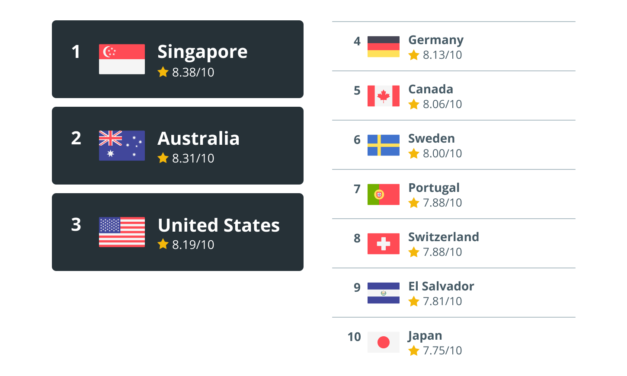
In her monthly Expert Take column, Selva Ozelli, an international tax attorney and CPA, covers the intersection between emerging technologies and sustainability, and provides the latest developments around taxes, AML/CFT regulations and legal issues affecting crypto and blockchain.At the end of 2021 — a year in which Bitcoin (BTC) and Ether (ETH) rose 100% and 300%, respectively — global crypto rating company Coincub ranked Singapore as the most crypto-friendly country in the world due to its “robust economy, positive legislative environment, and high rate of cryptocurrency adoption.”Cryptocurrency consumer protection lawSingapore’s regulators have done a great deal to nurture the blockchain industry. Its No. 1 ranking by Coincub was proven right by the prompt regulatory measures implemented by the Monetary Authority of Singapore (MAS), the country’s main financial regulatory body, when the cryptocurrency market began crashing during January 2022 and entered bear market territory.During mid-January, Singapore’s MAS enacted consumer protection laws for investors exposed to constant reminders of digital assets via billboard ads or crypto ATMs, banning all cryptocurrency-related advertisements and ATMs in public spaces.Related: Clampdown on crypto ads: A one-off or a new phase of global regulation?In a statement, MAS said that while it “strongly encourages” blockchain technology development and innovative crypto use cases, cryptocurrency trading is “highly risky and not suitable for the general public.” As such, cryptocurrencies should not be portrayed “in a manner that trivialises the high risks of trading” them.Payment Services Act, January 2020In January 2020, Singapore’s Payment Services Act came into effect as a response to the Financial Action Task Force’s 2018 update to its Anti-Money Laundering (AML) and Combatting the Financing of Terrorism (CFT) cross-border risk guidelines for cryptocurrencies. The Payment Services Act is a flexible framework for the regulation of payment systems and payment service providers in Singapore that establishes registration requirements along with AML and CFT guidelines for cryptocurrency businesses.MAS has been selective in issuing licenses to cryptocurrency businesses, with a large number of applicants failing to receive licenses to operate in the country. DBS Bank — Singapore’s largest bank — as well as OCBC Bank, IBM and two institutional-grade Bitcoin funds launched by Singapore-based fund manager Fintonia Group are among those that received licenses to operate.Initial coin offeringsIn response to a wave of initial coin offering launches, MAS first published guidelines in August 2017 indicating that if an ICO was deemed to be issuing a security, it would be subject to regulation. This was followed by MAS issuing “A Guide to Digital Token Offerings,” which provides further explanation and direction on the regulation of cryptocurrencies in Singapore.Taxation of cryptocurrenciesSingapore is a low-tax jurisdiction. According to Desmon Teo and Lee Vin Wee of Big Four accounting firm Ernst & Young, the Inland Revenue Authority of Singapore exempted digital payment tokens from goods and services tax effective Jan. 1, 2020. Since there are no capital gains taxes in Singapore, capital gains derived from the sale of cryptocurrencies are not taxable either.Related: The major tax myths about cryptocurrency debunkedBlockchain adoptionSingapore, which is a major financial center and shipping hub and has the tenth-highest GDP per capita, has emerged in a short period as a global cryptocurrency hub amid its favorable regulatory and tax infrastructure and by utilizing blockchain technology in many areas of its economy. MAS is bullish on the potential of crypto and blockchain, particularly in expediting cross-border payments and trade finance, but frowns on cryptocurrencies as investment assets for retail investors.Cryptocurrency exchangesAccording to one survey, 43% of Singaporeans own cryptocurrency. In comparison, the overall crypto ownership rate is 11.3% in South Africa, 10.5% in the United States and 9.8% in Sweden.Retail investors can trade cryptocurrencies on a multitude of crypto exchanges, including Coinbase, Kraken, FTX, Bybit, KuCoin, Vauld, Independent Reserve, Gemini, Coinhako, Tiger Brokers, Futu’s Moomoo and Syfe. Binance, the world’s largest crypto exchange, acquired an 18% stake in the Singapore-regulated private securities exchange Hg Exchange before announcing it would discontinue its operations at Binance Singapore by mid-February 2022. This announcement was followed by a special report by Reuters detailing Binance’s opaque corporate structure coupled with weak global AML and CFT compliance. Huobi, the world’s sixth-largest crypto exchange, also announced it would be shutting accounts in Singapore by the end of March 2022. SIX Digital Exchange — a sister company of SIX Swiss Exchange, which operates Switzerland’s national stock exchange — announced a partnership with SBI Digital Asset Holdings, a division of Japanese banking and financial services giant SBI Group, to establish a crypto exchange and central securities depository in Singapore. The joint venture, called Asia Digital Exchange, is designed to create a regulated, global liquidity pool for digital assets between Asia and Europe.BankingA multitude of big banks — including Barclays, BNP Paribas, BNY Mellon, Citi, Deutsche Bank, HSBC, Orient Securities, Standard Chartered, Societe Generale and United Overseas Bank — have joined Marketnode, a digital asset joint venture of major investment holding company Singapore Exchange (SGX) and government-backed investment firm Temasek. The goal is to explore the use of blockchain technology focused on capital markets workflows through smart contracts, ledger and tokenization technologies. Marketnode also partnered with Singapore-based fintech firm RootAnt Global and United Kingdom-based blockchain platform SETL to focus on fixed income and multi-asset end-to-end infrastructure development.Grab — a Singapore- and Indonesia-headquartered company focused on mobile applications for transportation, food delivery and cryptocurrency payments — and Singapore Telecommunications have each acquired a 16.3% stake in PT Bank Fama International in order to pursue digital banking opportunities in Indonesia. The two collectively secured a digital banking license in Singapore.Cap and trade and renewable energy trading exchangesEfforts for a green recovery from the COVID-19 pandemic have been gathering speed around the world, particularly following the COP26 conference in November 2021. Singapore is vulnerable to rising ocean levels as a result of global warming, with 30% of the landmass less than five meters (16 feet) above sea level.Singapore uses natural gas to generate power, and the nation’s Sunseap Group, a solar energy system developer, plans to spend $2 billion to build the world’s largest floating solar farm in the Indonesian city of Batam, doubling its renewable energy capacity. Temasek is collaborating with DBS Bank, SGX and Standard Chartered to create a blockchain-based exchange, Climate Impact X, to trade carbon credits. The country already hosts a blockchain-powered exchange for renewable energy trading from utilities provider SP Group.Related: UN’s COP26 climate change goals include emerging tech and carbon taxesGreen cryptocurrency mining companiesCryptocurrency mining is the process of obtaining new tokens by solving complex calculations performed by powerful computers, which demand a large amount of electricity to function. China, once the world’s largest crypto miner, cited the instability of cryptocurrency values when it shut down crypto miners in May 2021, as the profitability of mining companies is tied to the price of cryptocurrencies. Bitdeer, Saitech, Sharemine AI and BitFuFu are all Singapore-based cryptocurrency mining companies with mining operations outside the country. Bitdeer and Saitech are seeking to be publically listed on Nasdaq. Saitech recycles the waste energy from mining for use in residential, agricultural and industrial applications. Bitdeer and Sharemine AI mine with clean energy generated from hydroelectric and solar power.ShippingA recent study carried out by Nanyang Technological University in Singapore examined Singapore’s and China’s shipping industries to show that digitizing shipping documents could reduce more than 99% of the carbon emissions that result from the use of paper documents.Related: How will blockchain technology help fight climate change? Experts answer PSA International, the world’s largest container port operator — with flagship operations in Singapore and Antwerp and locations in 26 countries — is exploring using blockchain and digital assets for decarbonization goals. The company is a participant in supply chain blockchain platforms TradeLens and GSBN and an indirect minority shareholder in Global eTrade Services, which offers its Open Trade Blockchain for documents. PSA signed a deal with Singapore consulting firm RHT Group of Companies for an environmental, social and governance project.StartupsTribe Accelerator is a blockchain accelerator launched by Trive Ventures, a Singaporean venture capital firm, with the core goal of increasing and streamlining blockchain adoption in Asia, beyond financial services applications. It is the first blockchain accelerator supported by the Singaporean government (it is backed by MAS and Temasek).Other backers include Citibank, IBM, Intel, BMW, Korea Investment Partners, Mandiri Investment Management Singapore — a subsidiary of Indonesian state-owned Bank Mandiri — Greg Kidd — an early Twitter, Coinbase and Square investor — and Hong Kong-based investment firm Stellar Partners. So far, Tribe has funded more than 30 startups with a combined value of more than $1 billion. In November 2021, Microsoft launched its Singapore GreenTech Challenge to accelerate progress in startups in an effort to implement Singapore’s Green Plan.Central bank digital currencySingapore, through its Project Ubin, is one of 87 countries exploring a central bank digital currency (CBDC), according to the Atlantic Council.MAS has been testing CBDCs and discussing the creation of multiple CBDC arrangements to improve the speed, cost and transparency of cross-border payments. It has developed a prototype multi-currency wholesale settlement network to enable the issuance and distribution of various CBDCs on a common network in partnership with China.Related: Asian CBDC projects: What are they doing now? Nonfungible tokenSingapore Art Week 2022, which ran from Jan. 14 through Jan. 23, hosted TZ APAC, which celebrated Asian digital artists in an industry-first nonfungible token (NFT) showcase at the S.E.A. Focus showcase.ArtScience Museum in Singapore — the first museum in Asia with major exhibitions to integrate art, science, culture and technology — opened its newest exhibition, “Radical Curiosity: In the Orbit of Buckminster Fuller,” in conjunction with the final weekend of Singapore Art Week, according to Adrian George, director of programs, exhibitions and museum services at ArtScience Museum.Known as the “grandfather of the future” by his admirers, Richard Buckminster Fuller was an American architect, systems theorist, inventor and author who predicted a technology similar to blockchain, on which cryptocurrency is based. In a video interview from 1967, Fuller states: “I’ll have to talk about something which will be one of the very big, new realizations by 2000 AD, which will be a realistic scientific accounting system of what is wealth. […] Wealth is energy.”While ArtScience Museum did not offer NFTs of the “Radical Curiosity: In the Orbit of Buckminster Fuller” exhibition, here is one of Fuller created by Freeos and shared on Twitter:Just dropped this Buckminster Fuller #NFT to all of our #Freeos Beta Testers. Thank you everyone!https://t.co/yBXH5ZRJEu pic.twitter.com/zmyRKu64R1— Freeos (@Freeos_dao) October 6, 2021The views, thoughts and opinions expressed here are the author’s alone and do not necessarily reflect or represent the views and opinions of Cointelegraph.Selva Ozelli, Esq., CPA, is an international tax attorney and certified public accountant who frequently writes about tax, legal and accounting issues for Tax Notes, Bloomberg BNA, other publications and the OECD.

Čítaj viac

  • 1
  • 2

Získaj BONUS 8 € v Bitcoinoch

nakup bitcoin z karty

Registrácia Binance

Burza Binance

Aktuálne kurzy