Autor Cointelegraph By Savannah Fortis

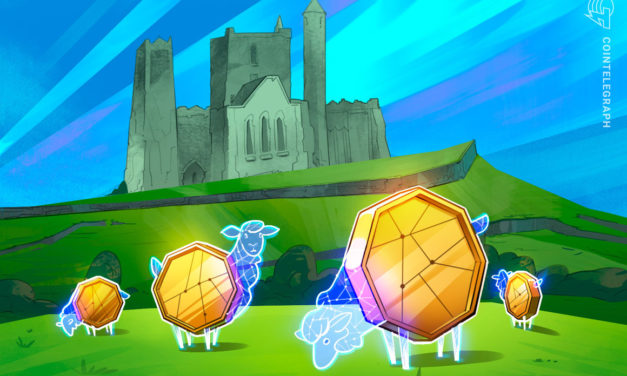
Crypto adoption in Ireland down over 16% in the last year

The number of crypto investors in Ireland has decreased slightly in the past year, or so it appears according to recent data from Finder.com. The report revealed that cryptocurrency adoption in the island nation has dropped by approximately 16.6% within the last year. Of the surveyed adult Irish internet users, 10% own cryptocurrency, as opposed to 12% in 2021.Finder’s crypto specialist James Edwards commented that such a small decrease is actually a positive shock given the state of the bear market. “We saw huge drops in the price of Bitcoin at the start of May and June and while we did see a reduction in the number of people holding cryptocurrency it’s not as severe as expected.”Edwards says the data suggests that despite the selloffs, the low drop in holders signals both hodlers and even more purchasing at discounted rates. The survey also highlighted the dominance of Irish male investors over female investors, with 72% of surveyed holders being men. This gender gap is in line with the reality of the entire crypto space, which is highly male-dominated.This is slowly changing as the space continues to integrate with various global industries. According to the BTCM Investor Study Report of 2021, the amount of women investors that entered the space increased by 126%. Irish investors are most keen on Bitcoin (BTC) at 35% ownership among local users. This is followed by Dogecoin (DOGE) (26%) and Ether (ETH) (23%). Related: Dogecoin launches new update to improve security and efficiencyGenerally, Ireland has been a friendly jurisdiction for cryptocurrency companies. In fact, in October 2021, Binance established three subsidiaries in Ireland and a fourth in November. The crypto exchange Gemini received its virtual assets provider license in Ireland in July 20 of this year. Kraken and Ripple are two other crypto-centric companies that have chosen Ireland as the European headquarters.

Čítaj viac


Spatial digital art exhibitions to level up metaverse experiences

In Decentraland’s third annual Metaverse Art Week held on Aug. 24–28, curators turned to new ways to utilize digital space to bring more interactive and true-to-life experiences of art. The metaverse world modeled its latest virtual festival after the real-life Biennale art event, which utilizes public space to display art. Visitors to the in-real-life (IRL) festival can walk around spacious pavilions and working parts of the city to engage with artists and brands outside of traditional gallery walls.Giovanna Graziosi Casimiro, the events and community producer for Decentraland, commented to Cointelegraph on this year’s design concept.“The core value of this year’s art week is to unframe the art in spatial experiences. For that, what we did is to repurpose public space in Decentraland.”In the digital world, art galleries and exhibitions aren’t new. Digital nonfungible token (NFT) art galleries have been implemented by companies like Spatial, and traditional art houses like Sotheby’s are active in hosting NFT art events. Sculpture exhibition from visual artist Nick Knight in Art Plaza in Decentraland Metaverse Art Week Source: Decentraland In Decentraland alone, there are six major art galleries hosted by big-name NFT marketplaces such as Rarible, SuperRare and KnownOrigin.What makes this event different is the way in which visitors interact with the art. Decentraland expects sizable engagement based on metrics from past events such as Metaverse Fashion Week, which saw 108,000 unique visitors, according to the foundation. The quality of metaverse events and avatars is a major discussion in the industry after feedback regarding quality in events like Metaverse Fashion Week. Mark Zuckerberg of Meta was recently met with criticism over the quality of avatars available in its new digital experiences. Casimiro said this is a top priority for the Decentraland team in developing these events:“Our team really worked hard in bringing new mechanics to Decentraland so that a lot of those art installations have an unedited interaction.” This can be seen in action through Opensea’s infinite gallery, where users can stand in an interactive hall of endless moving art. According to the team, the employment of such a mechanic in its metaverse is a first and the community will be able to use it in the repository. As engaging as digital art design can be, for new users, accessibility is still an issue. Across the industry experts highlight education as a key factor to break down barriers to entry. Casimiro told Cointelegraph that creating accessibility and educational components to digital events is critical to keep users engaged. “In the long term we need to always come out of the metaverse with actual knowledge. I am a big believer that we need to use the metaverse as an instrument of communicating knowledge and making it accessible to people.”Interactive art galleries, poetry readings and digital performances are the next frontier in metaverse engagement. In July, metaverse infrastructure company Condense released new technology to live stream IRL events into the digital world. 

Čítaj viac

Uniswap eyes NFT financialization, in talks with lending protocols

Crypto exchange Uniswap engaged in talks with multiple nonfungible token (NFT) lending protocols, according to a social media post from Uniswap’s head of NFT product Scott Lewis.In the tweet, Lewis highlights the company’s interest in tackling both liquidity issues and “information asymmetry” surrounding NFTs.uniswap is the interface for all nft liquidity. we are now in talks with 7 nft lending protocols. we will be working with each one to solve for liquidity fragmentation and information asymmetry. this is the first step to building nft financialization.— Scott (@Scott_eth) August 23, 2022While Uniswap’s goal of these talks and potential collaborations with lending protocols is NFT financialization, the crowd on Twitter came back with a double-sided response. Some users deemed the decision as a step towards solidifying the future of decentralized finance, simply known as DeFi:@uniswap keeps proving that #defi is here to stay.— structure_fi (@structure_fi) August 23, 2022

Other users questioned the motives behind Uniswap’s interest in NFT financialization and pointed toward taking advantage of liquidation profits.any other motive to provide this feature than profit from liquidations? or be kind to buy the lenders worthless asset at liq price and baghold it while you try and dump on yourself?— PilotGFX (@PilotGFX) August 23, 2022

Over the last few months, Uniswap has made big steps toward including NFT activity in its service offerings. Uniswap is one of the world’s largest decentralized exchanges (DEX), responsible for nearly $6 billion in assets in its liquidity pools.In June, the company introduced its acquisition of Genie, an NFT marketplace aggregation platform, allowing users to find and trade digital assets across most platforms.Shortly after, Lewis tweeted that Uniswap plans to introduce NFTs with full Sudoswap support. Sudosawp allows for anonymous interactions around NFT sales and the creation of NFT liquidity pools.We’ll be launching NFTs on Uniswap with full @sudoswap support. Pool data flowing in pic.twitter.com/nsRt9Cp1Ss— Scott (@Scott_eth) July 22, 2022

This is not the company’s first entrance into the NFT space, as in 2019, they launched Unisocks, which was the first rendition of NFT liquidity pools. However, this latest push for NFT activity comes as these digital assets gain more traction and utility inside and outside the DeFi space. Industries are utilizing these tokenized digital assets for everything from real estate contracts and digital fashion to collectibles and music rights monetization.Similar platforms like OpenSea, MagicEden, and even eBay are going full speed into the wild west of NFTs. DappRadar’s Q2 industry report even suggested an NFT platform battle could be in the future.

Čítaj viac

Bitfinex offers new chain split tokens ahead of Ethereum Merge

iFinex, the company responsible for Bitfinex Derivatives, announced on Tuesday the launch of a new service offering available to users before the highly-anticipated Ethereum Merge. The exchange now offers Ethereum Chain Split Tokens (CSTs). Tokens available to users represent the two systems involved in the Merge: ETHW (PoW) and ETHS (PoS). Bitfinex released the new trading tokens for users to have the possibility to trade on the potential forking event. The coins will be available through the Bitfinex derivatives platform. Bitfinex chief technology officer Paolo Ardoino said they released these new tokens to better prepare users for all eventual possibilities for the Merge. However, the tokens come with an expiration date set for the end of the year. Related: 3 strategies investors might use to trade the upcoming Ethereum MergeAccording to the exchange, there are three foreseeable outcomes for which these tokens can help users prepare. If there is no consensus change on the proof-of-work chain, ETHS will expire and ETH will be given for all ETHW holdings. However, if the consensus change is successful with no fork, the opposite will happen, ETHW will expire and ETH will exchange for ETHS. In the scenario of both a successful consensus change and a successful fork, both ETHW and ETHS tokens will be credited with ETH. The Merge, which is scheduled to take place around mid-September, has the entire industry on edge. Users are eager to see if the event will happen around the timeframe promised by developers and also if any disruptive side effects will occur. The Merge has been delayed multiple times in the past. Protocols like Aave encouraged users on the network to commit to PoS ahead of time, though there has been pushback from the PoW community.Miners especially are faced with the choice of how to proceed with the Merge. While some large mining pools have already shifted to staking, other PoW miners plan to freeze contracts to keep PoW alive despite skeptics.

Čítaj viac

Malaysian regulators add Huobi to investor alert list

The Securities Commission (SC) of Malaysia issued a statement on Monday regarding Huobi’s operations in the country. According to the statement, the crypto exchange is now on the SC’s Investor Alert List. Malaysian financial regulators say Huobi has been operating a digital asset exchange in the country without official registration with the SC.Huobi Global [https://t.co/la9Y3ntGuq] has been added to the SC’s Investor Alert List for operating a digital asset exchange (DAX) in Malaysia without being registered with the SC. pic.twitter.com/z3IGgnCa0t— SC Malaysia (@SecComMY) August 22, 2022In a follow-up tweet, the SC said that any operations that perform or offer capital market activities within the country require its approval. Those who aren’t granted such approval are considered unlicensed or unregistered entities. Local authorities say investors are “strongly urged” not to invest in such operations.Additionally, the SC highlighted that anyone who does utilize such a service does so at a risk and would not be able to legally resolve monetary losses.Such a statement does not bode well for the exchange. Local investors responded to the tweet by saying a simple fix is to change exchanges.In an official statement, the Huobi Group responded to Cointelegraph, stating that compliance is a core pillar of its business model in every country of its operations:”We are currently in discussions with Malaysian regulatory authorities regarding our presence in the local Malaysian market.” This comes amid an array of developments for the global exchange.In countries such as Australia and the United States, Huobi is taking steps toward expansion. Australian regulators greenlit the exchange in early August. In the United States, Huobi has secured a FinCEN license, which brings it one step closer to offering services to American clients.Related: Huobi co-founder reportedly looks to sell majority stake valued at over $1BWhile the exchange is taking steps in the right direction in some places, there are road bumps in others, like Thailand and New Zealand. Huobi’s Thailand affiliate recently shut down because it could not fix major systematic issues, despite several extensions from local regulators.In New Zealand, Huobi announced on Aug. 16 that it will end derivatives trading to complianc with local regulations. This comes only a few months after it won its initial license to operate in New Zealand.

Čítaj viac

Získaj BONUS 8 € v Bitcoinoch

nakup bitcoin z karty

Registrácia Binance

Burza Binance

Aktuálne kurzy