Autor Cointelegraph By Savannah Fortis

Middle East and North Africa are fastest-growing crypto markets: Data

Emerging markets continue to forge their way into the crypto scene finding a plethora of use cases, especially in the combined Middle East and North Africa (MENA) region. A new report from Chainalysis reveals that the crypto market in the MENA region is the fastest growing in the world. Transaction volume in the MENA region reveals users received $566 billion in crypto in the time frame of July 2021 to June 2022. This is 48% more than the previous year.MENA is followed by Latin America and North America with a growth of 40% and 36% respectively.This region is made up of approximately 22 countries which include emerging markets such as Morocco, Egypt and Turkey. In these countries, the usage of cryptocurrencies finds practical use cases in savings preservation and remittance payments.In countries such as Turkey and Egypt, which have both faced major devaluation of their local fiat currencies, crypto usage for savings preservation and remittances is especially dominant. Within the timeframe of the report, Egypt’s tripled transaction volumes can be accredited to local economic volatility. It has a year-over-year growth of 221.7% in crypto transaction volume. Turkey is the largest crypto market in the region with $192 billion in crypto received within the reporting period. The wealthier countries of the MENA region, such as the Gulf nation of the United Arab Emirates (UAE) which is home to the crypto haven of Dubai, have also been contributors to the local crypto scene though in a different capacity. Related: Dubai issues crypto marketing rules to better protect investorsAccording to the report both Saudi Arabia and the UAE made it into the region’s top five countries in terms of received crypto value. When it comes to these Gulf nations, however, crypto can be seen more in large institutional usage rather than person-to-person payments like remittances. Major crypto companies like Binance have received approval to set up operations in the UAE’s Abu Dhabi and Dubai, along with the neighboring country Bahrain. A local partnership with Bianance Pay in the UAE has even allowed local entrepreneurs can set up businesses using crypto. 

Čítaj viac
Latin Grammy Awards signs three-year contract for award show NFTs

This year’s 64th Latin Grammy Awards will have its first-ever nonfungible token (NFT) collection after the Latin Recording Academy signed a three-year contract for award show-related NFTs.The aforementioned partnership is between the Latin Recording Academy, which is behind the Latin Grammys, and OneOf, a Web3 music platform. Each collection, which will lead up to that year’s award show, will include drops highlighting Latin music.According to Manuel Abud, the CEO of the Latin Recording Academy, this is a new form of musical innovation and a way for fans to “own a piece of the Latin GRAMMYs:”“The Latin Recording Academy is committed to exploring innovative, new ways to celebrate excellence in Latin music and to connect music to other art forms in our culture, including visual and digital arts.”The Latin Grammy Awards NFTs will drop throughout October in the lead-up to the award show on Nov. 18.Related: Grammys 2022: NFTs hot topic of discussion among musicians and industry expertsThis comes after OneOf’s partnership with the Grammy Awards, in which it also planned a three-year NFT release plan. The first collection was released coinciding with the 64th Grammys, for which Binance was the official crypto exchange partner.The Grammys are not the first major award show with Web3 integrations. Earlier this year the MTV Video Music Awards announced its newest award category of “Best Metaverse Performance.”Additionally, music industry giants have been rapidly adopting Web3 technologies to upgrade their businesses. Sony Music filed a trademark application for NFT-authenticated music on Aug. 30 of this year.Musicians have been utilizing the technology to release NFT singles or to improve music rights and licensing. Moreover, NFTs officially became recognized as a chart-eligible format, with musicians such as Muse taking advantage of the development.

Čítaj viac

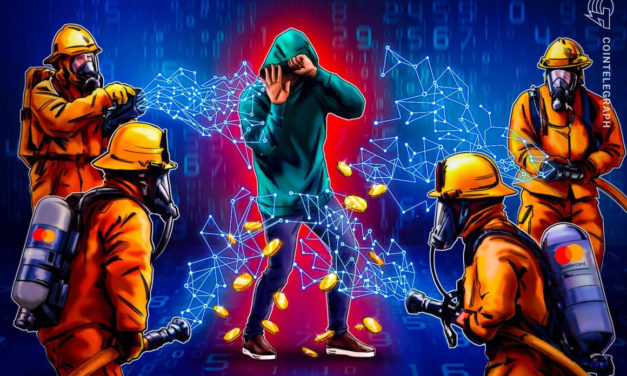
Mastercard launches new crypto fraud protection tool

The financial service provider Mastercard launched a new crypto service related to risk management on Oct. 3. Mastercard’s new service, Crypto Secure, is aimed to help banks find and prevent fraud on crypto merchant platforms.Crypto Secure combines the usage of artificial intelligence, blockchain data and public records of crypto transactions, along with other sources, to determine crime-related risks of crypto exchanges within the Mastercard network.Mastercard already has a similar service with fiat currency transactions available to banks.The president of cyber and intelligence business for Mastercard, Ajay Bhalla, said this development helps its partners stay compliant with local regulations when fighting fraud in the crypto space:“The idea is that the kind of trust we provide for digital commerce transactions, we want to be able to provide the same kind of trust to digital asset transactions for consumers, banks and merchants.”Banks and other Mastercard card issuers that use Crypto Secure will see color-coded risk ratings of crypto merchants, which represent the risk of suspicious or fraudulent activity connected to said merchant.Crypto Secure is run by CipherTrace, a California-based startup for blockchain security that was acquired by Mastercard the previous year.While the tool doesn’t make judgements for banks it provides another level of advisory on crypto transactions. Mastercard currently has around 2,400 crypto exchanges within its network.Related: Mastercard to allow 2.9B cardholders to make direct NFT purchasesCrypto payments are becoming more mainstream thanks to centralized payment processors like Visa and Mastercard. Last year Visa reported over $1 billion in crypto spending, while Mastercard has recently created new crypto payment options in countries such as Argentina and Indonesia.However, as crypto continues to enter the public eye so does any fraud and crime related to the industry. According to Chainalysis data, 2021 marked a new all-time high in crypto crime with fraudulent wallet addresses receiving $14 billion.In Australia, in 2022, investors lost $242 million to investment and crypto-related scams. While some executives have recently related crypto to a Ponzi scheme, others are calling on social media giants to be aware of crypto scams linked to their platforms.

Čítaj viac

MetaMask adopts custodial features for NFT-hungry institutional investors

Institutional investment is pouring into the crypto world, notably the nonfungible token (NFT) scene. In a reaction to the influx, MetaMask Institutional announced another addition to its custodial services offerings for institutional-level clients.MetaMask’s partnership with NFT management and storage service Cobo aims to create a “one-stop platform” for large corporations dealing with digital assets.Although MetaMask is a non-custodial wallet at its average user level, the institutional branch of the wallet has been adopting custodial partnerships in various countries around the world.Tavia Wong, the director of marketing and business development for Cobo, told Cointelegraph that not only does custodianship provide asset protection, but for institutions specifically, custodianship becomes useful on an administrative level.“Because of the high levels of users and different clearance levels, institutions require additional features to avoid internal failures and the consequences of negligence.”While wallets like MetaMask have been deemed not as “user friendly” in the past, this addition to custodial offerings prioritizes usability for big investors.Related: Institutional crypto custody: How banks are housing digital assetsThe new integration allows institutional clients to designate roles amongst the company alongside internal collaboration tools. According to Wong, this enables user limits on buying, trading and selling as permitted by the administrator.“With multisig access, it ensures that no single entity will be able to control all assets, removing any single point of failure.”The debate between noncustodial and custodial wallets still rages on nonetheless.With many in the space touting the slogan “not your keys; not your coins,” noncustodial wallets are often looked to for more security and financial autonomy.However, as mainstream users continue to enter the space without a technical background, custodial wallets often offer a more user-friendly environment. Some users even refute the aforementioned slogan in favor of greater accessibility for easy adoption:”not your keys, not your crypto” is short-sighted, small-minded and impractical.if we don’t create solutions that welcome *everyone* to crypto then it won’t be *anyone’s* crypto… because it’ll fall irrelevantly into the annals of history.— Chris Maddern (@chrismaddern) September 27, 2022Traditional financial giants like Société Générale, one of the largest investment banks in Europe, recently opened up crypto asset management services to provide its clients with an easy on-ramp.Nasdaq also announced on Sept. 20 that it will offer crypto custodial services.

Čítaj viac

NFTs bring in-game ownership to a new level, says Blokhaus founder

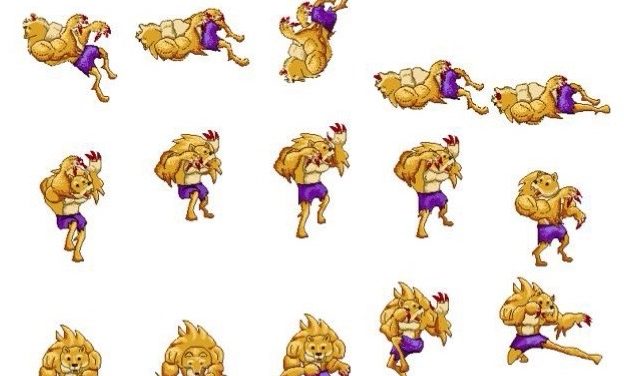
Nonfungible tokens (NFTs) have taken the gaming world by storm. Whether it’s through limited edition collectibles, avatar enhancement or play-to-earn incentivization, digital assets have given in-game ownership a new meaning.The ways in which NFTs are available to players are becoming increasingly tangible. In the case of Blockxer, the latest blockchain game from Blokhaus Inc., every component of the game has been NFT-ized and available for modification by users. Mark Soares, the founder of Blokhaus Inc., told Cointelegraph that when every aspect of the game is an NFT, users can create completely “bespoke” game experiences. Everywhere a user turns in this 8-bit, arcade-inspired game, there is an NFT — from the background and the characters to the weapons and more:“Imagine the ability to create your own characters, in your own scene, and the ability to gift or sell these mods as an NFT pack to other players.”NFTs allow users to unlock fully modular, community-driven in-game experiences to which they own the pieces. Soares likens this customization of an NFT-driven game, such as Blockxer, to 90s mixtapes, saying that it puts the “power of game creation in the players’ hands.”As explained by Soares, the design of Blockxer is quite simplistic, harkening back to pixelated arcade games of the nineties. It highlights crypto-meme culture and includes characters like a zombie doge.Zombie Doge NFT character sample. Source: BlockxerEven though the game design is simplistic, Soares stated that it doesn’t mean the utilities of the NFTs have to be simple as well. In fact, he said that too simplistic thinking of NFTs is a problem in the blockchain gaming industry.“Usually [they’re] just add-ons, rewards or badges for games that you can purchase – we think they can and should be much more.”This is only the beginning of NFT integration into the world of gaming. Recently MyMetaverse and Enjin games began implementing NFTs into popular games such as Minecraft and Grand Theft Auto 5 servers.Related: Solitaire, Counter-Strike, Snake: How casual gaming could be a ‘huge’ Bitcoin on-rampOther gaming giants like SEGA games have recently shown interest in blockchain gaming and its features.

Čítaj viac

Získaj BONUS 8 € v Bitcoinoch

nakup bitcoin z karty

Registrácia Binance

Burza Binance

Aktuálne kurzy