Autor Cointelegraph By Savannah Fortis

EU crypto sanctions against Russia has an unexpected enforcer

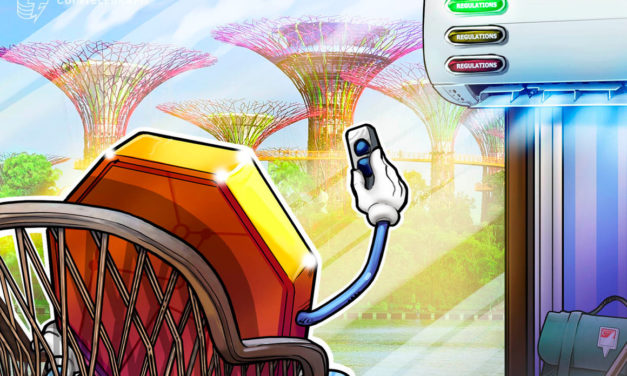
The Monetary Exchange of Singapore (MAS), ​​the country’s central bank and financial regulator, reminded all authorized cryptocurrency exchanges in the country to comply with financial sanctions in place toward Russia. This statement comes after research that revealed millions in crypto donations raised by pro-Russia groups in support of the ongoing conflict in Ukraine and increased sanctions on Russia from financial authorities around the world.Singapore’s decision puts it in line with European Union’s sanctions toward Russia, which were first imposed earlier this year. Initially, the sanctions limited Russia-EU crypto payments to around $10,000.However, the most recent restrictions in early October further tightened measures and banned “all crypto-asset wallet, account, or custody services, irrespective of the amount of the wallet.”Around the time of the EU’s first set of sanctions, MAS created measures aimed at Russian banks and other entities based in the country, along with the prohibition of any fundraising for any activities which could benefit the Russian government.Related: What new EU sanctions mean for crypto exchanges and their Russian clientsCrypto exchanges and related platforms have been falling in line with sanctions toward Russia since the start of the conflict.The popular crypto exchange Kraken closed its doors to Russian users this past month and restricted all accounts associated with the country. Similarly, Dapper Labs suspended all accounts of Russian users. The move prohibited Russian-linked accounts from selling, buying or gifting nonfungible tokens (NFTs), along with stopping funds withdrawal.Most recently, Binance’s global head of sanctions, Chagri Poyraz, told Cointelegraph in an interview that the company is working hard to comply with EU measures while still best serving their users.Meanwhile, many Russian users are flocking to neighboring countries, such as Kazakhstan, to continue utilizing services previously available to them.

Čítaj viac
Telegram launches marketplace to auction rare username handles

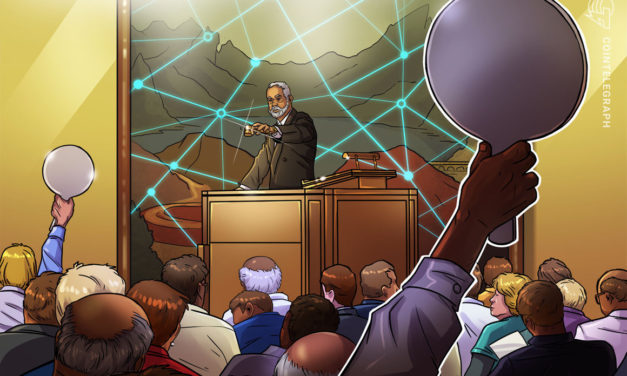
The popular messaging app Telegram announced on Oct. 26 the official launch of its new marketplace built on the Telegram Open Network (TON) blockchain. The marketplace will serve as an auction platform on which rare Telegram handles will be up for grabs.The idea was first mentioned back in August on app founder Pavel Durov’s Telegram channel after the TON Foundation successfully auctioned off TON DNS domains.Telegram will start with auctions of four- and five-letter handles, with this being the first time shorter handles will be made available to all users. The auction will last a week, with a price minimum for a four-character handle likely to be set at 10,000 Toncoin, the native token of the TON blockchain.Individual Telegram users will also have the ability to auction off their own usernames. According to the announcement, the owners of a particular handle will have the option to move and resell their purchase across several marketplaces as desired.Andrew Rogozov, founding member of the TON Foundation, believes this development will help accelerate blockchain adoption.“For the first time, social media users will be able to transparently prove that they own their handles.”Cointelegraph reached out to Telegram for further comments on the development.Related: WhatsApp down again? Google searches spike after the outageTelegram has a large user base within the combined Web3 and crypto community and has actively made efforts to incorporate Web3 features into its operations.The company first announced the development of the TON blockchain in 2018. However, it had to sever ties with the project due to a sticky court battle in 2020 with the United States Securities and Exchange Commission regarding its $1.7 billion initial coin offering. It then resurfaced as the TON Foundation and picked up momentum in the space once more. In April 2022, Telegram Wallet Bot enabled its users to send crypto in-app via the TON blockchain.

Čítaj viac

Kazakhstan to build central bank digital currency on BNB Chain

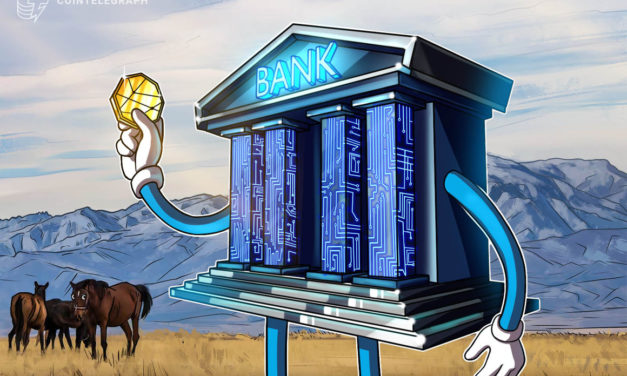
In an announcement on Twitter, Changpeng Zhao, the founder and CEO of Binance, said the network will be a major component of Kazakhstan’s latest Web3 endeavor.The Binance founder tweeted that the National Bank of Kazakhstan (NBK) will integrate its central bank digital currency (CBDC), the digital tenge, on the BNB Chain, the underlying blockchain of the Binance network.National Bank of Kazakhstan (NKB) will integrate their CBDC on @BNBchain. #BNB https://t.co/33WMKwAczm— CZ Binance (@cz_binance) October 27, 2022The NBK launched a CBDC pilot which included the participation of local merchants and consumers. Zhao said he looks forward to the bank further developing use cases to “bridge the gap between traditional banking and the crypto ecosystem.”This development is one of many in the network’s effort to push crypto adoption, particularly in Kazakhstan. Back in August of this year, Binance was given its in-principle approval to operate as a digital asset service provider in Kazakhstan.Less than a month later, on Oct. 6, the Kazakh Financial Services Authority granted Binance a permanent license to offer digital asset services and provide custody services. It was around this time that Binance also signed a memorandum of understanding with local authorities in an effort to help fight financial crime.The Binance ecosystem, including its founder, has been vocal about its mission to push crypto adoption around the world. Recently it has engaged in crypto-related activities in Ukraine by hosting an NFT collection of a local museum at risk due to the conflict, along with opening two new offices in Brazil, one of Latin America’s major crypto hubs.Related: SWIFT says it has reached a ‘breakthrough’ in recent CBDC experimentsKazakhstan’s CBDC pilot program is among the country’s recent activities in the crypto space. On Sept. 28, President Kassym-Jomart Tokayev said Kazakhstan is inching closer to legalizing methods to convert cryptocurrencies to cash, along with full legal recognition. This statement came after the country introduced new crypto mining tax regulations over the summer.Recent data on global crypto mining revealed that Kazakhstan is among the world’s top three destinations for Bitcoin (BTC) mining, after the United States and China.

Čítaj viac

Reddit NFT trading volume hits all-time high: Nifty Newsletter Oct. 19–25, 2022

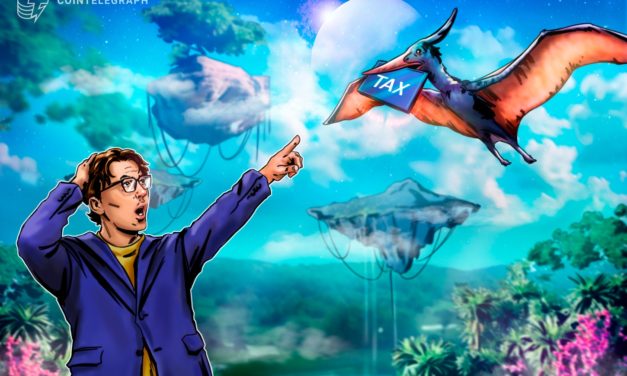
In this week’s newsletter, read about how Apple released its first-ever set of rules for nonfungible tokens (NFTs), including a 30% “tax” and limits on how NFTs can be bought and exchanged. Check out how NFTs have the potential to change museum experiences in the future and how OpenSea revised its NFT rarity ranking protocol after feedback from the community. In other news, find out how NFTs are used to democratize scheduled TV programming in the era of Web3. Last but not least, NFT trading volume on Reddit hit an all-time high with nearly 3 million wallet holders. New Apple rules double down on 30% NFT ‘tax’ and geo-limits exchanges The big-tech company Apple released new rules for its App Store around NFTs and cryptocurrency exchanges. This marks the first time the company specified rules for NFTs in particular. These new guidelines dictate many crypto-related activities, including the taxing of NFT purchases, how they can and cannot be used and rules on when a crypto exchange app can be listed in the app store. Continue reading…Will museums of the future just be giant NFT galleries?Recent developments in the NFT scene have seen big-name celebrities, brands and large institutions such as museums reinvent themselves for consumers. Museums, in particular, have used technology to verify collections and even raise funds. Speaking with Cointelegraph, Hussein Hallak, founder and CEO of Next Decentrum Technologies, helped answer the question of museums becoming giant NFT galleries in the future and how ownership really works in such a scenario.Continue reading…OpenSea revises NFT rarity ranking protocol after community feedback The Twitter community called on OpenSea to address several issues surrounding OpenRarity, the new rarity ranking protocol implemented on the NFT marketplace. The NFT investor tweeted that including a “rank” in the NFT listing without “rarity” would mislead collectors.After the feedback, OpenSea made noticeable changes to the ranking system. Now, NFT listings show “rarity rank” rather than just the rank. Additionally, it also added a trait count as a part of the ranking methodology to categorize NFTs with unique attributes prior to applying any additional information which could elevate its ranking.Continue reading…Can NFTs democratize scheduled TV programming in the Web3 era?The way we watch TV or other scheduled programming is about to be NFT-ied through a new streaming network that focuses on crypto content with NFTs as its backbone. In an interview with Cointelegraph, Greg Cipes, co-creator of NFTV, discussed the fine line between content democratization and staying true to an artist’s vision.When it comes to creative output, many artists have a specific vision for their content, especially those with a trademark style or brand. As NFTs come more into the picture and give community members a voice, Cipes says this can “absolutely” take away from creators.Continue reading…Reddit NFT trading volume hits all-time high as wallet holders near 3 millionThe trading volume of Reddit NFT avatars eclipsed $1.5 million in 24 hours on Oct. 24, according to data from Polygon and Dune Analytics. This increase in volume reflects more than a third of the entire trading volume of $4.1 million of the collection since its launch. Daily sales volume of Reddit NFTs also hit a new all-time high of 3,780 digital collectibles traded. These avatars are created by independent artists and minted, as on the Polygon blockchain. They can be displayed as profile pictures for users on the platform and purchased through Reddit’s Vault wallet. Continue reading…Thanks for reading this digest of the week’s most notable developments in the NFT space. Come again next Wednesday for more reports and insights into this actively evolving space.

Čítaj viac

Norwegian gov’t agency opens metaverse office in collaboration with EY

The Brønnøysund Register Center, a Norwegian governmental agency, partnered with Big Four accounting firm Ernst & Young (EY) to step into the metaverse with a new virtual office location. The center is responsible for managing numerous public registers for Norway, along with systems for the government’s digital exchange of information. According to the announcement, the agency is choosing to create a metaverse location because the “future users of public services are there,” and it wants to connect with the younger generation that utilizes its services.Magnus Jones, Nordic innovation lead at EY, told Cointelegraph:“More and more authorities see a clear need of being present at the platforms where mainly younger generations are both for tax and legal purposes with regards to information.”The virtual office plans to offer information on crypto reporting to users via the Norwegian Tax Agency and information on how to start an enterprise from experts at the Brønnøysund Registers.Andreas Hamnes, a business developer at the Brønnøysund Registers, said if services continue to develop as they do now, it will contribute to increased alienation for generations who were “born digital.”Jones continued to say that it’s the next generation that is really building “DeFi-based landscapes,” and they often have no clue or lack knowledge of tax or legal implications. “That is why public authorities in Norway want to inform [them] about everything: from how you register a company, at what threshold VAT registrations arise, how to report your cryptos, etc.”EY also has a metaverse office location in Decentraland, following its many Web3 developments, which include multi-million-dollar investments in the development of its own blockchain suite. Related: Crypto ownership among Norwegian women doubles, mirroring global trendsThis development comes after worrisome claims were made about usership numbers in Decentraland. Initial reports claimed that there were only around 40 unique active wallets in the metaverse platform. These numbers were corrected by both DappRadar, the source of the data, and Decentraland. In the weeks following the incident, developers and investors in the metaverse spoke out with confidence that the metaverse is still very much a major part of the future of the internet. DappRadar’s Q3 report revealed that blockchain games and metaverse projects raised a cumulative $1.3 billion in that quarter alone. In the same time frame, the International Criminal Police Organization entered the metaverse with its own metaverse law enforcement.

Čítaj viac

Získaj BONUS 8 € v Bitcoinoch

nakup bitcoin z karty

Registrácia Binance

Burza Binance

Aktuálne kurzy