Festivals in the metaverse: How Web3 projects are taking culture virtual
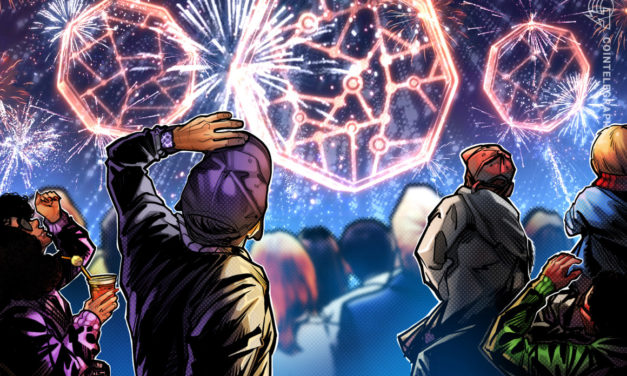
The metaverse is the future, or so is the claim of many interacting with the industry — a claim that can be backed up by the amount of activity pouring into the Web3-metaverse domain. Engagement in the metaverse of 2022 is looking less like a Sims-esque video game and more like government agencies creating virtual offices to connect with future generations of clients or nations facing the existential threat of climate change using the metaverse to create digital versions of themselves. One way brands and organizations are using the metaverse is by hosting large-scale virtual events similar to those they already hold in-real-life. This type of metaverse activity has been seen in many iterations over the last year, one of which was the metaverse’s first-ever fashion week in April 2022. The event invited fashion enthusiasts, designers and brands into virtual reality to participate in activities that mirrored real-life events at fashion weeks around the world. Catwalks, DJ-led afterparties, talkbacks and more were all included in the digital version of the iconic fashion industry event. In The Sandbox metaverse, a Pride festival was held in June. Similar to fashion week, what could be experienced at a physical event was recreated but with extras only made possible through digital reality, such as a Pride-themed game to be played by festival goers. Follow the rainbow path to the Valley of Belonging to celebrate #Pride, where you can be your most authentic self!@People0fCrypto presents a game that highlights cultural experiences amongst underrepresented communities in #Web3.Let’s go! ⤵️https://t.co/w55FEwKjSZ pic.twitter.com/KHuB0exKWd— The Sandbox (@TheSandboxGame) June 24, 2022Most recently, Decentraland held a four-day music festival with mega-headliners which included Björk, Ozzy Osbourne and Soulja Boy. The event had multiple stages designed with the aesthetic of the artist performing, along with other interactive attractions for festival goers. Stunning performance, thanks for the show @bjork @decentraland pic.twitter.com/LATzhvQyEl— Agus (@Agus0xyz) November 14, 2022
Physical festivals of such caliber cost hundreds of thousands, even hundreds of millions of dollars in cases like the popular Coachella music festival. Aside from the costs, some festivals take years of advanced planning, with months of physical prep time. To call it a big feat to pull off a mega event is putting it lightly. As festivals and large-scale events like fashion week continue to become digitized and built into the metaverse, the question arises as to what it takes to create such an experience. Moreover, how is it different from its physical counterpart? Complex yet creative A common thread among those involved with large-scale metaverse events is that it is indeed complex. As it is still a relatively new evolution of online activity for both planners and users, there is a greater learning curve for everyone involved. Akhbar Hamid is the co-founder of People of Crypto Lab — which hosted this year’s Pride festival in the Sandbox. He told Cointelegraph: “An important thing to remember is that throwing festivals and experiences in the metaverse is a very new experience and we are building and creating what that blueprint looks like everyday.”This “blueprint” includes a different set of logistics and planning depending on the virtual world. Related: Al tech aims to make metaverse design accessible for creatorsHamid gave the example of The Sandbox. As it is not yet a fully open metaverse and still in alpha, there is a bit more planning involved: “With metaverse worlds you can create and build within existing worlds and reskin existing user experience, which can allow you to execute in a shorter time frame.”Generally, building experiences from scratch can take months, he confirmed, with additional time allotted for bug testing afterward. Boundaries don’t existOne thing that everyone commented on is the limitless possibilities for utilizing space in the metaverse, which simply doesn’t exist in the physical world. Raluca Cherciu, the CEO and co-founder of Unpaired — which operated the OxArena venue in Decentraland’s four-day music festival — told Cointelegraph: “In the metaverse, what’s possible takes on a whole new meaning and the laws of physics do not apply.” She continued saying that as a venue with no spatial limitations, from an architectural point of view, they could really create whatever the imagination conspired. In the metaverse, “you don’t have to worry about things like permits and can have much more expansive areas to play with and build in.”Related:Spatial digital art exhibitions to level up metaverse experiencesHamid also touched on the fact that apart from no limitations for space in the metaverse, there are also no borders. People from anywhere can attend a metaverse festival and minimize typical festival travel costs like airfare and lodging: “This opens the doors for global festivals where everyone can share in the same experience from thousands of miles away.”However, in a borderless environment, issues do arise. As pointed out by Cherciu, one big hurdle is creating schedules that work across multiple time zones, which she said can impact attendance of the event. Community at the coreNonetheless, the community aspect is one of the most important elements for digital festival planners — and not just in attendance numbers. The community is the inspiration for everything that goes into building the experience. Giovanna Graziosi Casimiro, senior extended reality and events producer at the Decentraland Foundation, told Cointelegraph that the goal of a metaverse festival is to provide attendees with an “unparalleled sense of belonging.”She said there will be certain aspects of metaverse experiences that will fall short such as the physical presence of thousands of people or hugging friends at a concert. However: “I always like to emphasize that virtual events are not replacements for IRL events, but rather complements that allow for more holistic experiences.”To make a virtual experience altogether complementary, cohesive and intriguing for its physical community, Hamid says a strong understanding of the community that the festival is dedicated to is very important.He said creators need to ensure that “the game and experience you create speaks to the audience you are celebrating,” adding:“You want to create a moment that the existing Web3 community will enjoy and an experience that the Web2 community will want to experience as they begin to explore metaverse worlds.”One avenue that shouldn’t be overlooked when bridging these experiences is choosing artists with an authentic interest in interacting with their community in a new way. Web3 talentAs mainstream artists continue to find their way into the world of Web3, festivals and other large-scale virtual events can help further this trend. Casimiro says performances in virtual worlds open up much more creative freedom for artists, stating, “They have completely free range to tell their stories and explore their unique narratives however they desire.”She says the metaverse can even help artists personify themselves as characters or elements from their songs. Identity in the metaverse has been a big topic for users and digital avatars.When it comes to artists, the metaverse, too, is, “a space for identity expansion through storytelling.” This year, the entertainment network MTV introduced a new award for “Best Metaverse Performance” as an official competition category for their annual awards.Another aspect of metaverse performance, Hamid says, is that those on the backend can get live metrics and perform “live social listening” to monitor community satisfaction with the performance. Large-scale considerationsAside from community satisfaction, there are other road bumps that have to be considered when creating a digital festival. “Keeping open and organized channels of communication is one of the biggest challenges,” says Casimiro. “Especially when you’re dealing with several different platforms.” She also said finding a balance between encouraging artists to push their creative boundaries while making sure there is technology available to back these dreams up. Hamid cited an age-old problem that the Web3 space continuously faces, which is education, stating, “We have to make entering these spaces more accessible and educate the masses on all that is achievable through this technology.”The simultaneous task of learning what it takes to put on a digital festival while educating communities on how to participate is no small task. However, Hamid believes that festivals are one of the best ways to do so. “Cultural moments like festivals, like Pride, Women’s History Month, Black History month are all great moments to create unique metaverse experiences that help bring mass consumer awareness to the new technology,” he said.Looking forwardThe metaverse is not going anywhere. According to a Q3 DappRadar report, hundreds of millions of dollars have poured into metaverse development in the last quarter alone. The metaverse continues to be a big component of the success of other Web3 tools such as nonfungible tokens (NFTs). According to industry observers, what will contribute to the success of the metaverse and its major events is one primary thing: accessibility. Hamid said that the future of metaverse festivals will “be accessible from any device anywhere.” Related: The metaverse is becoming a platform to unite fashion communitiesCasimiro added that she has produced virtual concerts since 2019 and has no doubts they will continue to be a staple in the industry: “In the last three years, there’s been a cultural shift towards a global village with global access to content.”For Cherciu, accessibility and social interaction will be the prevailing elements for all metaverse activity:“The metaverse provides new opportunities for people in economic, physical or mental distress to participate in socially rewarding experiences that otherwise would not have access to/be able to take part of.”
Čítaj viac