Autor Cointelegraph By Sam Bourgi

‘Centralization issues’ are the biggest culprits of DeFi attacks: CertiK

Decentralized finance, better known as DeFi, may not be “decentralized” enough as attackers exploited centralized weak points to drain users of billions of dollars in 2021, according to research from blockchain security firm CertiK. In a new report on the state of DeFi security in 2021, CertiK researchers said “centralization issues were the most common attack vector” within decentralized finance. The blockchain security firm cited 44 DeFi hacks totaling $1.3 billion in lost funds in 2021. That’s an increase of over $500 million compared with 2021. “This underscores the importance of decentralization and highlights the fact that many projects still have work to do to reach this goal,” CertiK said, adding:“Centralization is antithetical to the ethos of DeFi and poses major security risks. Single points of failure can be exploited by dedicated hackers and malicious insiders alike.”Research undertaken by ImmuneFi revealed that the value lost due to DeFi hacks and related scams exceeded $10 billion over the past year, revealing major discrepancies in how exploits are classified and tracked. However, most research on the matter seems to agree that security exploits targeting DeFi projects have witnessed a steep rise.Although DeFi exploits have undermined the legitimacy of cryptocurrency markets in the eyes of traditional investors and legacy financial systems, CertiK offered a silver lining: 2021’s losses represented only 0.05% of crypto’s total market capitalization, down 17% from the previous year. Related: What is a honeypot crypto scam and how to spot it?The cryptocurrency market peaked just north of $3 trillion in November 2021 after starting the year below $800 billion, according to CoinGecko data. DeFi was a major growth catalyst for crypto, with the sector’s total value locked rising from less than $20 billion at the start of 2021 to a record high of nearly $260 billion in December. Total value locked, also known as TVL, refers to assets that are currently being staked on DeFi protocols.Total TVL is down from record highs but remains well above $200 billion. Source: DeFi LlamaCertiK cited the growing popularity of Binance Smart Chain (BSC) as one of the biggest reasons for DeFi’s success. Between January and December 2021, BSC’s TVL grew from $62 million to $21 billion — an increase of 31,000%.Demand for CertiK’s blockchain security services appears to be on the rise as more projects look to avoid falling victim to scams and exploits. The company audited a total of 1,737 projects in 2021. As Cointelegraph reported, CertiK is approaching unicorn status after securing $80 million in Series B2 investments that concluded in late November 2021.

Čítaj viac


Binance Labs backs $200M Oasis Ecosystem Fund

Binance Labs, the venture capital (VC) arm of the Binance cryptocurrency exchange, announced Tuesday that it will contribute to Oasis Foundation’s $200 million ecosystem development fund, sending a strong signal that major investors were still keen to back emerging projects on alternative blockchain networks. With the investment, Binance Labs joins other prominent VC firms in supporting the Oasis Network, an alternative smart contract platform that intends to compete with Ethereum. As Cointelegraph reported in November, Oasis Foundation initially launched a $160 million development fund to lure promising startups to its blockchain. In addition to Binance Labs, other notable VC firms to support the ecosystem development fund include Hashed, Jump Capital, Dragonfly Capital and Draper Dragon.Bill Chin, who heads the Binance Labs fund, touted the Oasis Network’s “scalability and privacy-preserving features,” as well as its ability to advance Web3 development, as reasons for backing the project.Binance Labs has invested in several blockchain projects over the past 12 months. As Cointelegraph reported, in December, the VC firm led a $60 million investment round into cross-chain protocol Multichain. A few weeks later, Binance Labs announced that it had participated in Woo Network’s $12 million Series A funding round. Related: OpenSea raises $300M for encrypted digital marketplaceVenture capital made a huge splash in the blockchain industry in 2021, with investment firms pumping over $17 billion into crypto-focused projects through the first 10 months of the year. The investment flows were steady throughout the year even as Bitcoin (BTC) and the broader cryptocurrency market experienced turbulent price action. Market turbulence has resurfaced at the start of 2022, with Bitcoin briefly falling below $40,000 and the broader crypto markets bleeding heavily. 

Čítaj viac

Crypto Biz: The Rise of the Bitcoin Treasury, Dec. 30–Jan. 6

The price of Bitcoin (BTC) cratered below $43,000 on Thursday in a selloff that was stoked by the Federal Reserve’s renewed pledge to start unwinding its pandemic stimulus support. For the so-called diamond hand investors among us, the decline presents an attractive entry point to continue accumulating BTC at discount rates. 2021 was the year that institutions and corporations became major movers and shakers in the Bitcoin market. By the end of the year, corporations and investment funds held roughly 1.48 million BTC, which represents 7% of the current circulating supply. Do you think these large, strategic investors are going to get shaken out by FUD?Below is the concise version of the latest “Crypto Biz” newsletter, which is delivered to your inbox every Thursday. For a comprehensive breakdown of business developments over the last week, register for the full newsletter below. Bitcoin corporate treasuries surge The number of publicly-listed companies holding Bitcoin grew in 2021, as more corporate executives began recognizing the digital asset’s value proposition. According to on-chain analyst Willy Woo, corporate treasuries have gained market share from leading spot exchange-traded funds, sending a strong signal that corporations are having a bigger impact on the Bitcoin market. Since MicroStrategy’s “Bitcoin for Corporations” conference in Feb 2021, public companies* holding significant BTC have gained market share from spot ETFs** as a way to access BTC exposure on public equity markets.* MicroStrategy & public mining companies** Mainly Grayscale pic.twitter.com/e18OEfgiEW— Willy Woo (@woonomic) January 2, 2022Related: Bitcoin could outperform stocks in 2022 amid Fed tightening — Bloomberg analystWonderFi plans to purchase Bitbuy parent company for $162MWonderFi Technologies, a decentralized finance platform backed by business mogul Kevin O’Leary, announced this week that it will acquire Bitbuy owner First Ledger Corp in a deal valued at $162 million. Founded in 2016, Bitbuy is a licensed crypto exchange operator in Canada with over 375,000 users. To fund the purchase, WonderFi will issue 70 million new shares, pay $15.7 million upfront and $23 million in deferred cash in 12 months. Canaan expands footprint in KazakhstanSoaring fuel prices stoked unprecedented political unrest in Kazakhstan this week, forcing the country’s presiding cabinet to resign unexpectedly. Just one day prior, Chinese Bitcoin mining manufacturer Canaan Inc announced it had broadened its business ties with the central Asian country. As of Dec. 31, 2021, Canaan had deployed 10,300 AvalonMiner units in Kazakhstan. The political upheaval in Kazakhstan had a negative impact on the Bitcoin network, which saw its hash rate plummet 13.4% in a matter of hours. Related: Cointelegraph Consulting: Crypto events of 2021 in retrospectNFT-focused holding company closes $50M Series ADigital asset curator Metaversal concluded a $50 million investment round that was co-led by CoinFund and Foxhaven, with additional participation from Dapper Labs, Digital Currency Group, Rarible and Theta Blockchain Ventures, among others. Metaversal will use the proceeds to expand its NFT-focused business, which includes acquiring more digital collectibles and supporting up-and-coming projects in the space.

Čítaj viac

Bitcoin could outperform stocks in 2022 amid Fed tightening — Bloomberg analyst

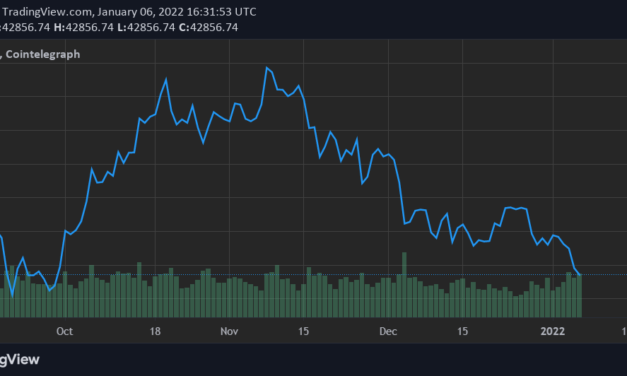
The Federal Reserve’s signaling for tighter monetary policy in 2022 could provide short-term headwinds for risk assets such as stocks and cryptocurrency, but there’s a good chance that Bitcoin (BTC) still comes out on top as investors recognize its value as a digital reserve asset, according to Bloomberg commodity strategist Mike McGlone. The January edition of Bloomberg’s Crypto Outlook described the Federal Reserve’s plan to raise interest rates in 2022 as a possible “win-win scenario for Bitcoin [versus] the stock market.” The reasons stem from the fact that the S&P 500 Index is currently the most overextended above its 60-month moving average in over two decades and that Bitcoin is seeing growing mainstream appeal as an inflation hedge.“Stretched markets have become common, but commodities and Bitcoin appear to be early reversion leaders,” McGlone said. “It’s a question of bull-market duration, and we see the benchmark crypto coming out ahead.”Minutes from the Federal Reserve’s December policy meeting revealed on Wednesday that central bankers are ready to aggressively curb their stimulus support more quickly than previously expected. The plan, at least for now, includes three interest rate hikes in 2022 accompanied by a reduction in the Fed’s balance sheet, which currently stands at nearly $8.3 trillion in Treasurys and mortgage-backed securities. Markets may be overreacting short-term but looking beyond hard to overestimate how hawkish the Fed minutes were. QE reduction + 3 hikes OK, but 3 hikes + accelerated QT was not in anybody’s radar.— Alex Krüger (@krugermacro) January 6, 2022Although stimulus reduction is usually considered negative for risk assets, a broad category that includes equities and cryptocurrencies, McGlone believes Bitcoin is in a unique position to outperform in this environment:“Cryptos are tops among the risky and speculative. If risk assets decline, it helps the Fed’s inflation fight. Becoming a global reserve asset, Bitcoin may be a primary beneficiary in that scenario.”Within the broader cryptocurrency market, the Bloomberg analyst said he expects the “enduring trio” — namely Bitcoin, Ether (ETH) and dollar-pegged stablecoins — to maintain dominance throughout the year. BTC/USD is in a clear downtrend that has accelerated following the release of the FOMC minutes. Data from Cointelegraph Markets Pro and TradingView showed a sharp decline in the value of Bitcoin on Wednesday following the release of the Federal Open Market Committee meeting minutes. The flagship cryptocurrency plunged below $43,000 for the first time since September and is currently down 8% over the past 24 hours.

Čítaj viac

Tribal Credit raises $40M in 'hybrid' debt round funded by dollars and stablecoins

Crypto-focused enterprise payment platform Tribal Credit has concluded a $40 million debt offering that was funded through fiat and stablecoins — giving the company additional capital to expand its business services in Latin America. The so-called hybrid debt round was financed by Partners for Growth, a California-based investment firm, and Stellar Development Foundation (SDF), which is a non-profit organization supporting the growth of the Stellar blockchain. Tribal said it will use the capital to fund receivables from its customer base throughout Latin America, particularly Mexico, Brazil, Chile, Colombia and Peru. Tribal COO Duane Good explained to Cointelegraph that funding receivables from its customer base means that “Tribal can use the debt facility to help customers” in the aforementioned countries. In other words, “this new debt facility will be used to support our customer’s spending on the Tribal platform.” When asked about the mechanics of the hybrid debt raise, Good explained that “a portion of the debt facility was established with SDF and funded through USDC.” A traditional debt facility, by contrast, “is an agreement with insittutiional lenders that enables a financial services firm to draw on the facility to support the underlying credit needs of their portfiolio.”Launched in 2016, Tribal Credit provides credit cards and other forms of funding to startups in emerging markets. The company also employs a cross-border payment system supported by cryptocurrency exchange Bitso that allows businesses to convert local currency to Stellar’s USDC stablecoin. Integration with Stellar blockchain began in April 2021 after Tribal received $3 million from the Stellar Development Foundation. Related: Crypto payments solutions firm Ramp raises $53 million to increase adoption of DApps”Mexico could be another example of a country adopting cryptocurrencies for remittances, as estimates have shown they could reduce costs by 50% to 90%.” – @ashady, CEO of Tribal. For more information, visit: https://t.co/g0oa3GvzZ4#TribalCredit— Tribal Credit (@TribalCredit) October 22, 2021Tribal and others have identified small businesses as a major source of growth for crypto payments and remittances, especially in emerging markets where access to traditional financial services is often limited. Data from the World Bank shows that small- and medium-sized enterprises in emerging markets create roughly seven out of 10 jobs, making their access to financing more important.

Čítaj viac

Získaj BONUS 8 € v Bitcoinoch

nakup bitcoin z karty

Registrácia Binance

Burza Binance

Aktuálne kurzy